Critical Thinking Easy Science Worksheets for Ages 4-9
4 filtered results
Difficulty Level
Grade
Age
-
From - To
Subject
Activity
Standards
Introducing our "Critical Thinking Easy Science Worksheets for Ages 4-9," designed to engage young minds through fun, educational, and interactive content. Tailored for early learners, these worksheets focus on developing essential critical thinking skills through age-appropriate science topics. Each worksheet provides a combination of exciting experiments, observations, and problem-solving activities that make learning enjoyable while boosting cognitive abilities. Perfect for classrooms or at-home learning, these resources encourage curiosity, nurture a love for science, and lay a strong foundation for future academic success. Stimulate your child’s intellect and curiosity with our expertly crafted worksheets today!
Favorites
With answer key
Interactive
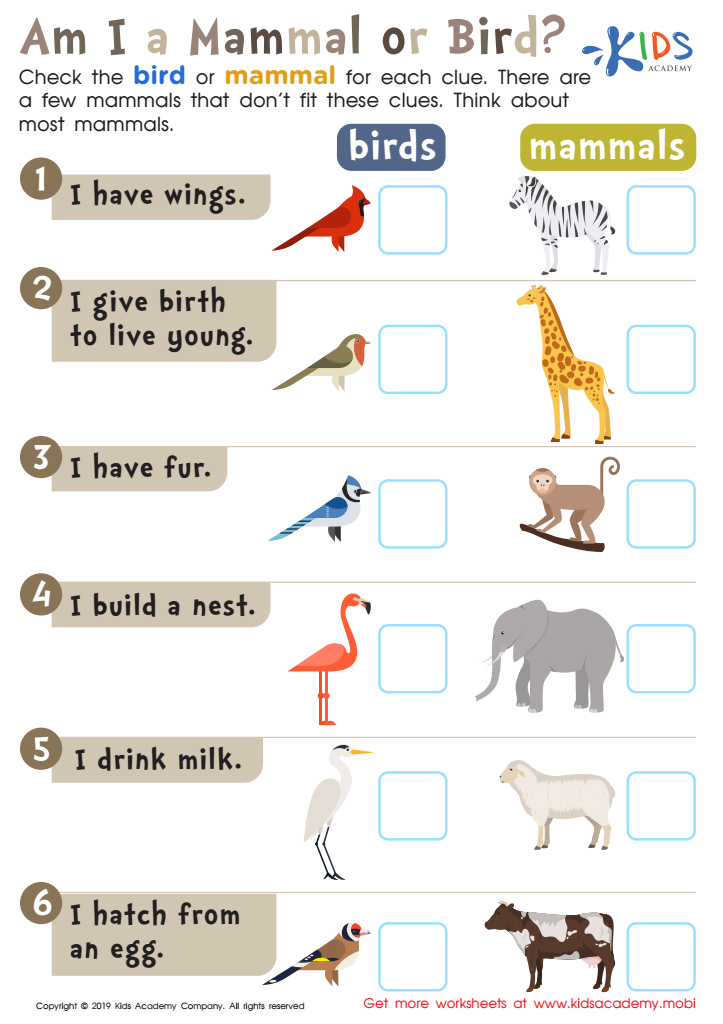
Am I a Mammal or Bird? Worksheet
We categorize animals into groups such as mammals, birds, reptiles, etc. This worksheet helps kids understand the difference between birds and mammals. Read through the clues and think about each one. Then decide if it describes a bird or mammal, check the box and complete!
 Assign to My Students
Am I a Mammal or Bird? Worksheet
Worksheet
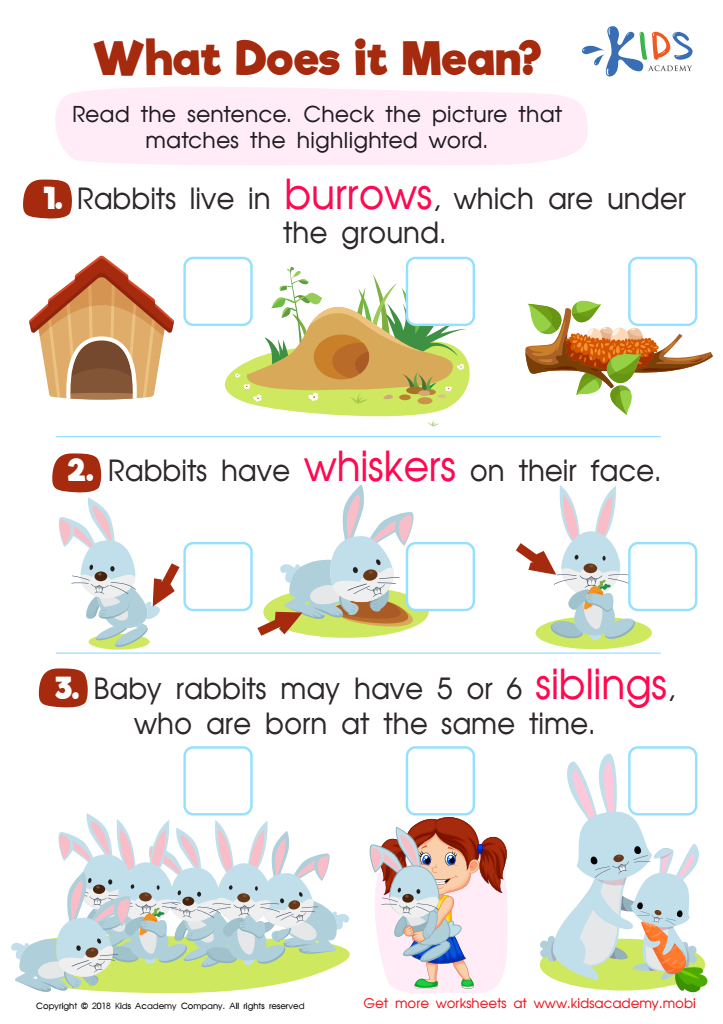
What Does It Mean? Worksheet
Teach your child to use context clues with this engaging Kids Academy worksheet. Read the sentences and find the pink-highlighted word. Use the other words in the sentence to figure out the meaning, then check the box next to the picture that represents it.
What Does It Mean? Worksheet
Worksheet
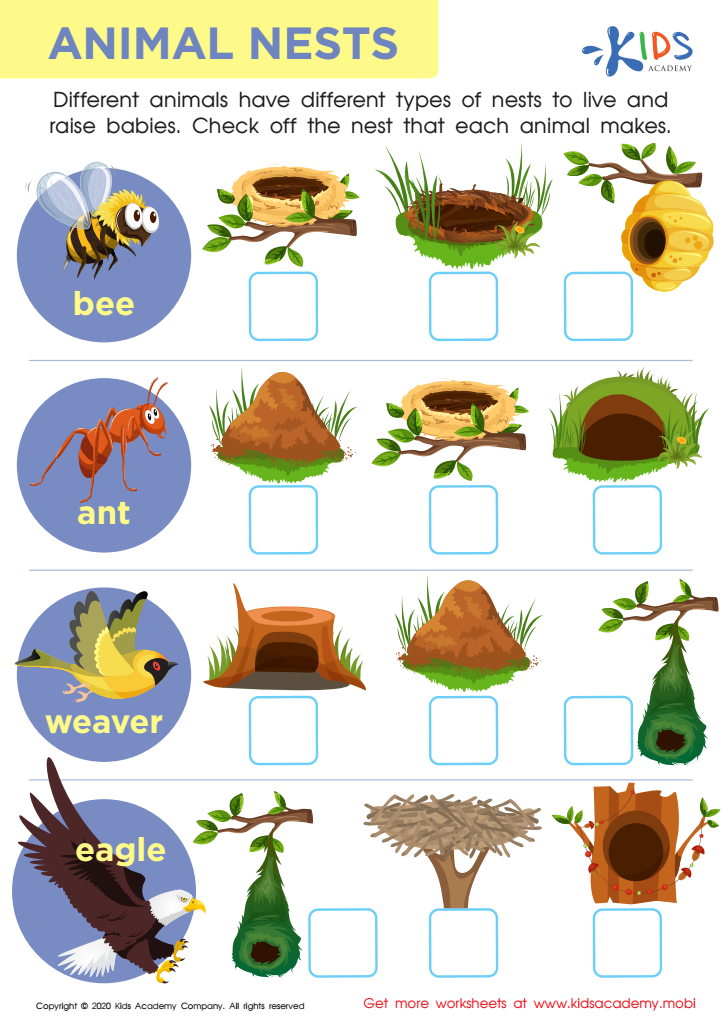
Animal Nests Worksheet
Animals need homes to sleep and stay safe. Look at the animal on the left and examine the nests and hives to the right. Check off the correct one for each animal to complete the worksheet! From birds to bees, it's a great way to show different types of homes animals make!
Animal Nests Worksheet
Worksheet
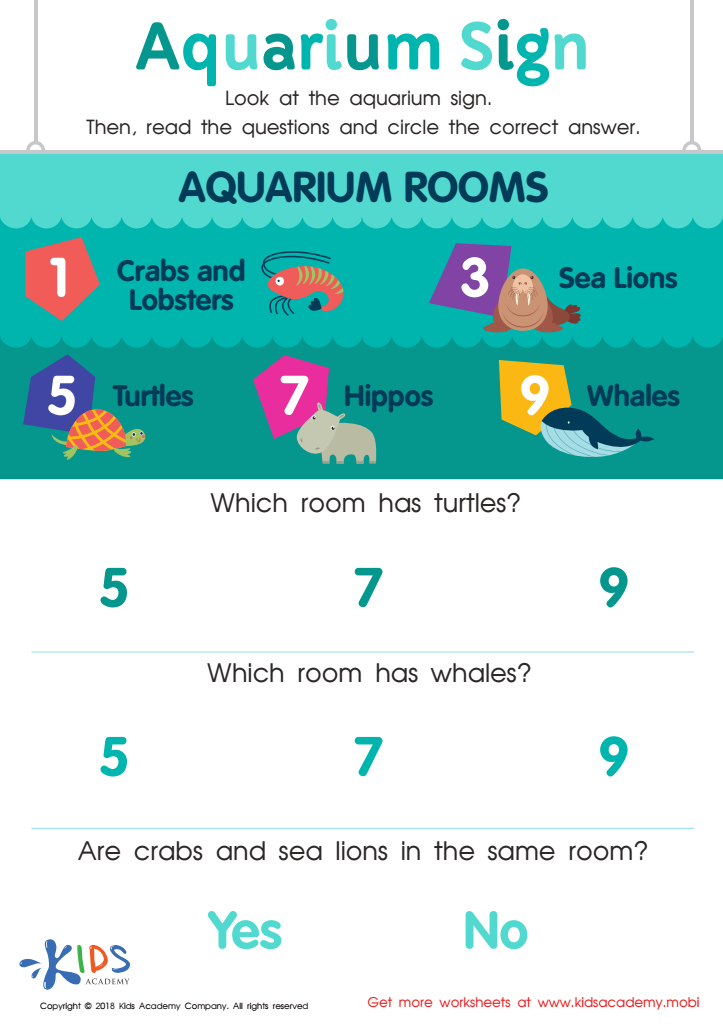
Assessment: Aquarium Sign Worksheet
Take your kids to an aquarium and marvel at the sea creatures! Help them identify the animals they see, and ask them which one is their favorite. Look at the aquarium sign and point to each creature. Ask your kids the questions and help them circle the right answer.
Assessment: Aquarium Sign Worksheet
Worksheet
Join Kids Academy for Free
Who is primarily going to use this learning content?







Critical Thinking Easy Science for Ages 4-9 is crucial for both parents and teachers to prioritize because it lays a strong foundation for lifelong learning and problem-solving abilities. During these formative years, children’s brains are exceptionally adaptable and receptive to new information and ways of thinking. Critical thinking in science nurtures curiosity and encourages children to question, explore, and understand the world around them, rather than just memorizing facts.
Integrating critical thinking into early science education helps children develop skills such as observation, prediction, and logical reasoning. These skills are essential not just in academic contexts but in everyday decision-making and problem-solving. For example, a child who learns to hypothesize what might happen to a plant without water is using basic scientific principles to make informed predictions and draw conclusions—skills that are transferable to any area of life.
From a practical standpoint, exposing children to critical thinking in science can increase their enthusiasm and engagement in learning, fostering a positive attitude towards education. Moreover, as children begin to tackle more complex subjects in higher grades, the confidence and competence built from early critical thinking experiences equip them with readiness for future academic challenges. Therefore, early emphasis on critical thinking in science creates not just smart kids, but thoughtful, inquisitive, and analytical thinkers equipped to excel in an increasingly complex world.