Fine Motor Skills Easy Letter Recognition Worksheets for 4-Year-Olds
6 filtered results
Difficulty Level
Grade
Age
-
From - To
Subject
Activity
Standards
Introduce your 4-year-old to the world of letters with our engaging Fine Motor Skills Easy Letter Recognition Worksheets! Designed purposefully to enhance fine motor skills vital for writing, these worksheets blend fun and learning seamlessly. Bright, child-friendly designs capture young imaginations, making the practice of letter recognition enjoyable and effective. Each worksheet includes activities geared towards tracing, coloring, and identifying letters, providing a comprehensive approach to early literacy development. Perfect for home or classroom use, these resources ensure foundational alphabet skills are gained with ease. Spark a love for learning with our expertly-crafted tools! Explore today at Kids Academy.
Favorites
With answer key
Interactive
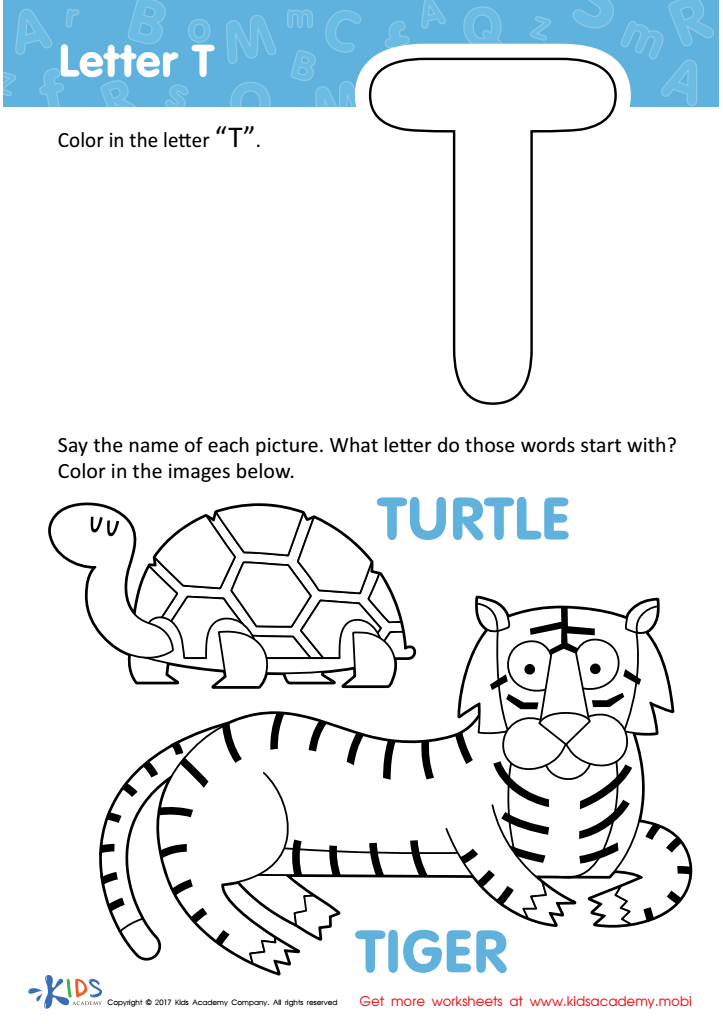
Letter T Coloring Sheet
Introduce your child to the letter "T" and its animals – turtles and tigers! With this coloring page, you can stimulate your child's imagination and creativity, while helping them recognize the letter "T". Have fun with your child and get coloring!
Download (PDF)
 Assign to My Students
Assign to My Students
Letter T Coloring Sheet
Worksheet
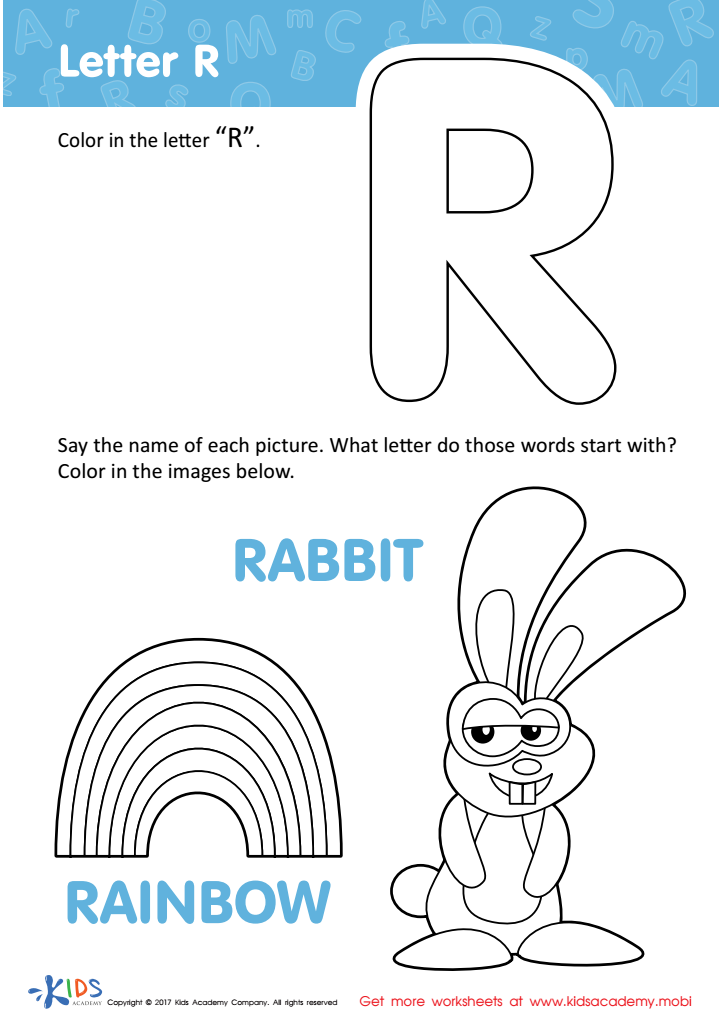
Letter R Coloring Sheet
Let your child explore the rainbow with this fun letter "R" coloring page! They can learn to recognize the letter and make connections to words, all while having fun! Make alphabet learning enjoyable with joyful coloring pages.
Download (PDF)
Assign to My Students
Assign to My Students
Letter R Coloring Sheet
Worksheet
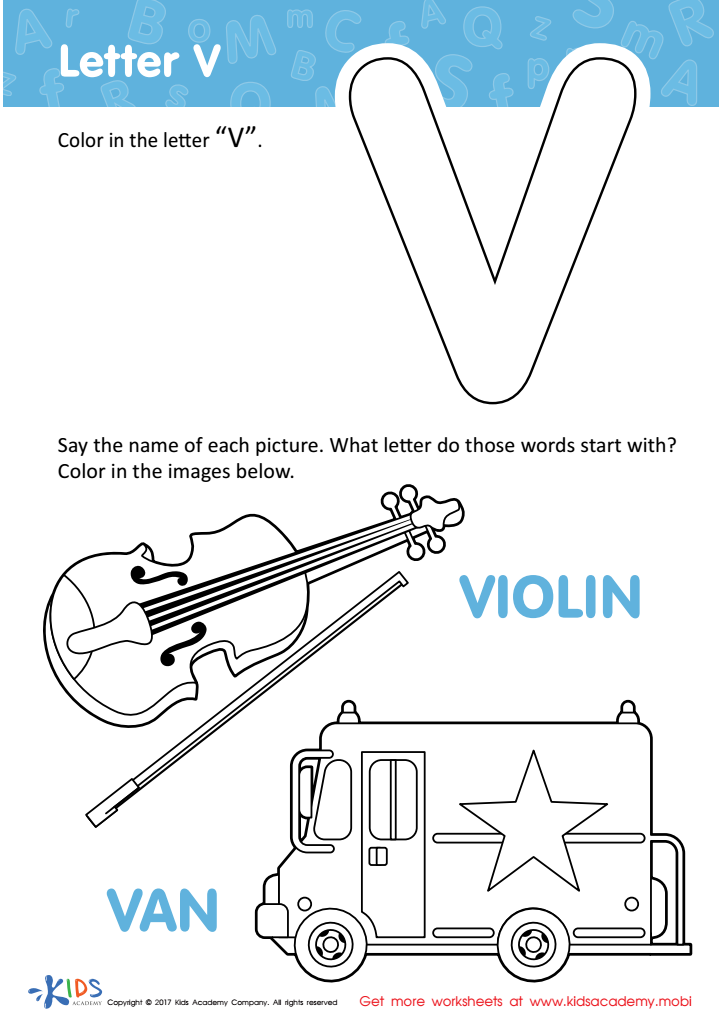
Letter V Coloring Sheet
This fun letter V coloring page can boost your child's knowledge of the letter "V" and its sound. Help them pronounce it correctly, too!
Download (PDF)
Assign to My Students
Assign to My Students
Letter V Coloring Sheet
Worksheet
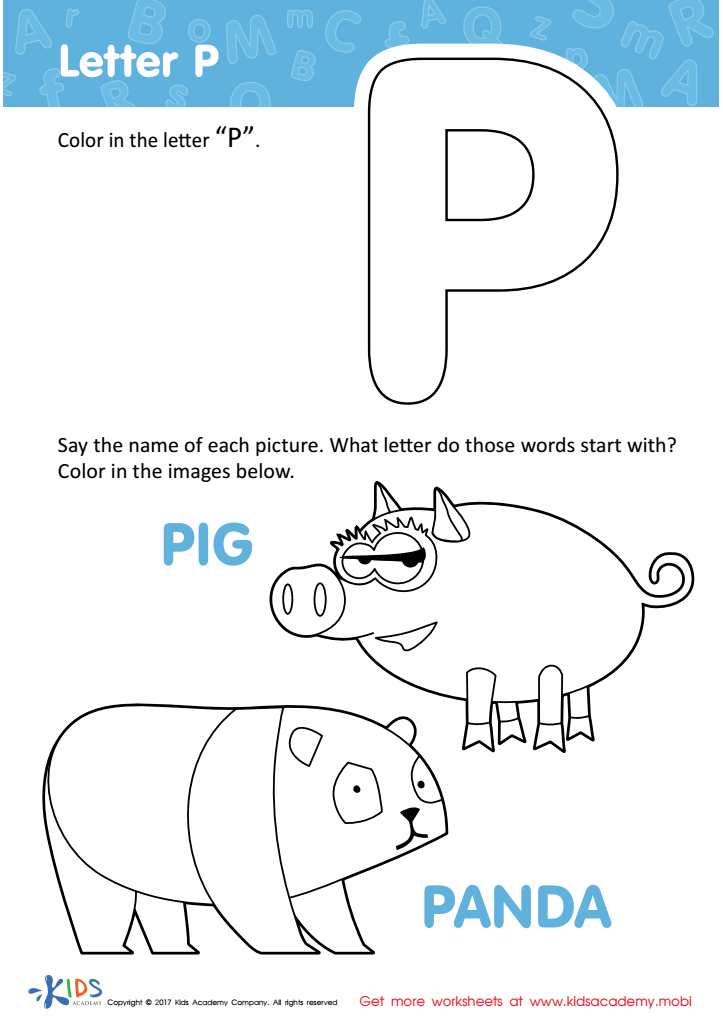
Letter P Coloring Sheet
Encourage your child's creativity and letter recognition with this "P" coloring page! Through coloring animals such as pigs and pandas, your little one will get to know the sound of the letter "P" and have fun too!
Download (PDF)
Assign to My Students
Assign to My Students
Letter P Coloring Sheet
Worksheet
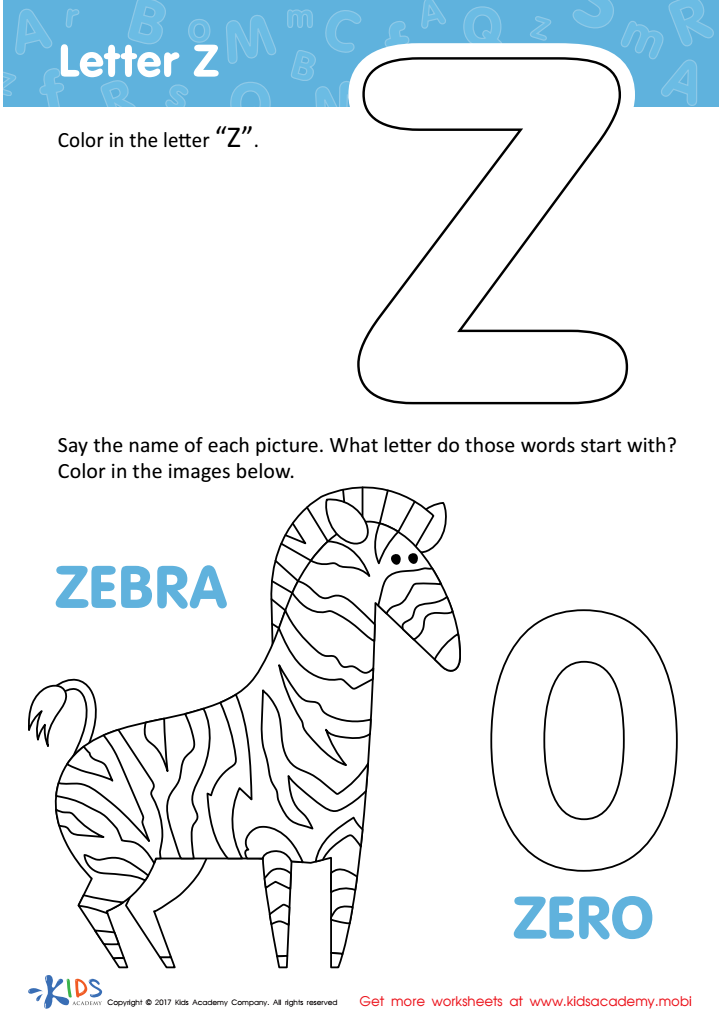
Letter Z Coloring Sheet
This coloring page featuring the letter "Z" is perfect for your child to practice letter recognition! Help them learn the unique sound it makes as they color. It'll be a fun and easy activity they won't have trouble with!
Download (PDF)
Assign to My Students
Assign to My Students
Letter Z Coloring Sheet
Worksheet
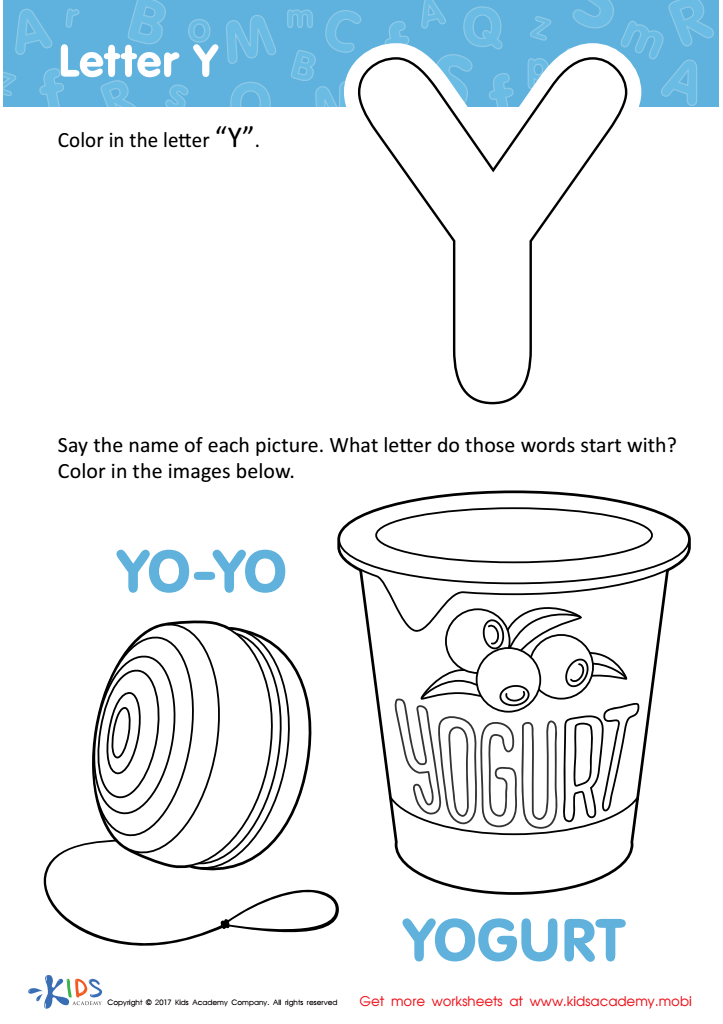
Letter Y Coloring Sheet
Let's celebrate letter "Y"! Here's a fun coloring page that'll help your child learn this end-of-the alphabet letter. It's packed with familiar objects that'll help build their art and literacy skills. So let's say "Yay"!
Download (PDF)
Assign to My Students
Assign to My Students
Letter Y Coloring Sheet
Worksheet
Join Kids Academy for Free
Who is primarily going to use this learning content?








Parents and teachers should care about fine motor skills and easy letter recognition for 4-year-olds because these foundational abilities are crucial to early childhood development and future academic success. Fine motor skills involve the use of small muscles in the hands and fingers, which are essential for performing tasks such as writing, drawing, and cutting. By developing these skills at a young age, children gain better control over their movements, making it easier to manipulate tools like pencils and scissors, which are essential for classroom activities.
Easy letter recognition serves as the building block for literacy. When children can quickly identify letters, they are better prepared to understand the relationships between letters and sounds, thereby facilitating the learning of reading and writing. Early proficiency in these areas sets the stage for improved academic performance in later years, as literacy is fundamental to learning across the curriculum.
Moreover, focusing on these skills can boost self-esteem and confidence. Children who feel competent in these basic areas are more likely to engage in learning activities enthusiastically and persist in the face of challenges. Therefore, prioritizing fine motor skills and easy letter recognition helps children not only academically but also emotionally and socially, fostering a balanced and positive early learning experience.