Basic measurement concepts Easy Worksheets for 4-Year-Olds
4 filtered results
-
From - To
Discover our "Basic Measurement Concepts Easy Worksheets for 4-Year-Olds" at Kids Academy, designed to build foundational math skills in young learners. These engaging, printable worksheets introduce simple measurement concepts, including length, height, and size comparisons, through fun, hands-on activities. Perfect for preschoolers, each worksheet features colorful illustrations and engaging prompts to help children understand and practice measuring objects. Our resources are carefully crafted to enhance cognitive development and boost early numeracy skills, making learning enjoyable and effective. Support your child's educational journey with our user-friendly measurement worksheets designed to inspire curiosity and confidence.
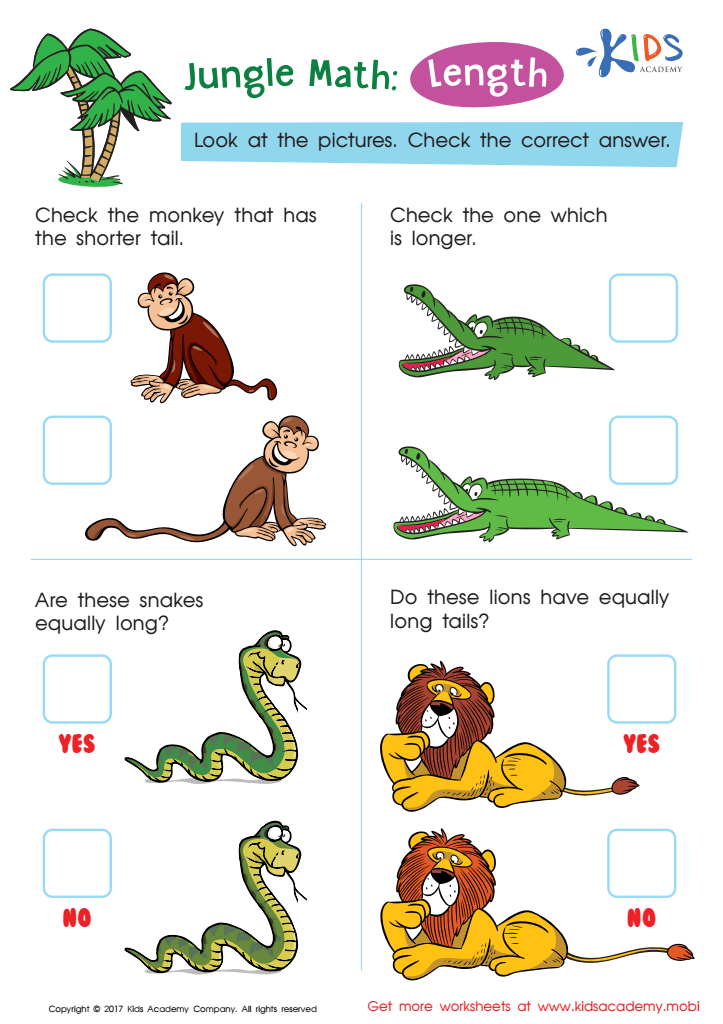
Which One Is Longer - Length Worksheet
 Assign to My Students
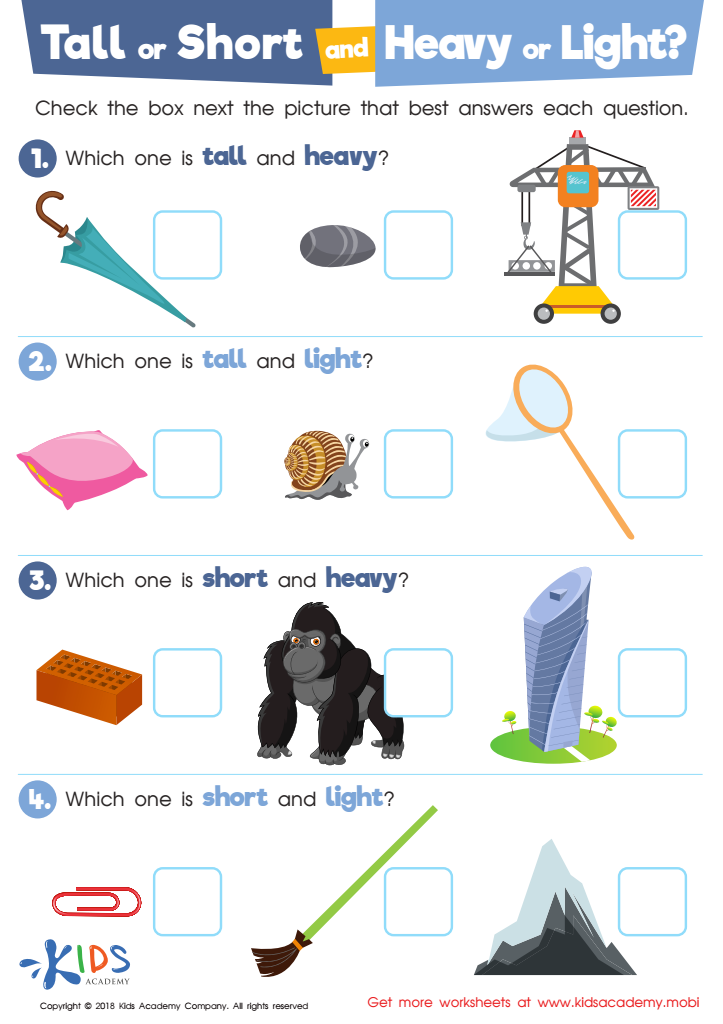
Tall or Short and Heavy or Light? Worksheet
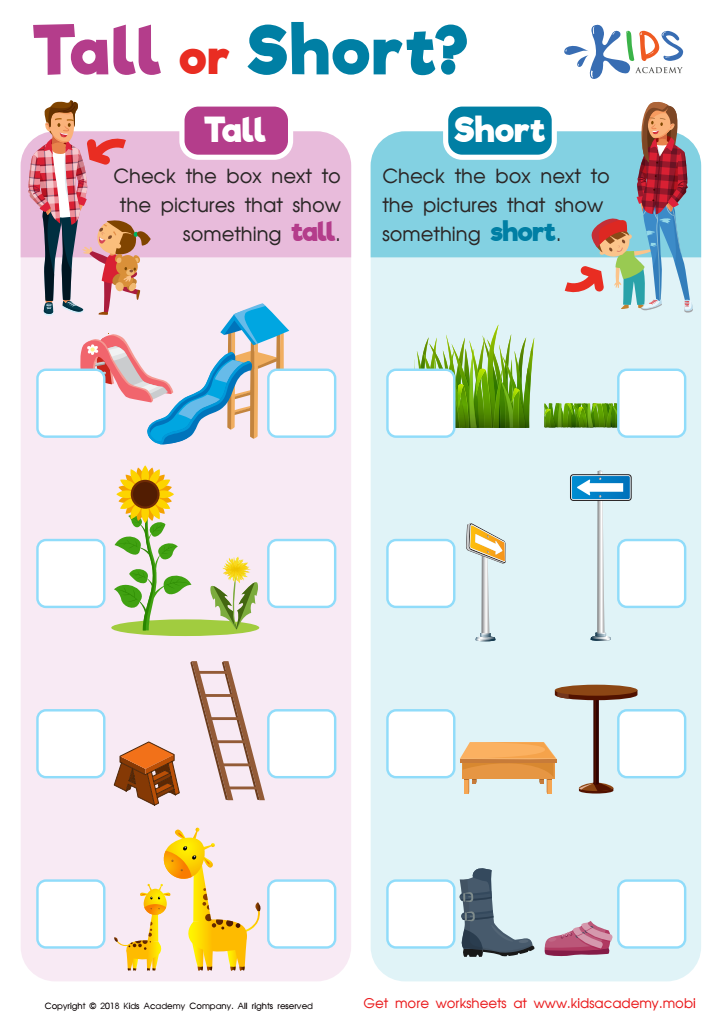
Tall or Short? Worksheet
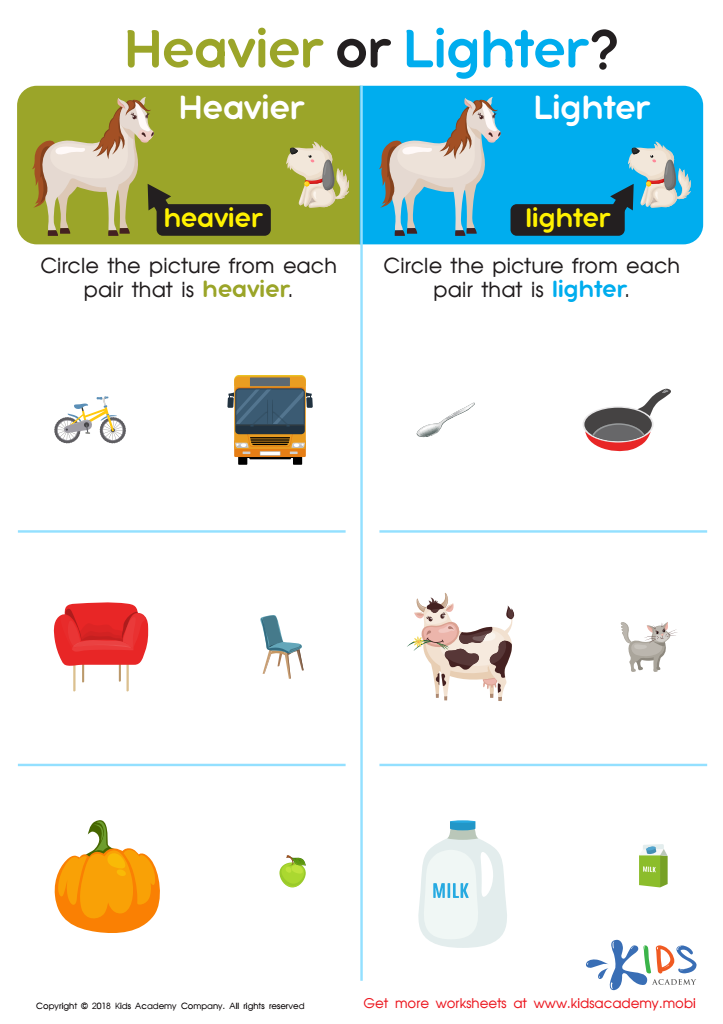
Heavier or Lighter? Worksheet


.jpg)




Understanding basic measurement concepts at an early age sets a strong foundation for a child's cognitive and practical development. Introducing these concepts to 4-year-olds helps them grasp essential life skills such as comparing sizes, amounts, and understanding sequences and patterns. When parents or teachers teach children to measure objects, they aren't just showing them how to determine length, height, or quantity; they are also enhancing the child's problem-solving abilities and critical thinking skills.
Moreover, learning measurement can make everyday activities more engaging for children. Simple tasks such as cooking can turn into educational experiences when children are asked to measure quantities using cups or spoons. Through play, discussing distances, or even measuring time for an activity, children develop an understanding of numbers and units in a fun and intuitive way.
Measurement also lays the groundwork for future academic and real-world success. When children encounter more complex mathematical concepts in higher grades, their early exposure to measurement will make these new ideas less daunting. Early comfort with measurement vocabulary and concepts can also foster a positive attitude towards subjects like science and geography, which frequently use measurement for various activities.
In summary, by prioritizing basic measurement skills at an early age, parents and teachers are equipping children with crucial tools for learning and daily life, fostering enthusiasm, curiosity, and competence in young learners.








