Story sequencing Easy Worksheets for 4-Year-Olds
3 filtered results
-
From - To
Help your 4-year-old boost essential reading and cognitive skills with our Story Sequencing Easy Worksheets. These engaging and fun activities guide young children through the basics of organizing events into a logical sequence. Each worksheet is designed to provide simple, clear instructions and colorful illustrations that capture a preschooler's imagination. By practicing story sequencing, kids develop their ability to comprehend narratives and improve their critical thinking skills. Perfect for early learners, these printables make learning an enjoyable and effective experience, laying a strong foundation for future reading success. Download now to kickstart your child’s story sequencing journey!
Folktales Printable PDF Worksheet: The 3 Little Pigs
 Assign to My Students
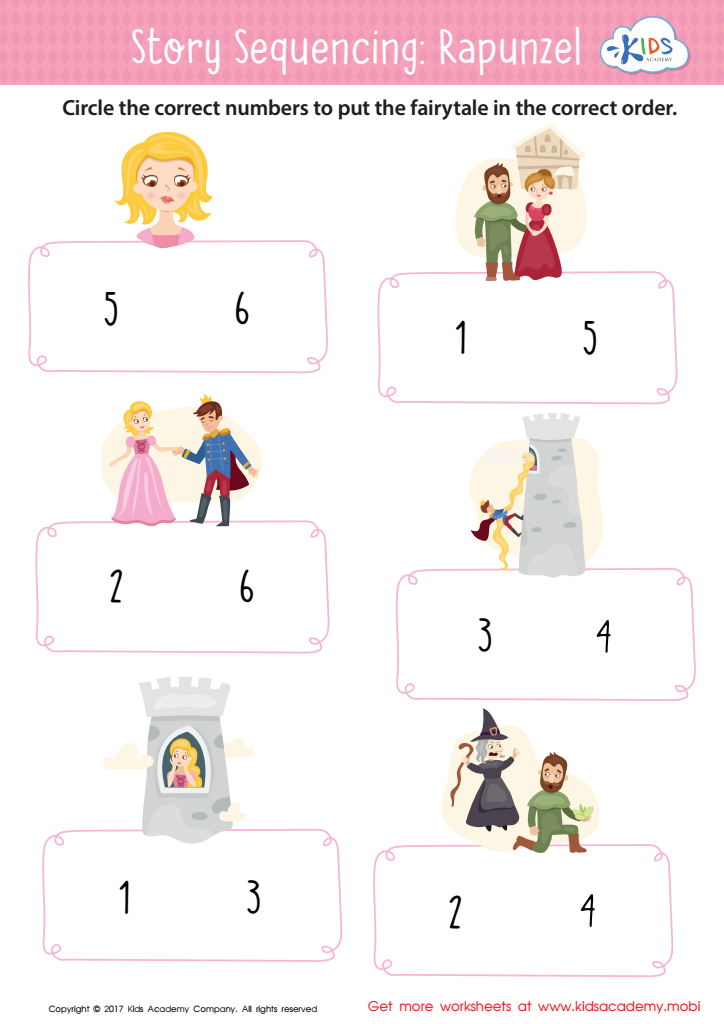
Rapunzel Story Sequencing Worksheet
Little Red Riding Hood: Illustrations Worksheet







Story sequencing is foundational for developing crucial cognitive and literacy skills in 4-year-olds. When parents and teachers emphasize sequencing activities, they are essentially teaching young children how to comprehend and structure narratives, which is vital for both reading and writing proficiency.
Story sequencing enhances a child's ability to identify the beginning, middle, and end of a story. This understanding of order fosters logical thinking, as kids learn to organize events in a coherent manner. This skill is not just important for storytelling but also for solving problems and understanding the cause-and-effect relationships in everyday situations.
Moreover, sequencing aids in the development of memory and attention to detail. When children recall and arrange events, they practice remembering sequences and specific details, improving their attention span and retention skills. These are essential components for all future learning.
On a social-emotional level, discussing sequenced stories allows children to articulate their thoughts and feelings, improving language skills and interpersonal communication. It builds their confidence, knowing they can express themselves clearly and be understood by others.
From an educational standpoint, introducing sequencing at an early age aligns with academic standards that emphasize comprehension and the ability to predict and infer. By incorporating story sequencing early on, we are setting children up for ongoing success in school and beyond.








