
Understanding sequencing Easy Worksheets for 4-Year-Olds
3 filtered results
Difficulty Level
Grade
Age
-
From - To
Subject
Activity
Standards
Welcome to our "Understanding Sequencing Easy Worksheets for 4-Year-Olds" page! Here, you'll find engaging and age-appropriate worksheets designed to help young children grasp the essential concept of sequencing—the order in which events occur. These worksheets feature colorful illustrations and straightforward activities that encourage kids to arrange pictures and complete simple sequences. By participating in these fun exercises, your child will develop critical thinking and problem-solving skills, laying a strong foundation for their future learning. Ideal for at-home practice or classroom activities, these resources make learning sequencing enjoyable and interactive. Start navigating the world of sequences today for a brighter future!
Favorites
With answer key
Interactive
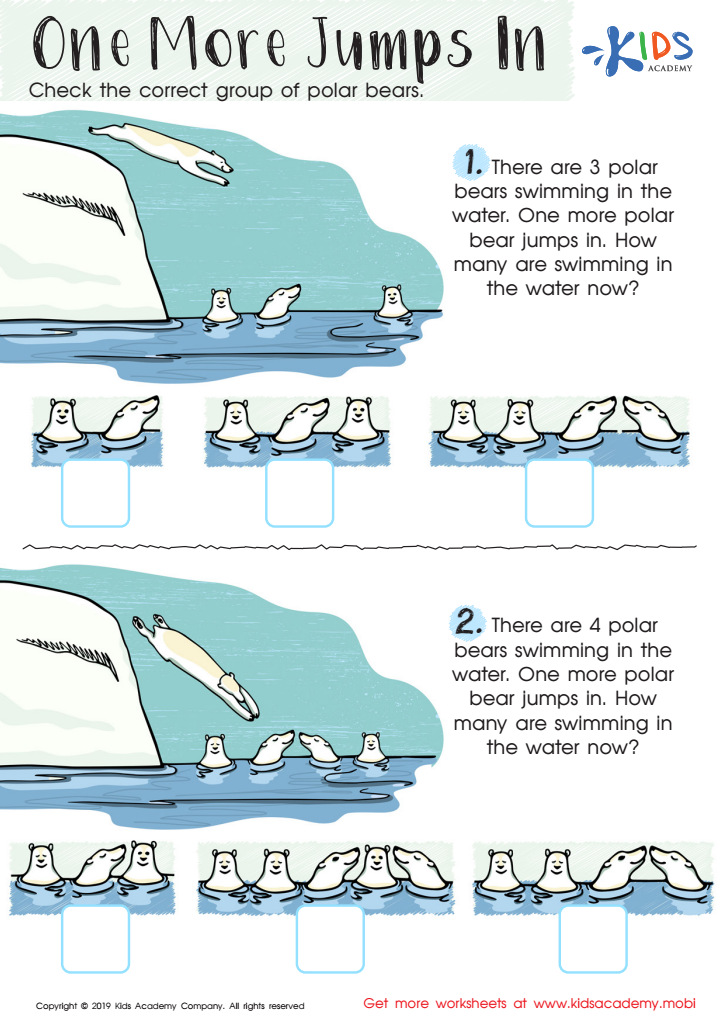
One More Jumps In Worksheet
Polar bears live in the Arctic which is always cold and snowy. Show your kids pictures of polar bears swimming in the water. Read the text and help them count correctly to answer the questions in the first and second sections.
 Assign to My Students
One More Jumps In Worksheet
Worksheet
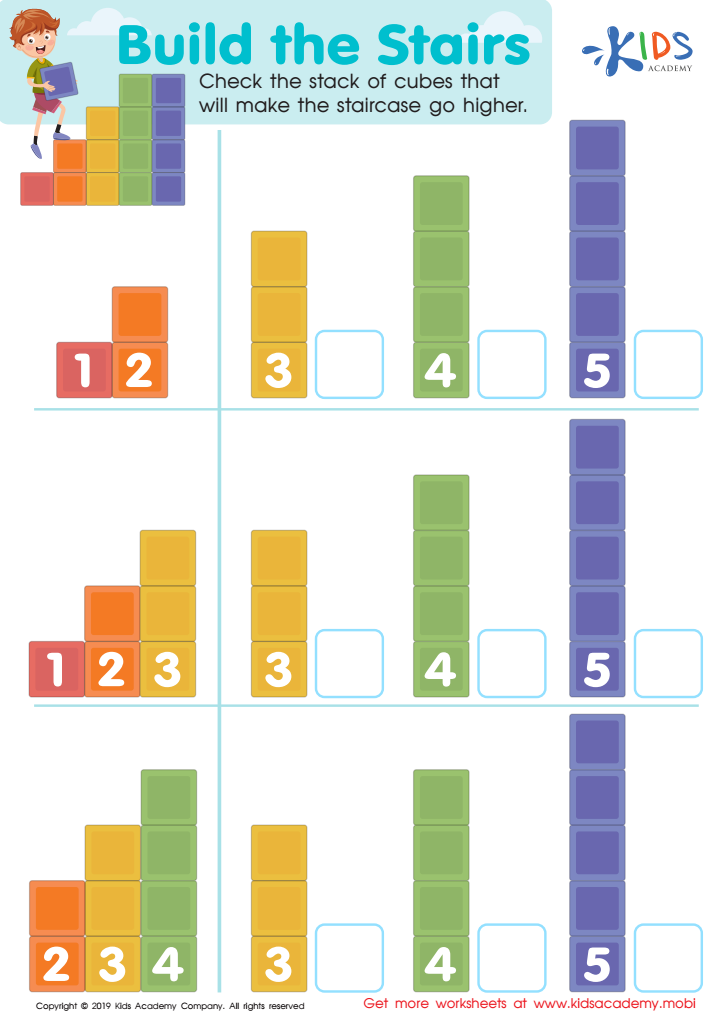
Build the Stairs Worksheet
Does your kid need help counting numbers? Make it fun with a staircase math worksheet! This printable PDF uses stairs to help your preschooler practice counting. Let them build the staircase by picking the next highest number as they go up! It's an interactive way to teach counting and sure to please your little one.
Build the Stairs Worksheet
Worksheet
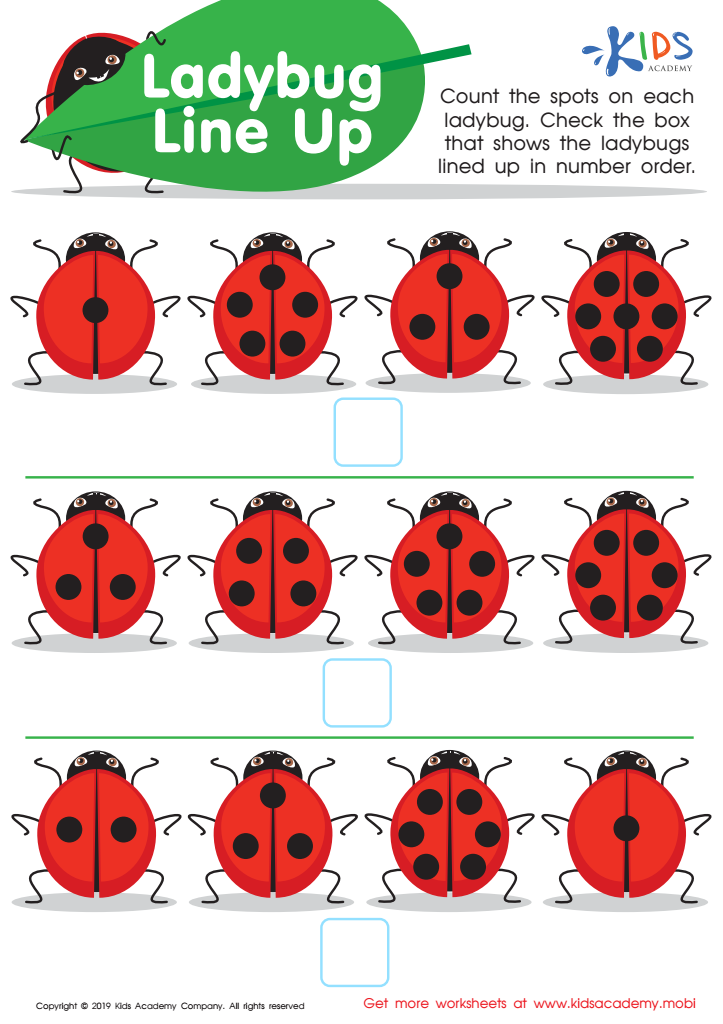
Ladybug Line Up Worksheet
Count the spots on the back of each ladybug in the three groups. Help kids check the box under each group that shows the ladybugs in proper number order. Ladybugs are an adorable insect with unique spots. This worksheet encourages counting and ordering.
Ladybug Line Up Worksheet
Worksheet
Join Kids Academy for Free
Who is primarily going to use this learning content?





.jpg)


Understanding sequencing is vital for 4-year-olds as it lays a foundation for critical thinking, problem-solving, and literacy skills. When children grasp the idea of sequencing, they learn to identify the order of events, which is essential for many aspects of learning and day-to-day life. For instance, they become adept at following simple instructions, understanding stories, and even organizing their daily routines.
Parents and teachers should care about this skill because it enhances a child’s comprehension and retention of information. Sequencing helps young learners break down complex concepts into manageable steps, making tasks more manageable and less overwhelming. Additionally, it supports language development by enabling children to articulate their thoughts clearly.
Moreover, as they learn to sequence events in a story (like recognizing the beginning, middle, and end), they develop narrative skills. This proficiency will benefit them not only academically but also socially, as they communicate their experiences with peers and adults effectively. In short, sequencing fosters cognitive growth, boosts self-confidence, and prepares children for future learning challenges, making it crucial for parents and teachers to prioritize.








