Categorization skills Easy Numbers 0–10 Worksheets for 4-Year-Olds
3 filtered results
-
From - To
Boost your child's early learning with our Easy Numbers 0–10 Worksheets! Specially designed for 4-year-olds, these vibrant worksheets focus on categorization skills, helping youngsters recognize, sort, and organize numbers. Activities are tailored to captivate young minds, promoting foundational math skills in a fun, engaging way. Ideal for both classroom and home use, these printable worksheets foster cognitive development and numerical proficiency. Start your child's educational journey today and witness their confidence and capabilities soar! Perfect for parents and teachers seeking effective, age-appropriate resources to enhance early childhood math education.
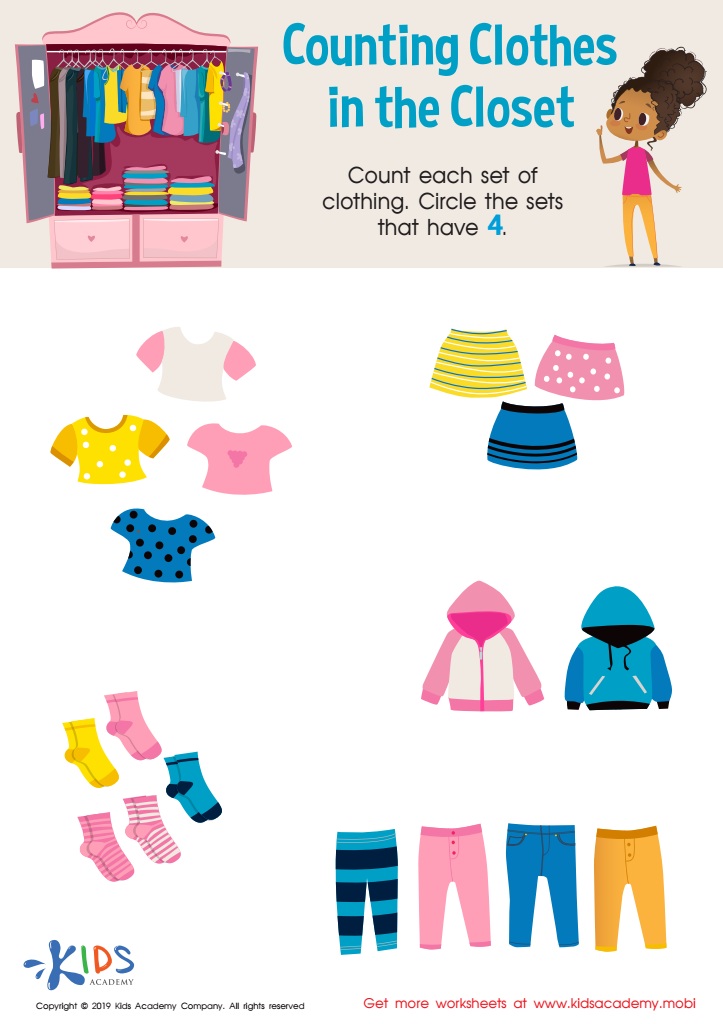
Counting Clothes Worksheet
 Assign to My Students
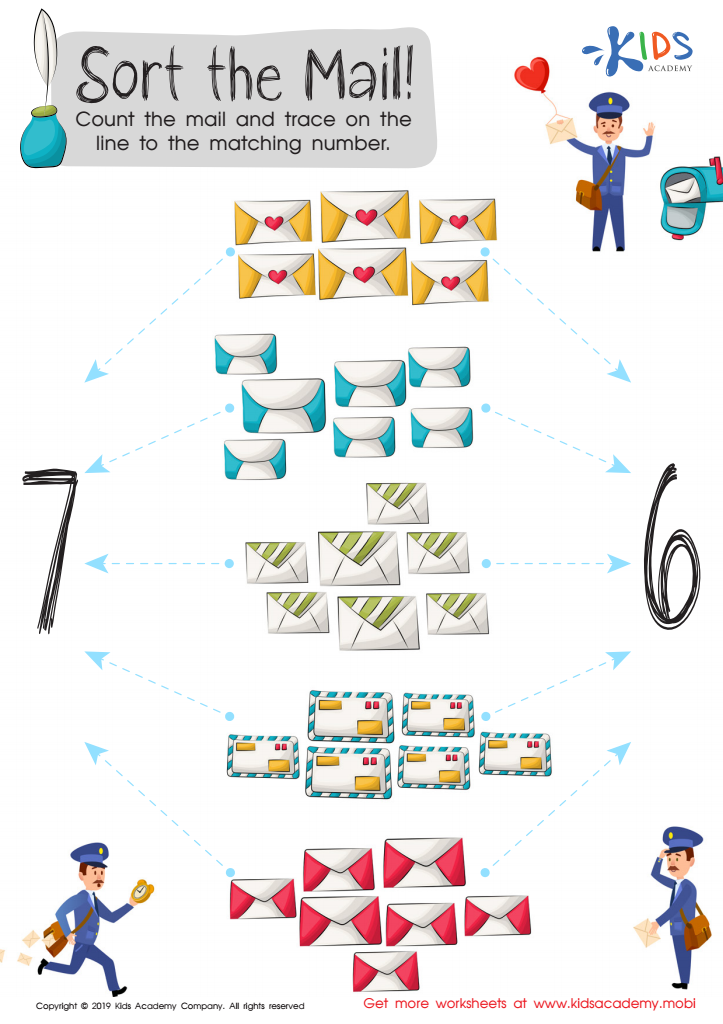
Sort the Mail Worksheet
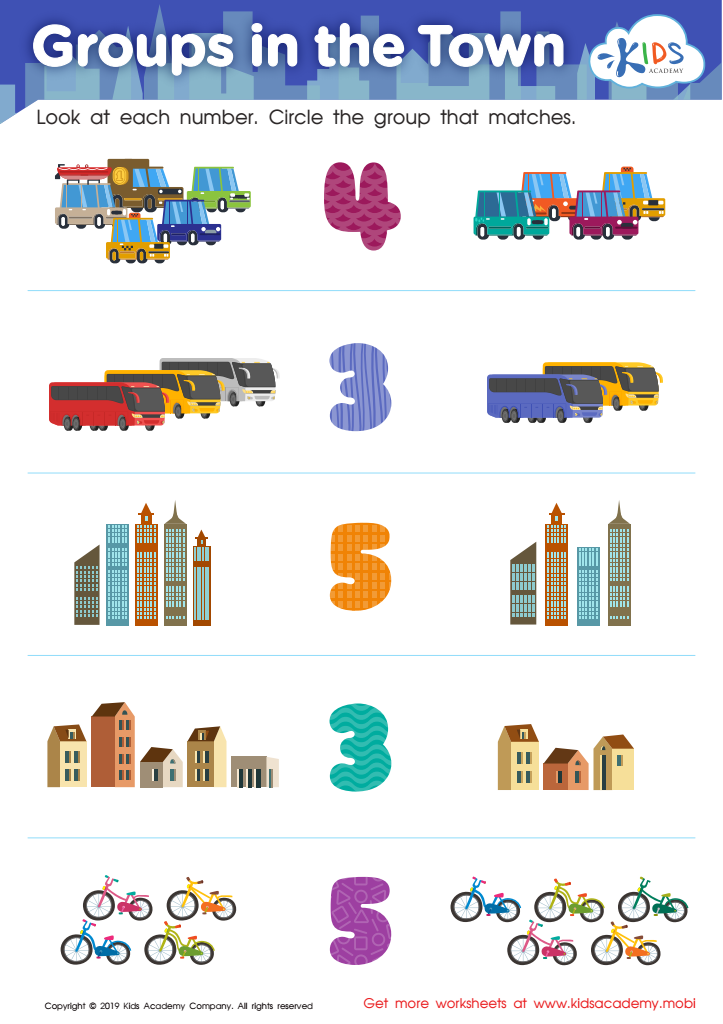
Groups in the Town Worksheet








Categorization skills involving easy numbers 0–10 are fundamental building blocks for young children's cognitive and mathematical development. These skills help 4-year-olds begin to see relationships and patterns in numbers, which simplifies complex problems later in life. When parents and teachers emphasize categorization, they guide children in recognizing that numbers aren't just isolated symbols, but have meaning when grouped or arranged orderly.
Understanding basic numbers through categorization aids in developing essential problem-solving skills. Children learn concepts like more, less, equal, and can start performing basic arithmetic operations mentally. An early grasp of how numbers link enhances spatial reasoning and can contribute to literacy skills since recognizing patterns is critical for reading too.
Parents and teachers who engage children in fun, number-based categorization activities not only make learning joyful but also lay down strong groundwork for more advanced mathematical learning. Activities like sorting objects based on quantities or arranging number cards can drive home these foundational concepts. This preparatory stage makes future educational tasks less daunting, fosters a positive attitude towards learning, and boosts overall confidence in academic abilities.
Ultimately, fostering categorization skills in young learners equips them with a fundamental toolkit that will benefit their educational journey, helping bridge the gap between play and academic achievement.