Filters

6 filtered results

Clear all filters
Favorites
With answer key
Interactive

6 filtered results

Difficulty Level

Grade


Help your 4-year-old develop essential color recognition skills with our easy building vocabulary worksheets. Designed specifically for young learners, these interactive printables make learning fun and engaging. Kids will explore a vibrant world of colors while enhancing their vocabulary and cognitive skills through exciting activities. Each worksheet focuses on various colors, encouraging children to identify, match, and name them accurately. Perfect for preschool and early kindergarten use, these worksheets lay a solid foundation for future learning. Foster your child’s creativity and comprehension in a playful environment with our thoughtfully crafted resources. Start their colorful learning journey today!

Check out this FREE Trial Lesson on Building Vocabulary for age 4!

Body Parts

Favorites
With answer key
Interactive
  • 4
  • Color recognition
  • Building Vocabulary
  • Easy
Red and Blue Coloring Fun Worksheet

Red and Blue Coloring Fun Worksheet

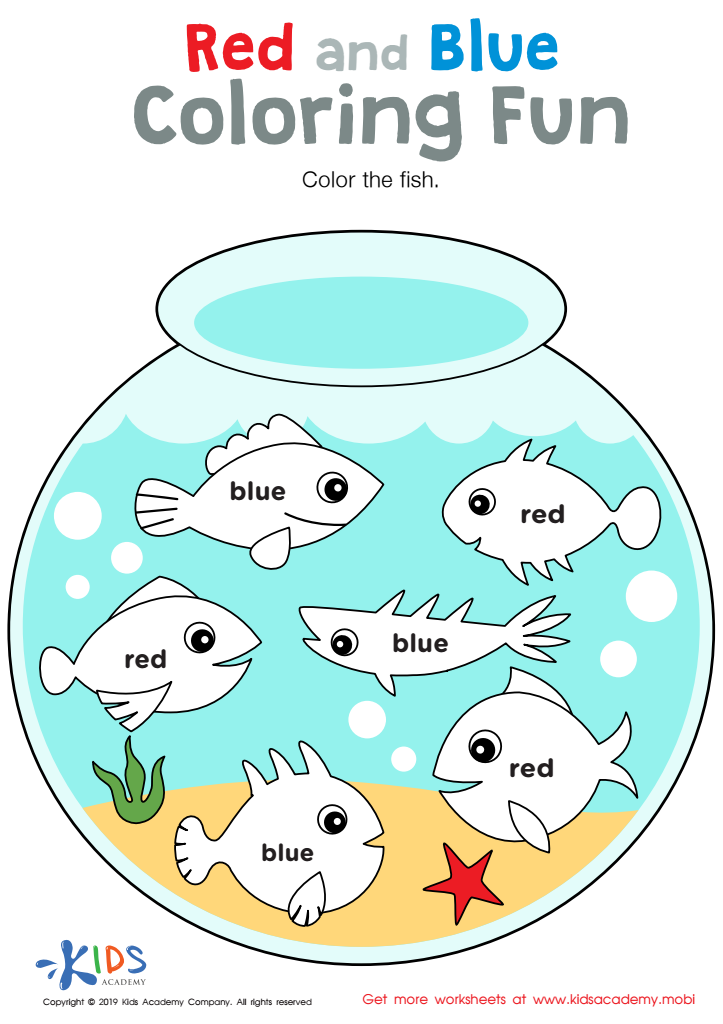
Kids know colors like red and blue. But can they read these words? Give them practice with this fun fish bowl coloring sheet. They'll look at the fish, then color them the corresponding hue. Home or classroom, they'll be sure to get a kick out of learning colors in this creative way!
Download (PDF)
Assign to My Students
Red and Blue Coloring Fun Worksheet
Worksheet
Colors: Assessment 2 Worksheet

Colors: Assessment 2 Worksheet

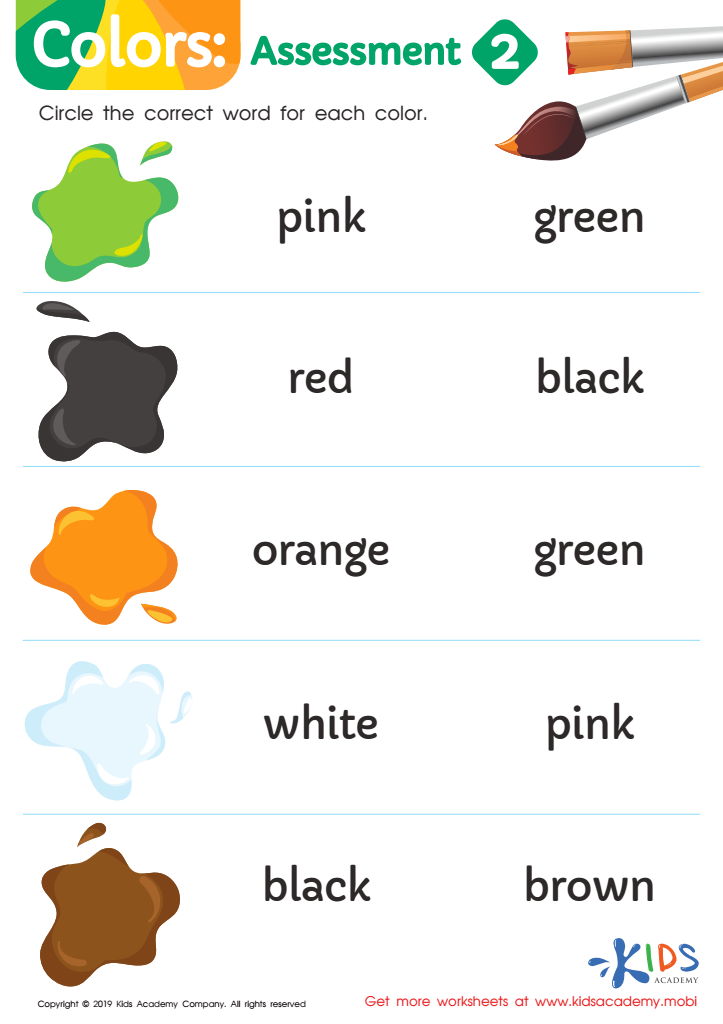
Teach color words to young students to build fluency and confidence. Check knowledge with an assessment worksheet. Have students look at paint samples and circle the correct color word. This assessment helps parents and teachers measure a child’s accuracy when reading color words.
Colors: Assessment 2 Worksheet
Worksheet
Colors: Assessment 1 Worksheet

Colors: Assessment 1 Worksheet

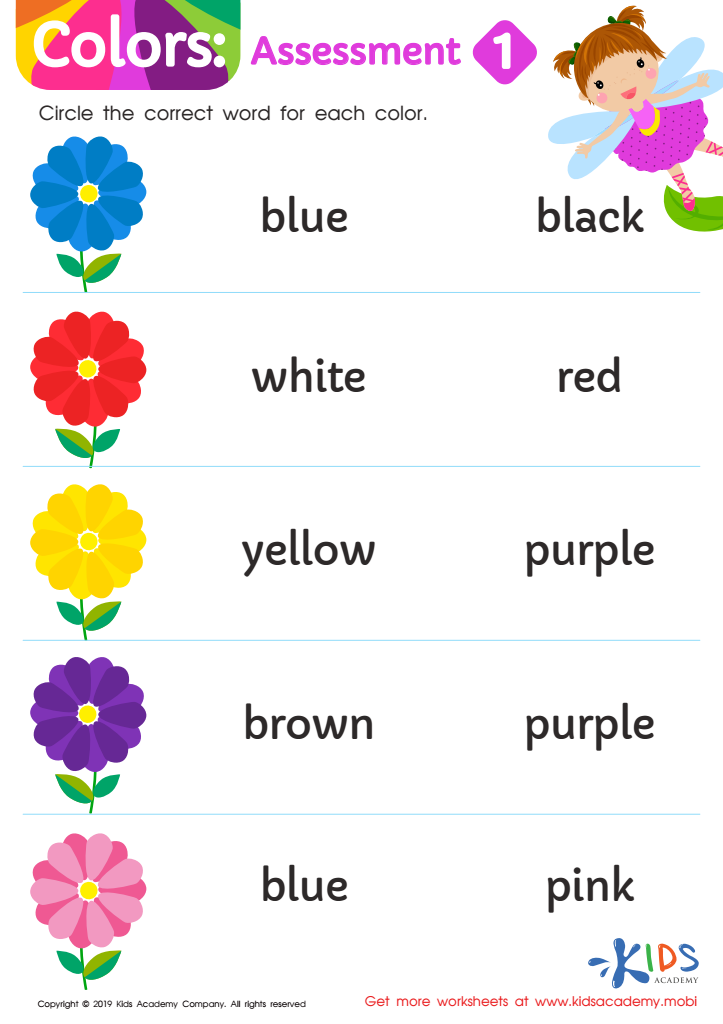
Children can decode unfamiliar words by sounding them out or by recognizing sight words. Color words are an important part of sight word knowledge, so add them to your child's list! This color word worksheet is an effective assessment tool for teachers to use with preschool and kindergarten students. It checks their knowledge of five color words - they simply look at the flower and circle the appropriate color word!
Colors: Assessment 1 Worksheet
Worksheet
Boy and Girl Words Coloring Worksheet

Boy and Girl Words Coloring Worksheet

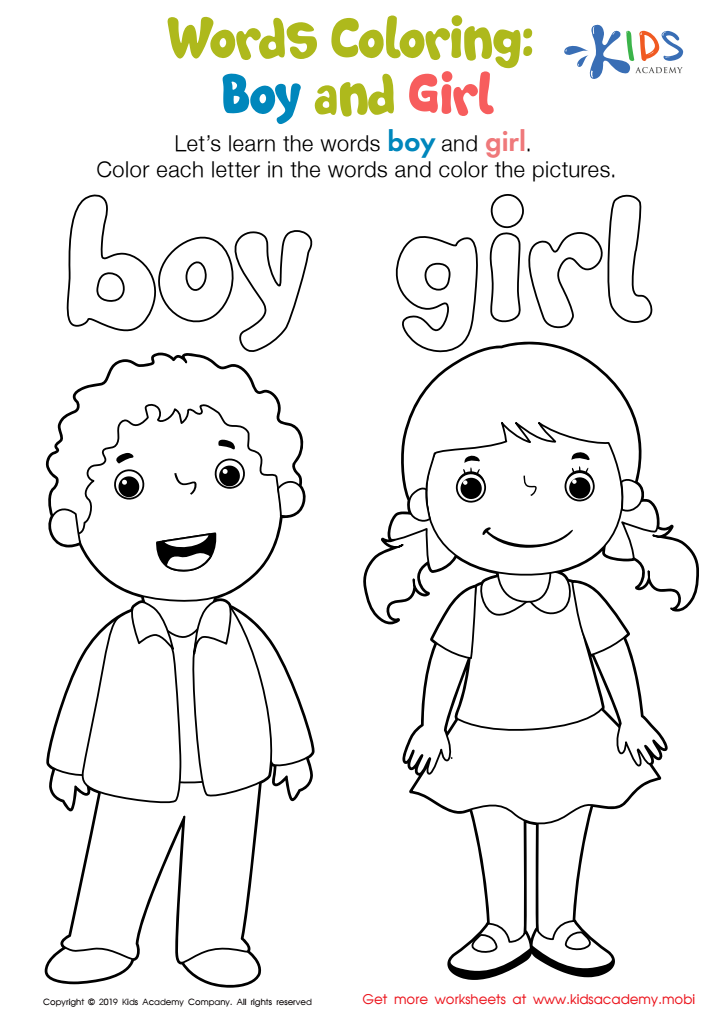
Help your students build their sight word vocabulary! Early readers may not be able to sound out all words, so this worksheet teaches them to read two important sight words: boy and girl. They will color the letters and a picture of each, making it a fun and educational way to learn. Download the PDF now.
Download (PDF)
Assign to My Students
Boy and Girl Words Coloring Worksheet
Worksheet
Tired and Worried Words Coloring Worksheet

Tired and Worried Words Coloring Worksheet

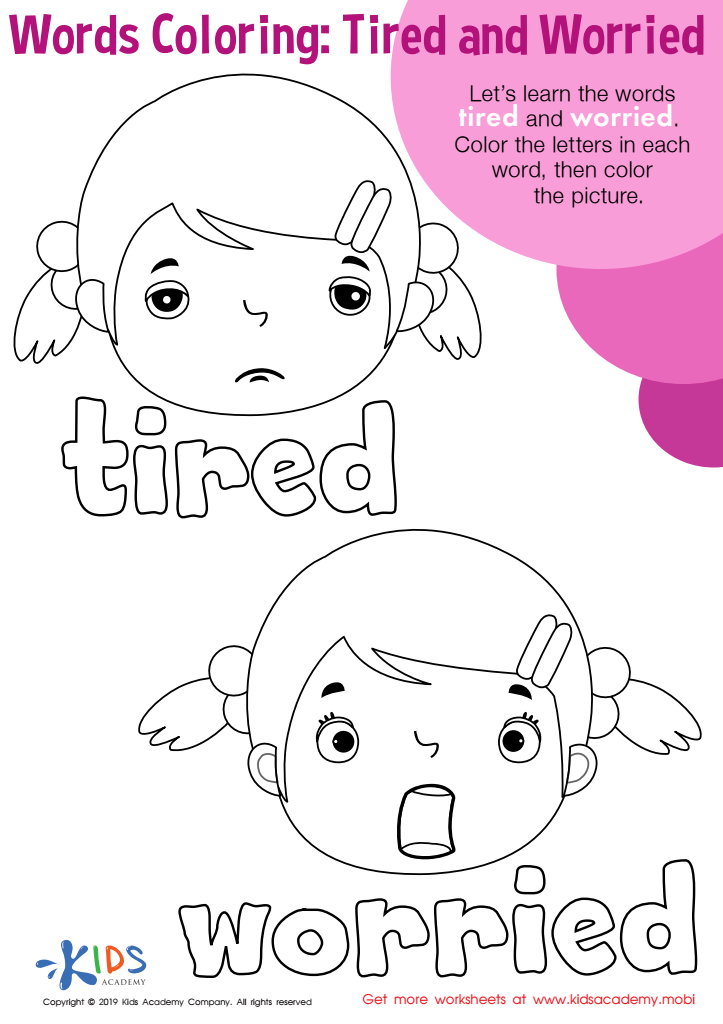
Teach your students about "tired" and "worried" with this worksheet. Have them read and color the emotion words, then color the pictures of a tired girl and a worried girl. Discuss what makes them tired and worried. Expand their vocabulary with this fun coloring activity!
Download (PDF)
Assign to My Students
Tired and Worried Words Coloring Worksheet
Worksheet
Happy Family Coloring Worksheet

Happy Family Coloring Worksheet

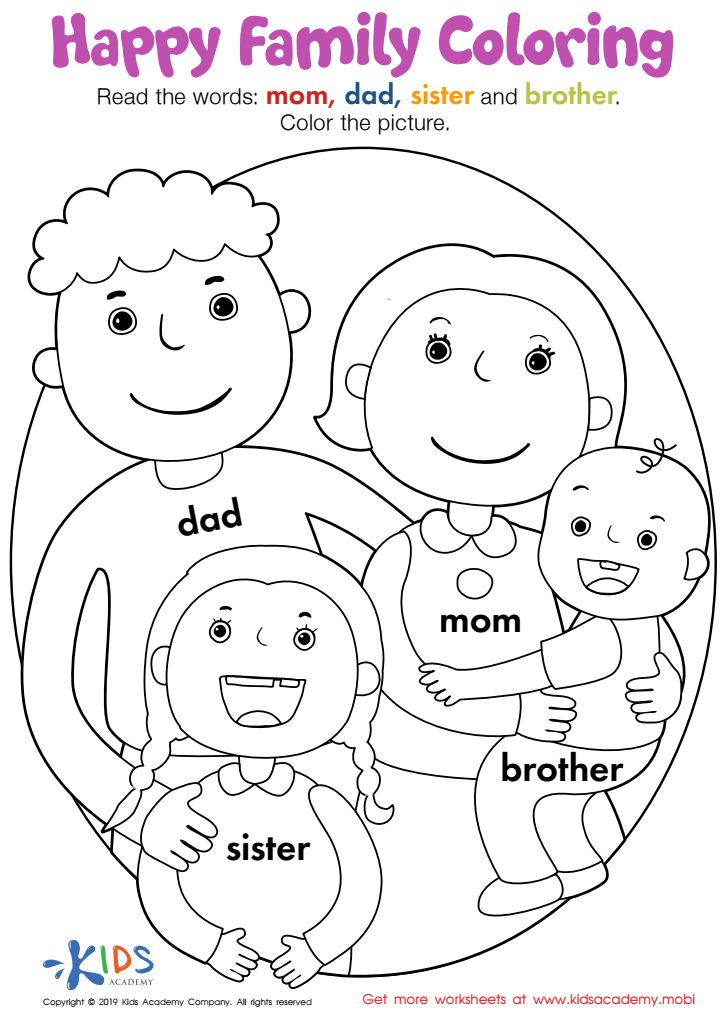
Help your students gain confidence in family vocabulary with this worksheet. Labelled images of a family (dad, mom, sister, brother) are featured, along with an accompanying activity to colour in the picture. Your students will feel a sense of accomplishment after reading and completing the printable.
Download (PDF)
Assign to My Students
Happy Family Coloring Worksheet
Worksheet


Color recognition and vocabulary building are essential components of early childhood development, particularly for 4-year-olds. At this age, children are rapidly learning to identify and categorize their world, and colors serve as accessible, tangible concepts to support this growth. Understanding colors not only boosts cognitive development but also enhances their language skills. When parents and teachers guide children in naming different colors, they expand their vocabulary, which lays the foundation for effective communication and literacy.

Moreover, recognizing colors helps children in numerous everyday situations, from organizing toys to selecting clothing. It fosters creativity as they explore color combinations in art and play. Improved color recognition also links to problem-solving skills; for instance, learning about shades and patterns can enhance critical thinking.

Encouraging color recognition through fun activities, like games, art projects, or storytime, captivates young learners and creates a rich educational experience. Investing in their color vocabulary nurtures their curiosity, confidence, and readiness for future learning. As children articulate their observations and ideas about colors, they become more engaged in their surroundings, reinforcing a love for learning that can last a lifetime. Therefore, parents and teachers should prioritize color recognition as part of holistic early childhood education.