Vocabulary enhancement Easy Building Vocabulary Worksheets for 4-Year-Olds
10 filtered results
Difficulty Level
Grade
Age
-
From - To
Subject
Activity
Standards
Unlock your child's potential with our "Vocabulary Enhancement Easy Building Vocabulary Worksheets for 4-Year-Olds!" Tailored for young learners, these engaging worksheets make mastering new words fun and exciting. Each activity is designed to introduce kids to a wide array of vocabulary through playful exercises, colorful illustrations, and interactive tasks. Perfect for early learners, these worksheets enhance language skills, boost confidence, and set a strong foundation for future reading success. Encourage your child's love for words and reading by utilizing our expertly crafted vocabulary-building resources today. Start their journey to language mastery with ease and enjoyment!
Favorites
With answer key
Interactive
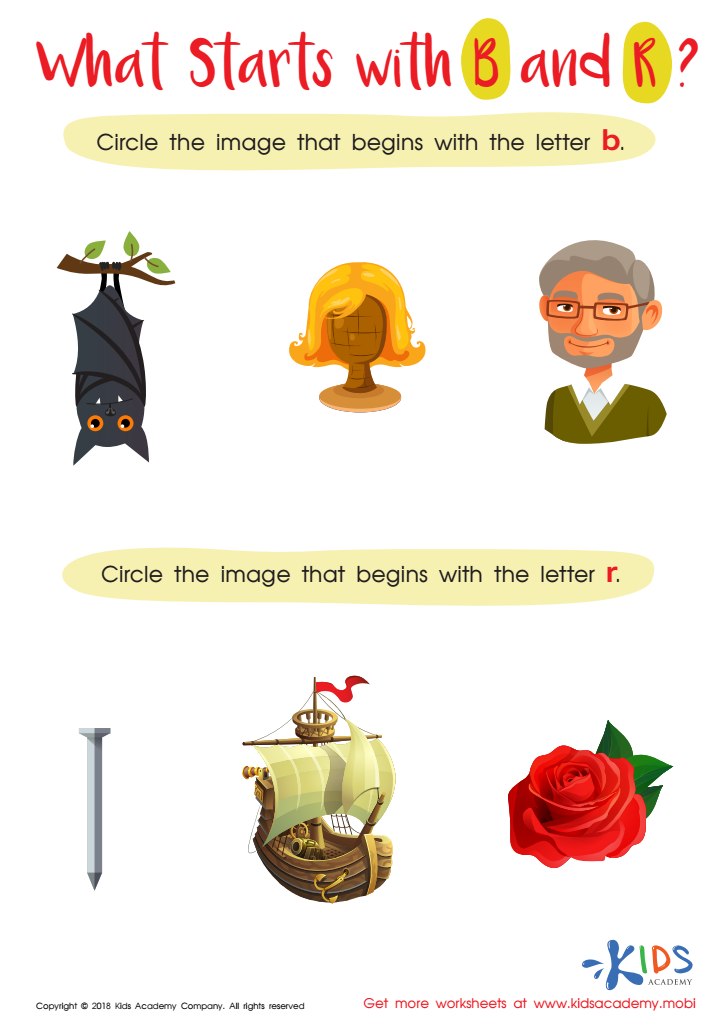
What Starts with B and R? Worksheet
Download this worksheet to help young readers practice visual and motor skills! They'll enjoy matching pictures with "B" and "R" letters while tracing the images. Bright and colorful, this engaging activity will help kids differentiate between words and have fun doing it.
What Starts with B and R? Worksheet
Worksheet











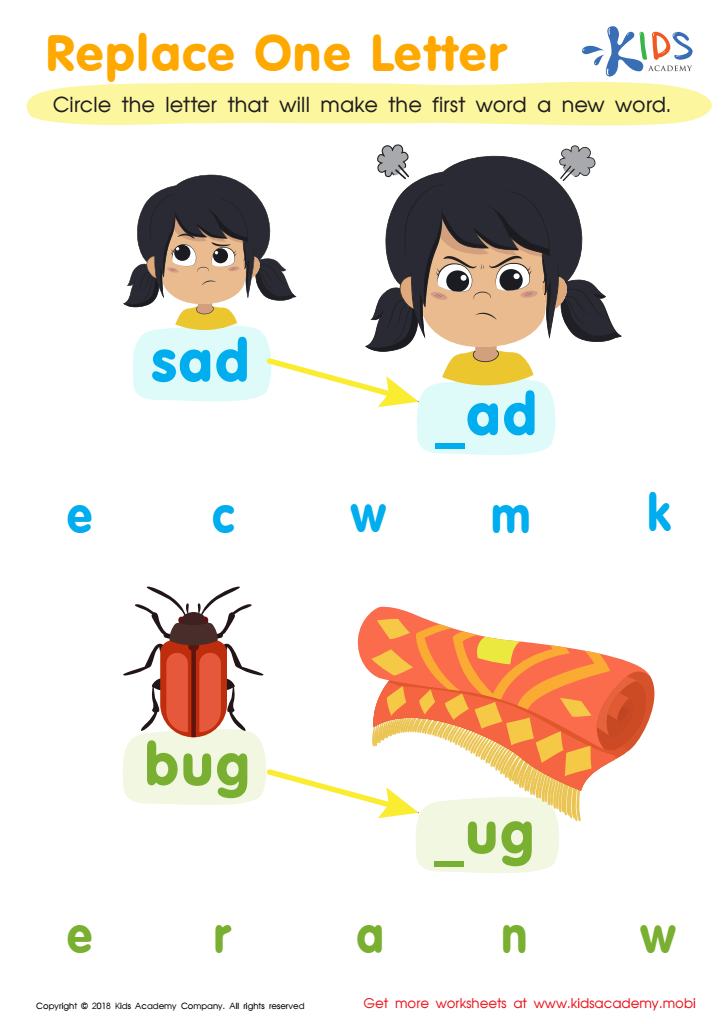
Replace One Letter Worksheet
Emerging readers will practice switching initial consonants to create new words with this fun PDF worksheet. They'll use picture clues, learn about onset letters and work on their fine motor skills as they circle the right letter for each "ad" and "ug" word family.
Replace One Letter Worksheet
Worksheet
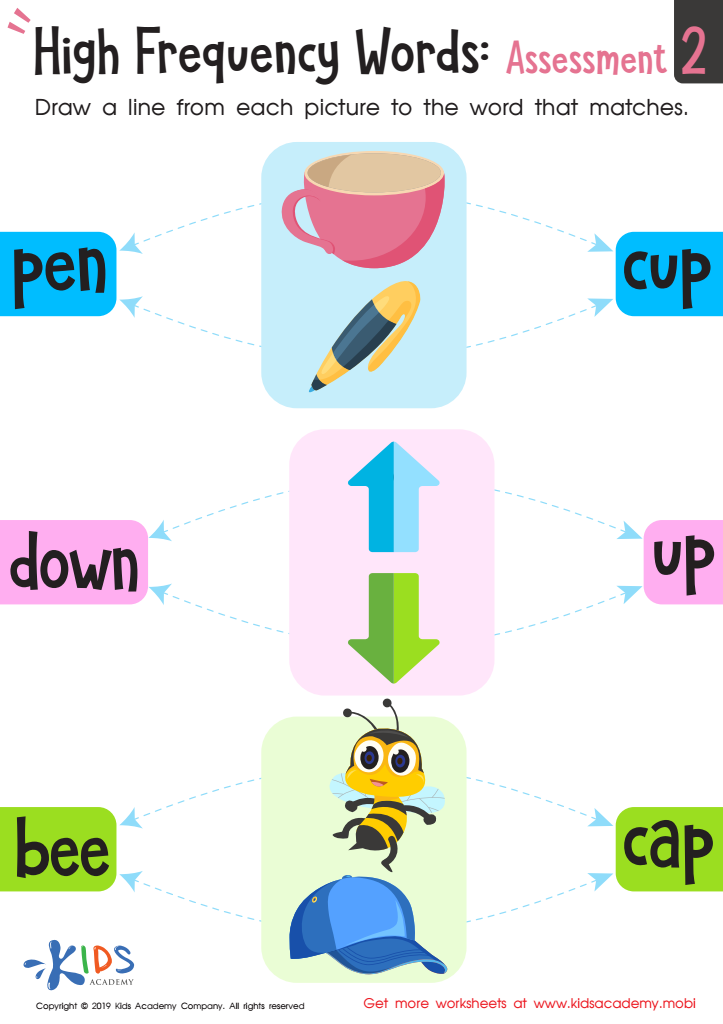
High Frequency Words: Assessment 2 Worksheet
Having knowledge of high frequency words can make emergent readers stronger and boost comprehension. This free assessment worksheet uses traceable lines to connect the picture to its corresponding words, allowing them to feel successful. It's a great way to reinforce high frequency words with familiar imagery.
High Frequency Words: Assessment 2 Worksheet
Worksheet
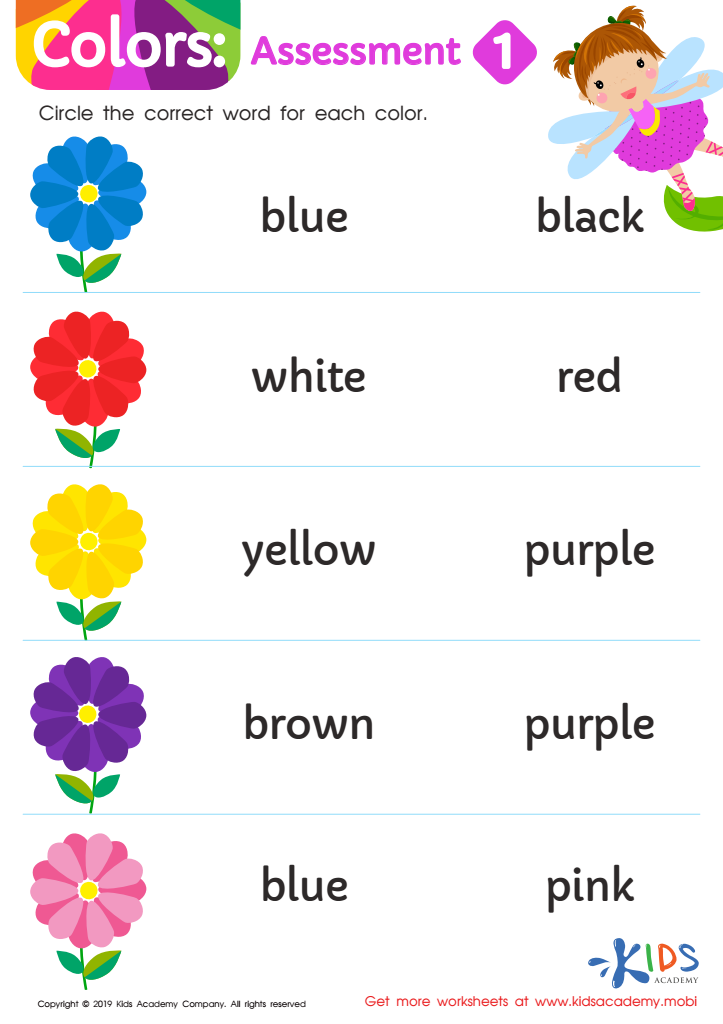
Colors: Assessment 1 Worksheet
Children can decode unfamiliar words by sounding them out or by recognizing sight words. Color words are an important part of sight word knowledge, so add them to your child's list! This color word worksheet is an effective assessment tool for teachers to use with preschool and kindergarten students. It checks their knowledge of five color words - they simply look at the flower and circle the appropriate color word!
Colors: Assessment 1 Worksheet
Worksheet
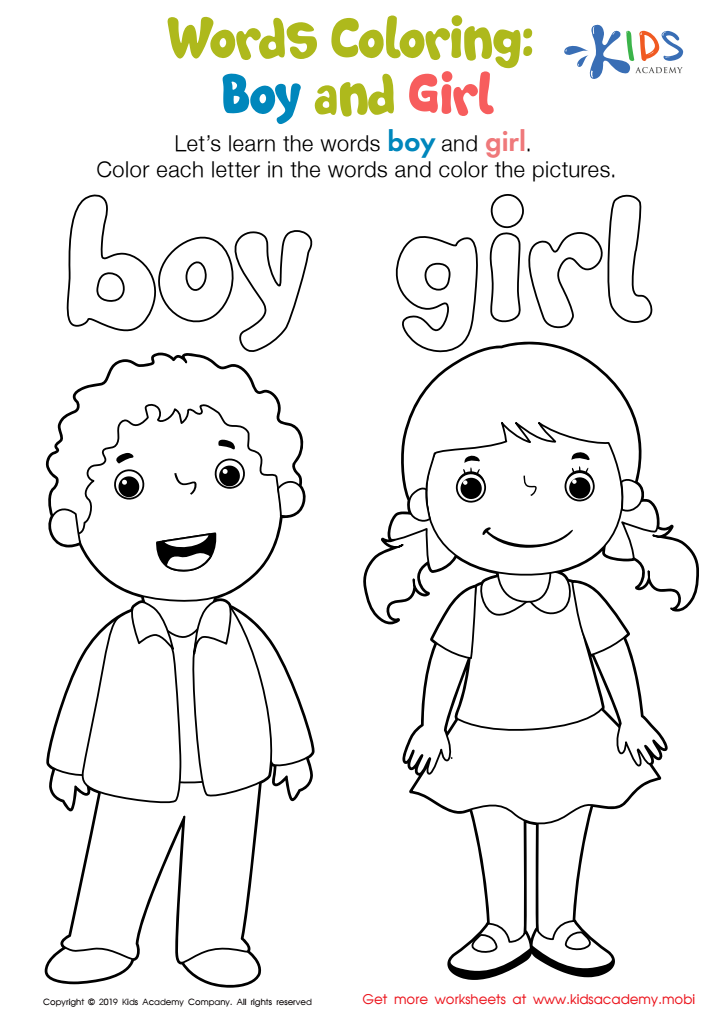
Boy and Girl Words Coloring Worksheet
Help your students build their sight word vocabulary! Early readers may not be able to sound out all words, so this worksheet teaches them to read two important sight words: boy and girl. They will color the letters and a picture of each, making it a fun and educational way to learn. Download the PDF now.
Download (PDF)
 Assign to My Students
Assign to My Students
Boy and Girl Words Coloring Worksheet
Worksheet
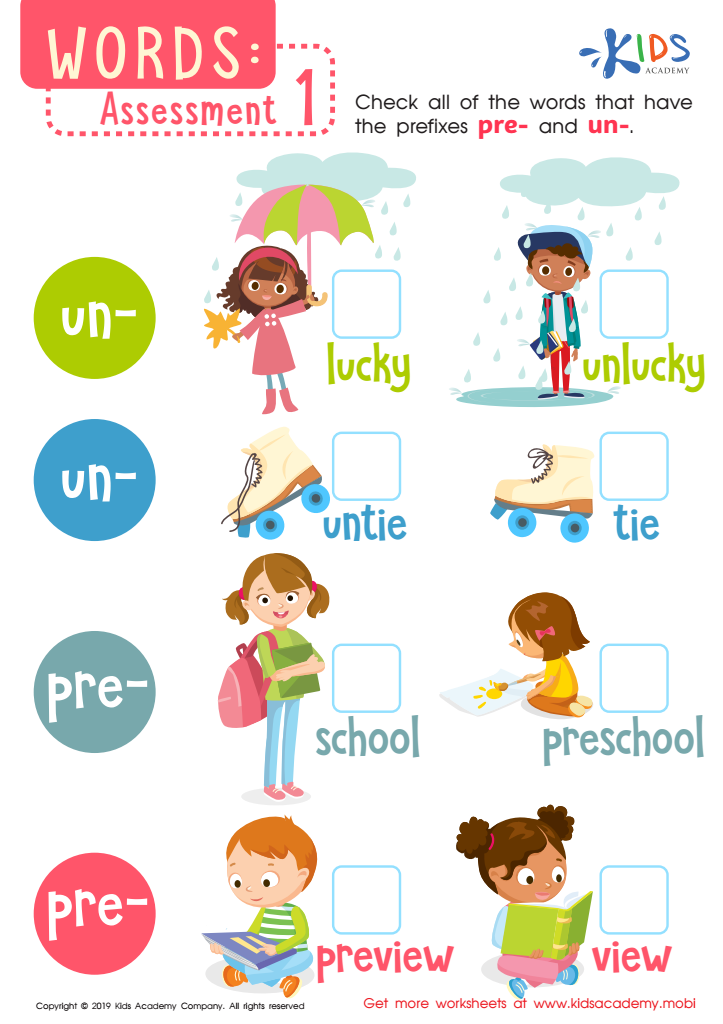
Words: Assessment 1 Worksheet
Help your child develop their knowledge of prefixes and suffixes with Kids Academy! This worksheet can test their understanding of pre- and un-. Have them view the illustrations and read the words to find the targeted prefix in each row. This is a great way to enhance their words and clarify meanings!
Words: Assessment 1 Worksheet
Worksheet
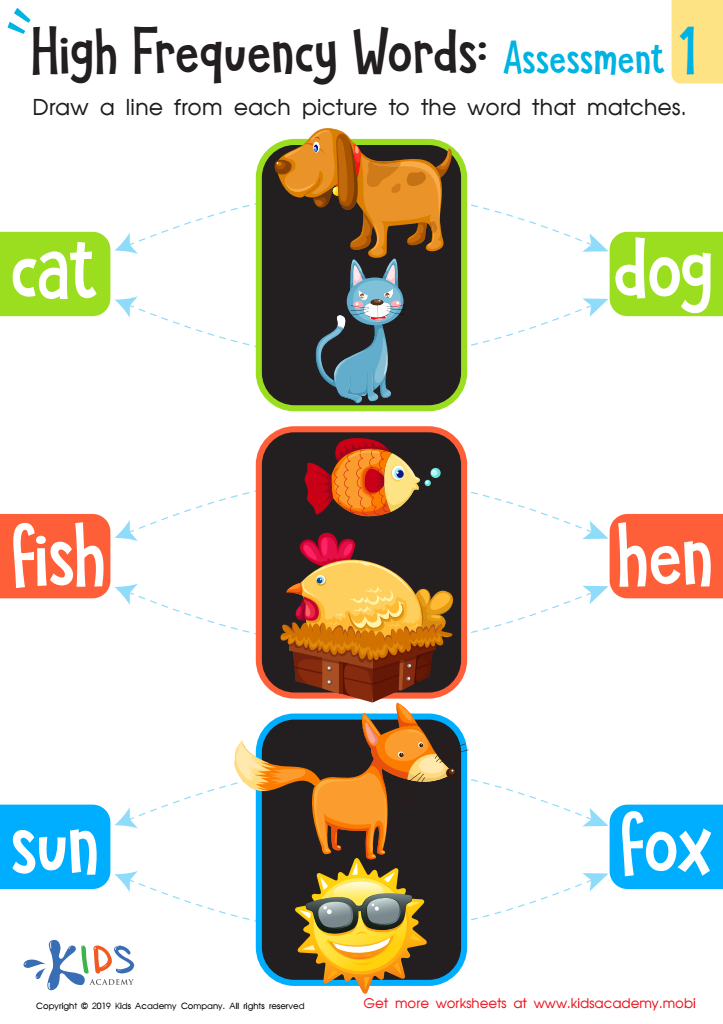
High Frequency Words: Assessment 1 Worksheet
Emergent readers need to know high-frequency words accurately and quickly to develop fluency. Connecting these words to colorful, fun pictures helps reading prosody. This assessment worksheet uses traceable lines to help learners match pictures to words.
High Frequency Words: Assessment 1 Worksheet
Worksheet
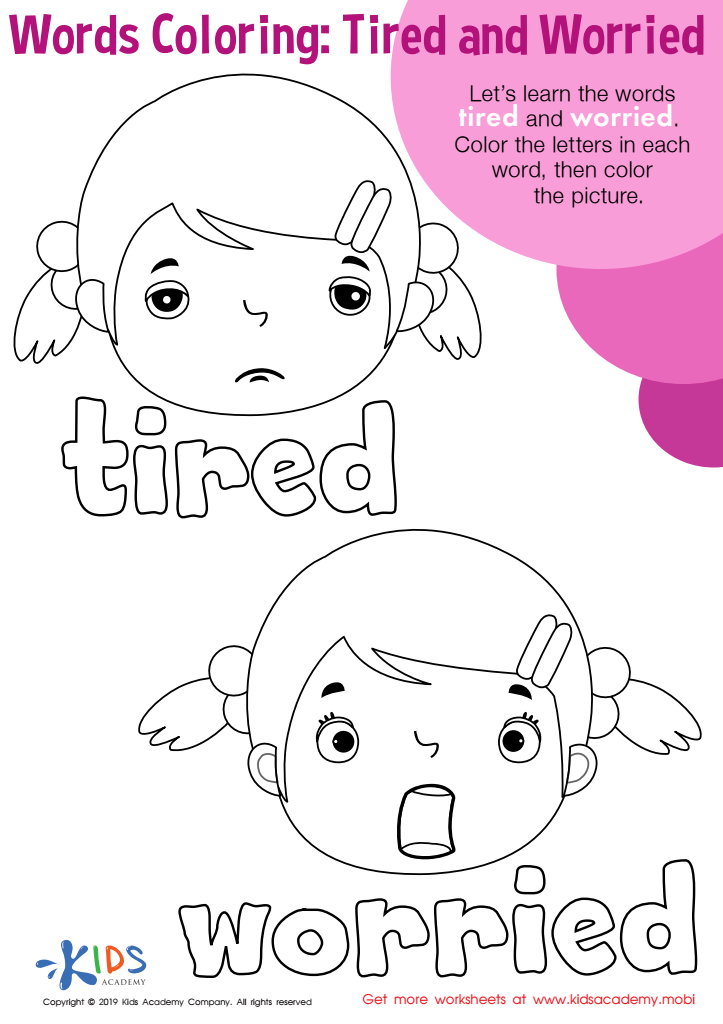
Tired and Worried Words Coloring Worksheet
Teach your students about "tired" and "worried" with this worksheet. Have them read and color the emotion words, then color the pictures of a tired girl and a worried girl. Discuss what makes them tired and worried. Expand their vocabulary with this fun coloring activity!
Download (PDF)
Assign to My Students
Assign to My Students
Tired and Worried Words Coloring Worksheet
Worksheet
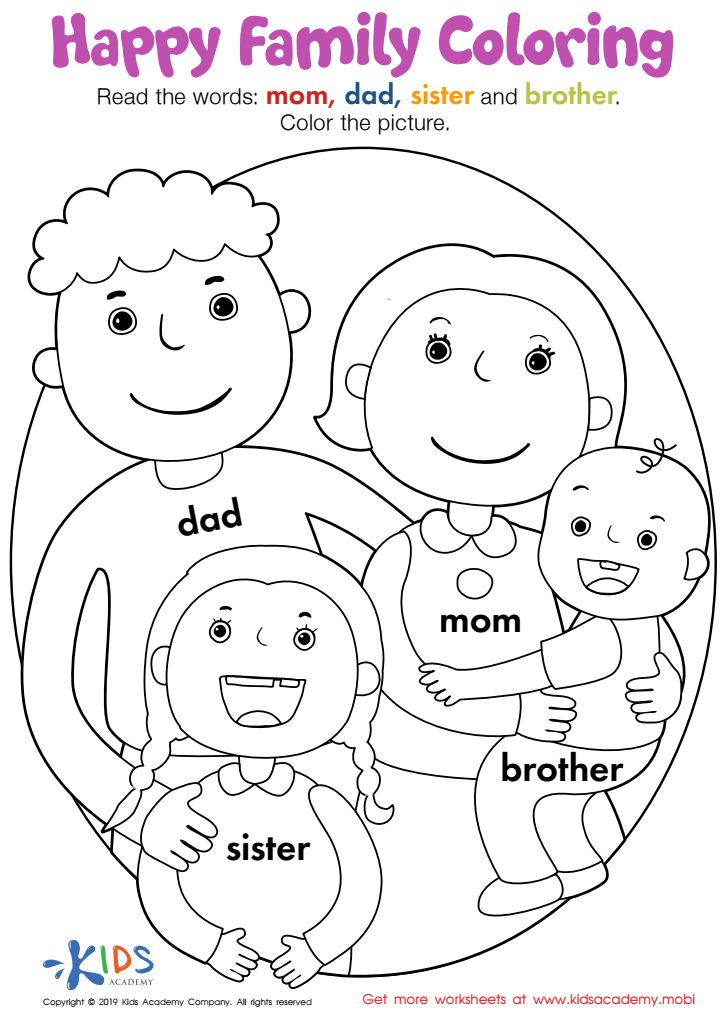
Happy Family Coloring Worksheet
Help your students gain confidence in family vocabulary with this worksheet. Labelled images of a family (dad, mom, sister, brother) are featured, along with an accompanying activity to colour in the picture. Your students will feel a sense of accomplishment after reading and completing the printable.
Download (PDF)
Assign to My Students
Assign to My Students
Happy Family Coloring Worksheet
Worksheet
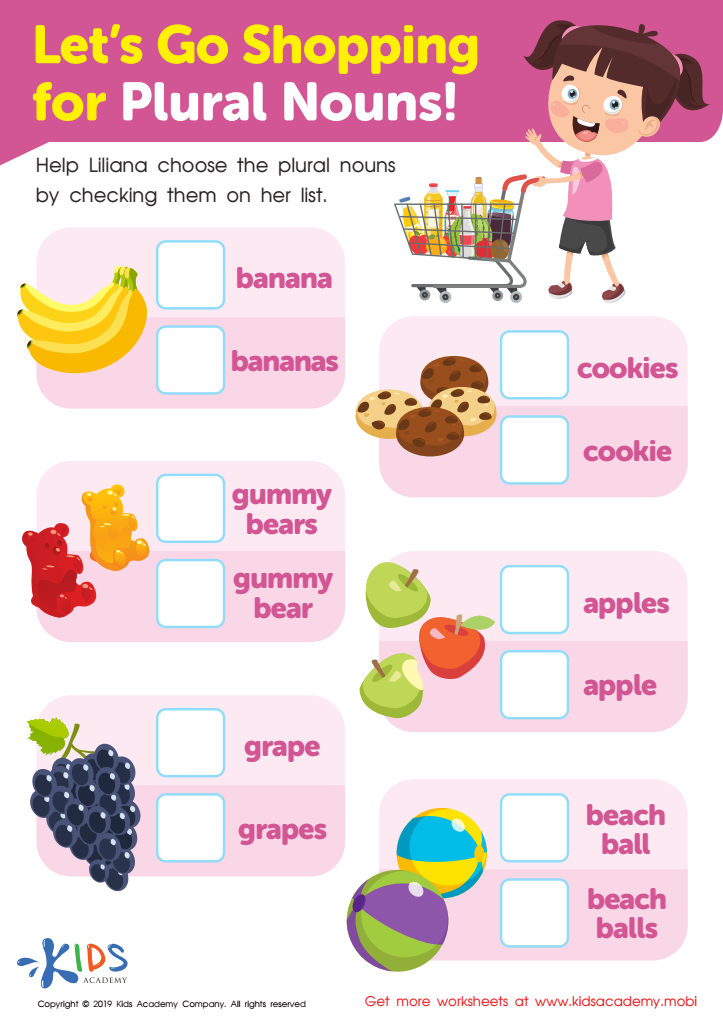
Let's Go Shopping for Plural Nouns! Worksheet
Help your students figure out the plural nouns in Lilliana's checklist. Look at the six objects in this PDF and add 's' to the nouns to make them plural. Show students how words can be tricky and explain how adding an 's' often changes the noun to its plural form.
Let's Go Shopping for Plural Nouns! Worksheet
Worksheet
Join Kids Academy for Free
Who is primarily going to use this learning content?








Building vocabulary in 4-year-olds is crucial for their overall development, both academically and socially. At this tender age, children's brains are incredibly receptive to new information, and having a rich vocabulary lays the groundwork for learning to read, understand, and communicate effectively.
Why should parents and teachers focus on enhancing vocabulary at this stage? Well, a robust vocabulary supports reading comprehension, making it easier for children to understand stories and informational texts as they progress through school. Additionally, it helps with cognitive development, allowing children to better understand and categorize the world around them. This becomes a key component in later academic success and critical thinking.
Socially, a strong vocabulary gives children the words they need to express their feelings, ask questions, and interact with peers. More words enable them to navigate social situations more comfortably and build healthier relationships.
Furthermore, vocabulary development is closely linked to future academic success. Children with a rich vocabulary tend to perform better on standardized tests and have a greater likelihood of academic achievement. By investing time and effort into vocabulary building, parents and teachers are laying a foundation that will help children not just in school, but throughout their lives. Simple activities like reading stories, singing songs, and engaging in conversations can significantly boost a child's vocabulary in a fun and engaging way.