Alphabet Recognition Easy Letter Recognition Worksheets for Ages 5-6
5 filtered results
-
From - To
Discover our "Alphabet Recognition Easy Letter Recognition Worksheets" designed for children ages 5-6! Our engaging printable worksheets make learning the alphabet fun and interactive. With colorful illustrations and various activities, kids will easily identify letters, practice writing, and strengthen their phonics skills. Each worksheet is tailored to enhance letter recognition while keeping young learners motivated and entertained. Perfect for preschoolers and kindergarteners, these easy worksheets provide a solid foundation for early literacy. Foster a love for learning with our comprehensive and accessible resources, helping your child build confidence as they explore the wonderful world of letters. Download now and start their alphabet adventure!
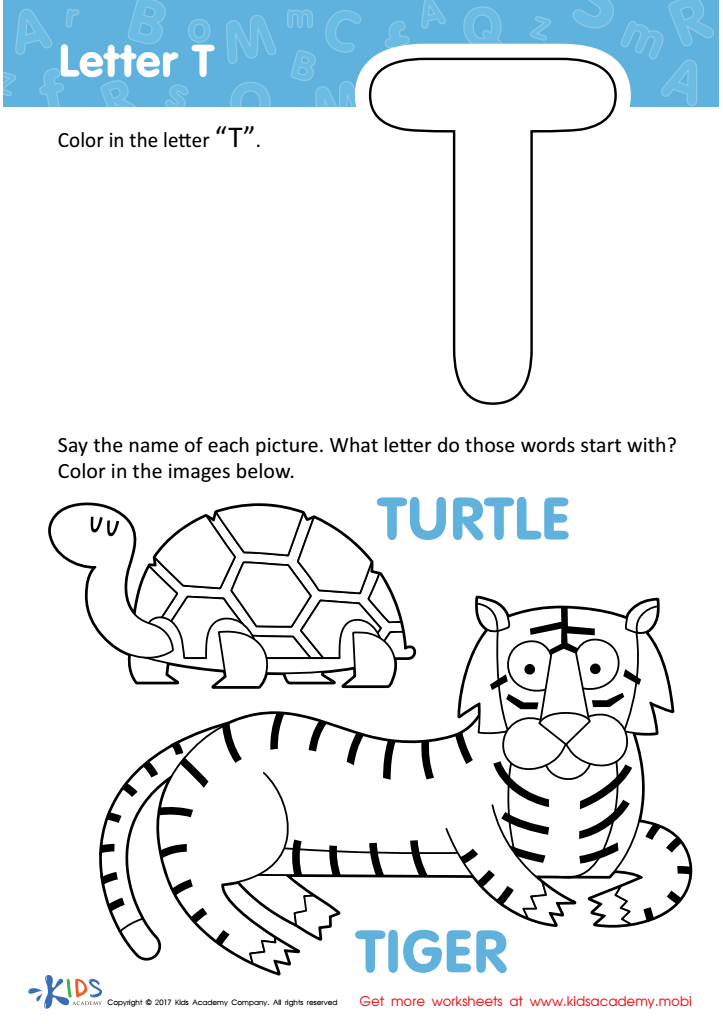
Letter T Coloring Sheet
 Assign to My Students
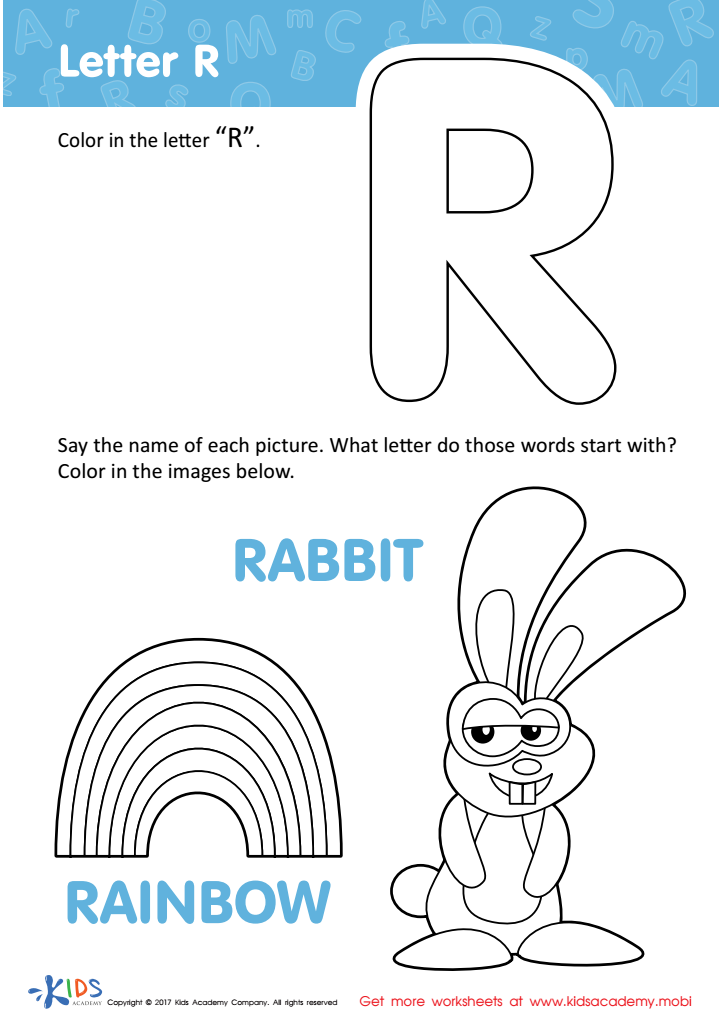
Letter R Coloring Sheet
Assign to My Students
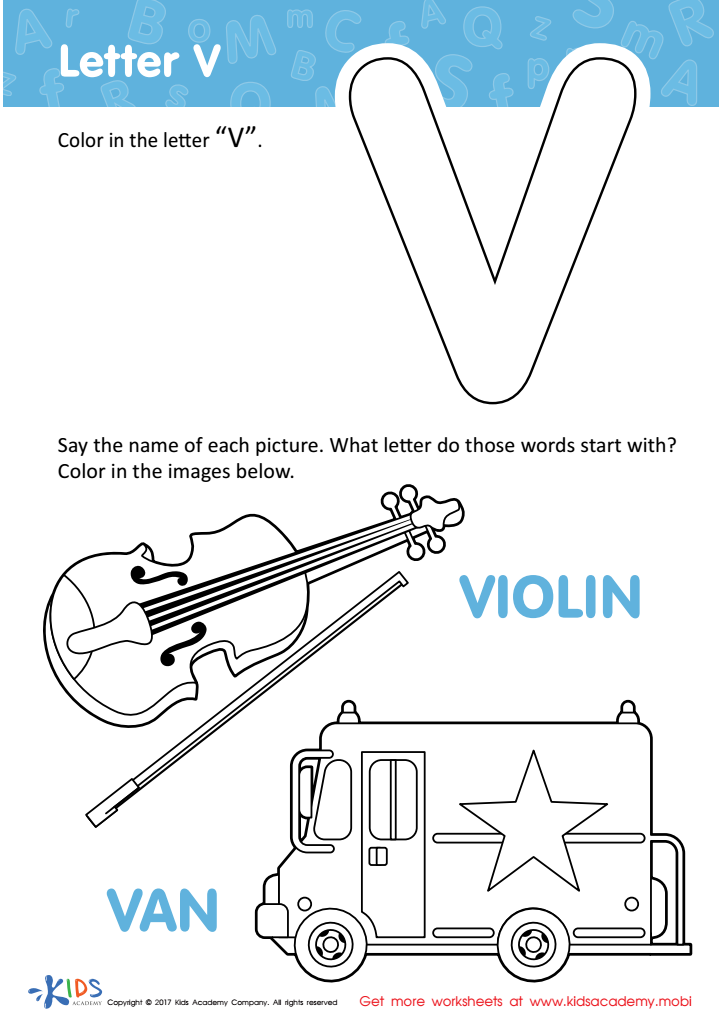
Letter V Coloring Sheet
Assign to My Students
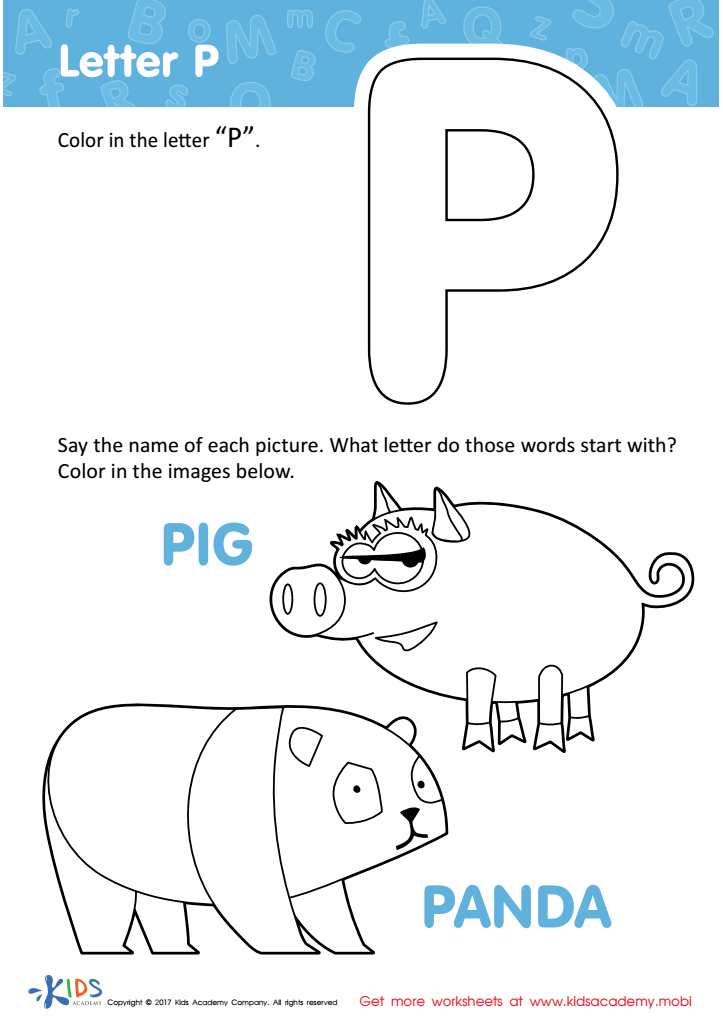
Letter P Coloring Sheet
Assign to My Students
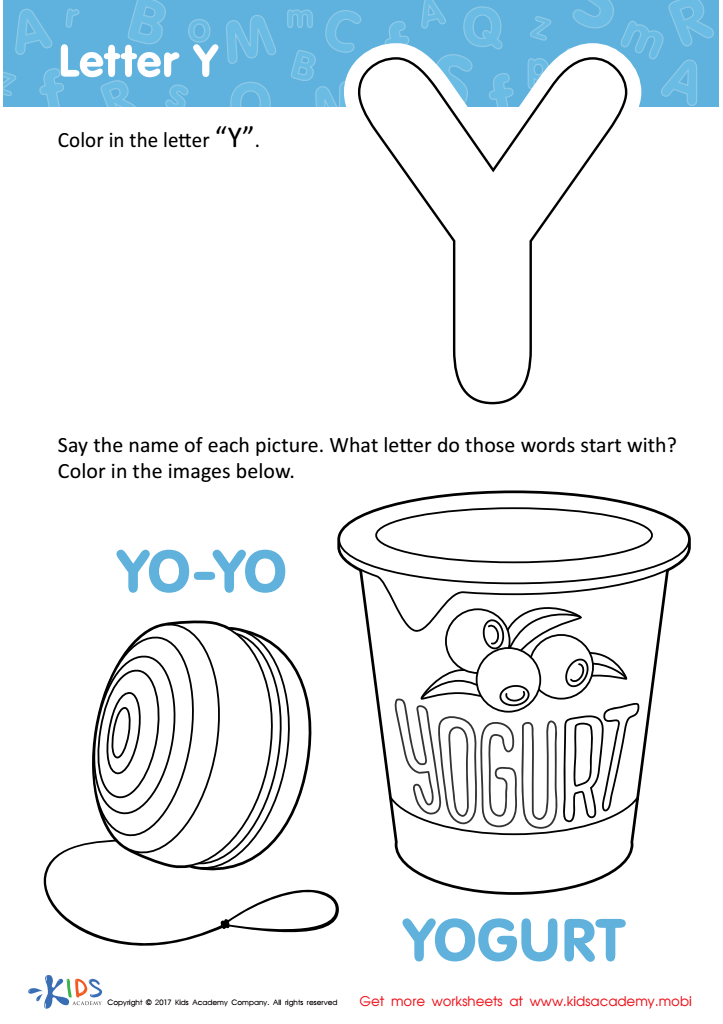
Letter Y Coloring Sheet
Assign to My Students








Alphabet recognition is a foundational skill crucial for early literacy development, making it essential for parents and teachers of children aged 5-6. At this stage, children are building the building blocks of reading and writing. Understanding letters is the first step toward literacy, enabling students to decode words, write their names, and express themselves through text.
Recognizing letters helps children connect sounds to symbols, laying the groundwork for phonics, vocabulary acquisition, and ultimately reading comprehension. This skill also fosters cognitive development, improving memory and concentration as children learn to differentiate between similar letters—such as 'b' and 'd.'
Furthermore, successful letter recognition can significantly boost a child's confidence and motivation in both reading and writing activities. When young learners feel capable, they are more likely to engage in literacy-related activities, fostering a love for reading that will follow them throughout their educational journey.
Additionally, nurturing letter recognition collectively in home and school environments can create a consistent learning experience. Parents and teachers working together to support this skill will not only enhance academic achievement but also foster positive parent-teacher relationships focused on the child’s success. Recognizing letters sets a pathway for lifelong learning and academic progression.