Comparing heights Easy Worksheets for Ages 5-6
3 filtered results
-
From - To
Discover our amazing collection of "Comparing Heights Easy Worksheets for Ages 5-6" that make learning fun and engaging! Perfect for young learners, these activities help children develop essential math skills by comparing the heights of various objects and characters. With colorful illustrations and simple exercises, kids will effortlessly grasp the concepts of tall, short, taller, and shorter. Designed specifically for ages 5-6, these worksheets will build confidence and establish a strong foundation in early mathematics. Parents and teachers, kickstart your child’s learning journey with our easy-to-use and enjoyable resources today!
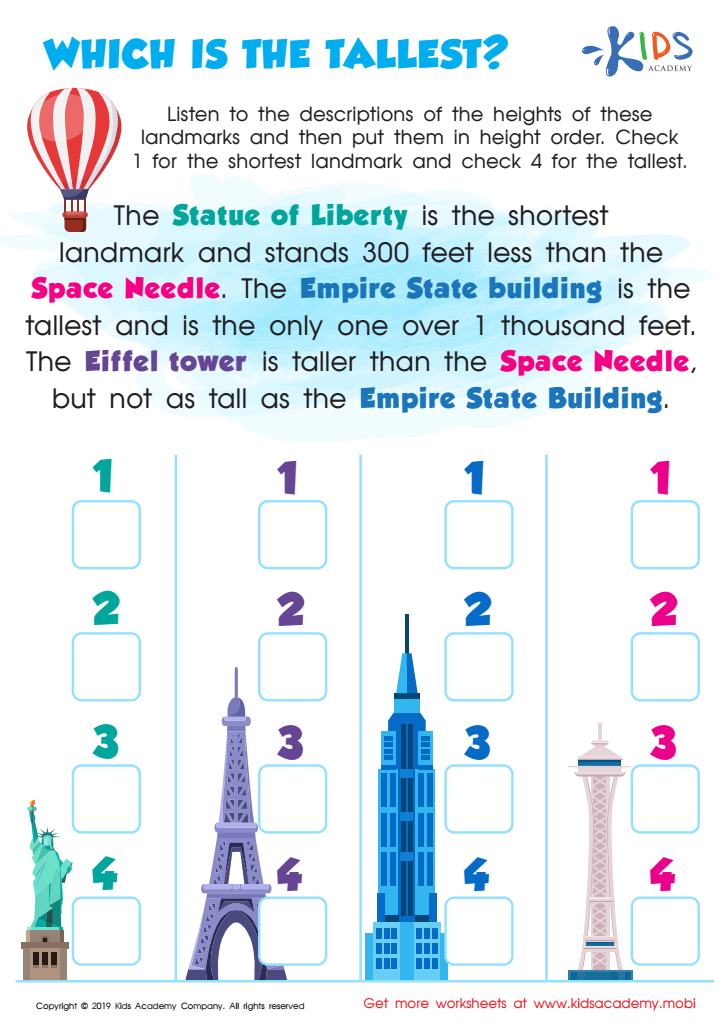
Which is the Tallest? Worksheet
 Assign to My Students
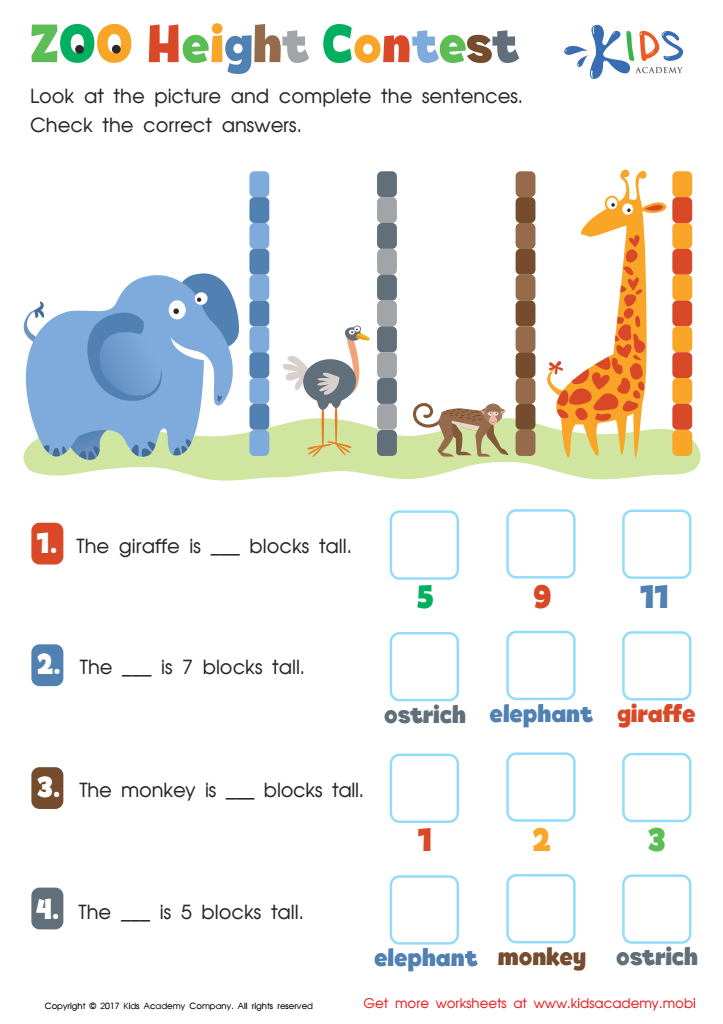
Zoo Height Contest Worksheet
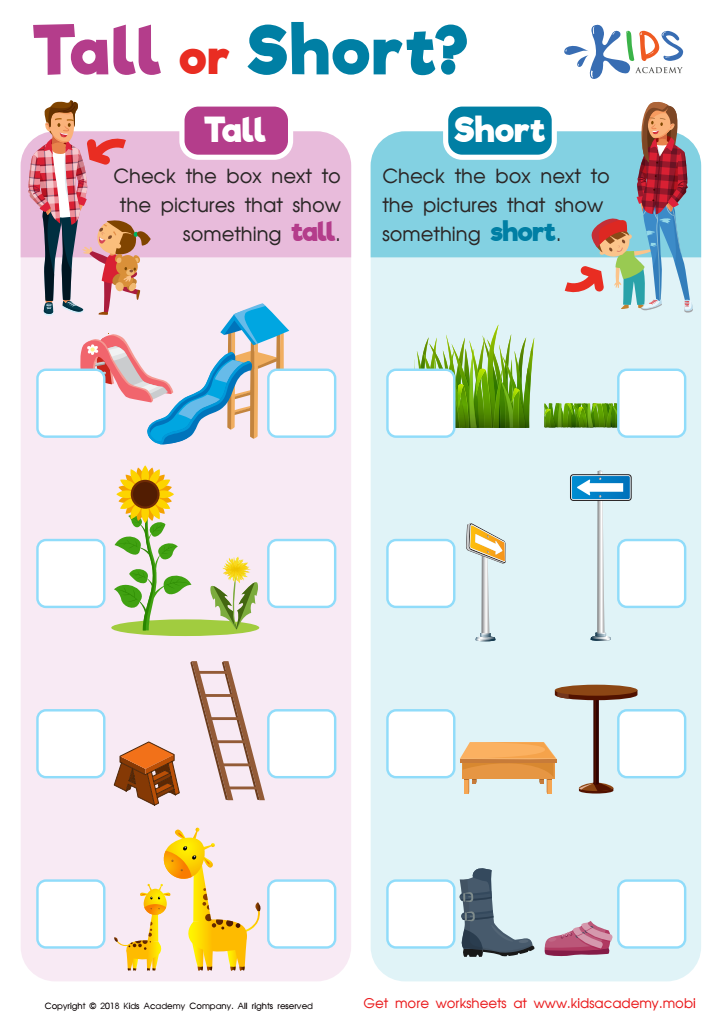
Tall or Short? Worksheet






Parents and teachers should care about children comparing heights at ages 5-6 because it is an essential foundational skill in early childhood development that paves the way for more complex mathematical and cognitive abilities. Comparing heights engages children in basic measurements, spatial awareness, and critical thinking. These skills are integral components of early math concepts as prescribed in many educational standards.
By comparing their own height to that of their friends or objects in the room, children practice observing and articulating differences, which bolsters language development and descriptive vocabulary. It also provides a practical, hands-on understanding of measurement and the concept of more and less, taller and shorter.
Furthermore, when children engage in these exercises, they also develop social and emotional skills. Interacting with peers in these activities can promote cooperation, communication, and empathy. Inclusive, respectful conversations about height and growth differences help to nurture acceptance and self-awareness.
Finally, this type of comparative learning is engaging and interactive, fostering a love for discovery and curiosity. It can serve as a stepping stone to more advanced topics like arithmetic, geometry, and scientific inquiry, providing a robust educational foundation while making learning fun and relatable.








