Comparing quantities Easy Worksheets for Ages 5-6
3 filtered results
-
From - To
Looking for fun and educational resources to help your 5-6 year olds master comparing quantities? Our easy worksheets are perfect for young learners! Specially designed to build essential math skills, these worksheets make comparing quantities simple and engaging. Each colorful page features interactive activities like counting objects, identifying groups with more or fewer items, and solving basic comparison problems to boost your child's confidence. Ideal for classroom use or at-home practice, these worksheets align with early learning standards to ensure your child achieves remarkable progress while having fun. Download and watch your child excel in math today!
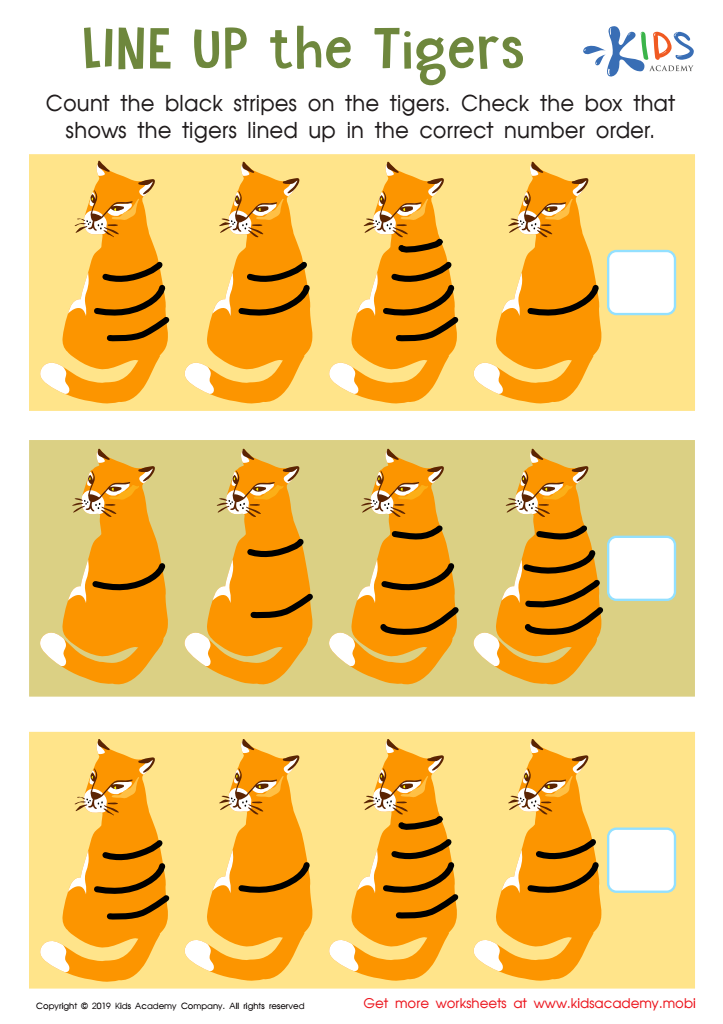
Line up the Tigers Worksheet
 Assign to My Students
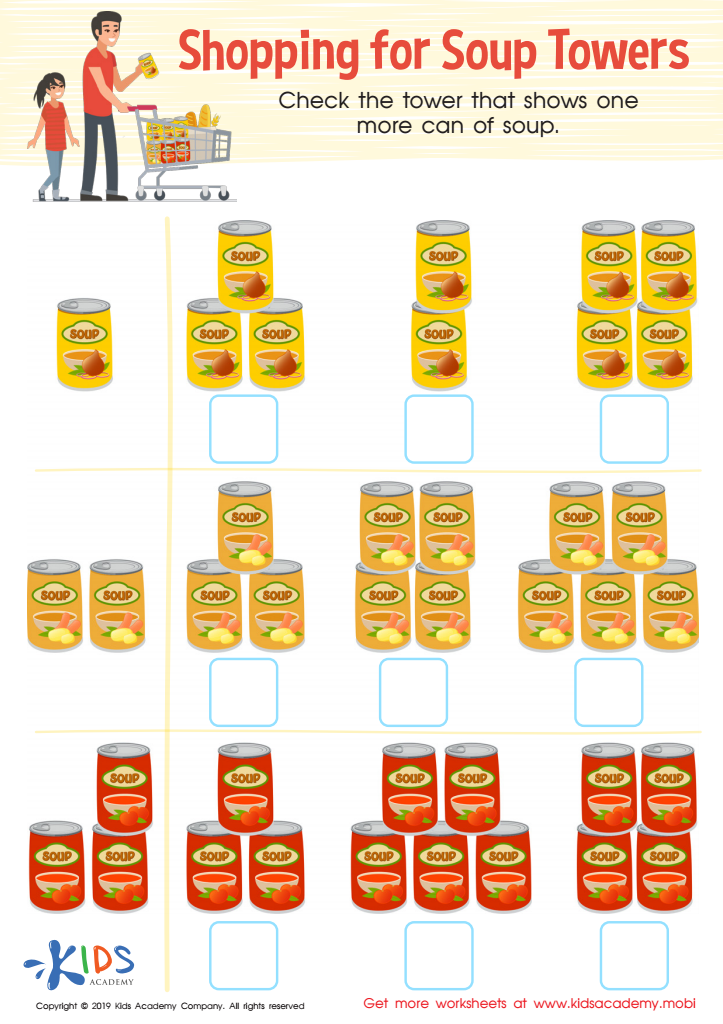
Soup Towers Worksheet
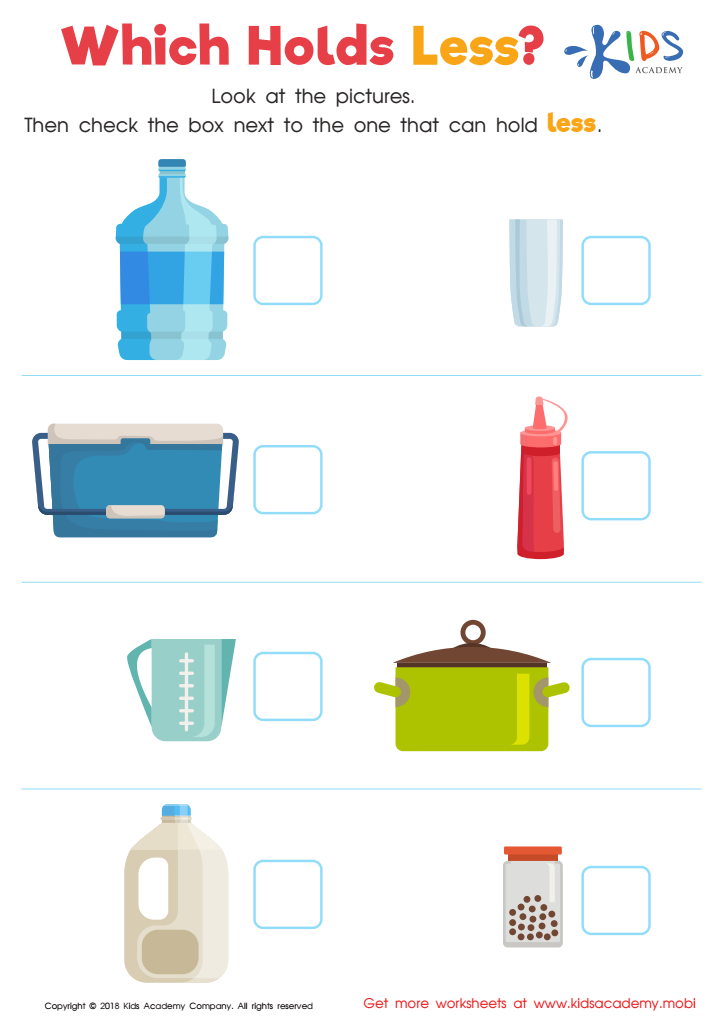
Which Holds Less? Worksheet


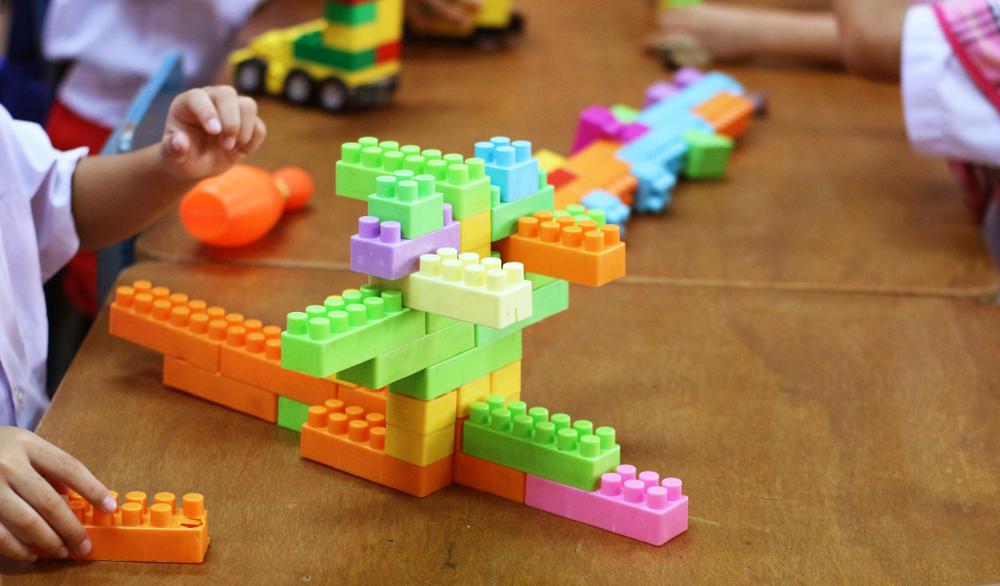



Comparing quantities is a foundational math skill crucial for early learners, aged 5-6, as it lays the groundwork for more complex mathematical reasoning and problem-solving. When children compare quantities, they develop an understanding of concepts such as "more than," "less than," and "equal to," which are fundamental for grasping addition, subtraction, and even more advanced operations like multiplication and division.
For parents and teachers, it's essential to foster these skills early because they also enhance other critical developmental areas, such as logical thinking, spatial awareness, and vocabulary. A child who can compare quantities confidently is likely better at sequencing, pattern recognition, and number sense—all critical for their future academic success.
Additionally, comparing quantities helps young children in real-life situations, such as sharing toys equally or understanding time intervals, which directly correlates with developing social skills and cooperation. When children understand these basics, they can handle everyday tasks more efficiently and grow more confident in their abilities.
By incorporating fun and easy comparison activities suitable for ages 5-6, such as counting objects, sorting items by size or amount, and playful math games, parents and teachers can make learning both effective and enjoyable. These early experiences foster a positive attitude towards math, encouraging lifelong learning and curiosity.








