Improving vocabulary Easy Worksheets for Ages 5-6
3 filtered results
-
From - To
Enhance your child's language development with our "Improving Vocabulary Easy Worksheets" designed specifically for ages 5-6. These engaging and interactive worksheets encourage young learners to explore new words while building foundational vocabulary skills. Through fun activities such as matching words to images, tracing, and fill-in-the-blank exercises, children will develop their understanding of words in context. Our worksheets are tailored to stimulate creativity and critical thinking, helping kids express themselves more effectively. Perfect for at-home or classroom use, these resources aim to foster a love of language in a supportive and enjoyable learning environment. Unlock your child's potential today!
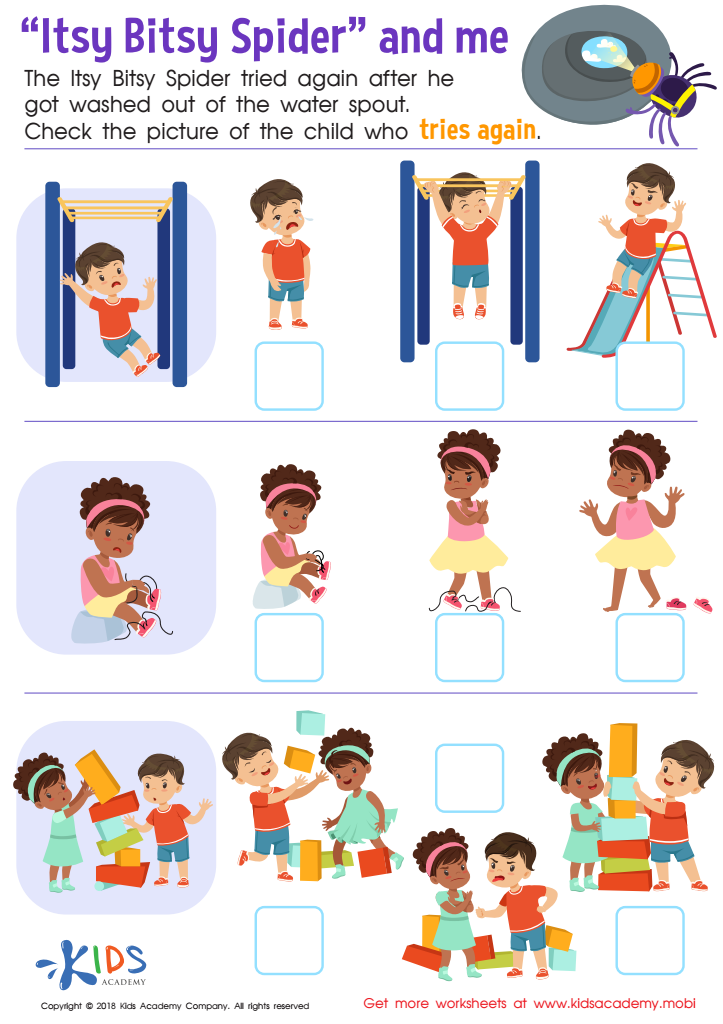
Itsy Bitsy Spider and Me Worksheet
 Assign to My Students
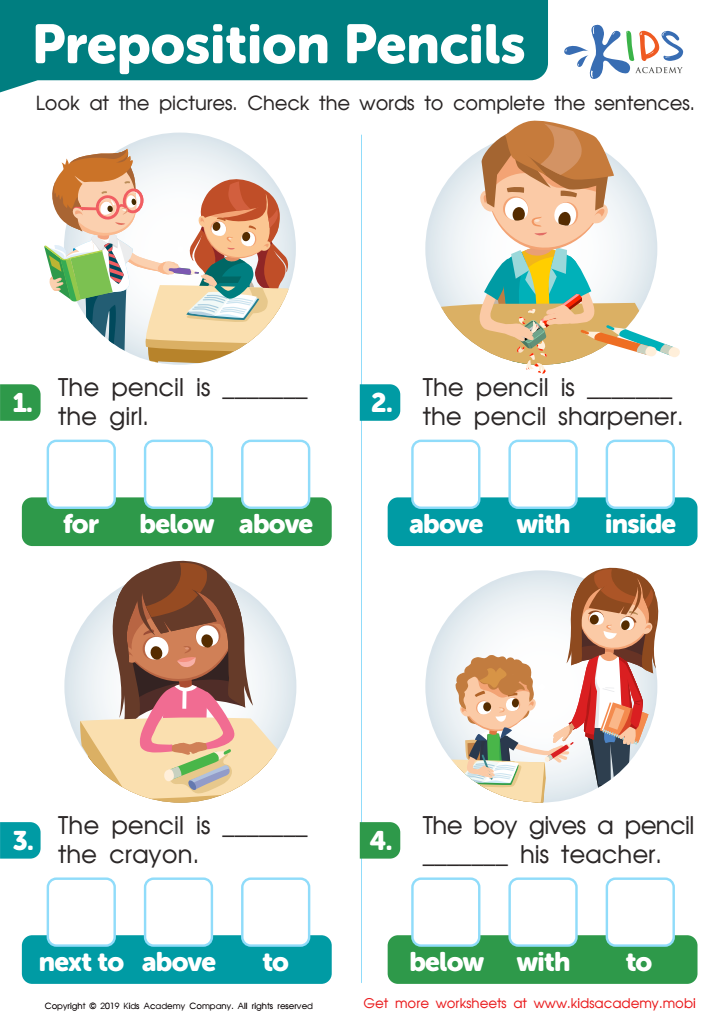
Preposition Pencils Worksheet
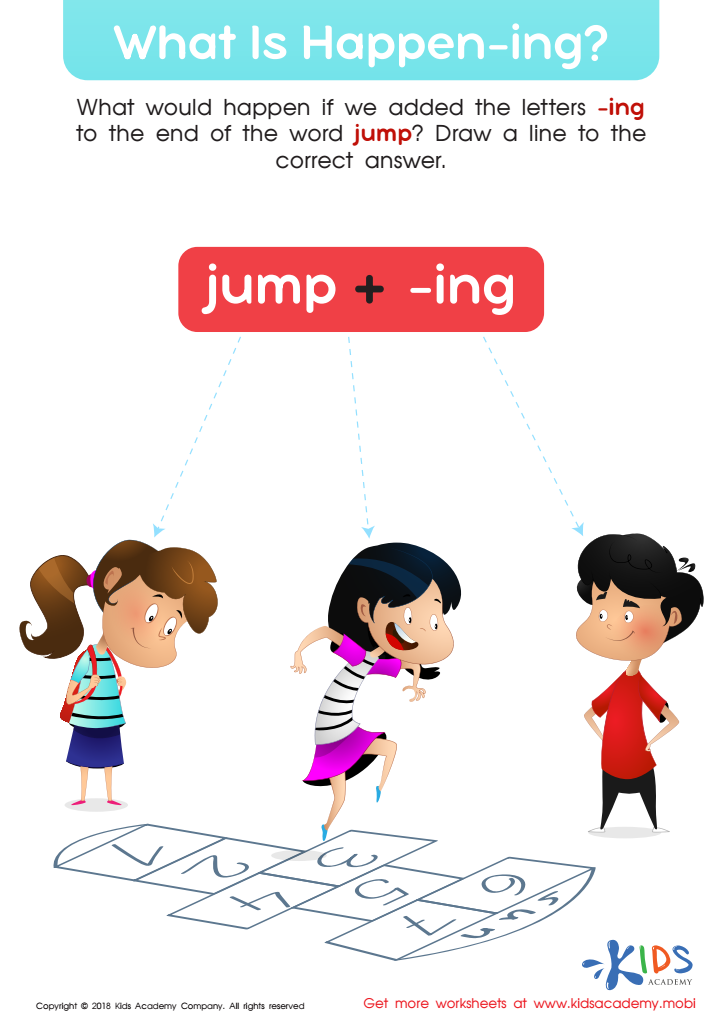
What Is Happen-Ing? Worksheet








Improving vocabulary in children aged 5-6 is crucial for their cognitive and social development. During these formative years, children are establishing foundational skills for reading, writing, and effective communication. A rich vocabulary sets the stage for literacy, enabling kids to express their thoughts and feelings clearly and understand what they read. By expanding their vocabulary, children improve their comprehension skills, which in turn fosters a love for reading and learning.
Moreover, a strong vocabulary enhances interpersonal skills, allowing children to engage more effectively with peers and adults. It aids in their ability to share ideas and emotions, which is essential for building friendships and social bonds. Furthermore, a good vocabulary is linked to academic success; research shows that children with a robust vocabulary tend to perform better in school.
Parents and teachers play a pivotal role in enhancing vocabulary through various interactive activities like reading aloud, playing word games, and encouraging conversations. This engagement not only strengthens the child’s vocabulary but also creates a supportive learning environment. An investment in vocabulary development today paves the way for brighter educational outcomes and lifelong communication skills, making it essential for parents and educators to prioritize.








