Understanding opposites Easy Worksheets for Ages 5-6
4 filtered results
-
From - To
Welcome to our "Understanding Opposites" worksheet collection, designed specifically for children aged 5-6! These engaging and interactive worksheets help young learners grasp the concept of opposites in a fun and enjoyable way. Through vibrant illustrations and simple activities, children will explore pairs like hot/cold, big/small, and light/heavy. Our worksheets encourage critical thinking and enhance vocabulary, making learning both enjoyable and effective. Perfect for classroom use or at-home practice, these resources support early literacy skills while fostering curiosity and creativity. Download your worksheets today and watch your child brighten up their learning journey with the exciting world of opposites!
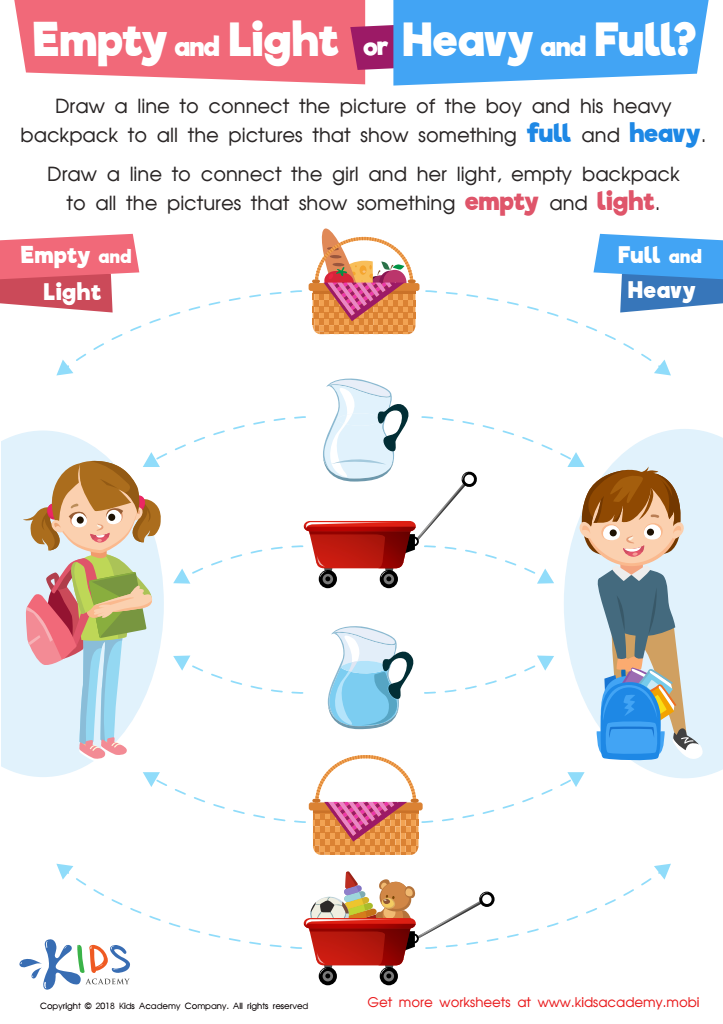
Empty and Light or Heavy and Full? Worksheet
 Assign to My Students
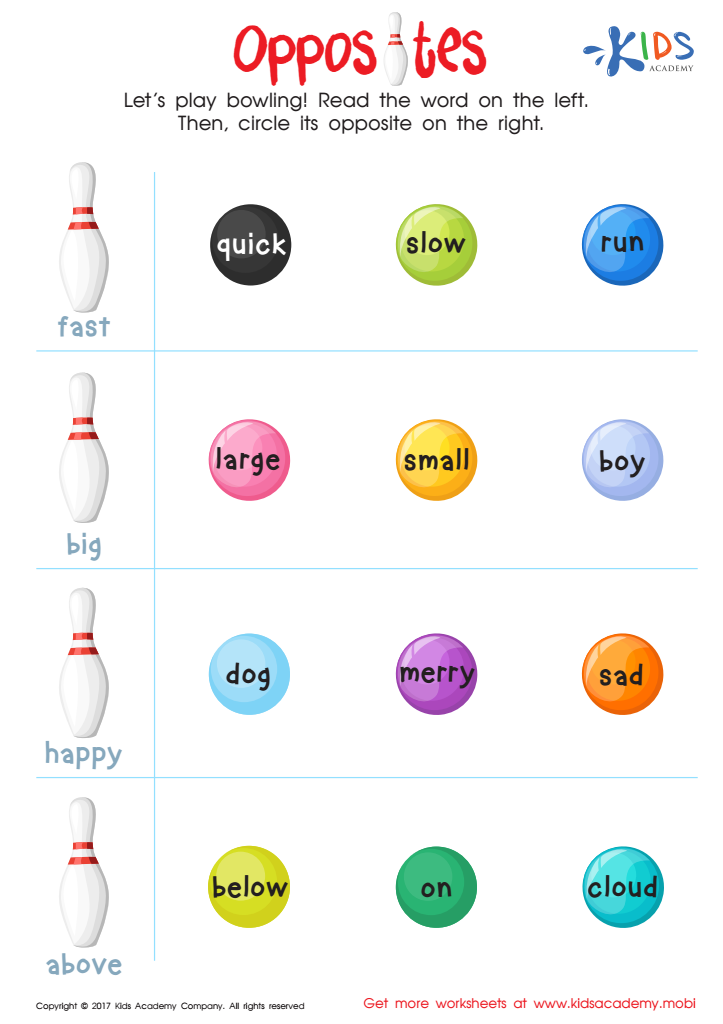
Opposites Worksheet
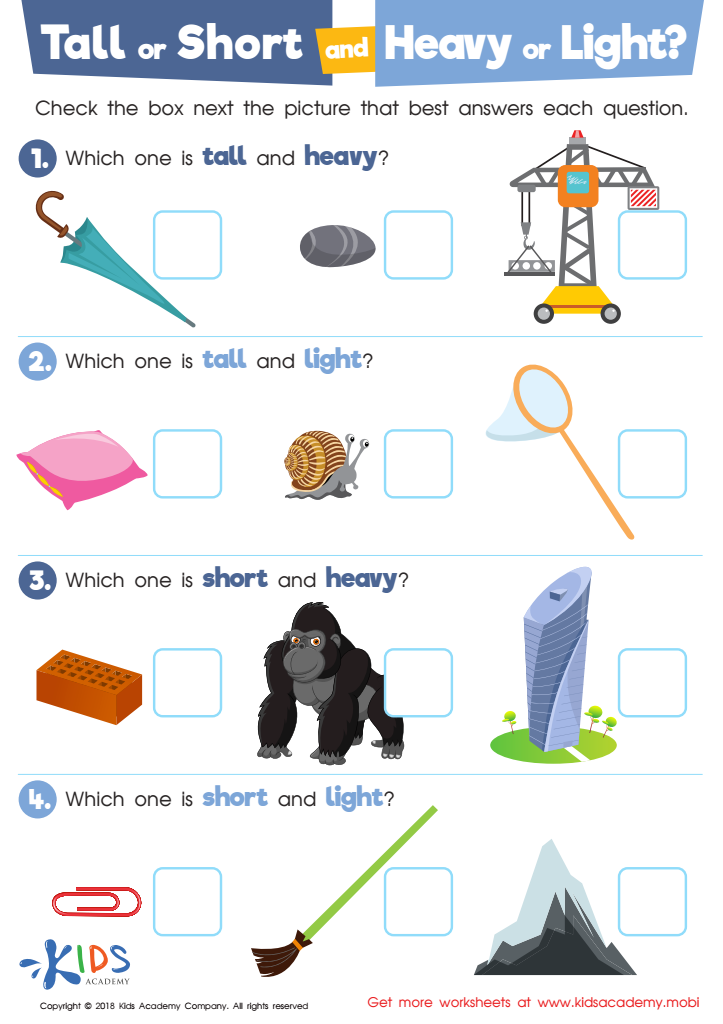
Tall or Short and Heavy or Light? Worksheet
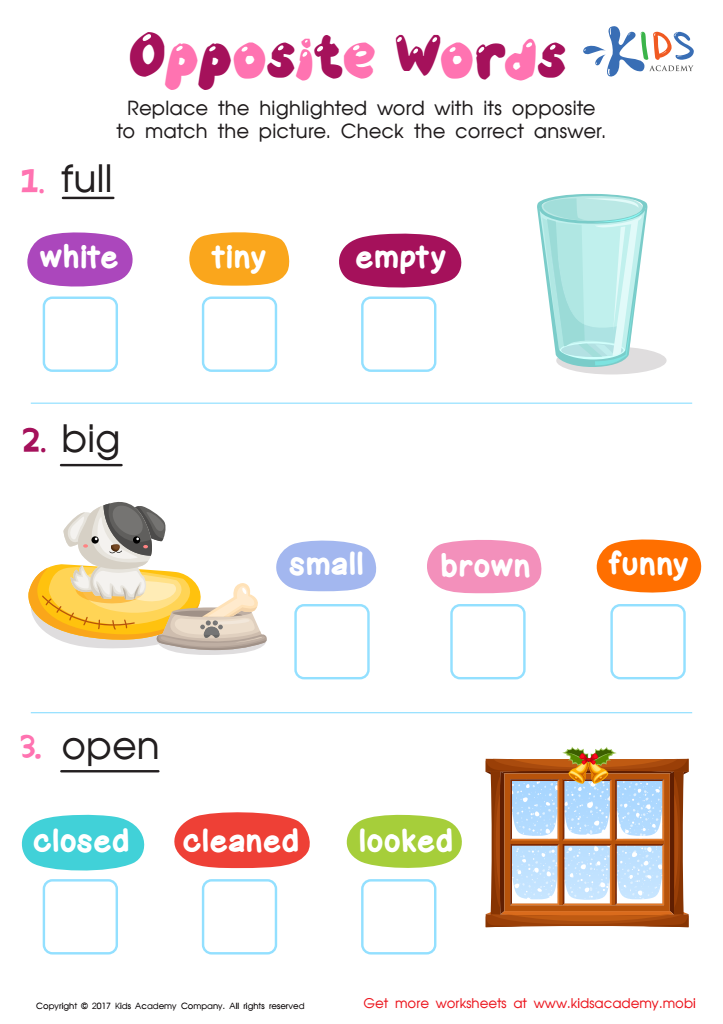
Opposite Words Worksheet






Understanding opposites is a fundamental concept that plays a crucial role in early childhood learning, particularly for children aged 5-6. At this stage, children are developing their vocabulary and cognitive skills, and grasping the idea of opposites helps enhance both.
First, learning opposites such as big/small or hot/cold enriches language acquisition and comprehension. It promotes a stronger vocabulary, allowing children to express their thoughts and feelings more precisely. Furthermore, it aids in improving critical thinking skills, as children learn to differentiate and categorize information.
Additionally, understanding opposites contributes to children’s social and emotional development. For example, recognizing differences in emotions—happy/sad—helps them develop empathy and emotional intelligence. This awareness encourages positive interactions with peers and supports conflict resolution skills.
Moreover, activities centered around opposites can promote engagement and creativity. Fun games and storytelling around opposites make learning enjoyable, fostering a love for learning. Teachers and parents who focus on this concept provide children with essential life skills, paving the way for academic success and personal growth. By prioritizing this aspect of learning, caregivers equip children with the tools they need to navigate their world and its complexities effectively.








