Visual discrimination Easy Worksheets for Ages 5-6
5 filtered results
-
From - To
Enhance your child's visual discrimination skills with our "Visual Discrimination Easy Worksheets for Ages 5-6." Designed for young learners, these engaging worksheets help children identify patterns, differences, and similarities in various objects and images. Perfect for at-home learning or classroom activities, our resources bolster critical thinking and observation skills in a fun and interactive way. With colorful illustrations and age-appropriate challenges, children will stay motivated and enthusiastic while honing their important cognitive abilities. Download our printable worksheets today and support your child's early education journey as they learn through play. Perfect for teachers and parents looking to enrich learning experiences!
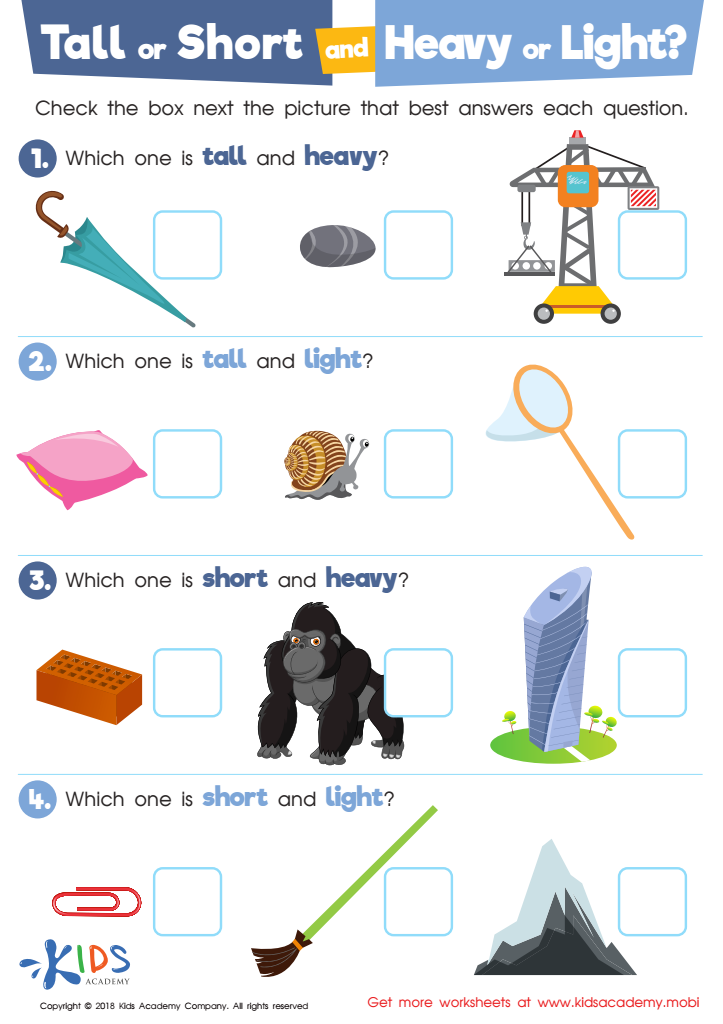
Tall or Short and Heavy or Light? Worksheet
 Assign to My Students
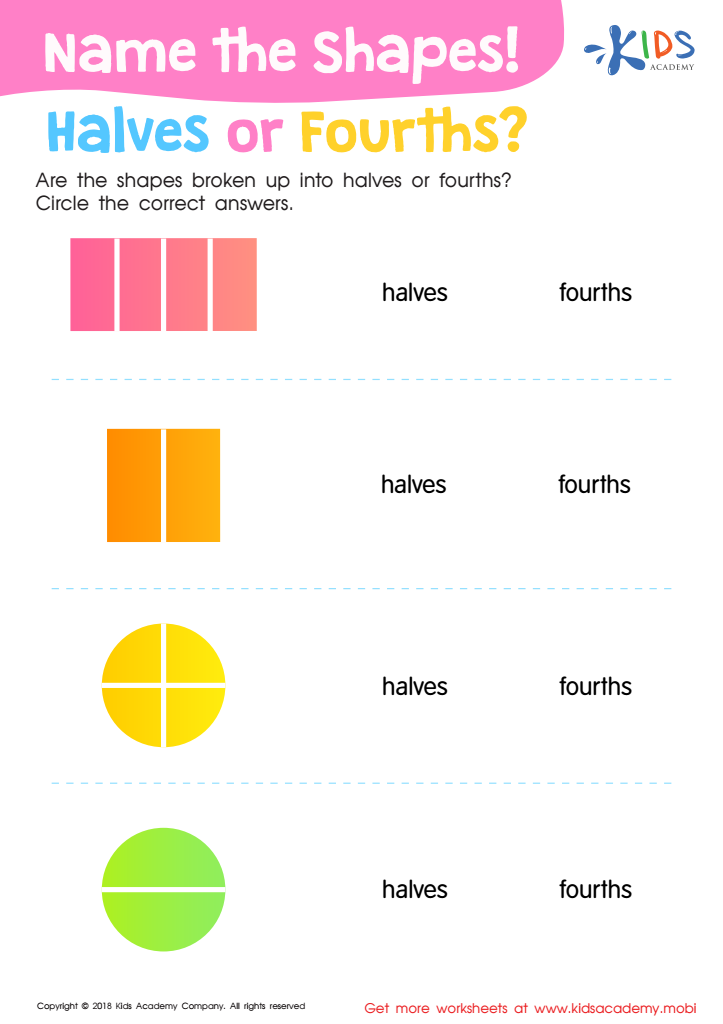
Name the Shapes Halves or Fourths? Worksheet
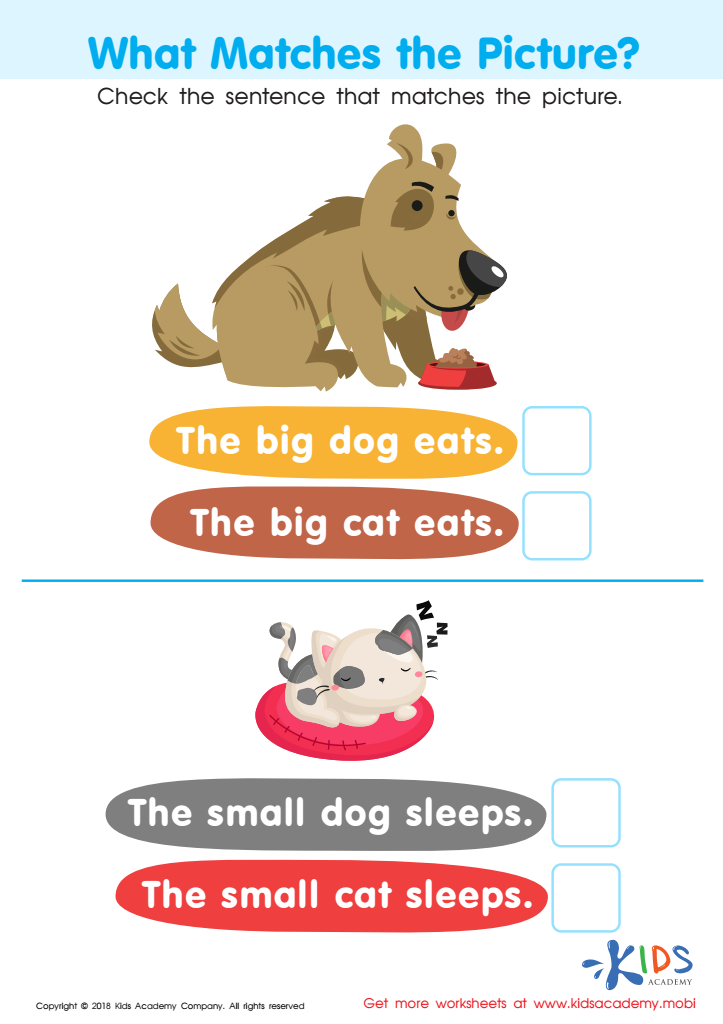
What Matches the Picture? Worksheet
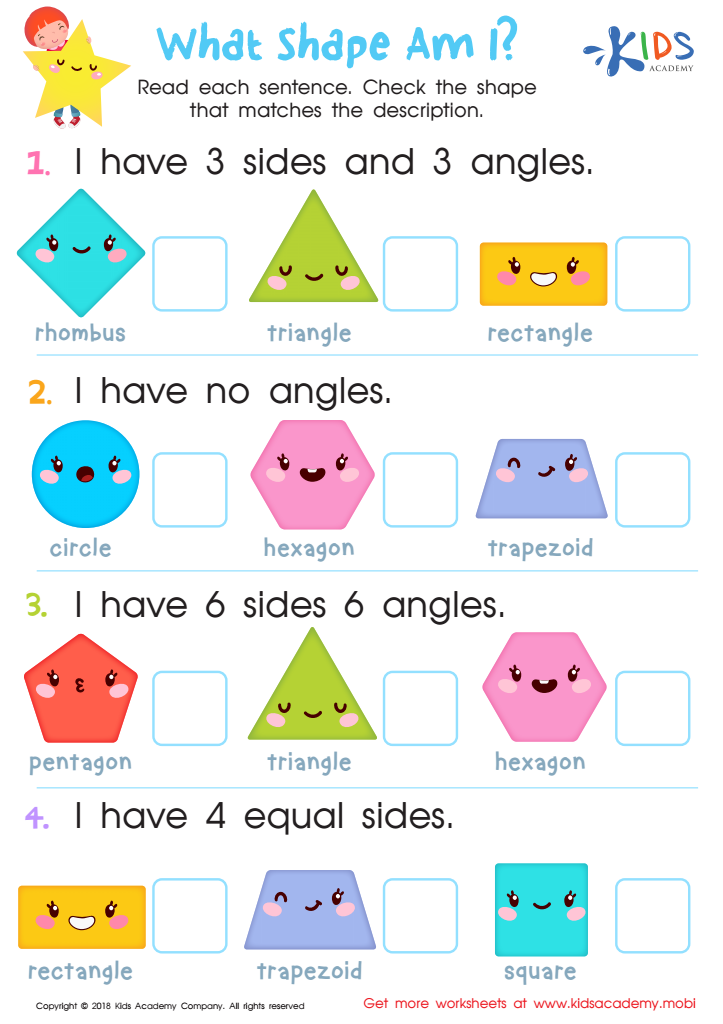
What Shape Am I? Worksheet
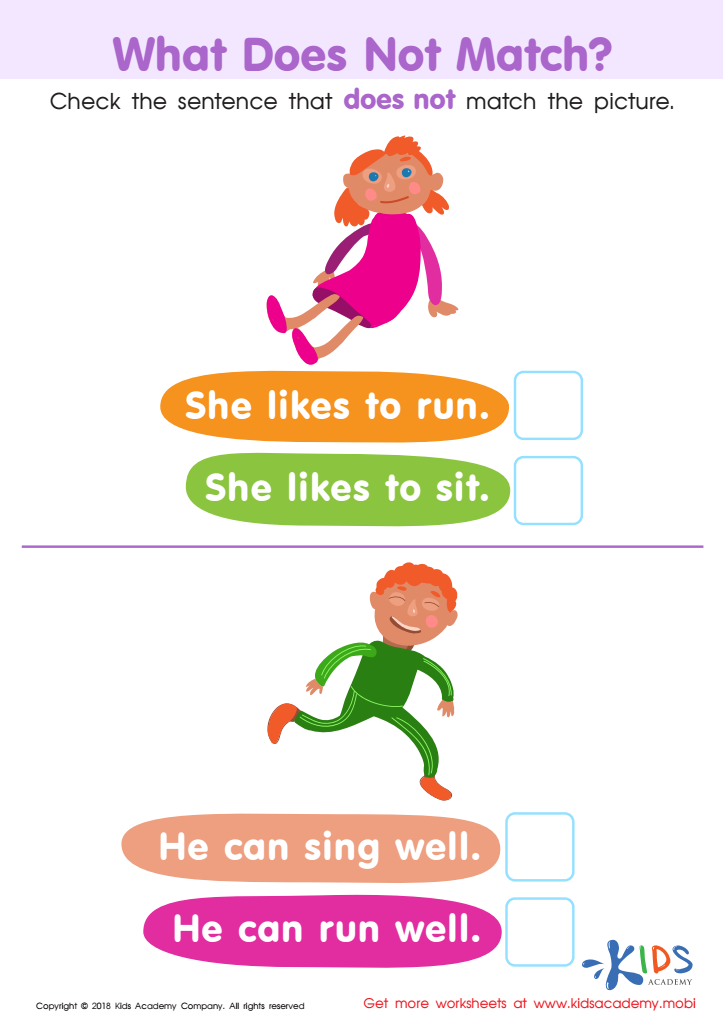
What Does Not Match? Worksheet







Visual discrimination is an essential skill for children aged 5-6, and it's crucial for both parents and teachers to pay attention to it. This ability allows young learners to notice small differences and similarities in shapes, colors, sizes, and patterns. Developing strong visual discrimination skills can significantly impact a child's academic success and everyday functioning.
For instance, children use visual discrimination when learning letters and numbers, which helps in reading and math. If they can distinguish between 'b' and 'd' or differentiate between the numbers 6 and 9, they are likely to perform better in school. Furthermore, visual discrimination plays a vital role in problem-solving and critical thinking, as it helps children analyze their environment and make informed decisions—skills that are valuable throughout life.
By fostering these skills through engaging activities like puzzles, matching games, and art projects, parents and teachers can create a strong foundation for cognitive development. Ignoring visual discrimination may lead to challenges in learning and could hinder a child's confidence in their abilities. Therefore, it's essential for adults to actively support and nurture these skills during this critical developmental stage.








