
Vocabulary Enrichment Easy Worksheets for Ages 5-6
7 filtered results
Difficulty Level
Grade
Age
-
From - To
Subject
Activity
Standards
Discover our engaging "Vocabulary Enrichment Easy Worksheets for Ages 5-6" designed to enhance early language skills in young learners. These worksheets are perfect for fostering vocabulary development through fun, age-appropriate activities. Children will enjoy exploring new words, improving comprehension, and building confidence in their language abilities. Each worksheet incorporates colorful visuals and interactive tasks to ensure an enjoyable learning experience. Ideal for both classroom and home use, these resources encourage creativity and critical thinking. Download and print our worksheets to inspire a love for language and help your child expand their vocabulary in an exciting, engaging way!
Favorites
With answer key
Interactive
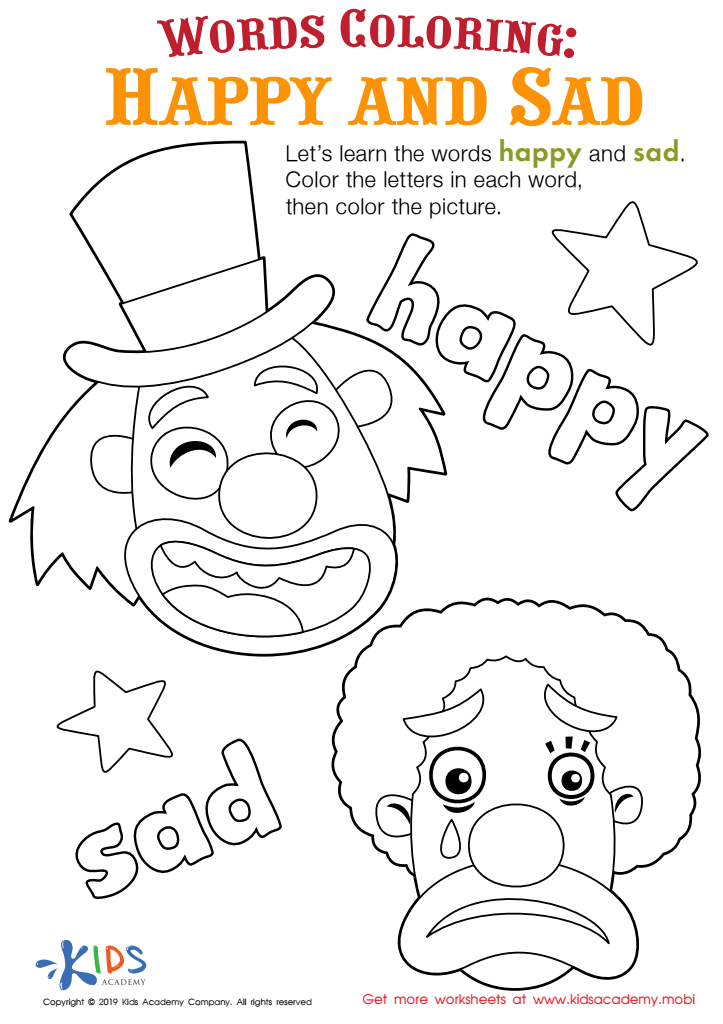
Happy and Sad Words Coloring Worksheet
Help students understand emotions by using this fun worksheet. It features smiling and sad clowns and the words 'happy' and 'sad'. Read the words with your students, then have them color the clowns and the emotion words. This PDF is an effective way to teach kids how to express how they feel.
Download (PDF)
 Assign to My Students
Assign to My Students
Happy and Sad Words Coloring Worksheet
Worksheet
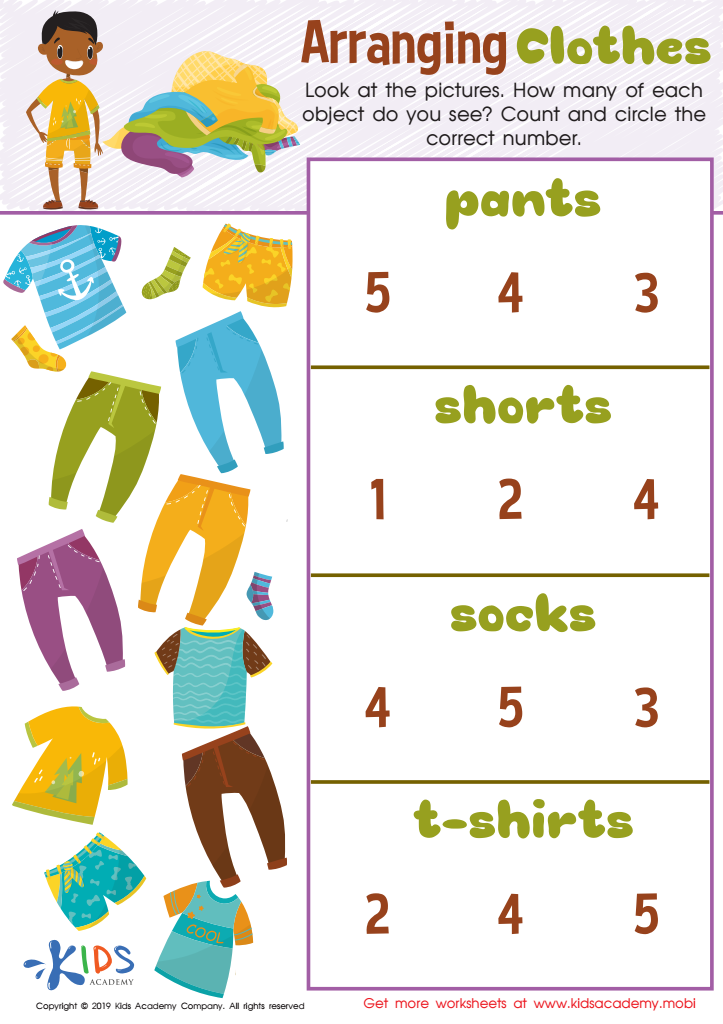
Arranging Clothes Worksheet
This worksheet uses familiar items, brightly colored to attract your kids. Ask them to name each item, then count them and circle the right number.
Arranging Clothes Worksheet
Worksheet
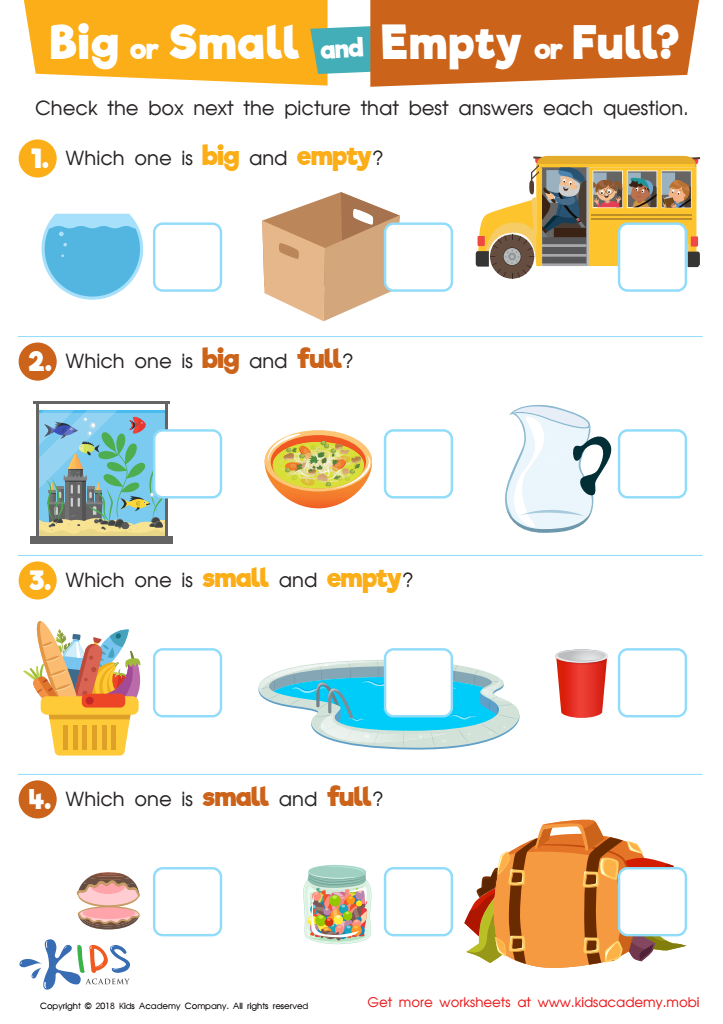
Big or Small and Empty or Full? Worksheet
Early learners can develop their math skills by using this Worksheet with fun, familiar pictures. It reinforces concepts like big/small and empty/full, helping them to differentiate and identify objects that meet those definitions.
Big or Small and Empty or Full? Worksheet
Worksheet
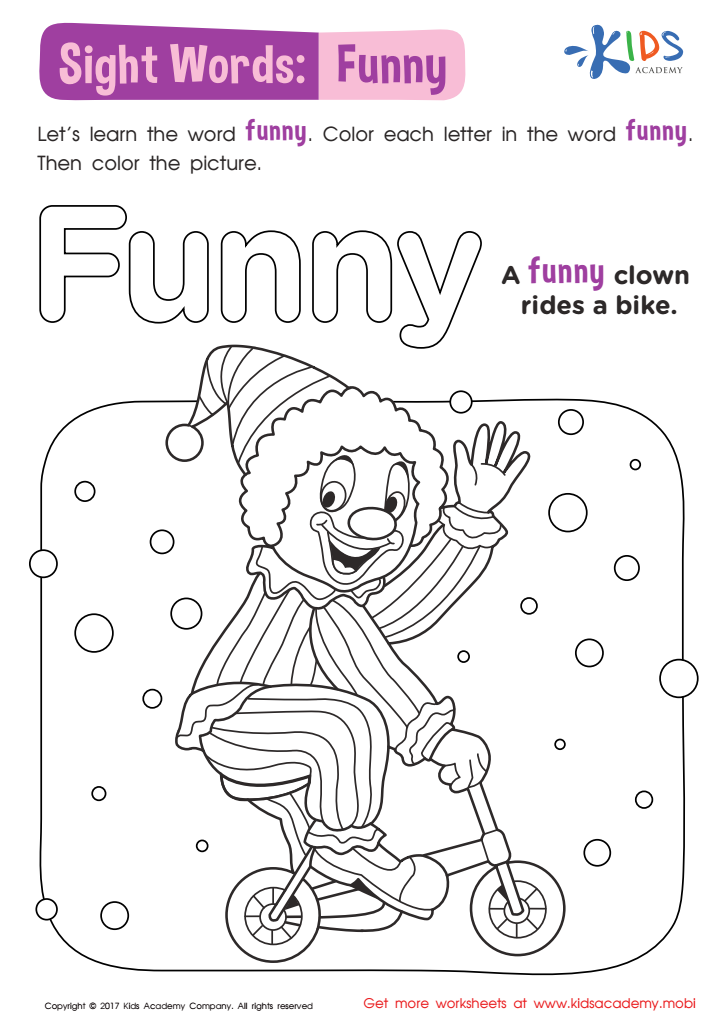
Funny Worksheet Sight Words Worksheet
Love humor? Introduce "funny" as a sight word with this fun worksheet! Have your child read the sentence then color the word in the center. Let them use their imagination to color the silly clown in any way they like!
Download (PDF)
Assign to My Students
Assign to My Students
Funny Worksheet Sight Words Worksheet
Worksheet
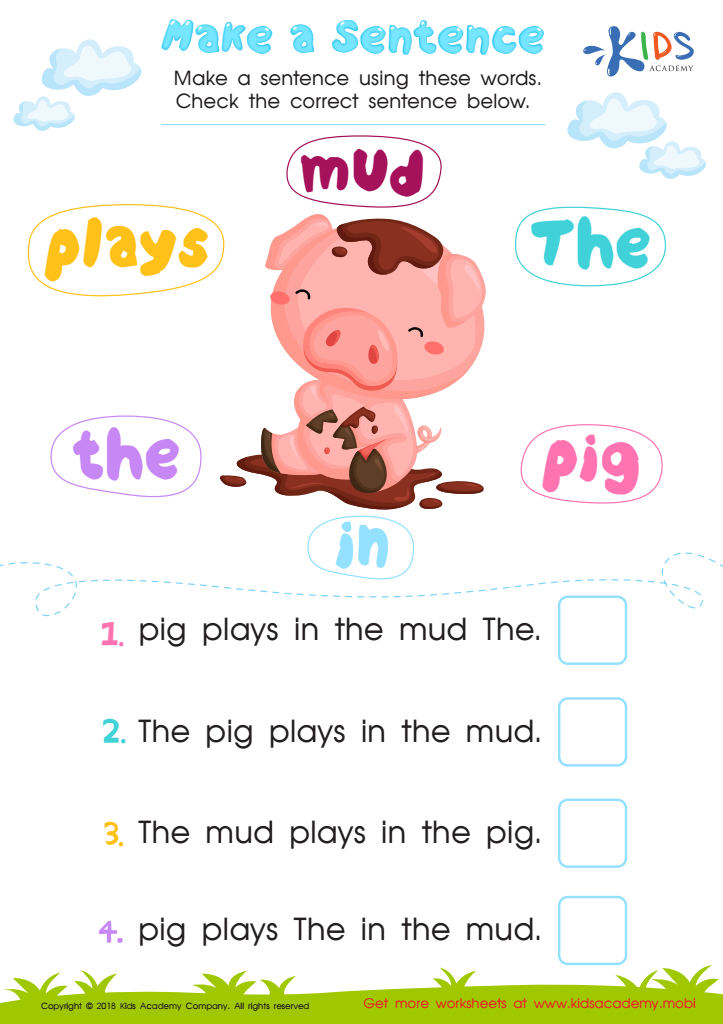
Assessment: Make a Sentence Worksheet
Help your kids identify the animal in the printout. Read the words in the bubbles and then read the four sentences in the options 1 – 4. Ask them to check the box with the correct sentence.
Assessment: Make a Sentence Worksheet
Worksheet
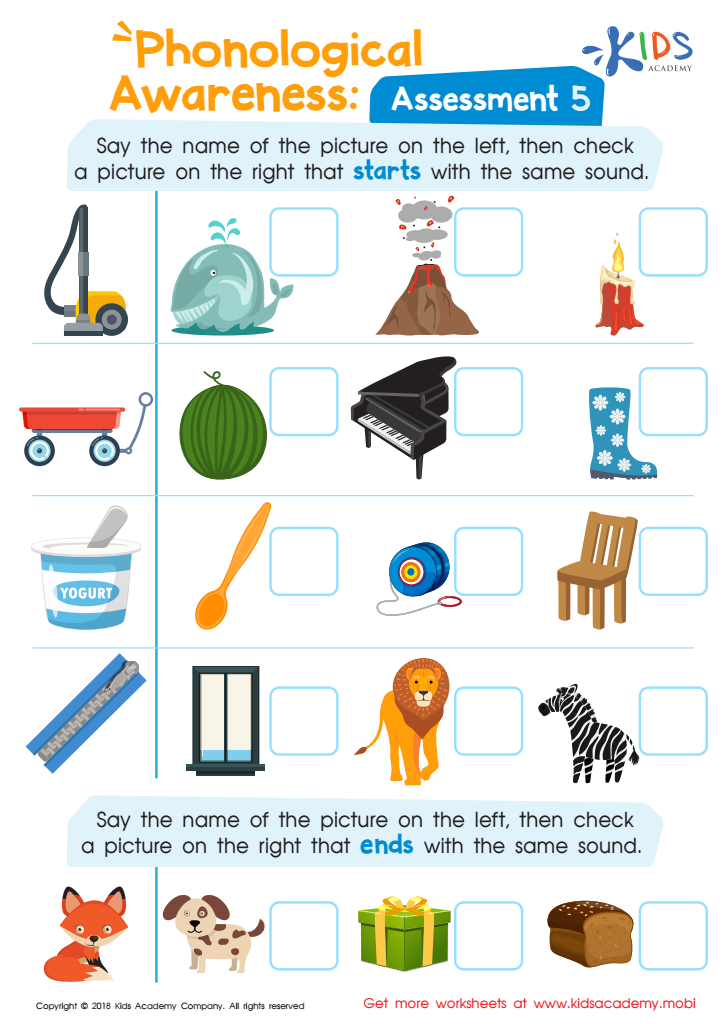
Phonological Awareness: Assessment 5 Worksheet
Repetition is key to success! This worksheet tests kids' ability to match beginning and ending sounds in words. Instruct them to say each word and listen closely to the sounds they make. Focus on the starting sounds for the first four pics, then the last one to hear ending sounds and find the right match!
Phonological Awareness: Assessment 5 Worksheet
Worksheet
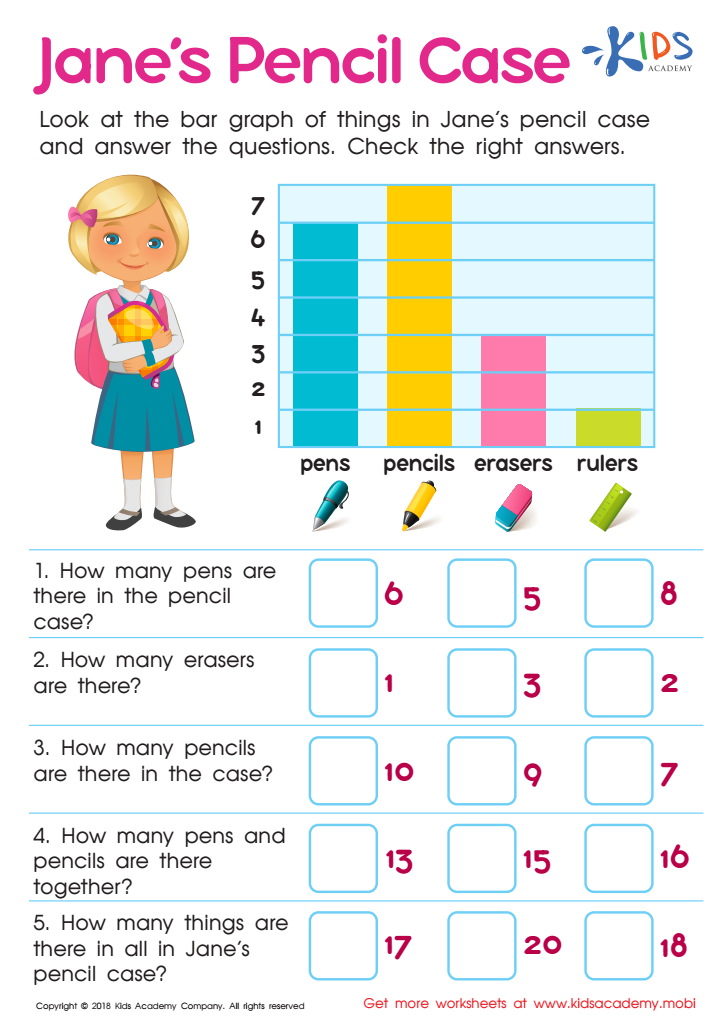
Jane's Pencil Case Worksheet
Help Jane organize her pencil case! Have your child look and the bar graph on the worksheet and interpret the data. Ask them to read each problem, then check the box next to the correct number. It's a fun way to practice reading graphs and reporting data.
Jane's Pencil Case Worksheet
Worksheet
Join Kids Academy for Free
Who is primarily going to use this learning content?







Vocabulary enrichment for children aged 5-6 is crucial for their overall language development and future academic success. At this formative stage, young learners are like sponges, eagerly absorbing new words and concepts. Enhance their vocabulary provides a strong foundation for reading comprehension and writing skills, both essential for effective communication.
By improving vocabulary, children gain the ability to express thoughts and ideas more clearly, which boosts their confidence in social interactions and academic settings. This age group also benefits from vocabulary-rich environments, as exposure to diverse words fosters cognitive development and critical thinking skills. Engaging with new words through games, stories, and everyday conversations makes learning enjoyable, encouraging a lifelong love of language.
Moreover, when parents and teachers incorporate vocabulary enrichment into daily routines, they help bridge language gaps that can affect a child's performance in later grades. A robust vocabulary not only supports literacy but also connects to math and science understanding, as many concepts in these subjects rely on precise language.
Ultimately, prioritizing vocabulary enrichment at this age sets children on a path to successful communication, academic achievement, and personal growth. Investing in their vocabulary now cultivates a bright future filled with opportunities.








