Counting skills Easy Addition & Subtraction Worksheets for Ages 5-6
16 filtered results
-
From - To
Enhance your child's counting skills with our Easy Addition & Subtraction Worksheets, specially designed for ages 5-6. These engaging, printable worksheets provide a fun and interactive way for young learners to master basic math concepts. With colorful visuals and straightforward exercises, your child will develop essential counting strategies while practicing addition and subtraction. Each worksheet promotes a hands-on approach, encouraging your little one to explore numbers in an enjoyable manner. Perfect for home or classroom use, our resources will boost confidence and build a solid foundation in mathematics. Start your child's mathematical journey today with our thoughtfully crafted worksheets!
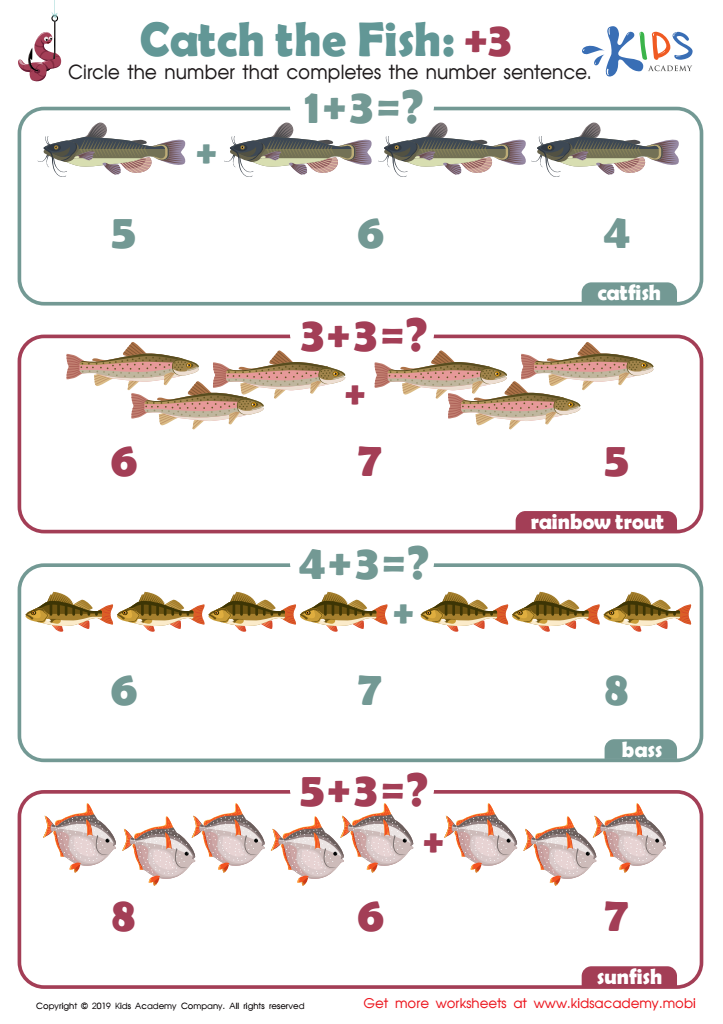
Catch the Fish: +3 Worksheet
 Assign to My Students
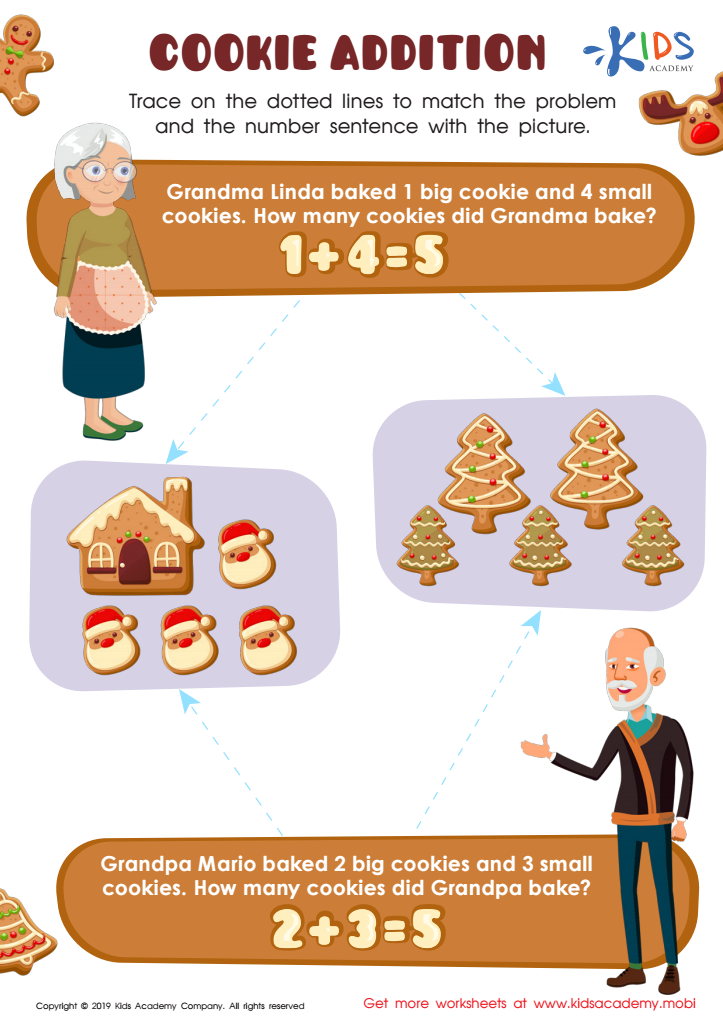
Cookie Addition Worksheet
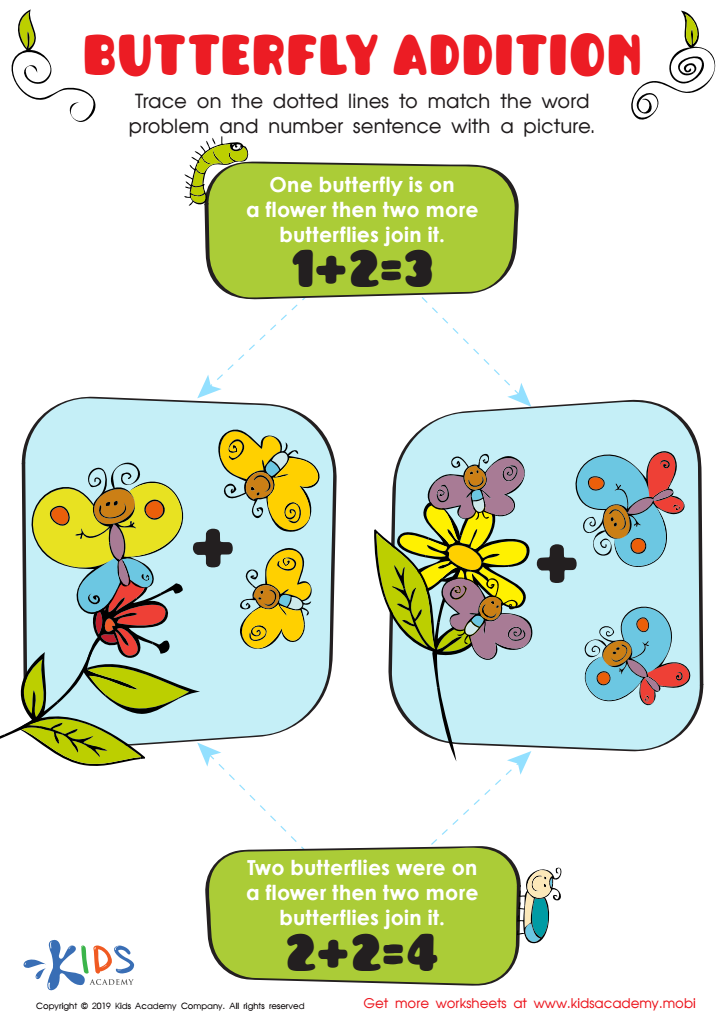
Butterfly Addition Worksheet
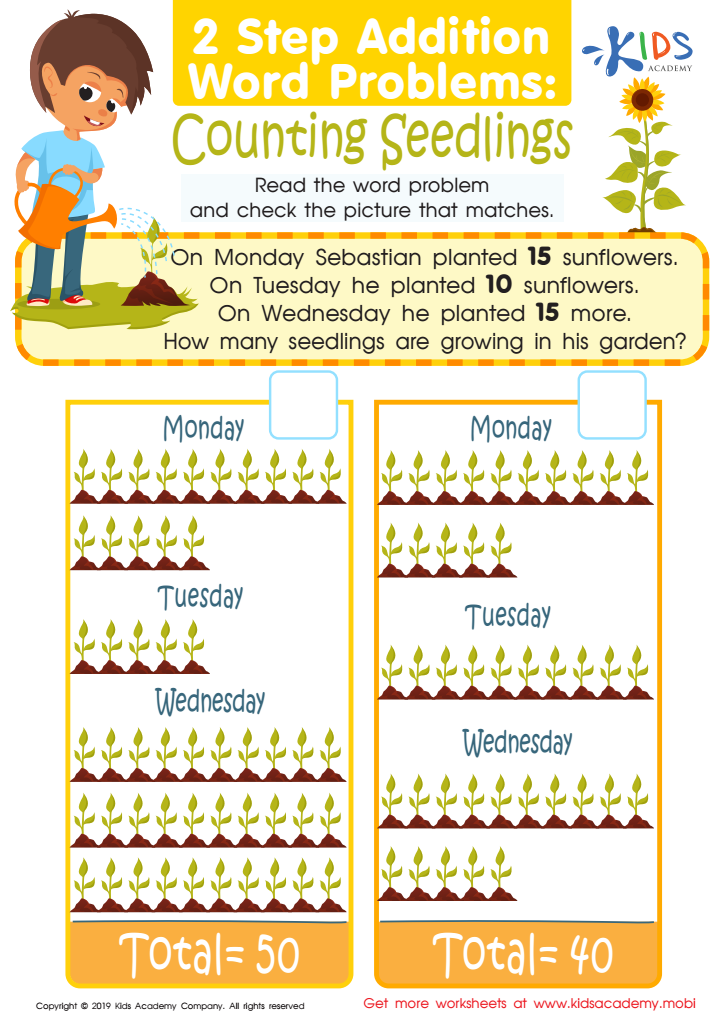
Counting Seedlings Worksheet
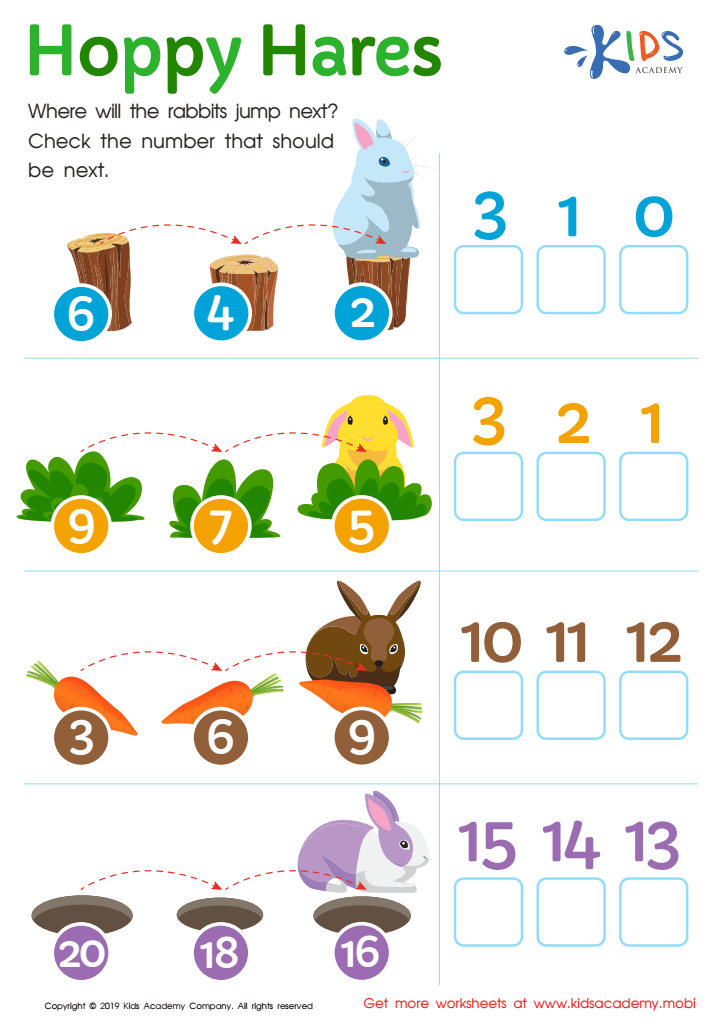
Hoppy Hares Worksheet
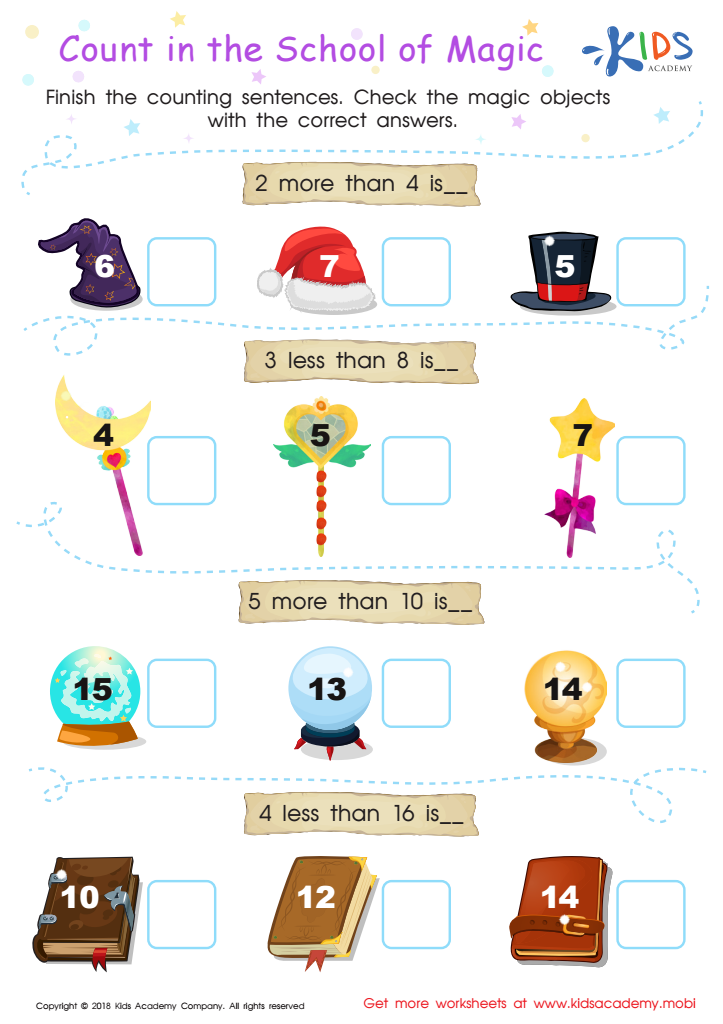
Count in the School of Magic Worksheet
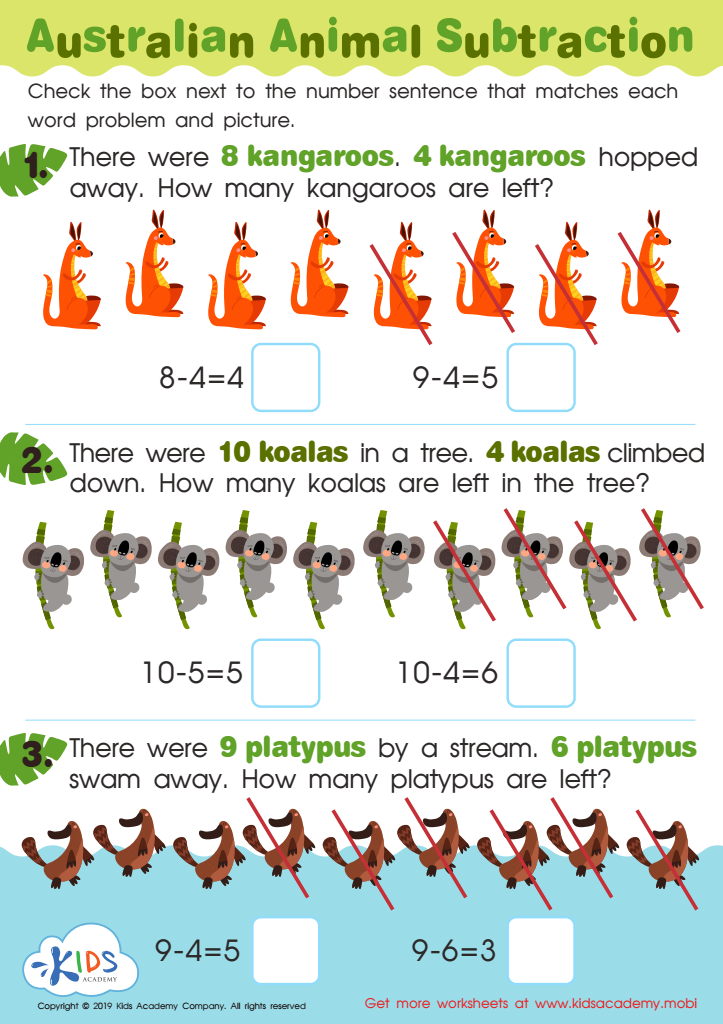
Australian Animal Subtraction Worksheet
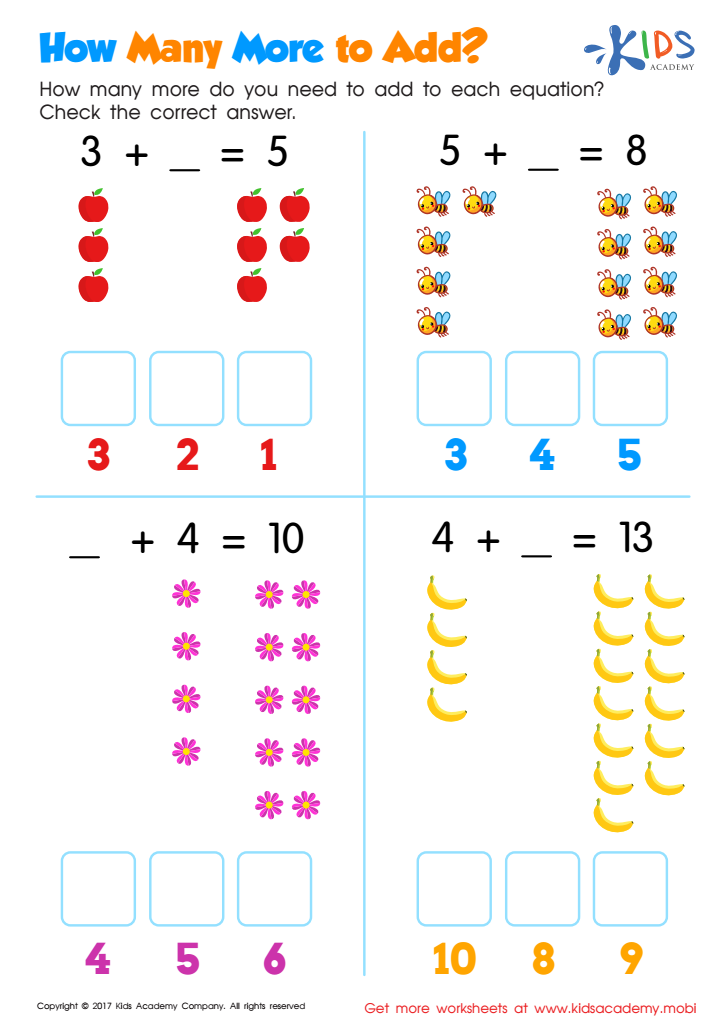
How Many More to Add Worksheet
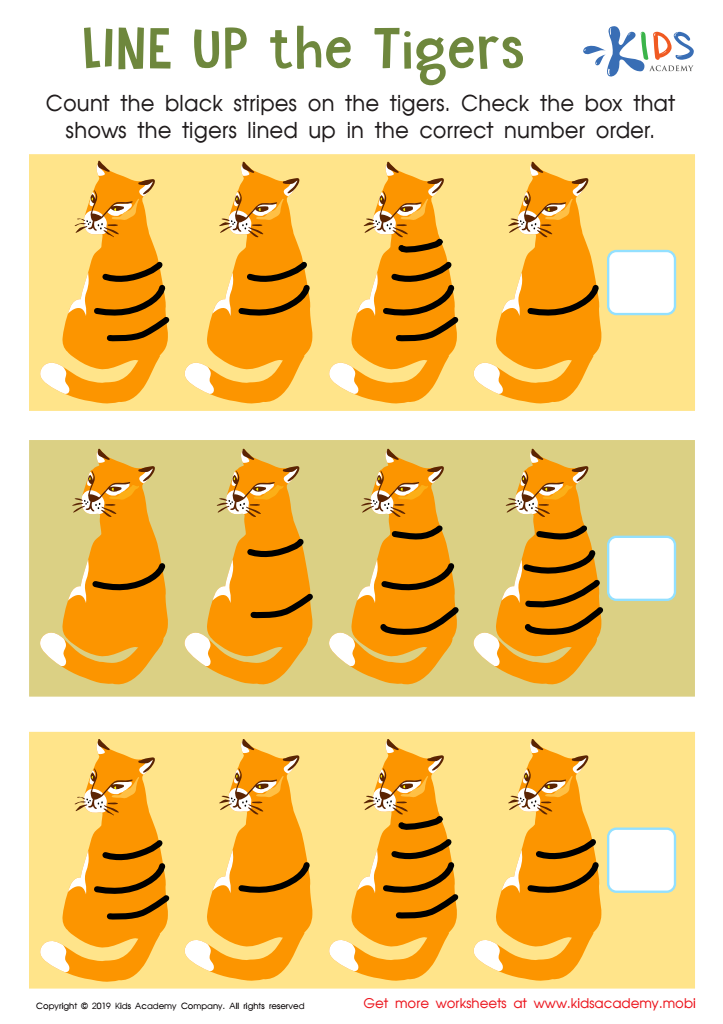
Line up the Tigers Worksheet
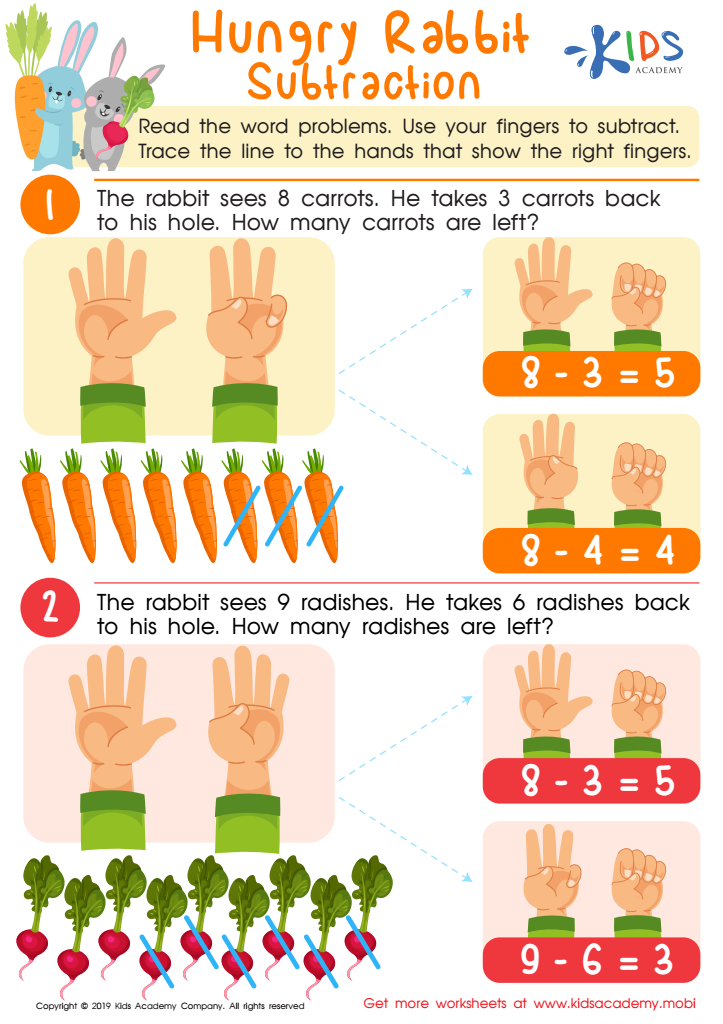
Hungry Rabbit Subtraction Worksheet
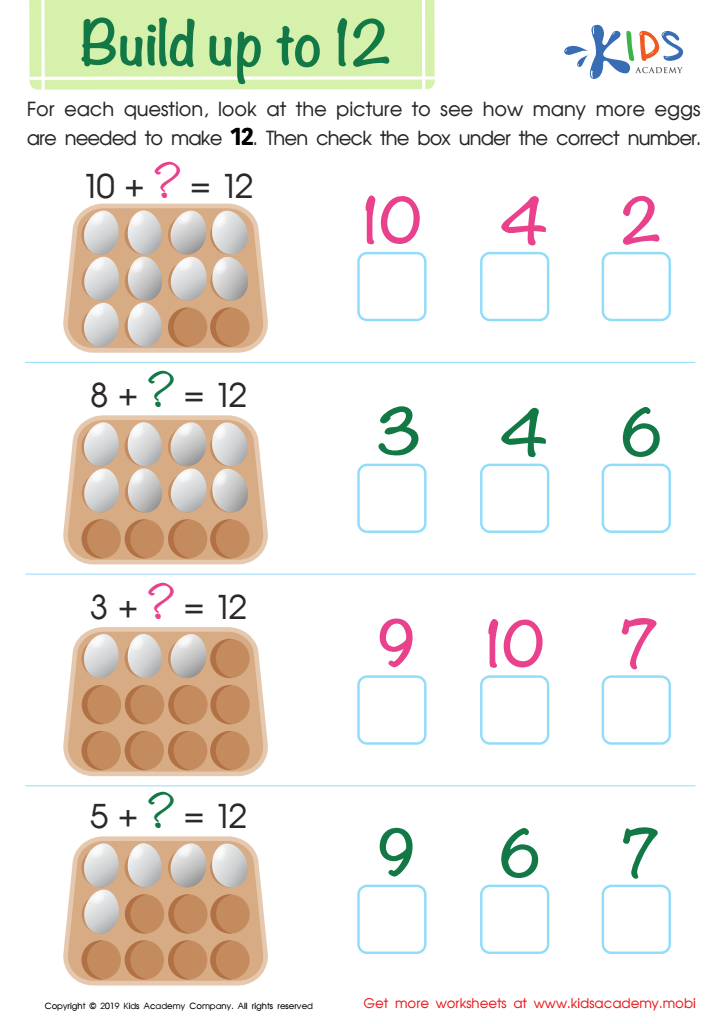
Build up to 12 Worksheet
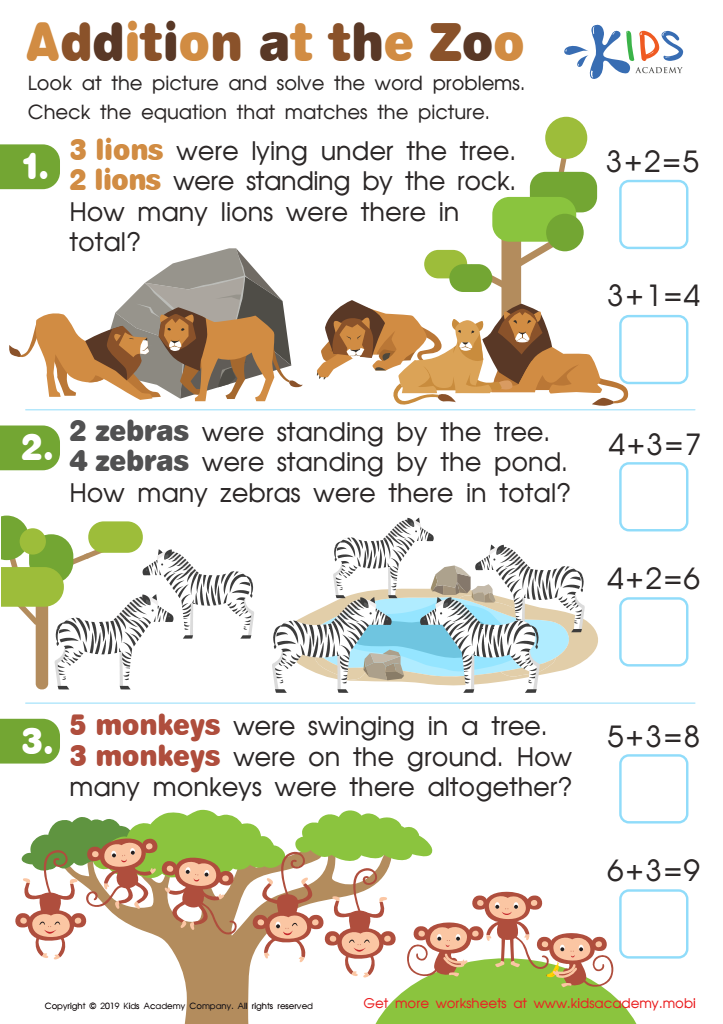
Addition at the Zoo Worksheet
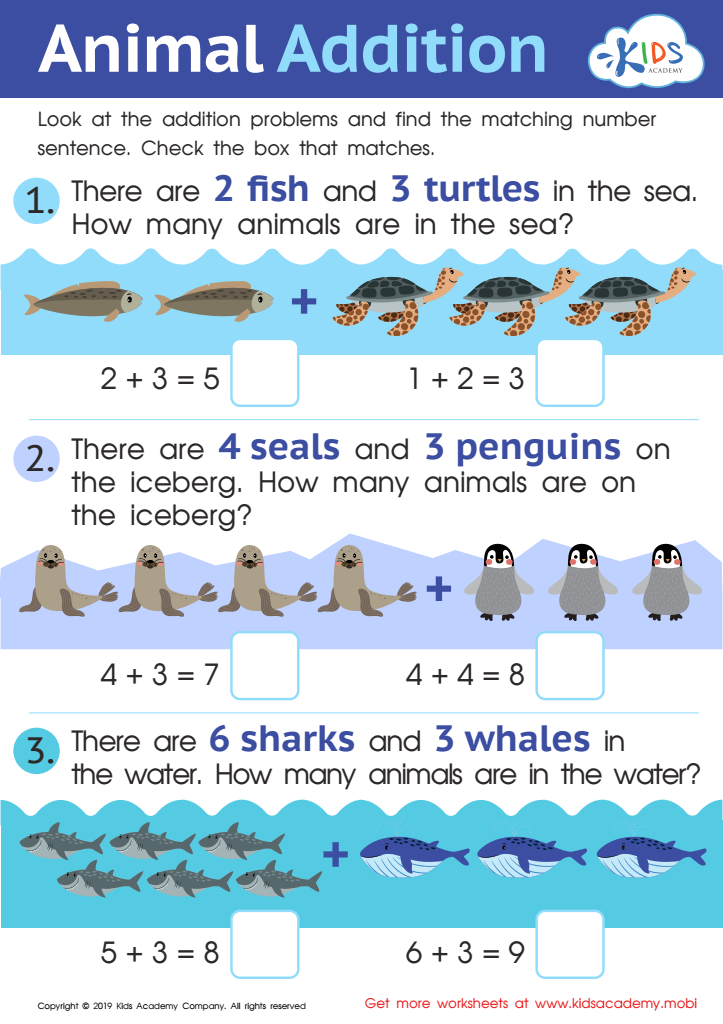
Animal Addition Worksheet
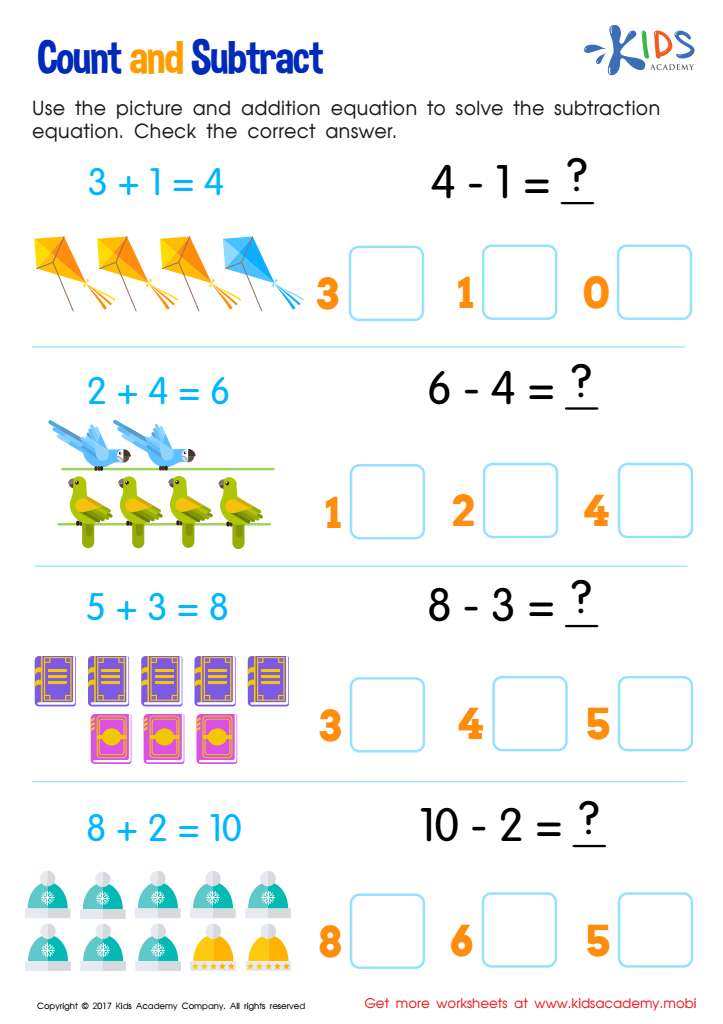
Count and Subtract Worksheet
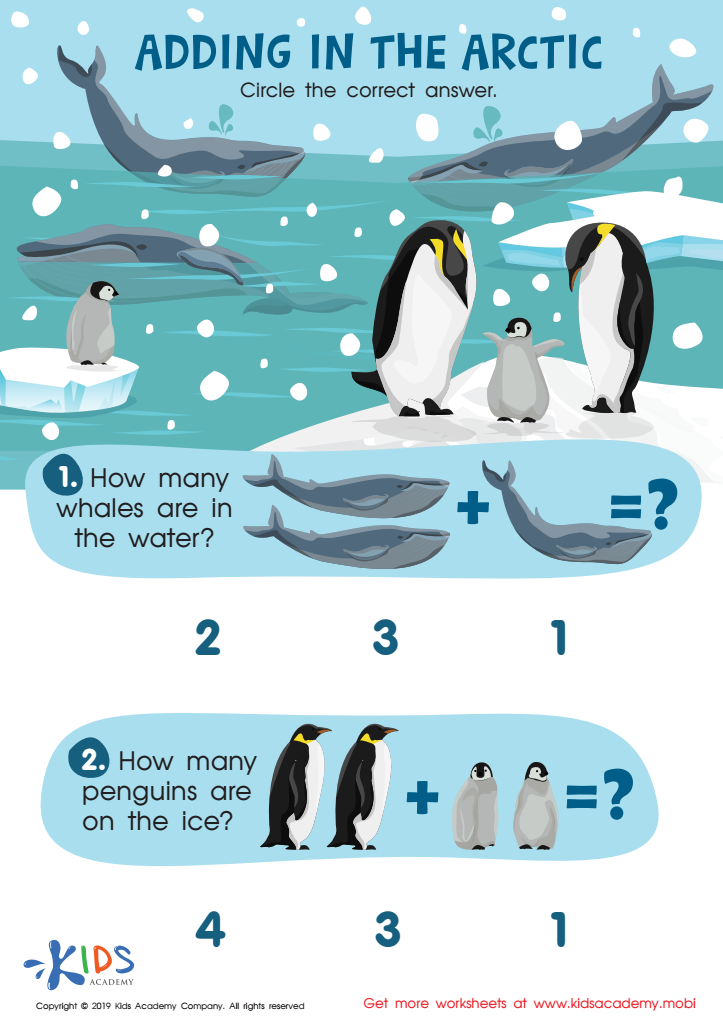
Adding in the Arctic Worksheet
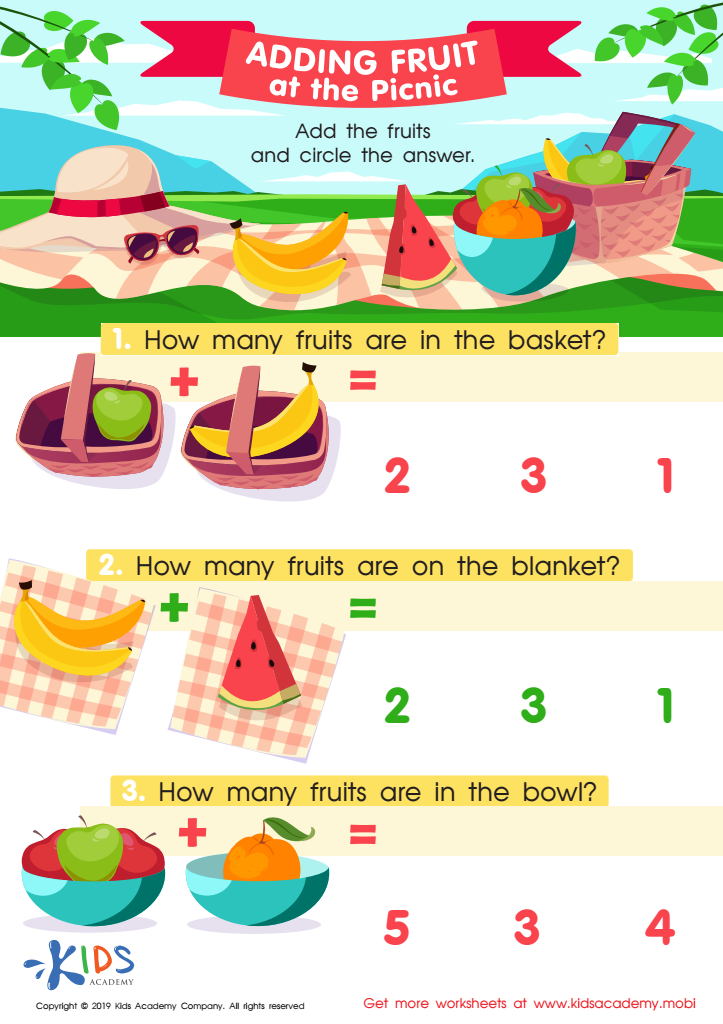
Adding Fruit at the Picnic Worksheet








Counting skills and basic addition and subtraction are fundamental for children aged 5-6, forming the cornerstone of their mathematical understanding. For parents and teachers, fostering these skills equips children with the tools they need to solve everyday problems, enhance cognitive development, and build a solid foundation for future learning.
At this age, children are naturally curious and eager to grasp new concepts. Early exposure to counting develops pattern recognition and number sense, essential for later arithmetic and more complex math. Mastering addition and subtraction not only boosts academic performance but also cultivates logical thinking, pattern recognition, and problem-solving abilities. Such skills are crucial for not just math but interdisciplinary learning as children progress through their education.
Moreover, fluency in basic math fosters confidence and a positive attitude toward learning. When children understand these concepts, they are more likely to engage with and enjoy math-related activities, sparking an early affinity toward the subject. Parents and teachers play a vital role in making math relevant and fun, transforming what could feel like daunting tasks into enjoyable challenges. Ultimately, encouraging counting skills and math basics in early education profoundly impacts children's overall intellectual and emotional development.








