Counting practice Easy Addition Worksheets for Ages 5-6
5 filtered results
-
From - To
Explore our Counting Practice Easy Addition Worksheets designed specifically for children ages 5-6! These engaging and interactive worksheets help young learners develop essential counting and addition skills in a fun way. Each worksheet encourages the practice of simple addition through colorful images and relatable themes, making learning enjoyable for little ones. Ideal for classroom activities or home practice, our resources provide structured activities that boost confidence and mastery of early math concepts. Whether your child is just starting or needs a little extra help, our worksheets offer the perfect foundation for building addition skills. Start their math journey today!
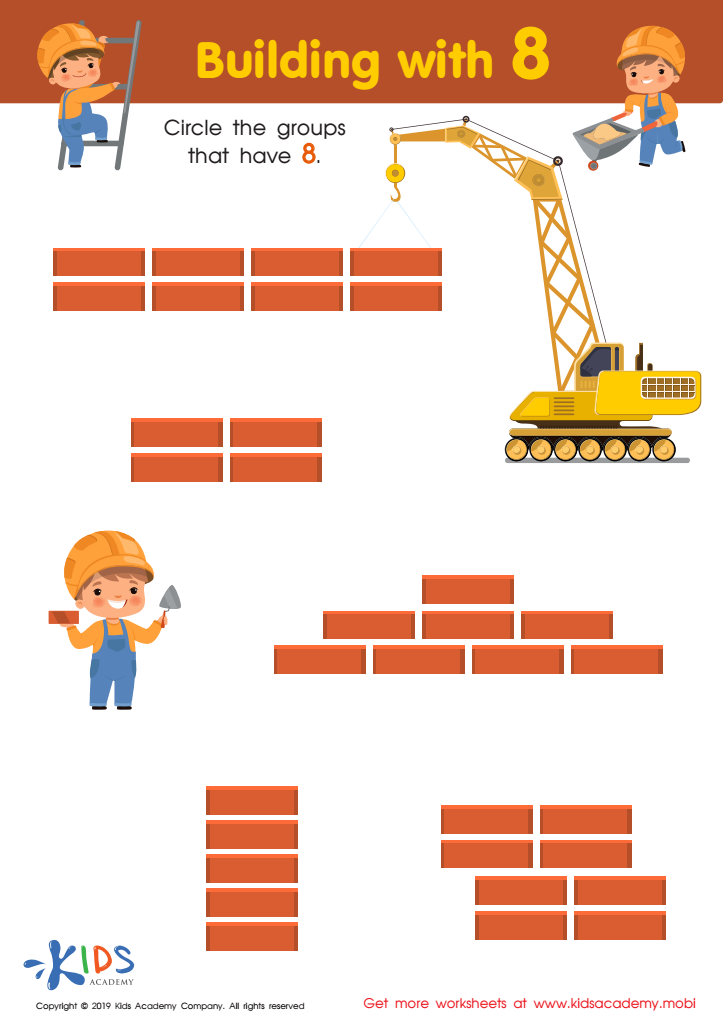
Building with 8 Worksheet
 Assign to My Students
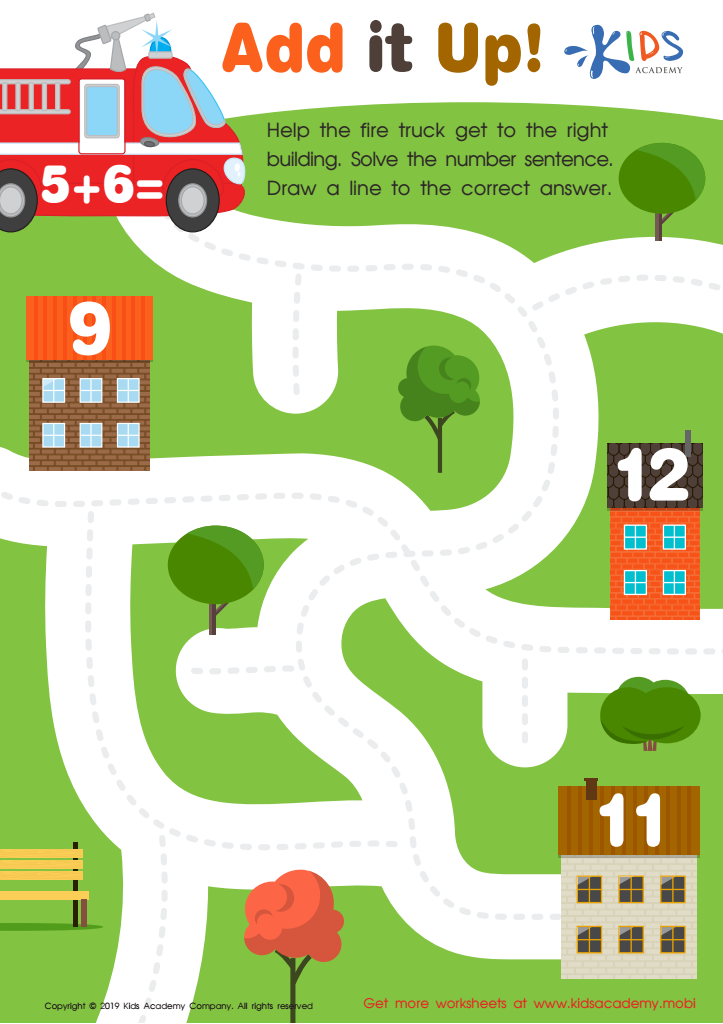
Add it Up Worksheet
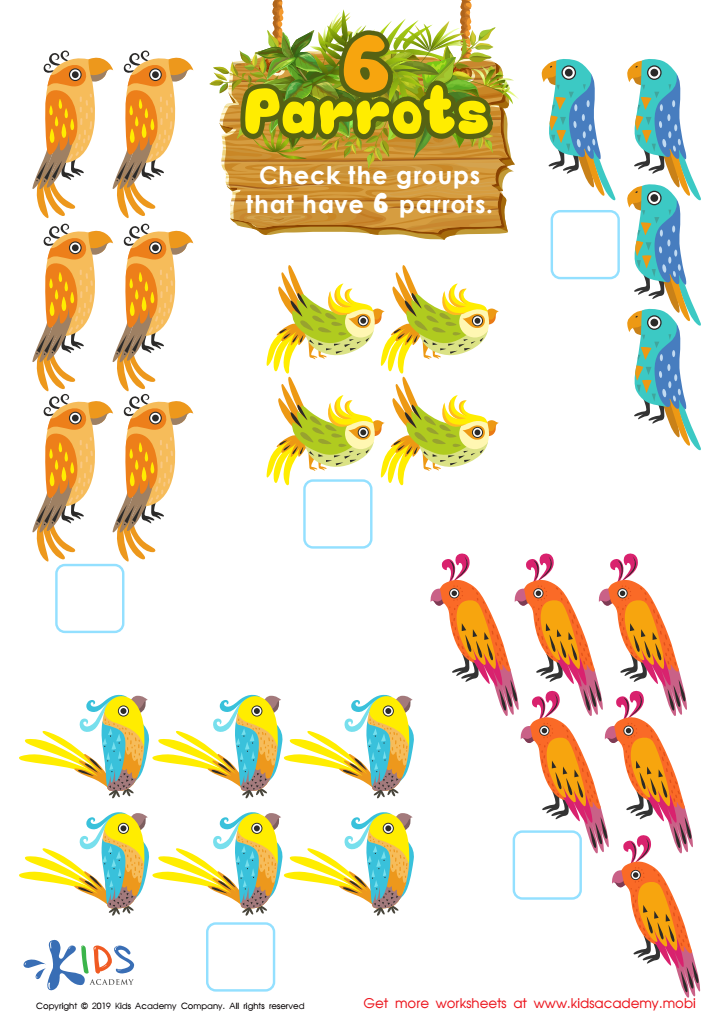
6 Parrots Worksheet
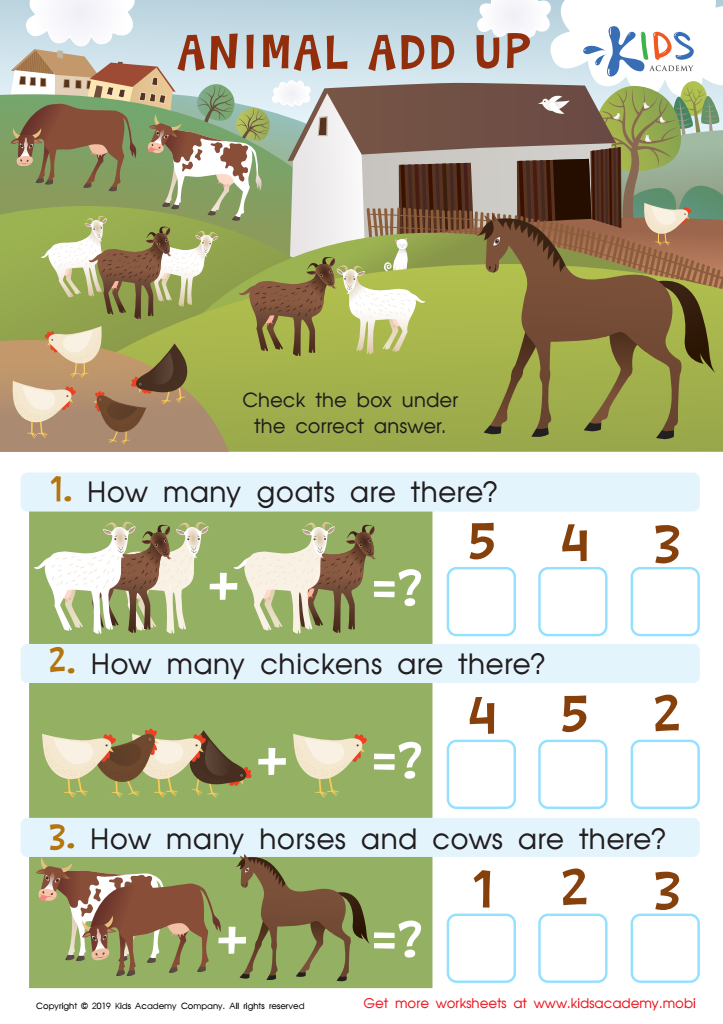
Animal Add Up Worksheet
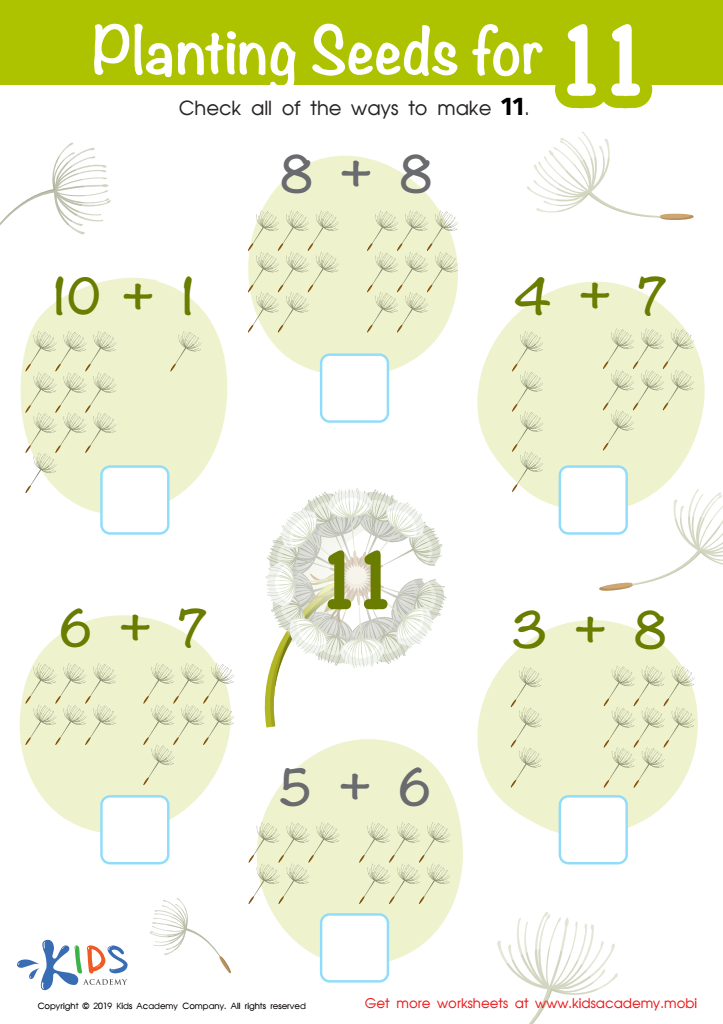
Planting Seeds for 11 Worksheet








Counting practice and easy addition are fundamental skills for children aged 5-6 that serve as the building blocks for future mathematical understanding. At this developmental stage, children are like sponges, eager to absorb knowledge, and establishing a solid foundation in counting and basic addition will greatly benefit them in their academic journey.
Parents and teachers play a crucial role in fostering a love for math and ensuring students are comfortable with numbers. Early exposure to counting and simple addition enhances cognitive development, promotes critical thinking, and improves problem-solving skills. Engaging children in fun and interactive practices—such as counting objects, playing math games, or using visual aids—helps them grasp these concepts more thoroughly and enjoyably.
Furthermore, mastery of these skills boosts children's confidence and lays the groundwork for more complex mathematical concepts in later grades. It also promotes participation in class discussions and collaborative activities involving math. It is vital for parents and teachers to embrace and encourage counting practices to build not just mathematical competence but also to nurture a lifelong appreciation for learning—helping young learners feel competent and enthusiastic about mathematics as they progress in their education.








