
Basic Math Skills Easy Numbers Worksheets for Ages 5-6
11 filtered results
Difficulty Level
Grade
Age
-
From - To
Subject
Activity
Standards
Our "Basic Math Skills Easy Numbers Worksheets for Ages 5-6" are designed to make learning numbers an enjoyable experience for young children. These engaging worksheets focus on fundamental math concepts such as counting, comparing numbers, and basic addition and subtraction. Perfectly suited for kindergarteners, our interactive materials nurture early math skills through colorful illustrations and fun exercises. Developed by educational experts, these worksheets aim to build a strong mathematical foundation while keeping young learners entertained and motivated. Download now to give your child a head start in their math journey with activities that are both educational and fun!
Favorites
With answer key
Interactive
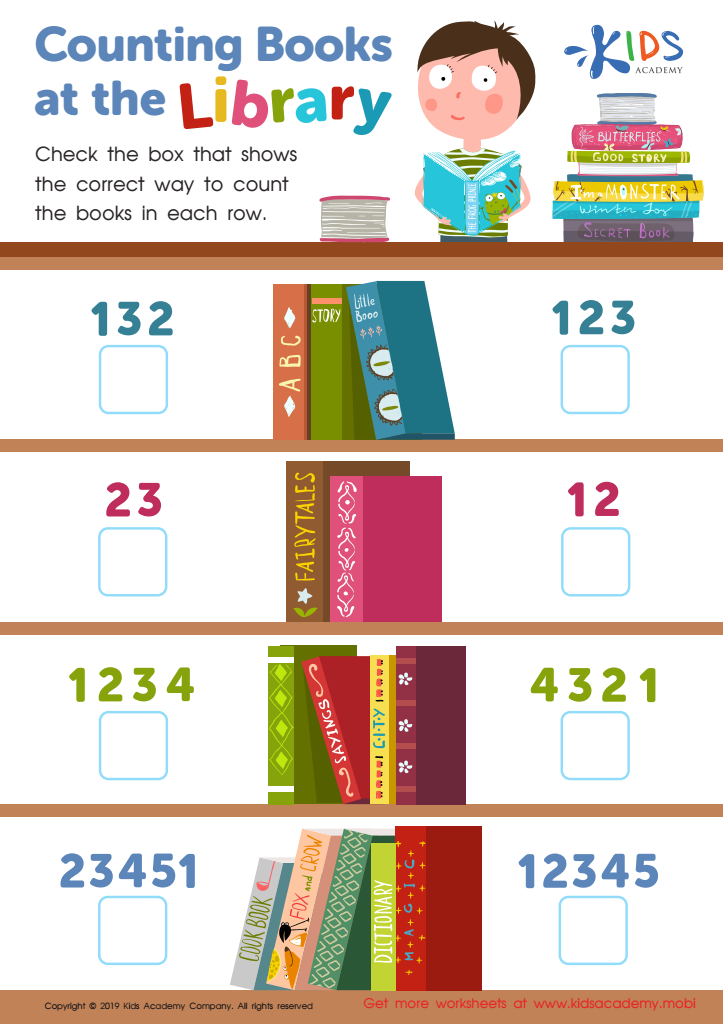
Counting Books at the Library Worksheet
At the library, you can find many books arranged in rows on shelves. Count the books in each row with your kids and check the box that shows the right way to count them. Besides books, libraries offer a place to read, study and research.
 Assign to My Students
Counting Books at the Library Worksheet
Worksheet
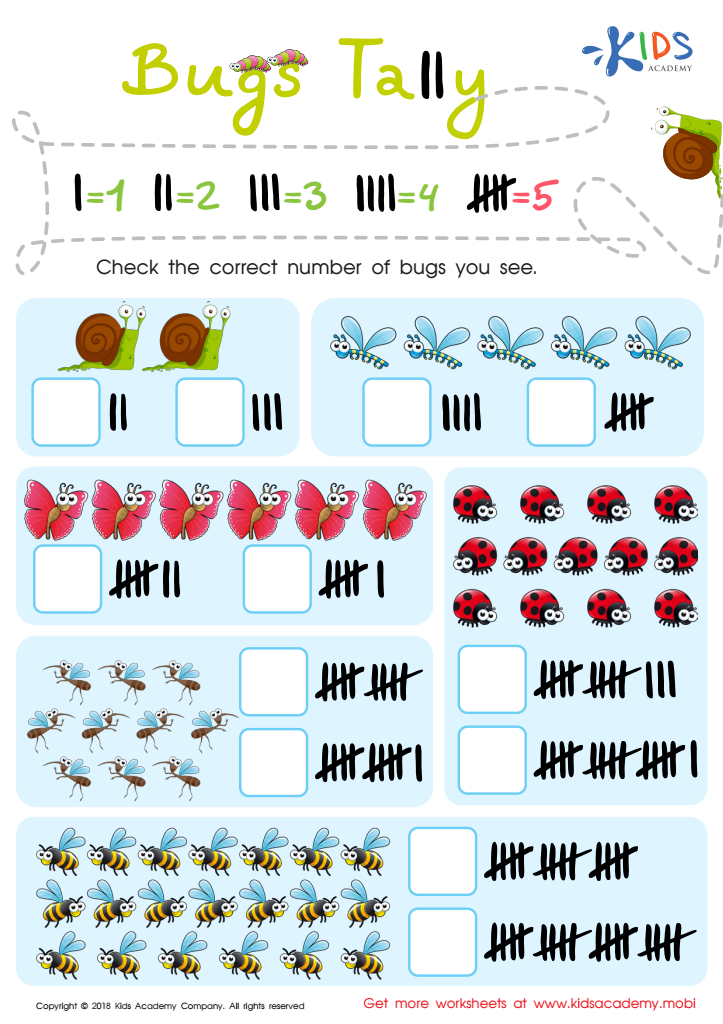
Bugs Tally Worksheet
This fun worksheet uses friendly bugs to help young mathematicians learn numbers and tally marks. They'll gain real-world skills to help with adding, subtracting and counting. Representations will solidify number reasoning, aiding with game playing and more.
Bugs Tally Worksheet
Worksheet
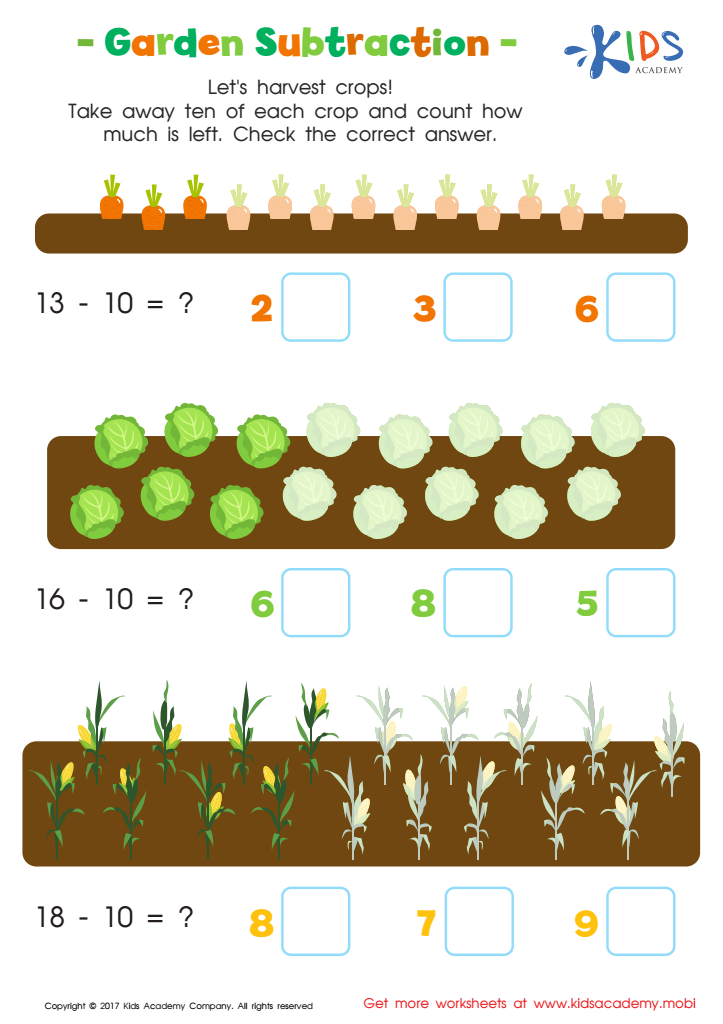
Garden Subtraction Worksheet
Help your kids understand math with this fun, garden-themed subtraction worksheet! Have them read the number sentences and count the veggies in each row. Then, subtract 10 from each row to find the answer. They'll love counting the colorful veggies and solving the problems!
Garden Subtraction Worksheet
Worksheet
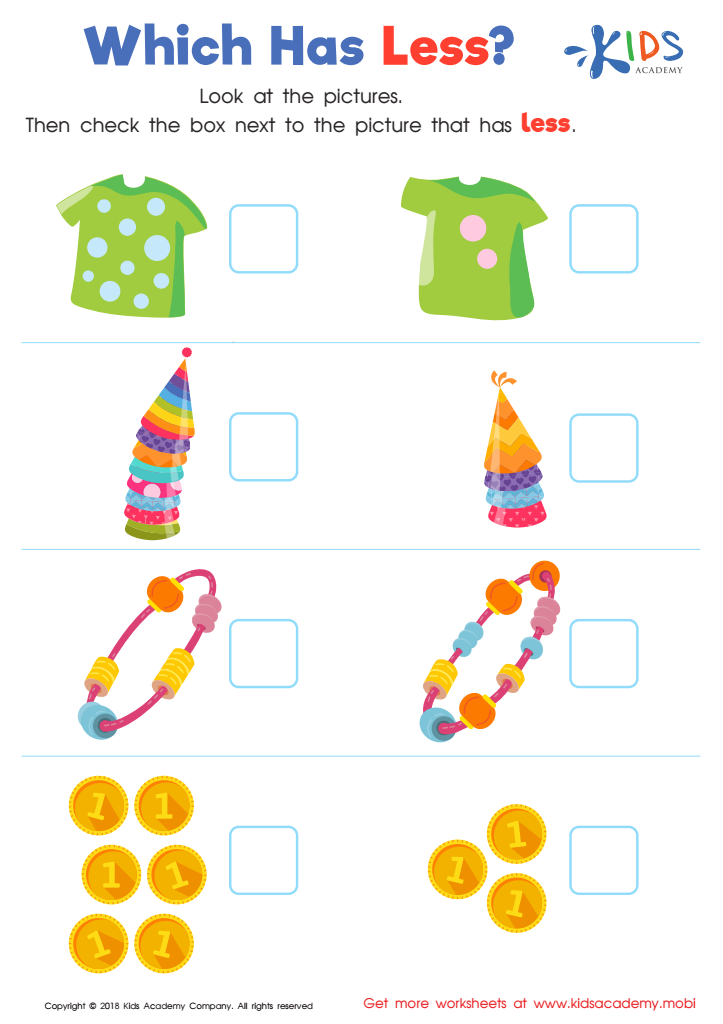
Which Has Less? Worksheet
Kids can develop their number sense by comparing and contrasting objects to identify which has less. This worksheet helps them practice: it's bright and colorful, featuring familiar objects and pictures to count, strengthening basic counting skills. It's the perfect warm-up for comparing and contrasting larger numbers.
Which Has Less? Worksheet
Worksheet
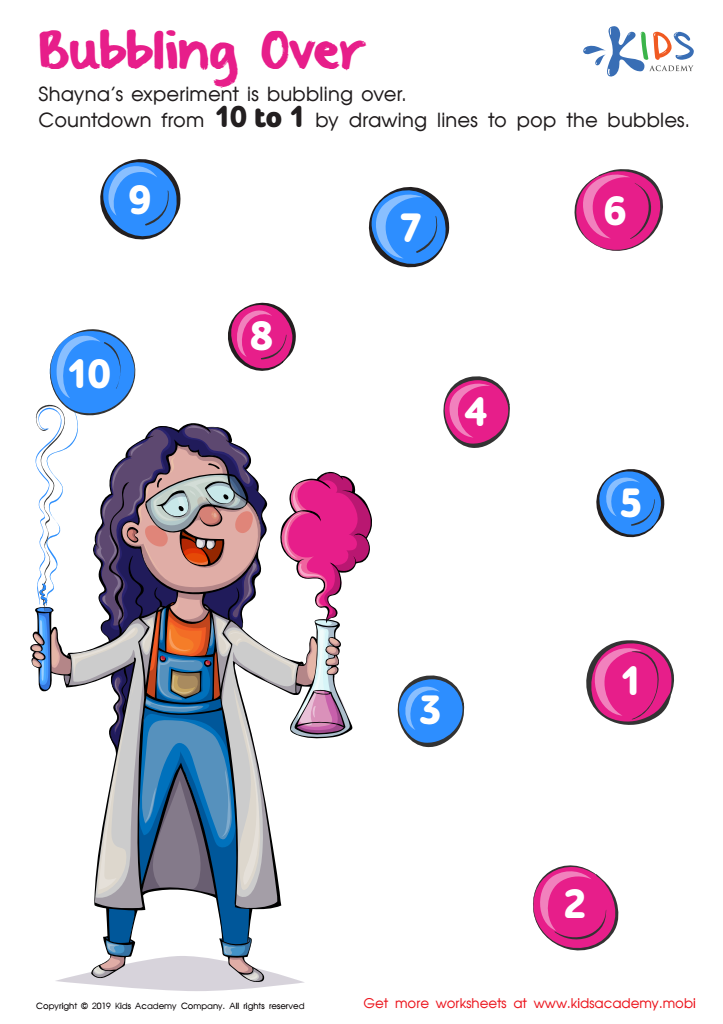
Bubbling Over Worksheet
Students love science experiments at the lab! They get to practice their counting skills while creating a masterpiece or an unexpected catastrophe! Ask them to count down from 10 to 1 by drawing lines to 'pop' the bubbles coming out of Shayna's experiment in the worksheet.
Bubbling Over Worksheet
Worksheet
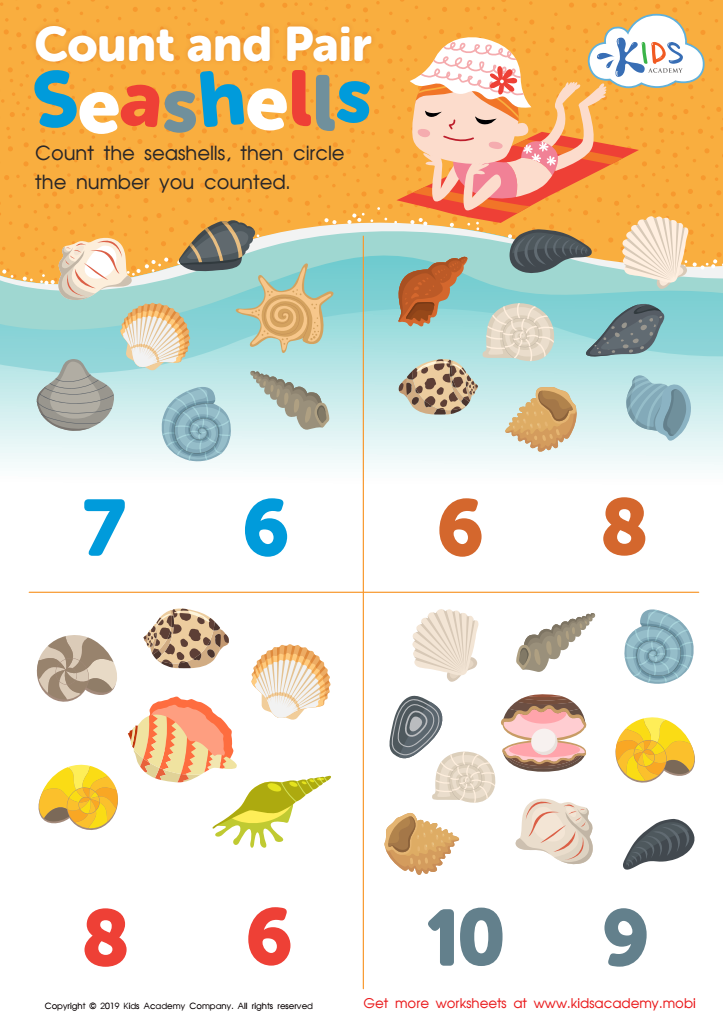
Count and Pair Seashells Worksheet
Kids love trips to the beach. Ask them to count the shells in the four sets of seashells in this printout - then circle the correct number beneath each set. Let them recall the happy memories of the beach and make this worksheet fun.
Count and Pair Seashells Worksheet
Worksheet
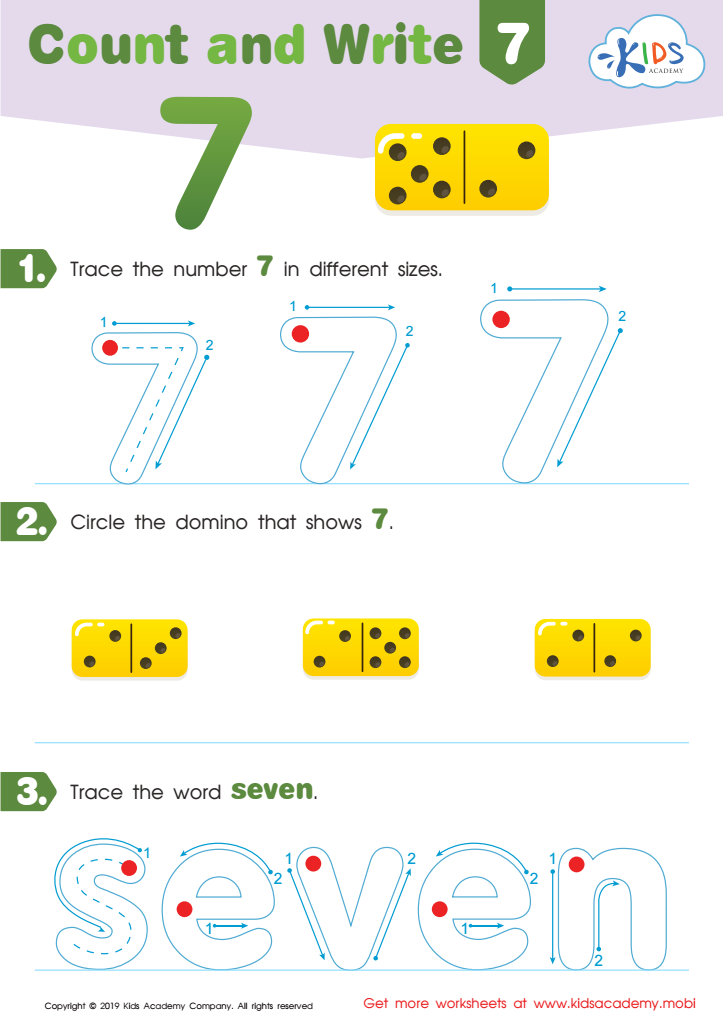
Count and Write 7 Worksheet
It's key to recognize and represent numbers in different formats. This free PDF shows children how '7' looks as a numeral, word, and with dice. Strengthening math skills is crucial, and the traceable lines and bright guide dots can help them practice writing '7' in two forms. Additionally, they'll hone their fine motor skills as they circle the dice that depicts '7'.
Count and Write 7 Worksheet
Worksheet
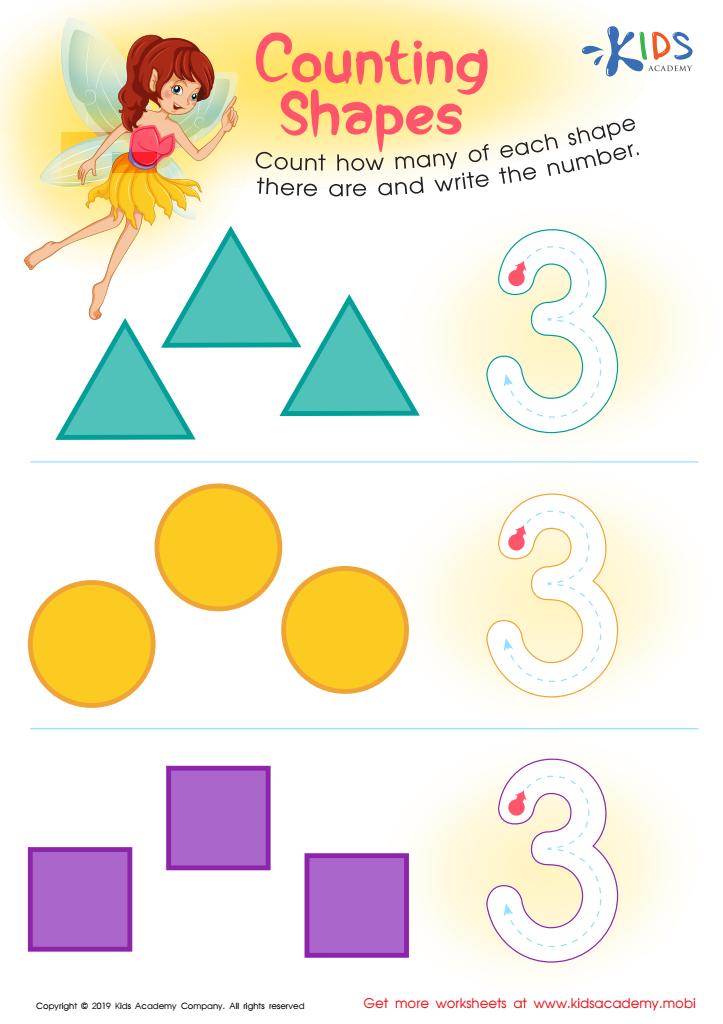
Counting Shapes Worksheet
Counting and number sense are essential skills. Picture representation helps kids understand and remember concepts. This free worksheet is perfect for introducing numbers and counting in groups of three. It also helps kids to practice writing numbers with traceable lines and guiding dots. It's an easy and fun way to give little mathematicians a successful start.
Counting Shapes Worksheet
Worksheet
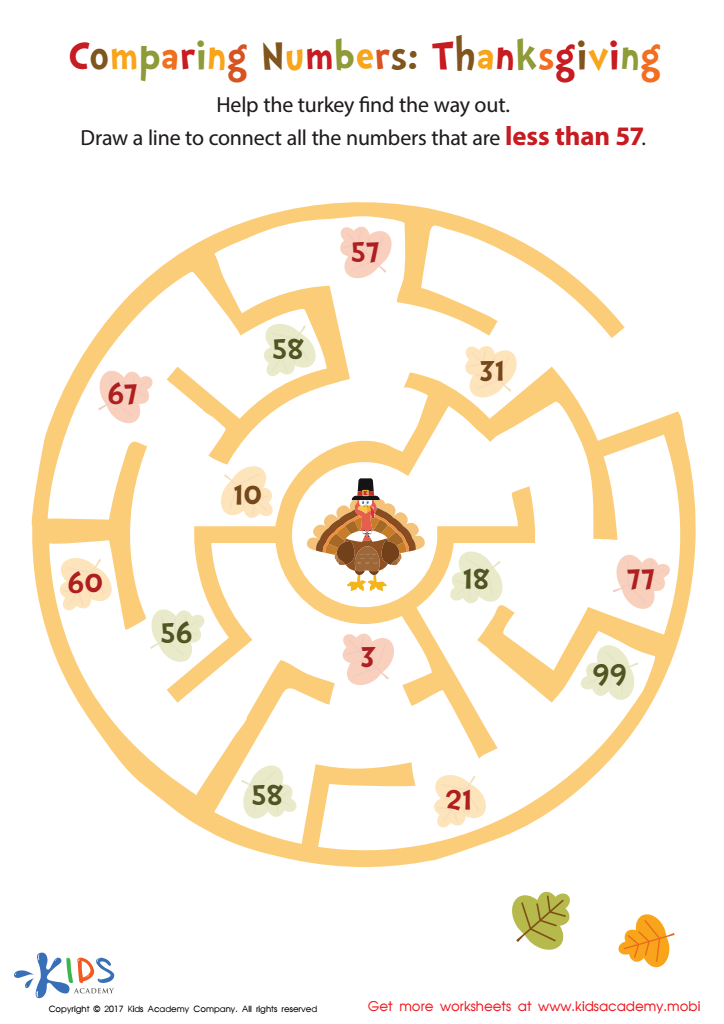
Comparing Numbers Printable
Test your child's number skills with this fun and tricky maze! This Thanksgiving worksheet lets them explore a maze, using numbers less than 57 to get to the tasty goal: A Thanksgiving turkey! Develop their number sense in a fun and engaging way!
Comparing Numbers Printable
Worksheet
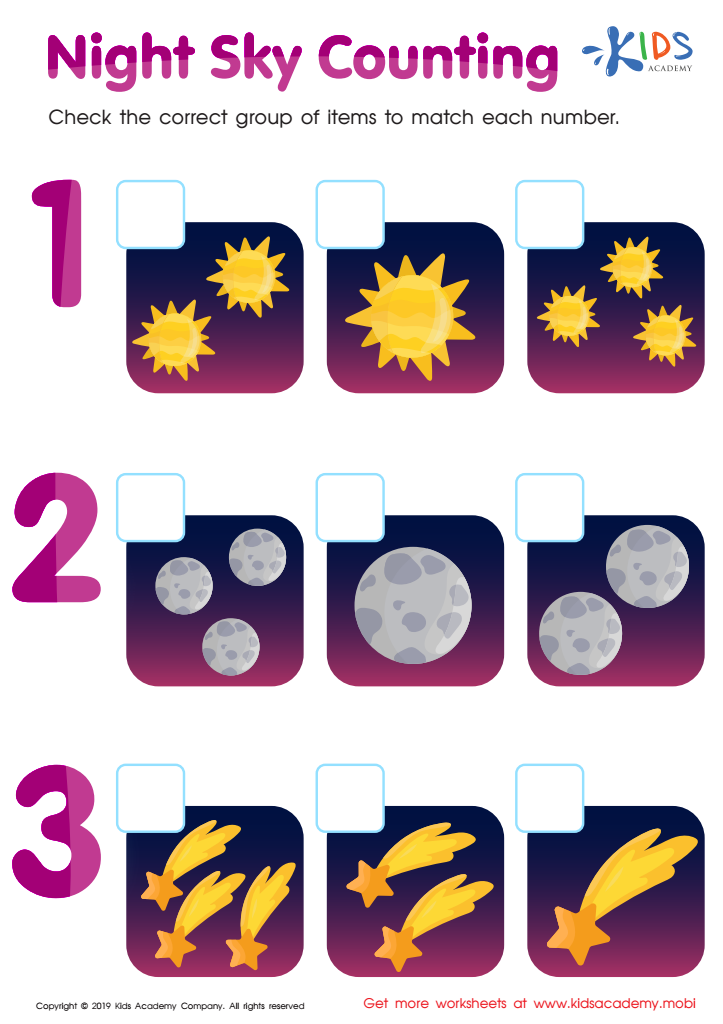
Night Sky Counting Worksheet
Twinkle, little star! Counting is fun with this Night Sky worksheet. Kids use colorful pictures and basic counting skills to match numerals with their corresponding group of items. It's a great way to let them practice number sense and one-to-one representation while having fun!
Night Sky Counting Worksheet
Worksheet
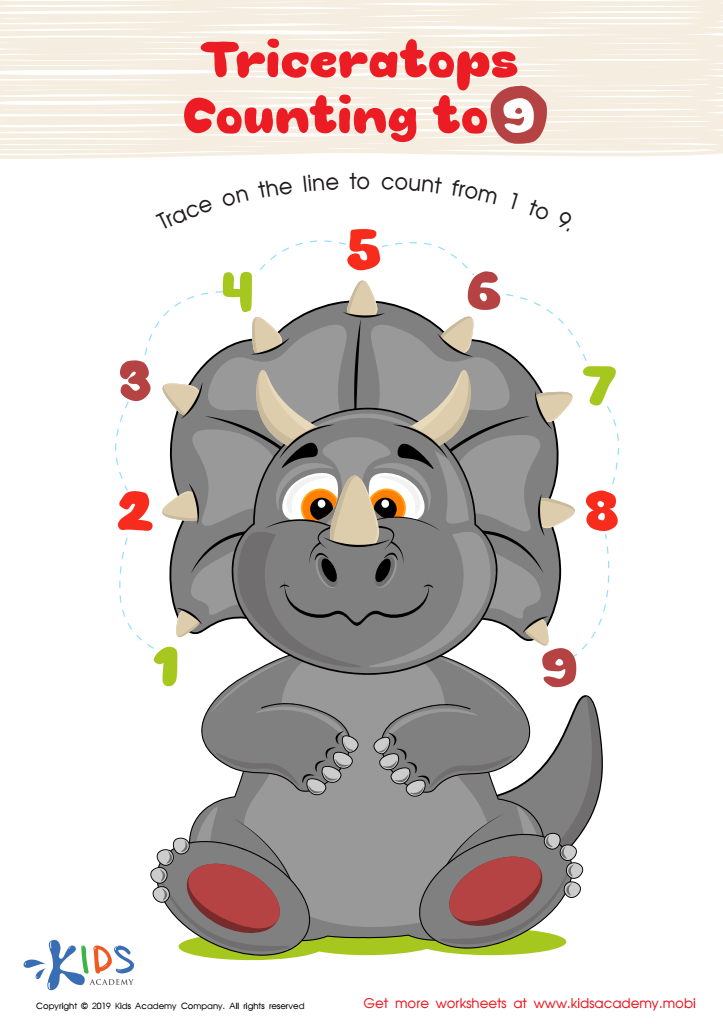
Triceratops Counting to 9 Worksheet
This little triceratops is here to help kids learn to count! Dinosaurs lived long before us and we've never seen one alive, but through research, we know a lot about them. Let the dinosaur help trace on the line from 1 to 9 for a fun counting practice.
Triceratops Counting to 9 Worksheet
Worksheet
Join Kids Academy for Free
Who is primarily going to use this learning content?







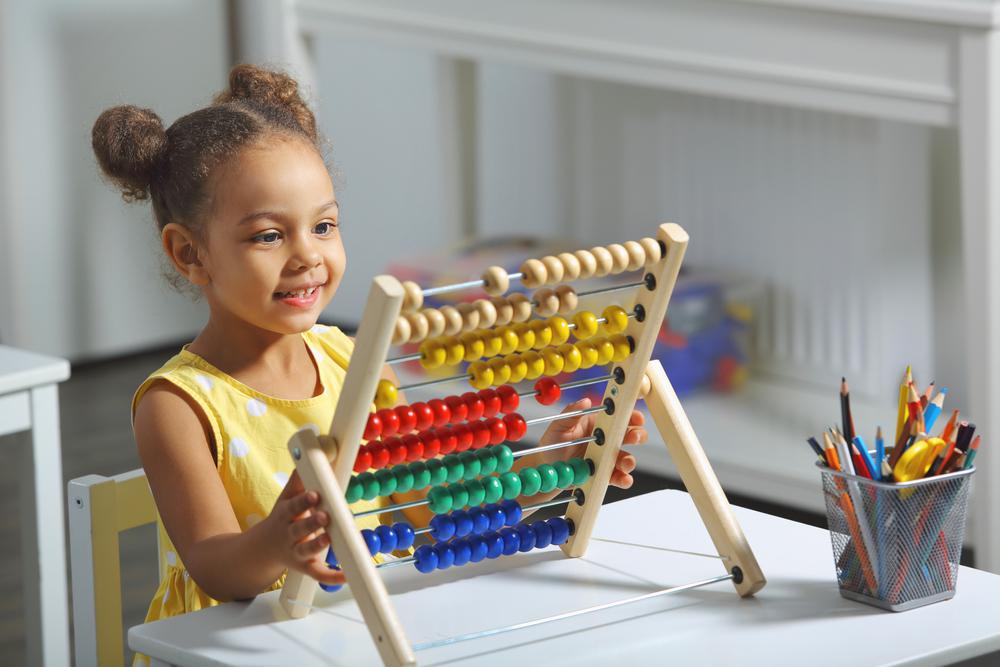
Basic math skills and an understanding of numbers are crucial building blocks for children's overall academic and personal development. For ages 5-6, this foundational knowledge prepares them for more complex concepts in later grades while promoting cognitive growth and problem-solving ability.
Firstly, early proficiency in basic math enhances critical thinking skills. Recognizing numbers, counting, and performing simple addition or subtraction help children learn logical reasoning and develop the capability to approach real-life problems methodically. These skills are directly applicable in everyday decisions, laying the groundwork for more intricate mathematical learning.
Secondly, math practice boosts confidence and fosters a positive attitude towards learning. When children master easy numbers through fun, age-appropriate activities, they gain a sense of accomplishment, motivating them to face academic challenges with enthusiasm.
Thirdly, integrating basic math into daily routines supports interdisciplinary learning. Math intersects with reading, science, and social studies, so early numerical literacy enriches overall educational outcomes. For example, story problems blend math and language arts, encouraging young learners to think critically about language and computation.
Lastly, developing strong mathematical foundations in the early years fosters long-term academic achievement. Students who grasp basic math concepts early tend to perform better in all subsequent educational stages, showing that early investment reaps substantial future benefits.
In summary, prioritizing basic math skills for ages 5-6 sets the stage for academic success, personal confidence, and practical problem-solving abilities, benefiting children across multiple areas of life.








