Addition Practice Easy Math Worksheets for Ages 5-6 - Page 2
26 filtered results
-
From - To
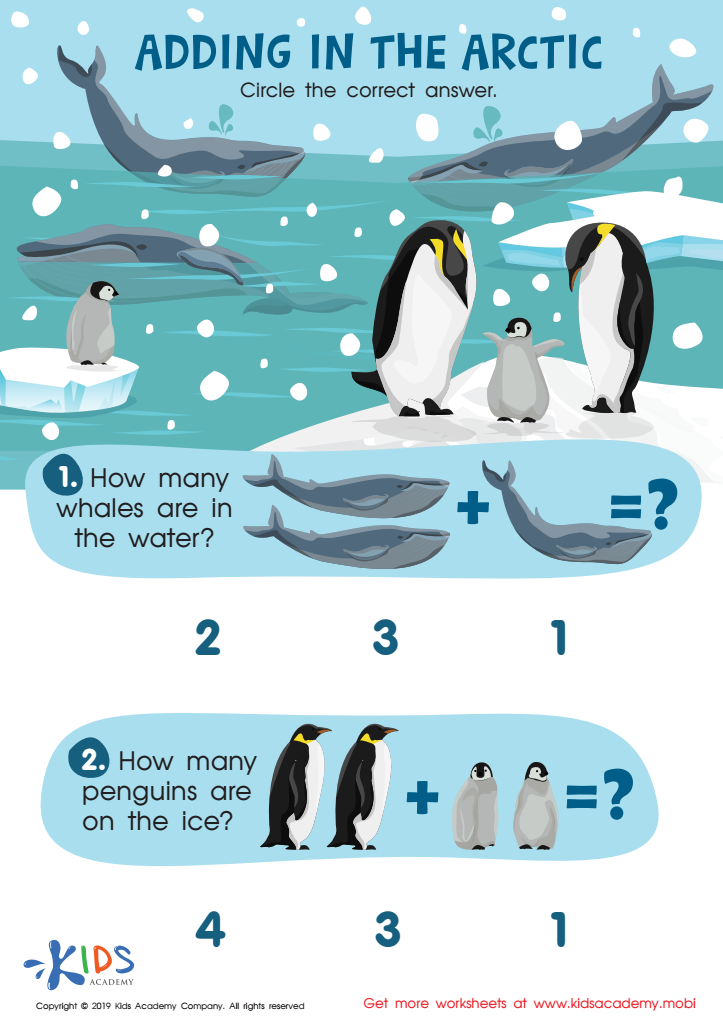
Adding in the Arctic Worksheet
 Assign to My Students
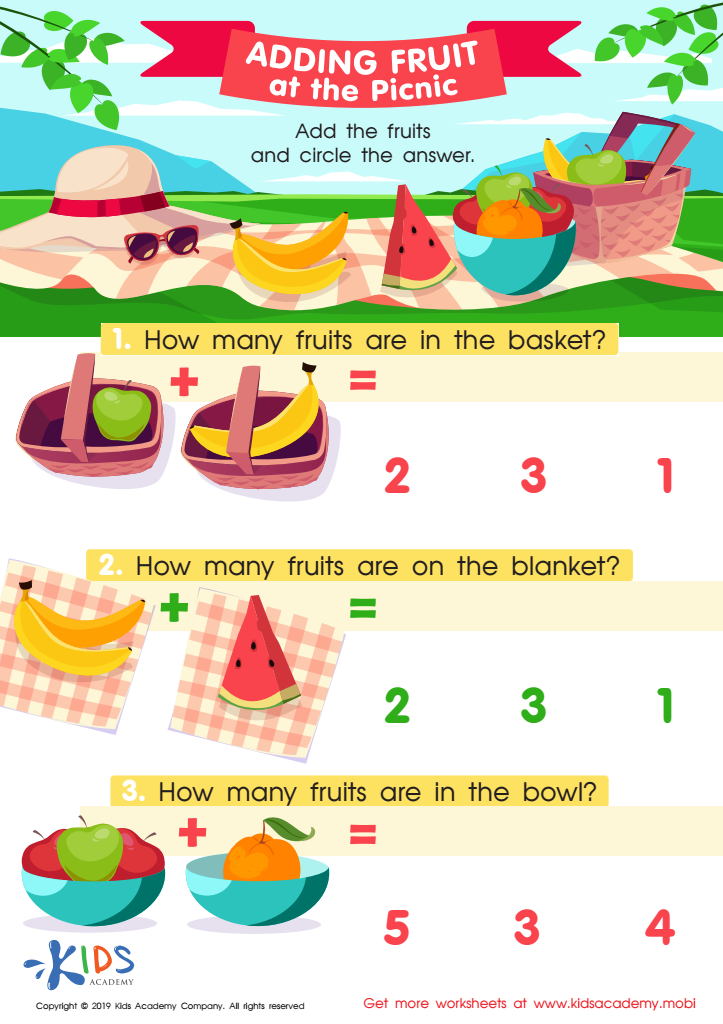
Adding Fruit at the Picnic Worksheet








Parents and teachers should care about addition practice for ages 5-6 as it's a fundamental building block in a child's education. Early proficiency in basic math skills is crucial for the development of higher-level mathematical thinking and problem-solving abilities. At this formative age, children are developing their counting and number recognition skills. Practicing addition introduces them to the concept of combining quantities, which is essential for understanding more complex arithmetical operations such as subtraction, multiplication, and division.
Regular practice also strengthens cognitive abilities such as memory, attention to detail, and logical reasoning. These practices help build mathematical fluency, making it easier for children to tackle progressively challenging tasks with confidence. Moreover, early success in math can foster a positive attitude toward the subject, boosting a child's self-esteem and encouraging a lifelong interest in learning.
Furthermore, math exercises can be enjoyable and engaging, incorporating games or interactive tools that capture a young child's imagination. They can be conducted in a playful and stress-free environment, which helps in reinforcing a healthy relationship with learning in general. Hence, investing time and effort in easy addition practices not only nurtures academic skills but also supports overall emotional, social, and intellectual development.








