Comparing numbers Easy Math Worksheets for Ages 5-6
3 filtered results
-
From - To
Welcome to our "Comparing Numbers Easy Math Worksheets" for ages 5-6! Designed to make math fun and engaging, these worksheets help young learners develop essential skills in comparing numbers. Through colorful visuals and interactive activities, children will identify larger and smaller numbers, promoting early mathematical understanding. Our carefully crafted exercises encourage critical thinking, while simple instructions ensure that kids can work independently. Perfect for both classroom and home use, these worksheets make learning enjoyable and effective. Subscribe today for access to a wealth of resources, and watch your child gain confidence as they master the art of comparing numbers!
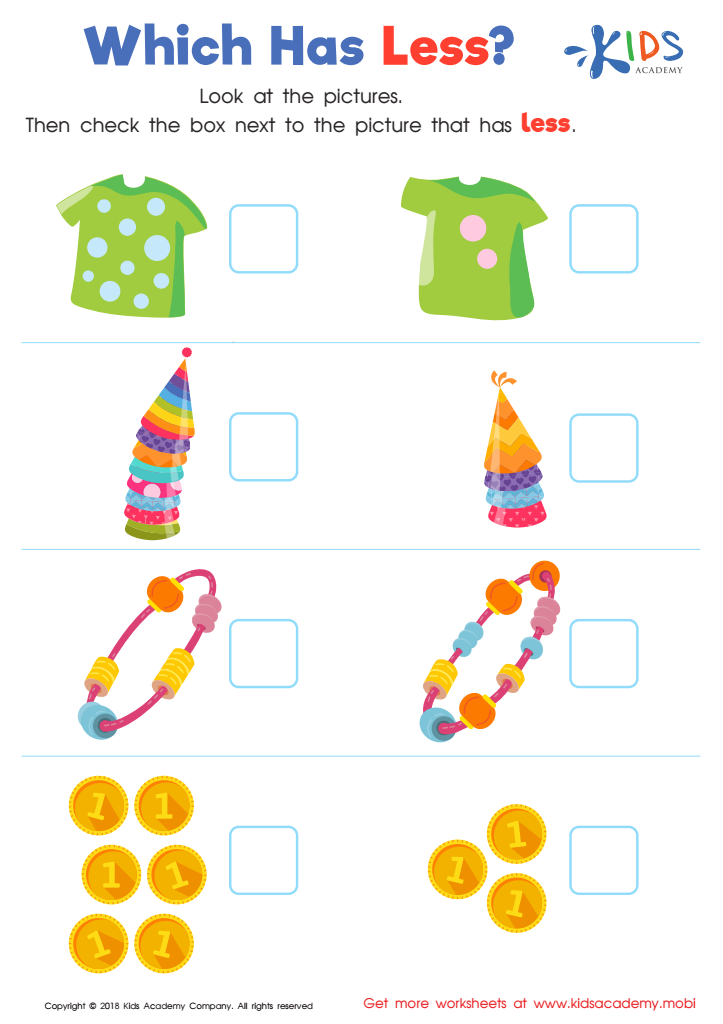
Which Has Less? Worksheet
 Assign to My Students
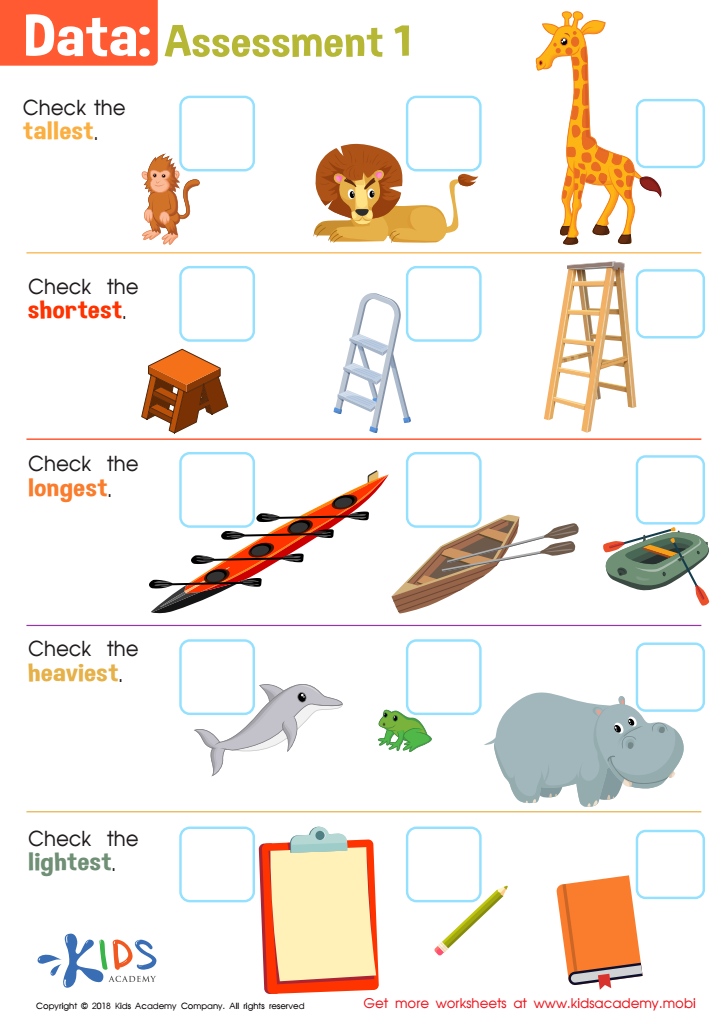
Data: Assessment 1 Worksheet
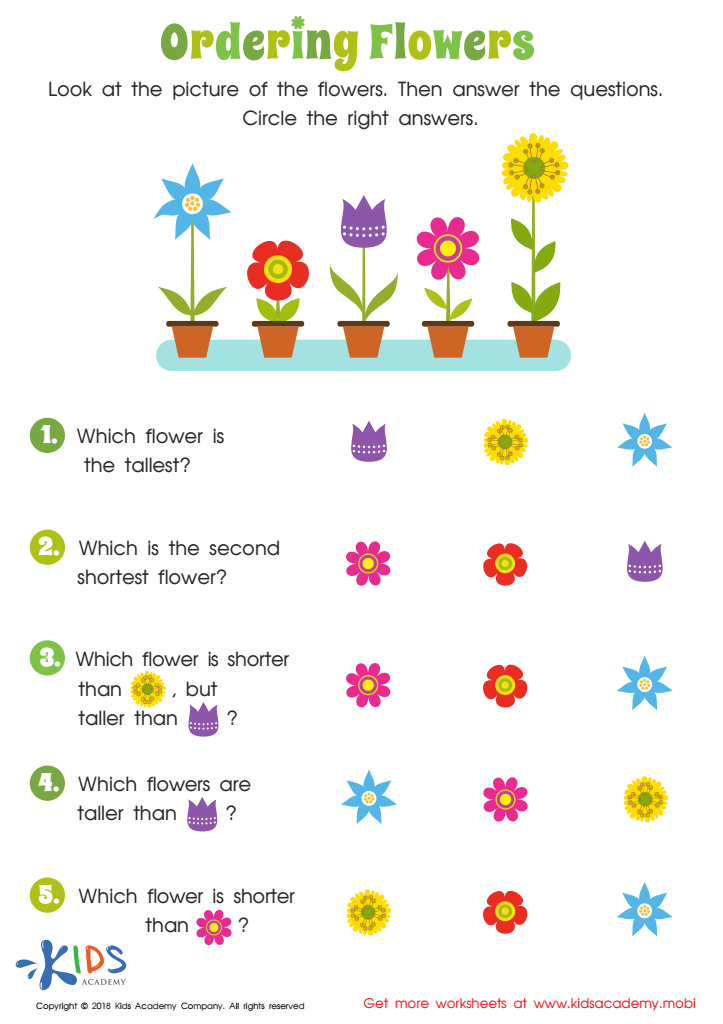
Ordering Flowers Worksheet








Parents and teachers should prioritize teaching young children basic number comparison skills because it lays the foundation for their mathematical understanding and critical thinking. At ages 5-6, children are developing essential cognitive skills, and learning to compare numbers helps them understand quantities, recognize patterns, and develop number sense, which is crucial for all future math concepts.
Engaging students in comparing numbers fosters analytical thinking and encourages them to make connections between different values. It also promotes the development of language skills, as children articulate their reasoning when explaining which number is greater or smaller. This practice can aid children in making informed decisions, as they learn the importance of evaluating options based on quantity and value.
Furthermore, introducing easy math concepts early on helps build confidence in their math abilities. Children who feel competent in foundational skills are more likely to embrace challenges and persist in problem-solving as they progress into higher grades. By emphasizing the comparison of numbers, parents and teachers can create a supportive learning environment that not only nurtures math skills but also instills a love for learning, setting the stage for long-term academic success.








