Comparing quantities Easy Math Worksheets for Ages 5-6
3 filtered results
-
From - To
Title: Comparing Quantities Easy Math Worksheets for Ages 5-6
Unlock your child's potential with our engaging "Comparing Quantities" math worksheets, tailored for ages 5-6. These vibrant and fun-filled printables focus on building essential early math skills by teaching young learners how to compare numbers, quantities, and sizes. Perfect for both classroom and at-home learning, our worksheets provide a solid foundation in numerical understanding through interactive and playful exercises. Each worksheet is designed to make math enjoyable, helping children develop confidence and a love for numbers as they practice critical comparison skills. Give your child the head start they deserve with Kids Academy's easy math worksheets!
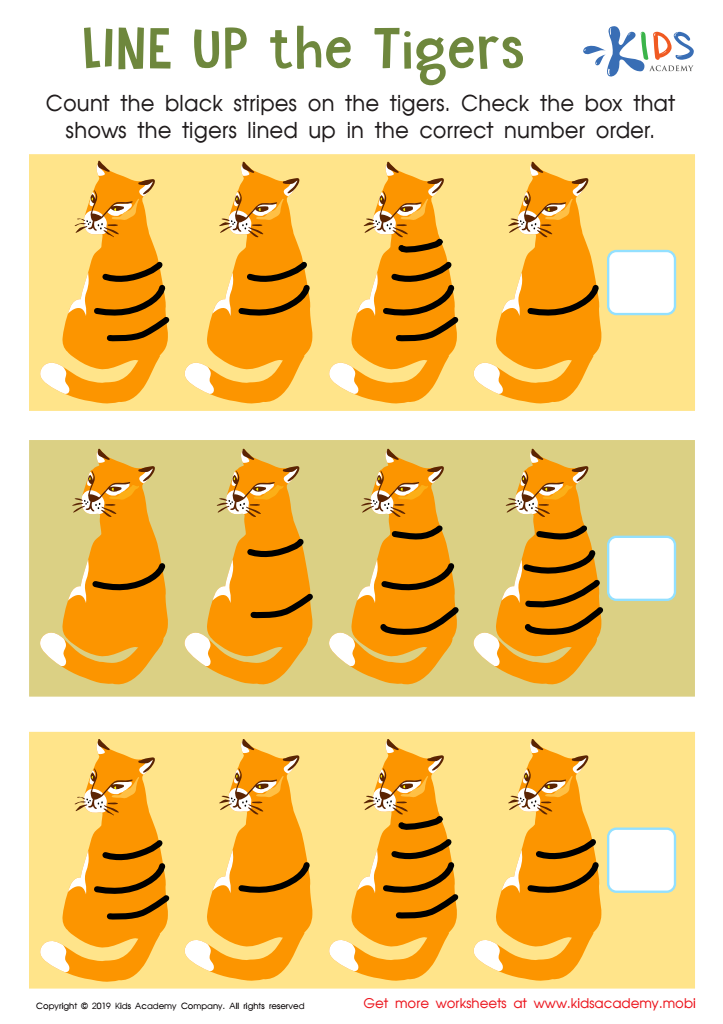
Line up the Tigers Worksheet
 Assign to My Students
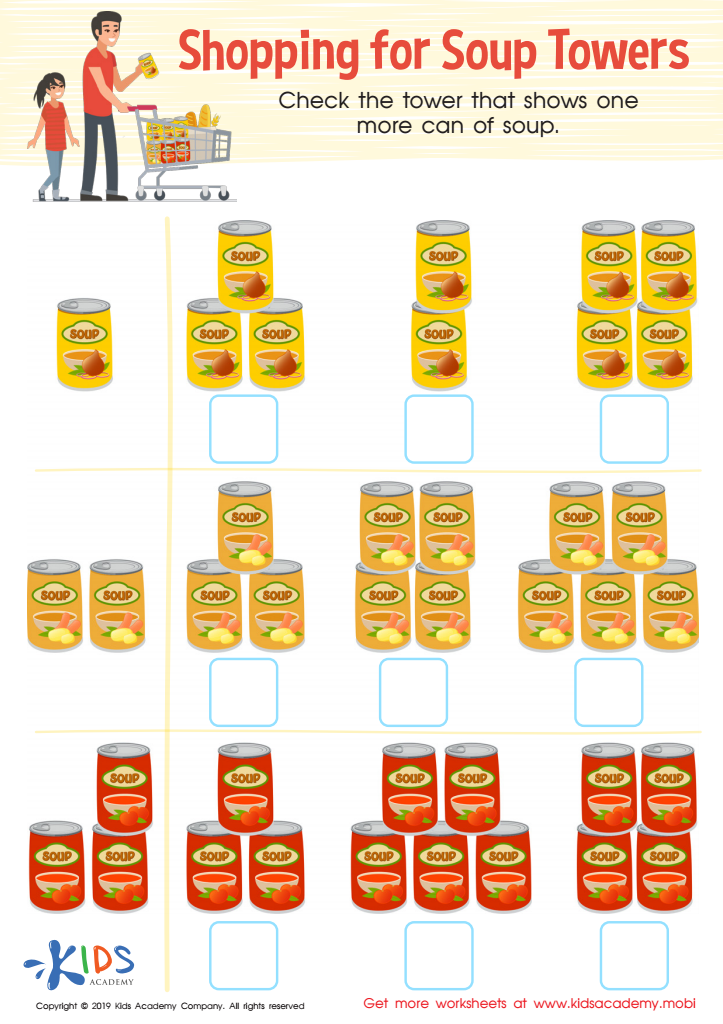
Soup Towers Worksheet
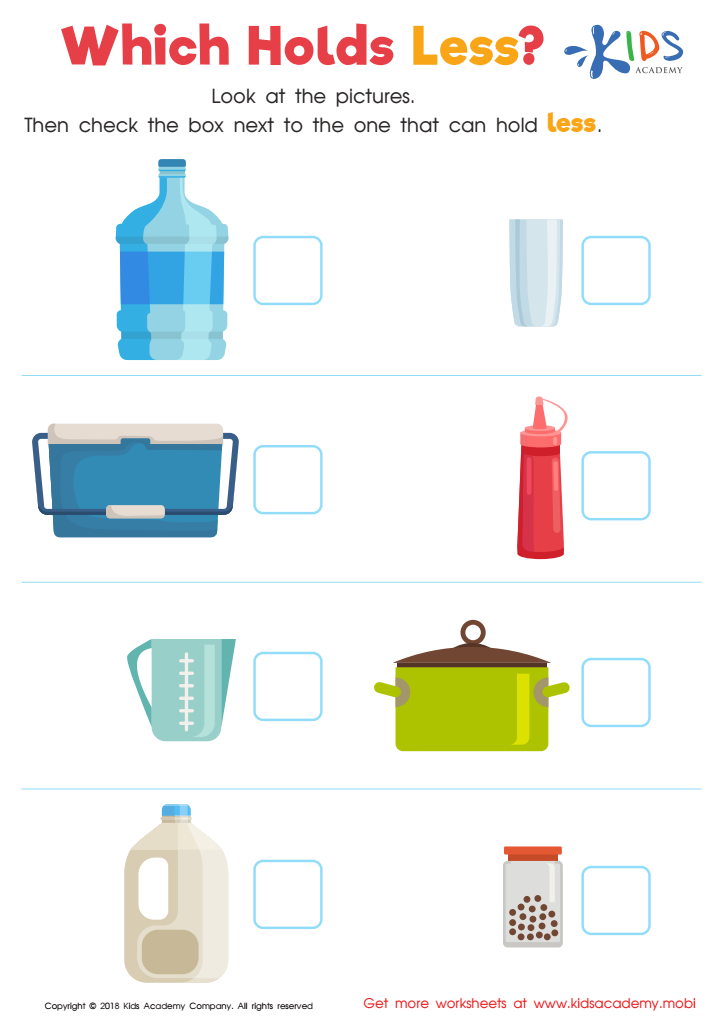
Which Holds Less? Worksheet







Comparing quantities is a foundational math skill crucial for children ages 5-6. At this early stage, children are developing their numerical understanding, and comparing quantities helps ground them in basic numerical concepts such as more than, less than, and equal to, which are essential for future mathematical learning.
Firstly, engaging in these comparisons builds strong counting skills. When children line up objects and determine which group has more or fewer items, they practice accurate and purposeful counting. This sharpens their ability to quantify sets and enhances their understanding of number sense.
Secondly, comparing quantities aids in cognitive development. It builds logical thinking and problem-solving abilities, as children learn to analyze different groups and make decisions about them. These skills are transferable across all subjects and everyday situations.
Moreover, it lays the groundwork for understanding more complex mathematical operations. Recognizing quantity differences is the first step toward grasping addition, subtraction, and other advanced math concepts.
Incorporating easy math comparisons in daily activities can make learning fun and stress-free, enabling children to build confidence in their abilities. Early mastery of such skills not only boosts academic performance but also fosters a positive attitude toward learning and mathematics in general, benefitting their long-term educational journey.








