Understanding Quantities Easy Math Worksheets for Ages 5-6
6 filtered results
-
From - To
Discover the joy of learning with our "Understanding Quantities" easy math worksheets, specially designed for children aged 5-6. These engaging resources help young learners develop essential skills in recognizing and comparing quantities through fun and interactive activities. Each worksheet promotes hands-on practice with colorful visuals, ensuring that math becomes an enjoyable experience. Perfect for both classroom and home learning, these worksheets lay the foundation for essential numeracy skills while catering to various learning styles. Empower your child’s mathematical thinking and boost their confidence with our carefully curated worksheets, making understanding quantities a breeze! Start exploring today for a brighter mathematical future!
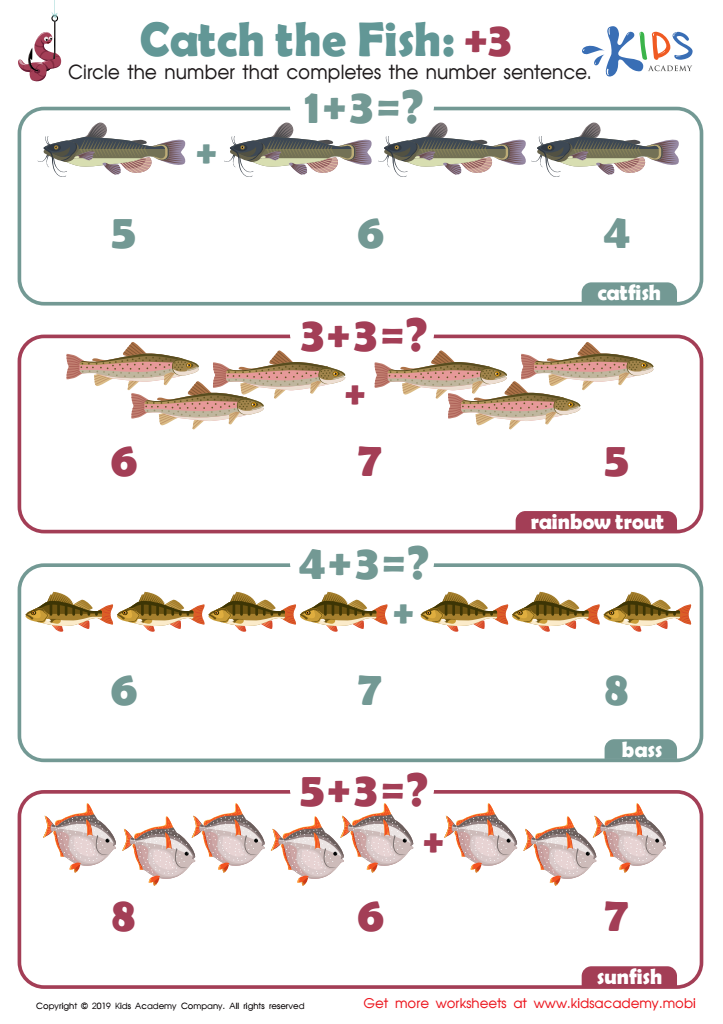
Catch the Fish: +3 Worksheet
 Assign to My Students
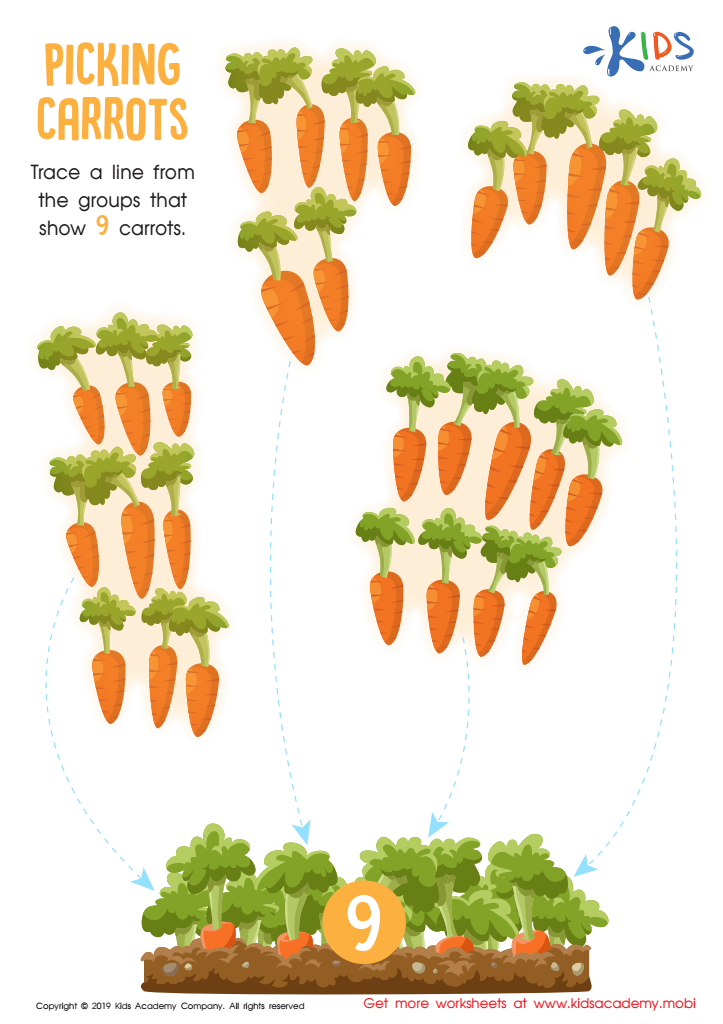
Picking Carrots Worksheet
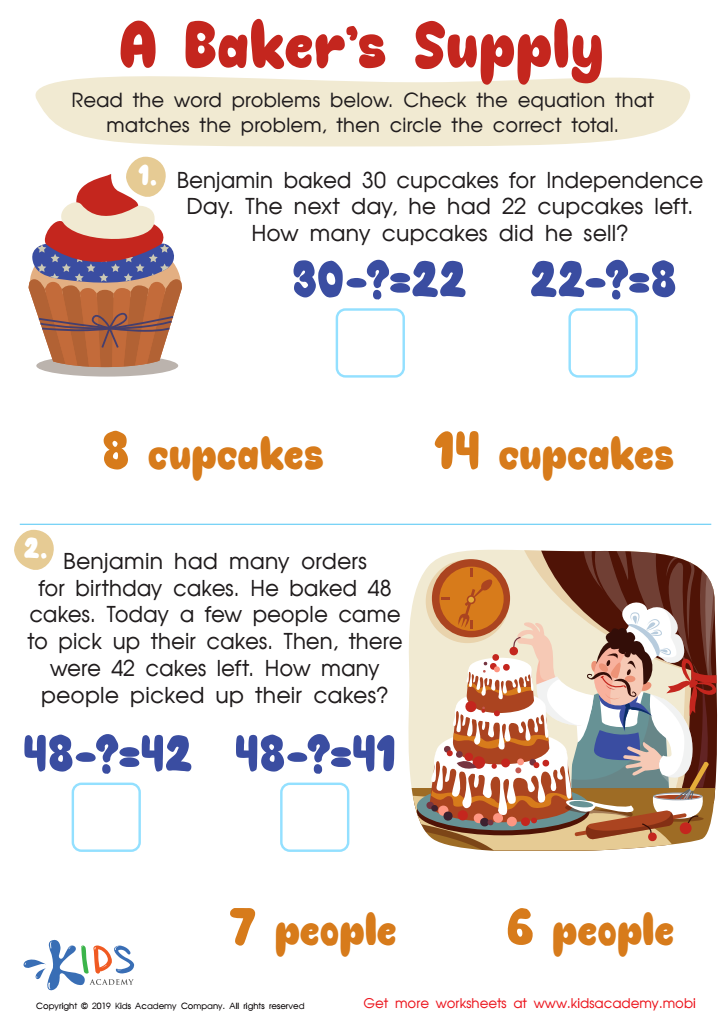
A Baker's Supply Worksheet
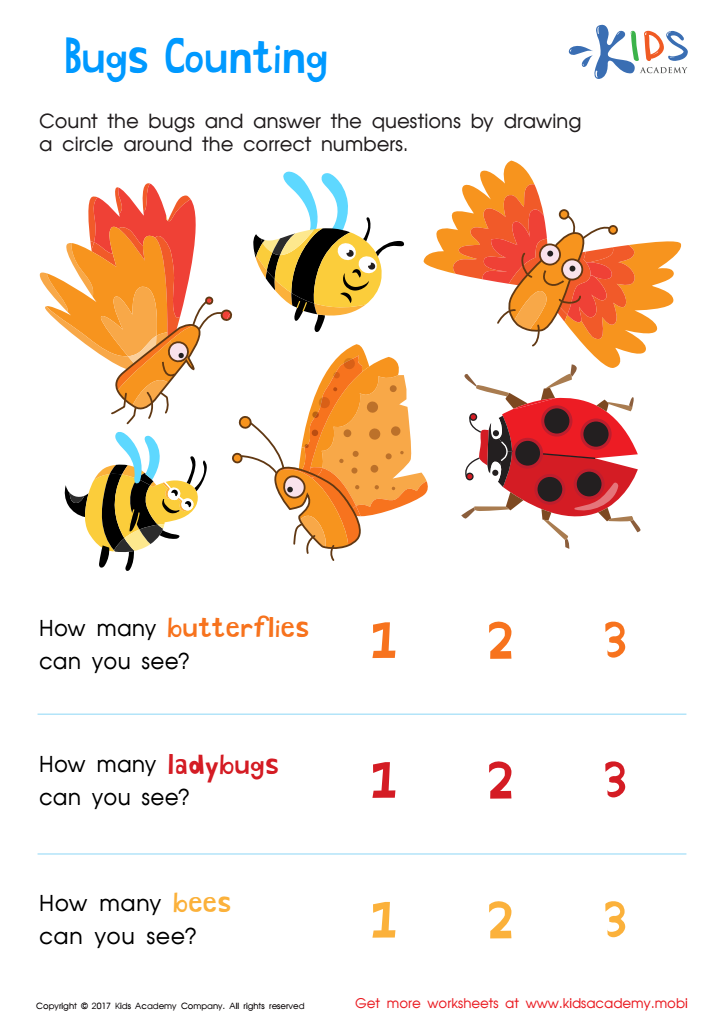
Bugs Counting Worksheet
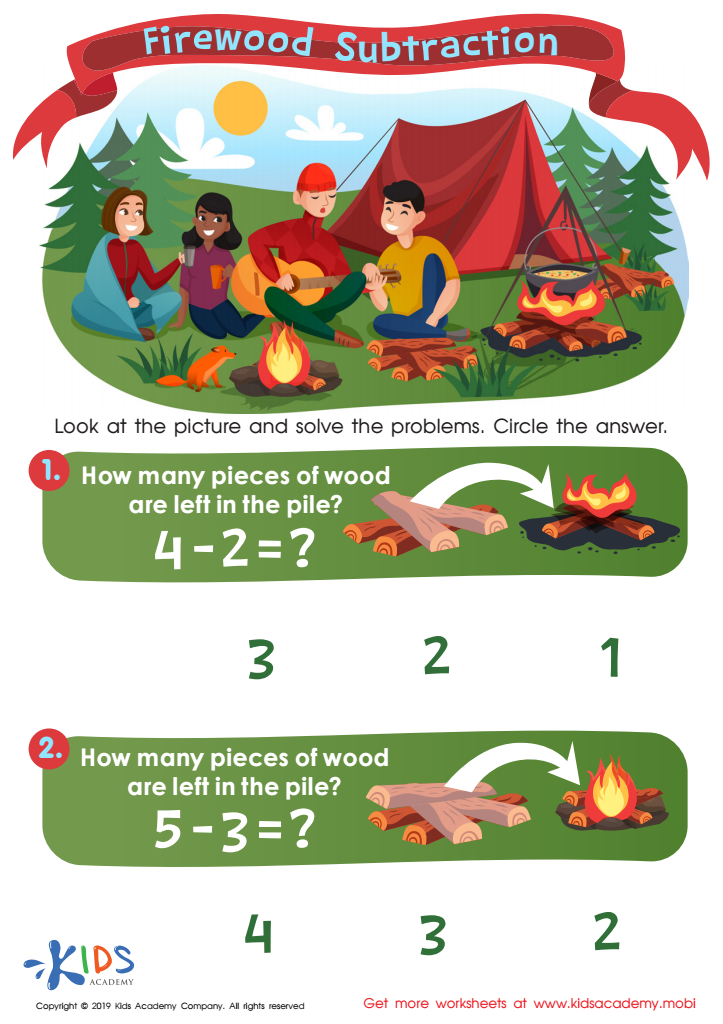
Firewood Subtraction Worksheet
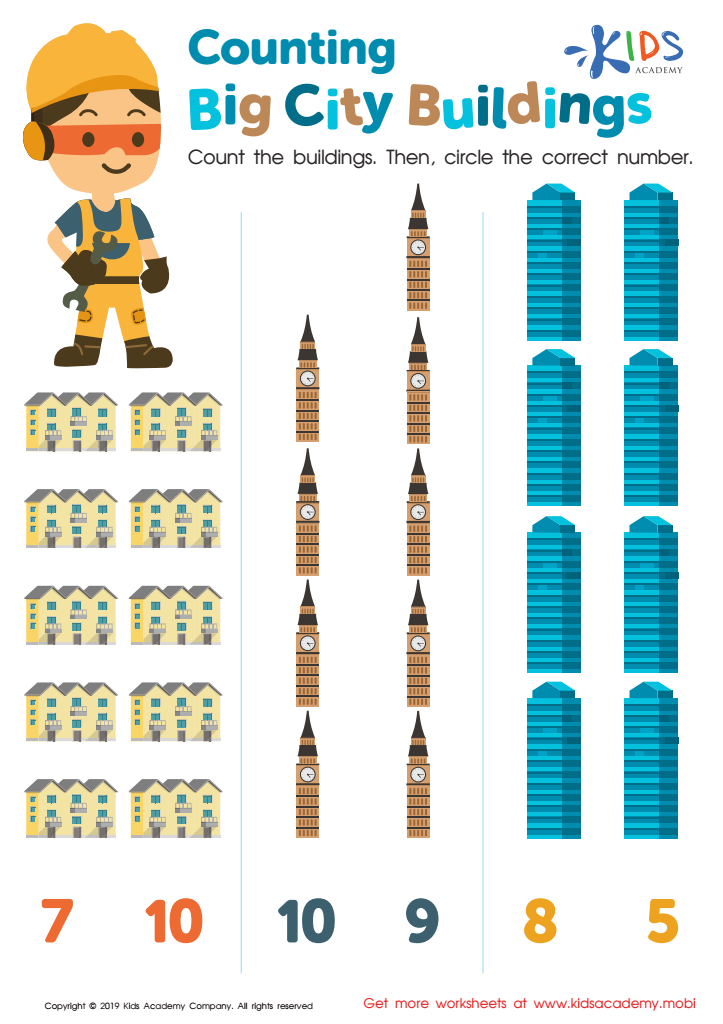
Counting Big City Buildings Worksheet








Understanding quantities is a fundamental mathematical skill that serves as the foundation for all future math learning. For children aged 5-6, grasping the concept of quantities extends beyond basic counting; it fosters critical thinking and problem-solving abilities. When parents and teachers emphasize quantity comprehension, they help children develop an intuitive sense of numbers, which supports their ability to compare, add, and subtract.
Caring about this early-stage learning is pivotal for various reasons. Firstly, early understanding cultivates confidence in young learners, encouraging them to approach math tasks with a positive mindset. Secondly, it enhances cognitive development; children learn to organize and classify information, which is essential across all subjects.
Moreover, activities focusing on quantities can easily be integrated into daily routines—from sharing snacks to playing games—making learning engaging and practical. By prioritizing an understanding of quantities, parents and teachers equip children with essential skills that transcend math, influencing their academic performance and daily life. Such foundational knowledge not only boosts students' readiness for more complex math concepts later on but also nurtures a lifelong appreciation for learning. Investing time in these early lessons ultimately reaps significant rewards for both children and their educational journey.








