Understanding Sequences Easy Math Worksheets for Ages 5-6
4 filtered results
-
From - To
Discover "Understanding Sequences Easy Math Worksheets" tailored for children ages 5-6! Our engaging, printable worksheets are designed to help young learners grasp the fundamental concepts of sequences and patterns in a fun and enjoyable way. These activities encourage critical thinking and enhance problem-solving skills by promoting the identification and continuation of sequences with numbers, shapes, and colors. Each worksheet is age-appropriate and comes with vibrant illustrations that make learning captivating. Perfect for preschool and early elementary education, these resources provide both educators and parents with valuable tools to support children's mathematical development. Start your math adventure today!
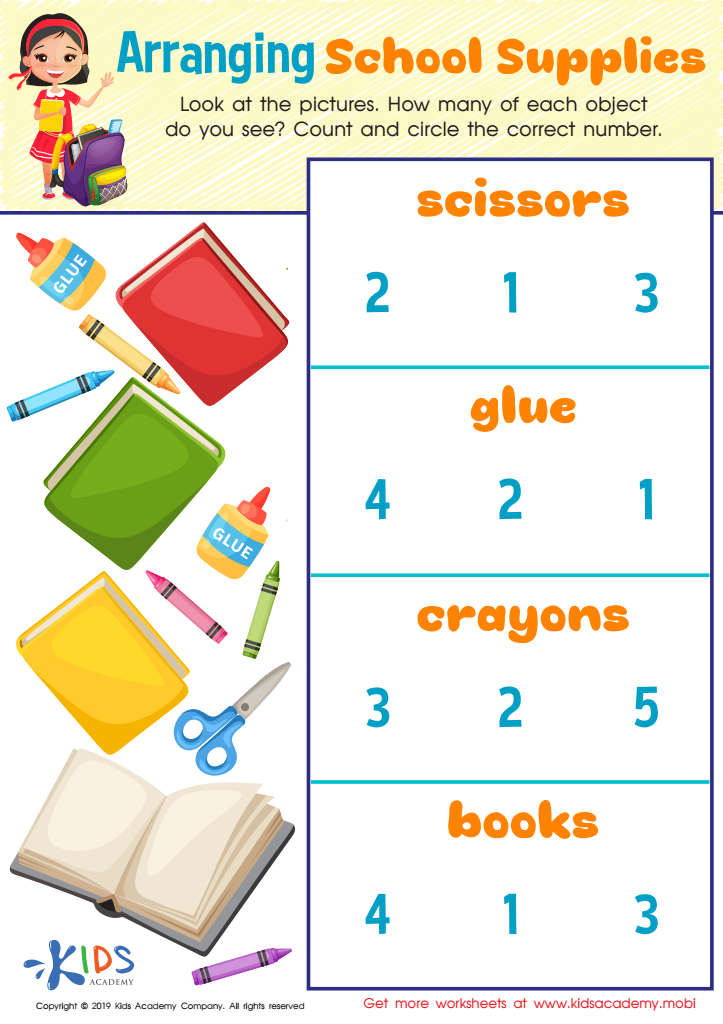
Arranging School Supplies Worksheet
 Assign to My Students
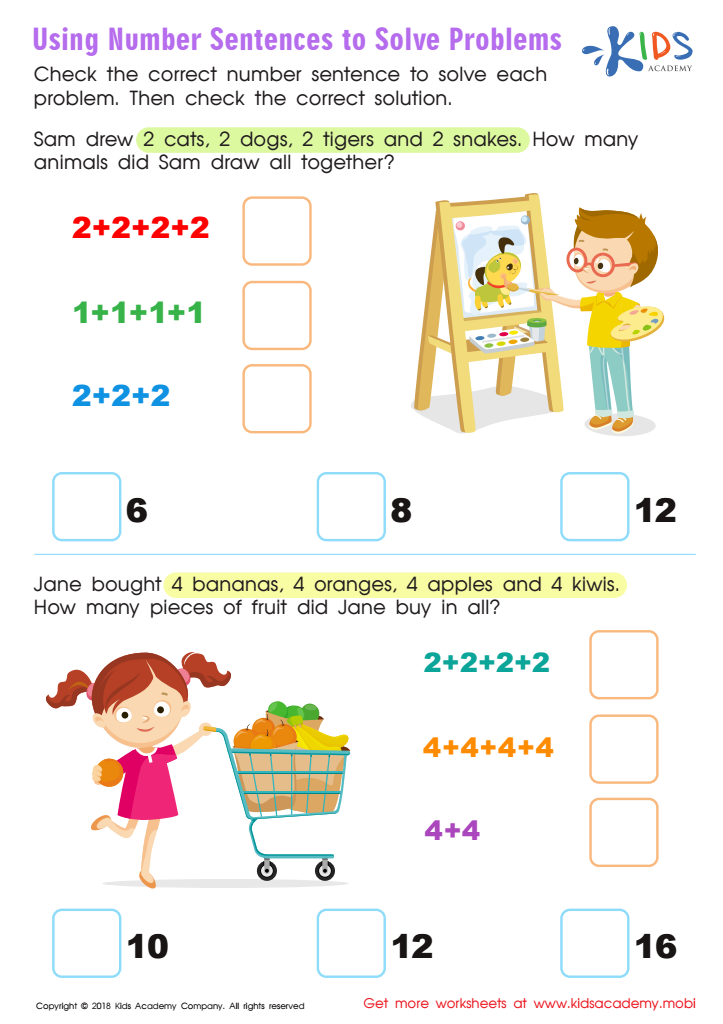
Using Number Sentences to Solve Problems Worksheet
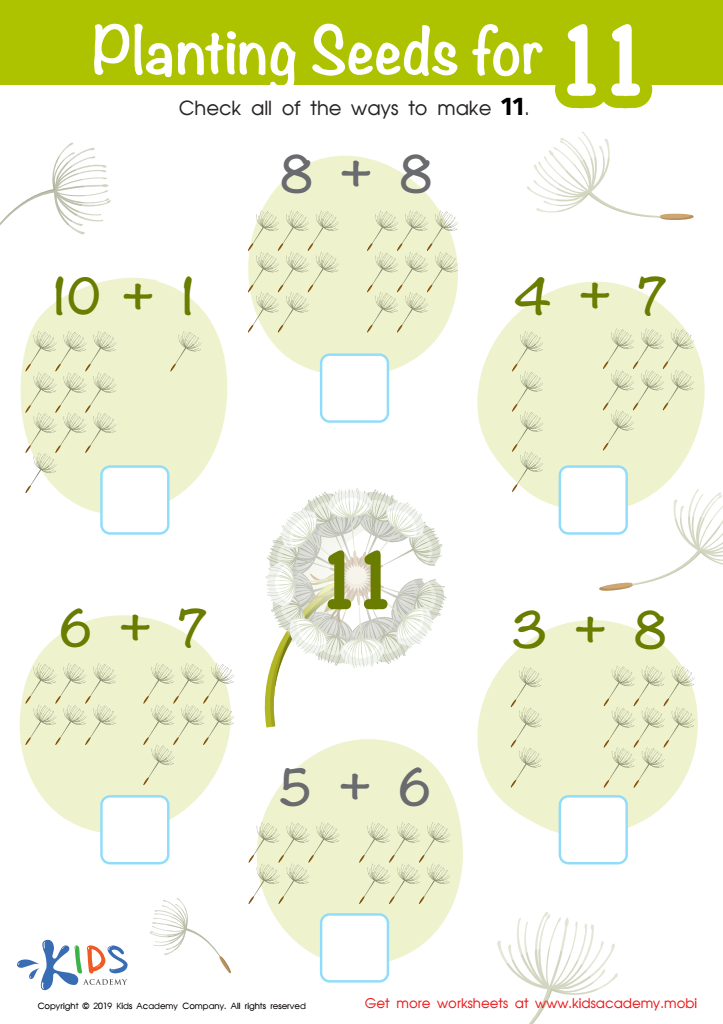
Planting Seeds for 11 Worksheet
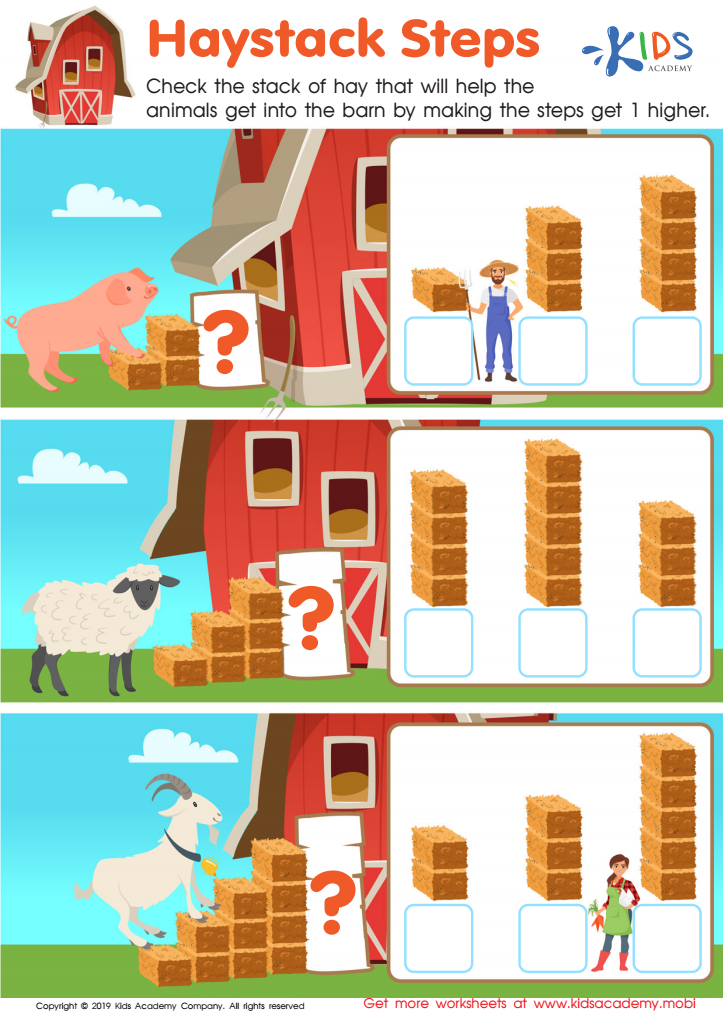
Haystack Steps Worksheet








Understanding sequences is a foundational skill in early mathematics that is crucial for children aged 5-6. At this stage, children are developing their cognitive abilities and starting to recognize patterns, which are essential for problem-solving and critical thinking. Parents and teachers should care about this concept because it not only aids in arithmetic but also lays the groundwork for more advanced mathematical concepts they will encounter later, such as addition, subtraction, and even algebra.
Learning about sequences helps children make sense of the world around them by recognizing chronological order and patterns in everyday life, such as days of the week, months, and routines. It promotes logical thinking by encouraging them to predict what comes next, fostering their ability to analyze information.
Moreover, early mastery of sequencing strengthens a child’s confidence in their mathematical abilities, making them more eager to explore challenging problems in the future. Introducing sequences through fun and interactive activities can engage young learners, making math enjoyable and relatable. By prioritizing this aspect of math education, parents and teachers can equip children with essential skills that will serve them throughout their academic journey and beyond.








