Understanding sequencing Easy Math Worksheets for Ages 5-6
3 filtered results
-
From - To
Unlock your child's mathematical potential with our "Understanding Sequencing Easy Math Worksheets for Ages 5-6" at Kids Academy. Designed specifically for young learners, these worksheets help children grasp the fundamental concept of sequencing through engaging and interactive exercises. With colorful visuals and simple instructions, children will find joy in identifying patterns, ordering numbers, and arranging events in sequence. These activities not only enhance mathematical skills but also boost cognitive development and critical thinking. Perfect for preschoolers and kindergarteners, our easy-to-follow worksheets pave the way for academic success in a fun, stress-free environment.
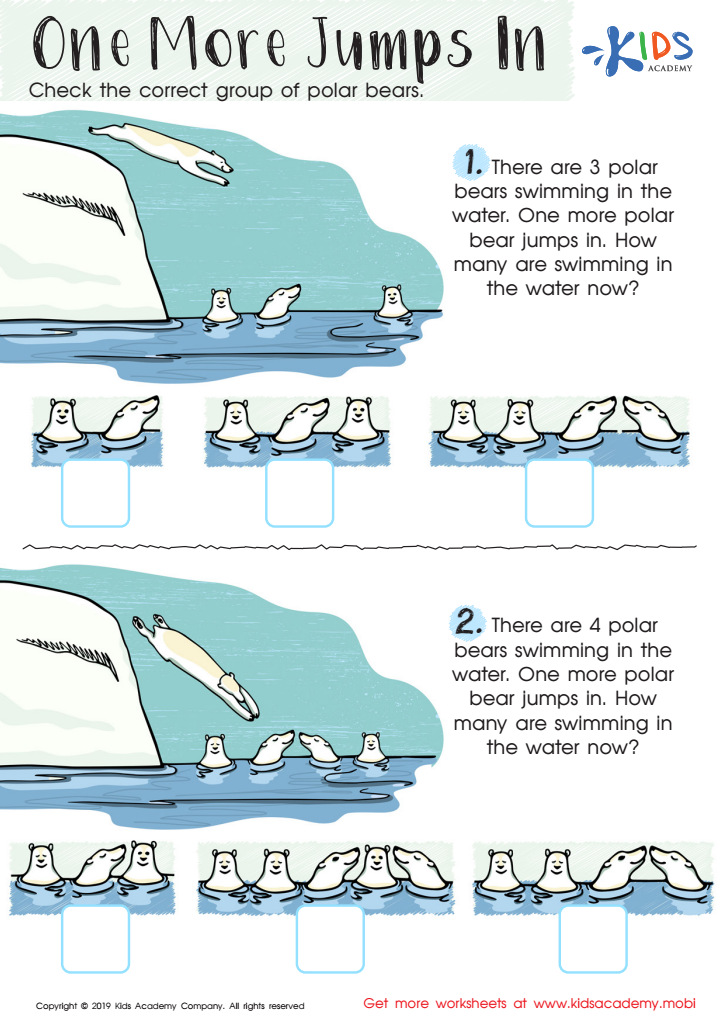
One More Jumps In Worksheet
 Assign to My Students
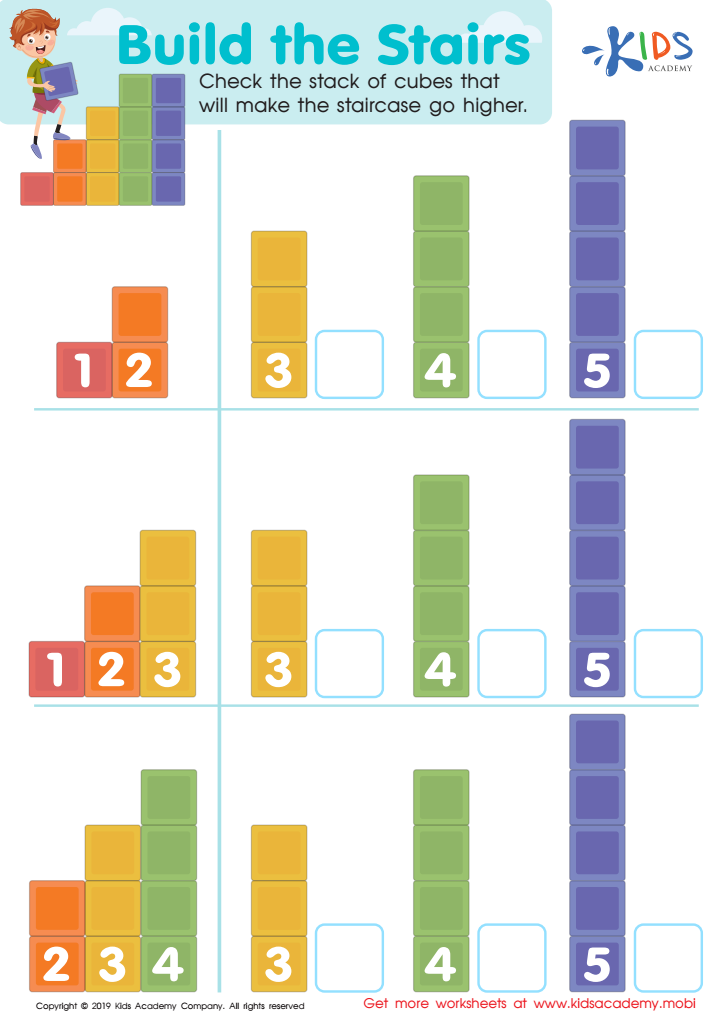
Build the Stairs Worksheet
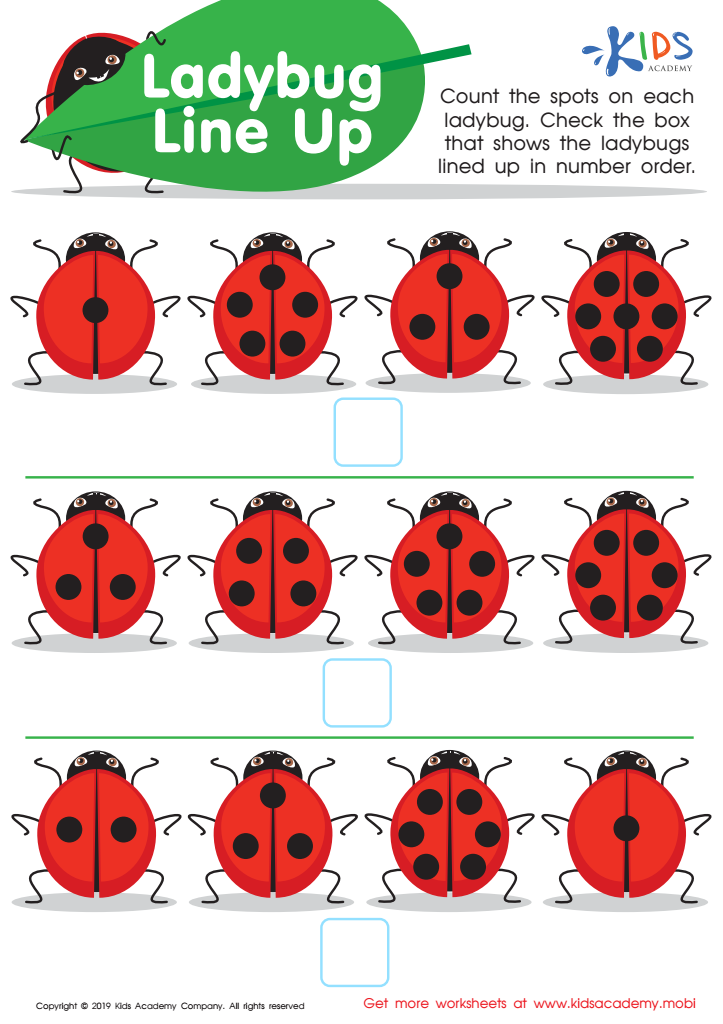
Ladybug Line Up Worksheet


%20(1).jpg)





Understanding sequencing in math is crucial for young children aged 5-6, as it forms the foundational skill for more complex mathematical concepts and everyday tasks. Sequencing is the ability to understand the order or arrangement of objects, events, or numbers, which is essential for basic arithmetic, problem-solving, and logical thinking.
When children grasp the concept of sequencing, they can better understand patterns and relationships, both critical for future math topics such as addition, subtraction, and eventually, multiplication and division. For example, counting in the correct order (1, 2, 3, etc.) helps children understand larger math concepts, including place values and proper number operations. Alternatively, putting days of the week in the correct sequence helps children comprehend calendars and time management.
Moreover, sequencing is not only about numbers; it's also crucial for following instructions, organizing thoughts, and improving reading comprehension. It helps in daily activities like getting dressed in the right order or following a sequence of steps to complete tasks.
Investing time and effort in helping children understand sequencing equips them with the cognitive tools needed for academic and life success. This fundamental skill supports their learning trajectories, not just in math, but across various educational domains and everyday activities. Therefore, parents and teachers must prioritize and encourage activities that develop sequencing skills during these formative years.








