Understanding citizenship Easy Social Studies Worksheets for Ages 5-6
3 filtered results
Difficulty Level
Grade
Age
-
From - To
Subject
Activity
Standards
Explore the fundamentals of citizenship with our engaging "Understanding Citizenship" social studies worksheets, designed for children ages 5-6. These fun, visually appealing activities introduce young learners to important concepts such as community, belonging, and responsibilities. Each worksheet encourages kids to think critically about what it means to be a good citizen and how they can positively contribute to their communities. From coloring pages to simple-fill activities, our resources simplify social studies, making learning both enjoyable and interactive. Perfect for homeschooling or classroom settings, these worksheets support early childhood education by nurturing essential civic awareness and social skills in young minds.
Favorites
With answer key
Interactive
What is a Citizen? Worksheet
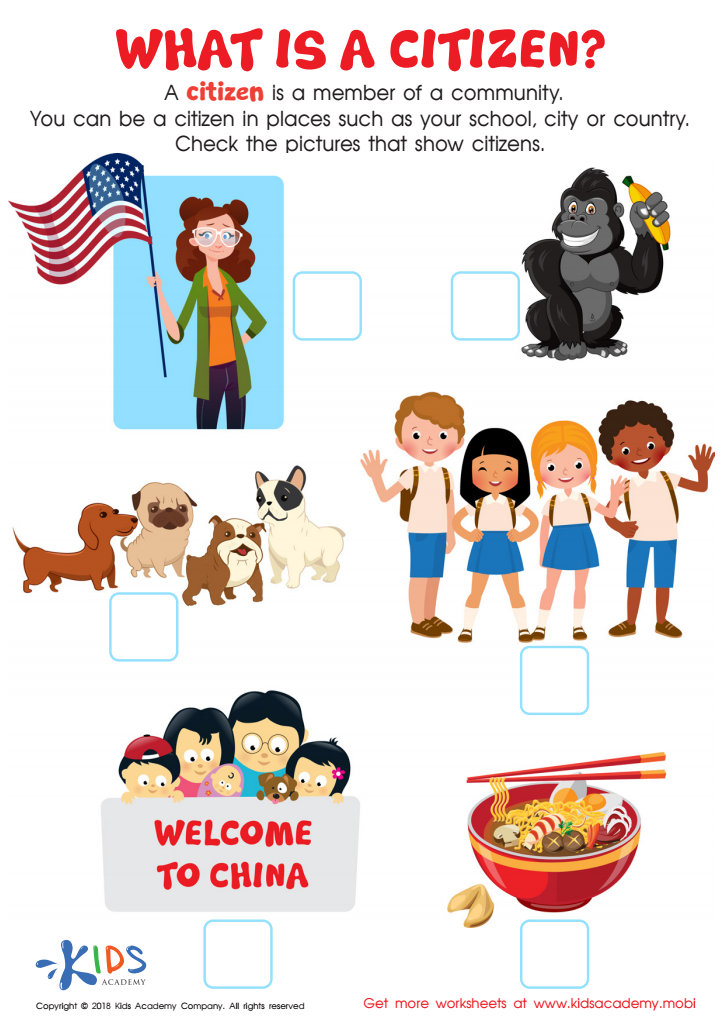
Do your students know who a citizen is? Use this worksheet to teach them: a citizen is a member of a community, such as your school, city or country. Look at the pictures in the pdf with your students. Ask them to identify who or what is in the pictures, and help them check which are citizens.
 Assign to My Students
What is a Citizen? Worksheet
Worksheet
Finding Good Citizens Worksheet
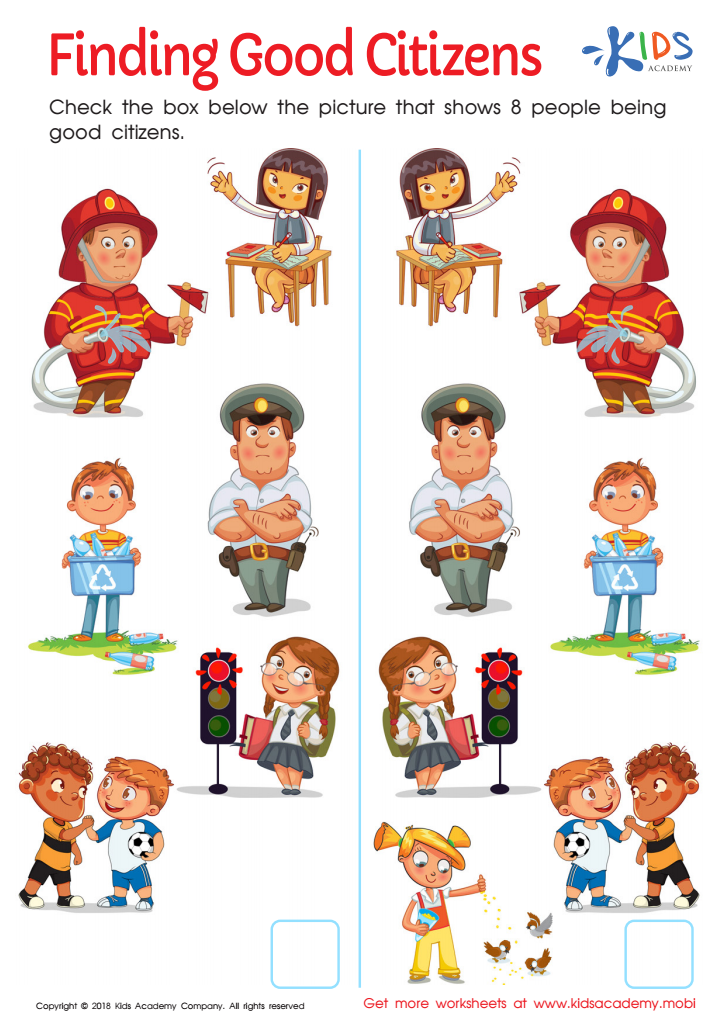
Teach your students what it takes to be a responsible citizen in their community. Test their knowledge by having them identify good citizen acts in pictures. Ask them to check the box showing 8 people being good citizens. Challenge their comprehension and make sure they understand the importance of being a good citizen.
Finding Good Citizens Worksheet
Worksheet
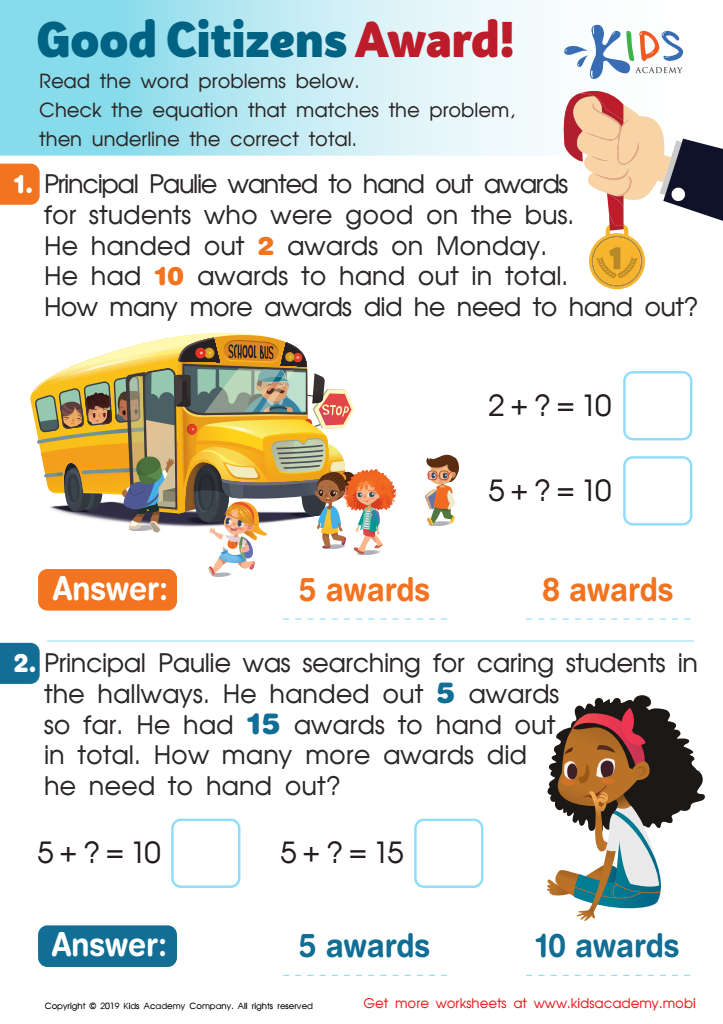
Good Citizens Award! Worksheet
A citizen is a person who resides in a certain area and is granted legal rights and privileges. Becoming a citizen can be achieved in various ways, most commonly through birth or marriage. Good citizens honor their nation's laws and act responsibly. Ask your students to share examples of good citizenship. Have them read the word problem and choose the equation that yields the right answer, then underline it.
Good Citizens Award! Worksheet
Worksheet
Learning Skills
Join Kids Academy for Free
Who is primarily going to use this learning content?








Understanding citizenship from an early age is vital for children's development as responsible and informed members of society. For parents and teachers, teaching children about citizenship fosters a sense of belonging and community awareness. At ages 5-6, children are naturally curious and eager to learn about their world, making this the perfect time to introduce concepts like sharing, cooperation, and respect for others.
By incorporating "Understanding Citizenship" into social studies, we help children grasp the importance of rules, fairness, and understanding diverse perspectives. This foundation nurtures essential skills such as empathy, communication, and critical thinking. Engaging discussions on their roles within the family, classroom, and broader community can cultivate a sense of pride and agency.
Moreover, an early focus on citizenship supports social-emotional learning, helping children navigate their feelings and relationships. Parents and teachers play a pivotal role in guiding children as they learn to ask questions, express themselves, and appreciate others' viewpoints. As today's children grow into tomorrow’s leaders, instilling a strong sense of citizenship equips them to contribute positively to society, reinforcing values that will benefit their communities for years to come. Investing in this knowledge today lays the groundwork for a compassionate and inclusive tomorrow.