Enhancing observation skills is essential for developing young minds, and our Easy Worksheets for Ages 5-7 provide fun, engaging activities designed to boost these skills. Tailored for early learners, these printable worksheets encourage kids to pay attention to details, improve focus, and enhance their critical thinking abilities through interactive tasks. Ideal for use at home or in the classroom, these resources introduce vibrant illustrations and simple exercises that promote active learning. By fostering observation skills early on, children will build a solid foundation for academic success. Explore our collection and make learning enjoyable for your little ones today!

Check out this FREE "Enhancing observation skills" Trial Lesson for age 5-7!

Organize and Categorize

Favorites
With answer key
Interactive
  • 5-7
  • Enhancing observation skills
  • Easy
The Scientific Process Worksheet

The Scientific Process Worksheet

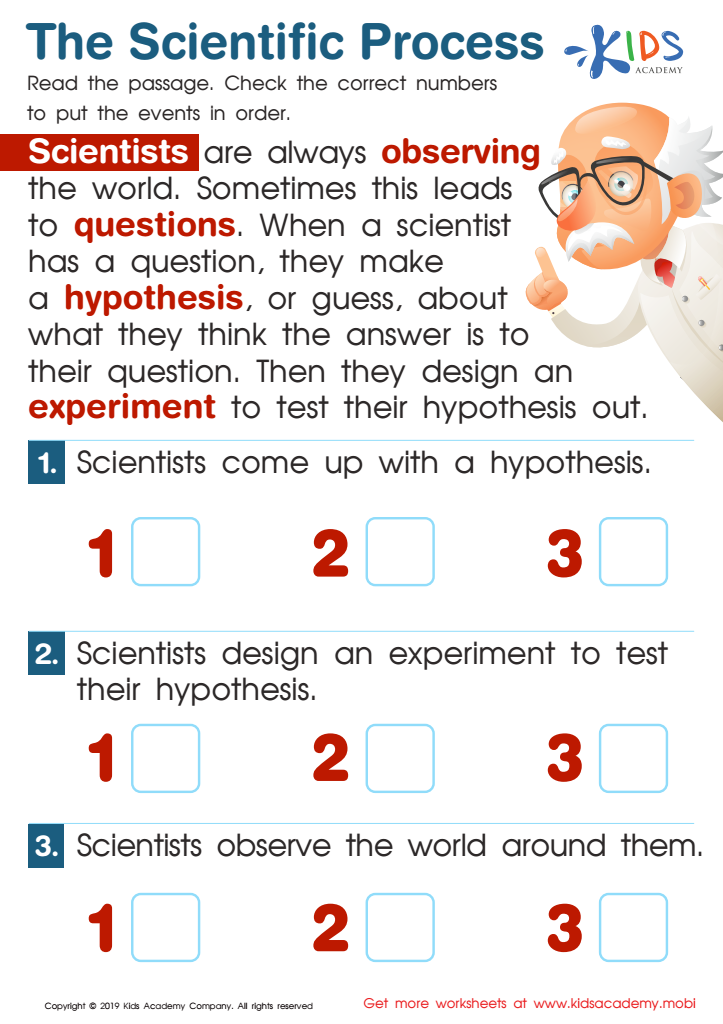
Help your kids read the passage, then ask them to explain what they've learnt. Ask the questions and help put the events in order. Through this worksheet, your kids will learn more about science and practice reading skills. It's a fun way to explore science! (80 words)
The Scientific Process Worksheet
Worksheet
Pets Tally Chart Worksheet

Pets Tally Chart Worksheet

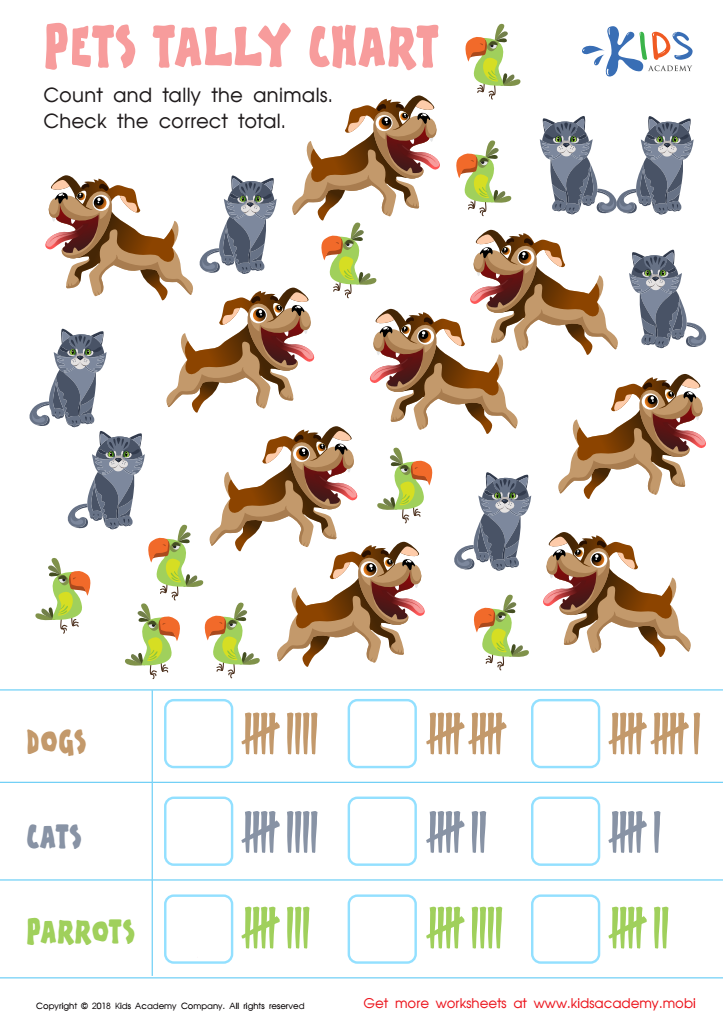
Let your little mathematician count and tally the animals with this fun PDF worksheet. They'll assign value to each pet type and select the correct answer. It's a great way to practice number reasoning and learn how tallying helps keep math organized and efficient when solving equations.
Pets Tally Chart Worksheet
Worksheet
Life Cycle of a Frog Worksheet

Life Cycle of a Frog Worksheet

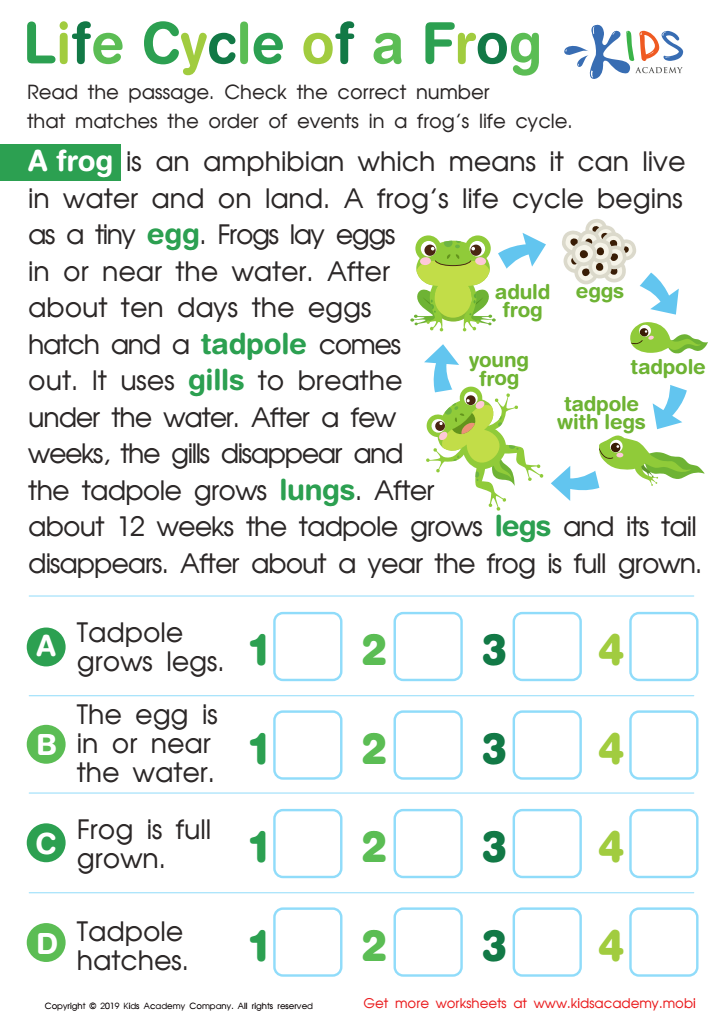
Teach your kids to read and open their eyes to new knowledge. Frogs have fascinating life cycles. Show them the worksheet with pictures and guide them as they read the passage about it. Encourage them to check the number that matches the frog's life cycle order.
Life Cycle of a Frog Worksheet
Worksheet
Weather Every Day Worksheet

Weather Every Day Worksheet

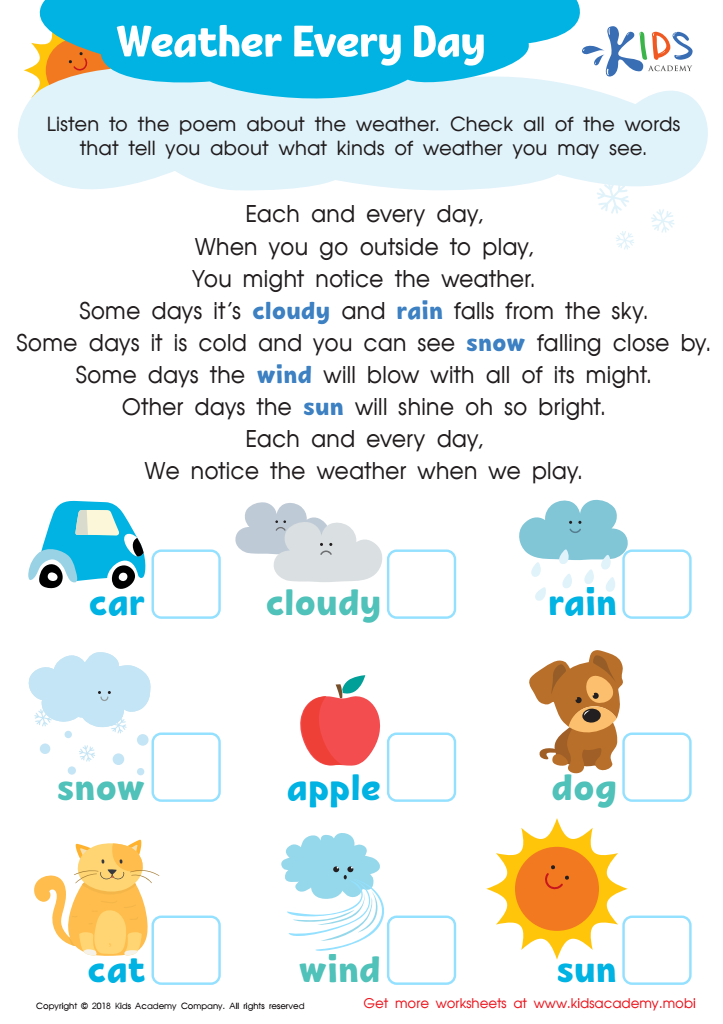
Ask your child to look out the window and tell you what the weather's like. Is it raining, stormy, cloudy, snowing or sunny? Help them observe all the different types of weather and then check the words at the bottom of the worksheet. What's their favorite type of weather? Read them this poem about the weather and see what they think!
Weather Every Day Worksheet
Worksheet
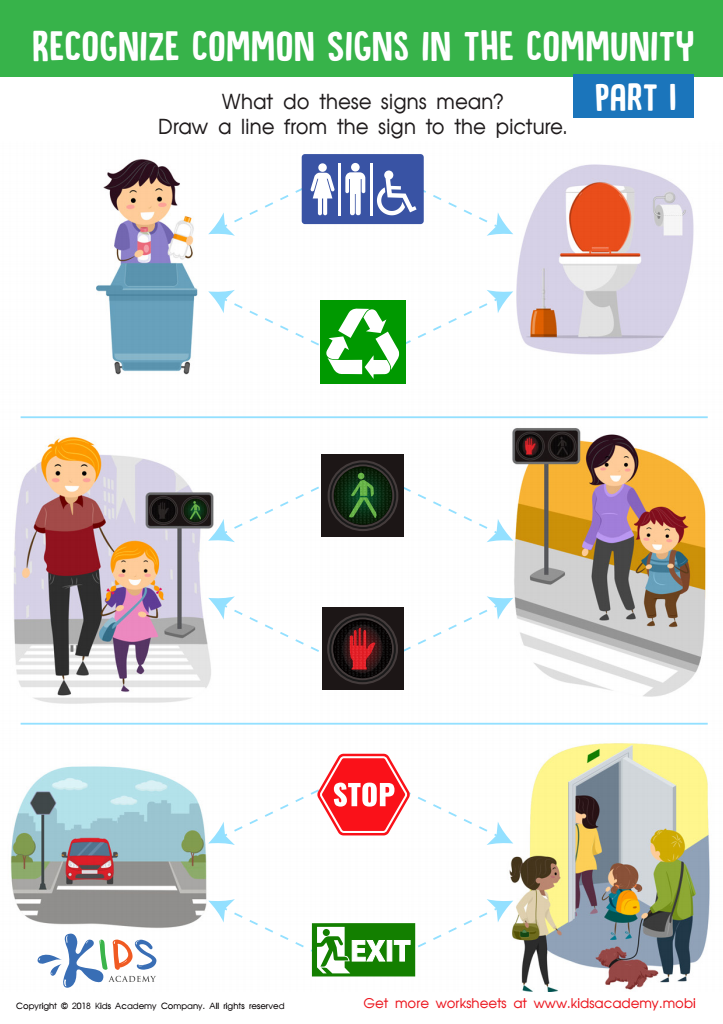
Recognize Common Signs: Part 1 Worksheet

Recognize Common Signs: Part 1 Worksheet

Beginning readers can strengthen picture identification and decoding skills with a free downloadable worksheet. They use traceable lines to match activities in community signs to the correct pictures and build a bridge to reading. This helps familiarize them with their surroundings and starts them on their reading journey.
Recognize Common Signs: Part 1 Worksheet
Worksheet
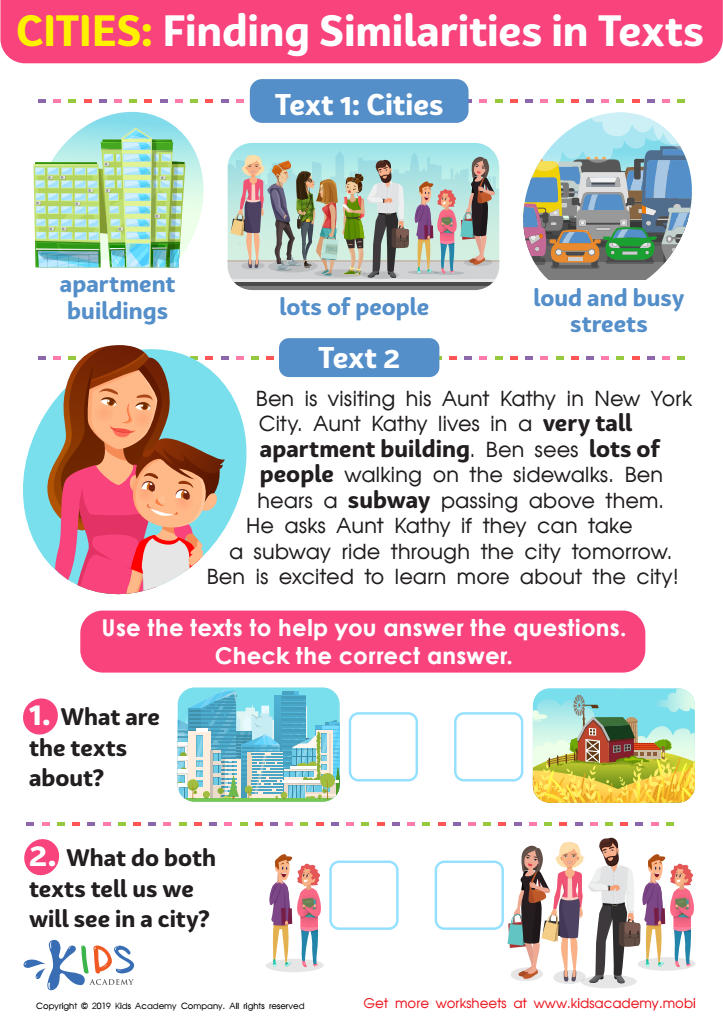
Cities: Finding Similarities Worksheet


Cities: Finding Similarities Worksheet

This worksheet offers kids a chance to explore how information can be presented differently but still contain similar facts. They'll compare two texts and look for similarities, honing their reading comprehension and critical thinking skills.
Cities: Finding Similarities Worksheet

Worksheet


Enhancing observation skills in children aged 5-7 is crucial for their overall development and learning. At this stage, children are naturally curious and eager to explore their surroundings. By cultivating their observation skills, parents and teachers can help children develop critical thinking and analytical abilities. Improved observation encourages them to notice details, ask questions, and engage more deeply with their environment.

Observational skills lay the foundation for literacy and numeracy development. For instance, noticing patterns in nature or the differences in shapes can support early math concepts. When children narrate their observations or describe what they see, they practice verbal communication skills and expand their vocabulary.

Additionally, strong observation skills foster creativity as children learn to appreciate and interpret different perspectives. This ability builds empathy and social skills, empowering them to connect with peers.

Finally, nurturing these skills promotes independence and self-directed learning. Children who can observe effectively are more likely to explore and experiment on their own, leading to lifelong learning habits. Thus, by prioritizing enhancement of observational skills, parents and teachers can significantly contribute to a child's cognitive, emotional, and social development during these formative years.