
Math problem-solving Easy Worksheets for Ages 5-7
4 filtered results
Difficulty Level
Grade
Age
-
From - To
Subject
Activity
Standards
Welcome to our collection of Math Problem-Solving Easy Worksheets designed specifically for children aged 5-7! These engaging worksheets are perfect for young learners to develop their problem-solving skills while enjoying fun and interactive activities. Our resources focus on essential math concepts, including addition, subtraction, and simple word problems, ensuring that your child builds a strong foundation in mathematics. With colorful illustrations and age-appropriate challenges, these worksheets cater to different learning styles and keep students motivated. Encourage your child’s love for math while boosting their confidence with our easy-to-use, printable worksheets that make learning a joyful experience!
Favorites
With answer key
Interactive
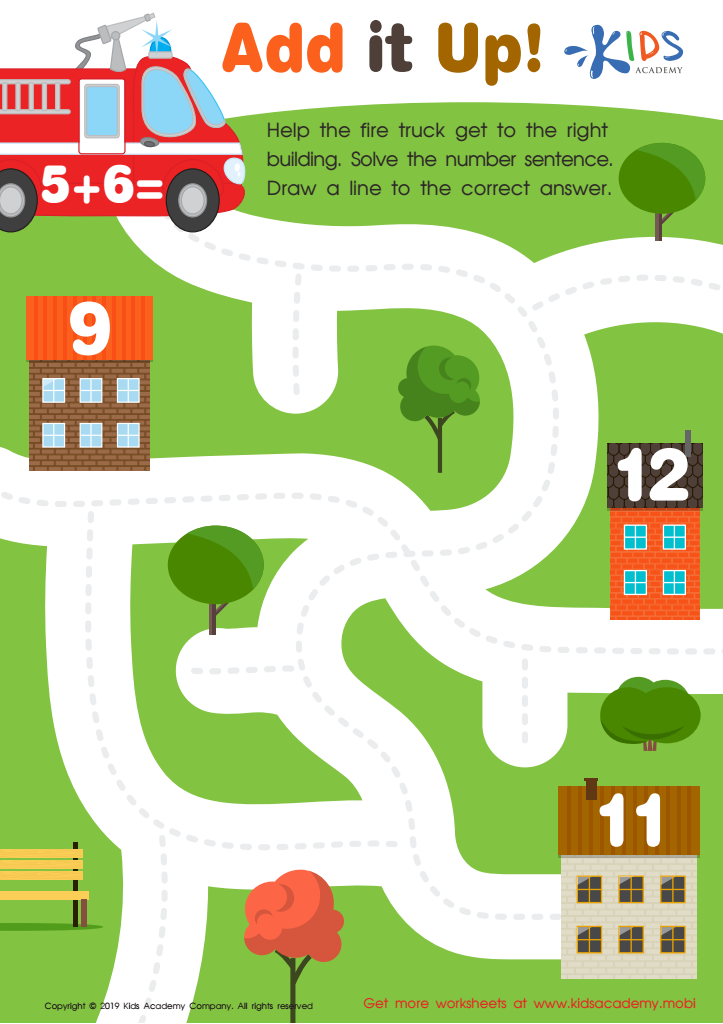
Add it Up Worksheet
The fire service is the right number to call in case of a fire. Test your children's safety knowledge by asking them other emergency numbers. Have them identify the fire truck in the worksheet and solve the number sentences. Guide them in drawing a line to the right answer.
Add it Up Worksheet
Worksheet
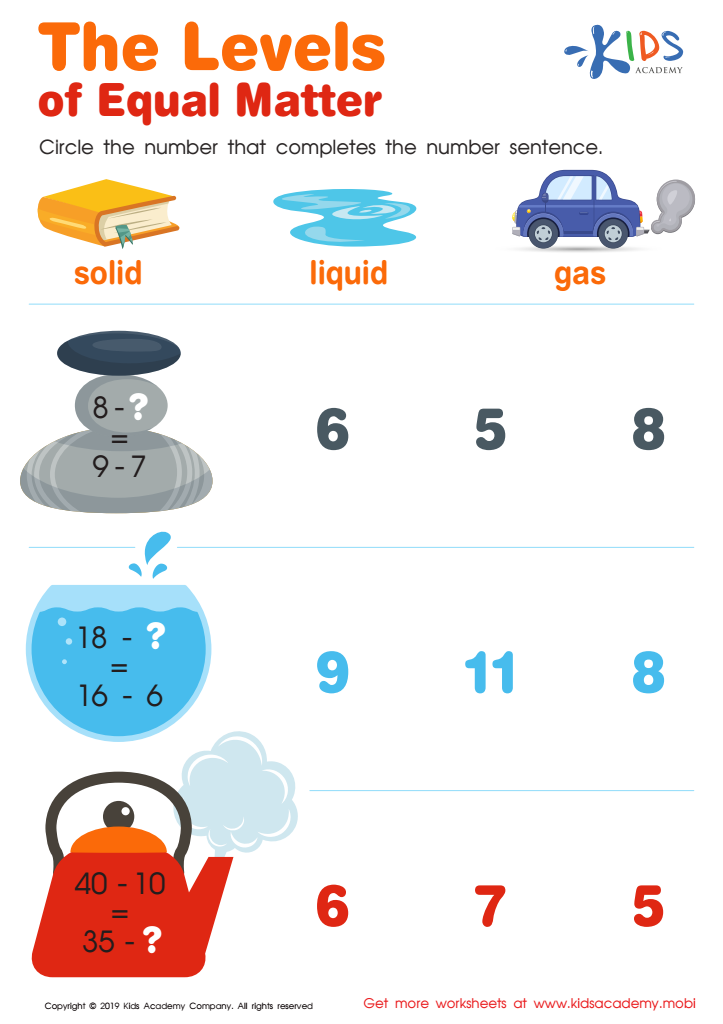
The Levels of Equal Matter Worksheet
Matter is anything that has weight and occupies space. Common examples include people, animals, objects and liquids. Have your kids understand this concept by looking at the levels of matter in this worksheet and completing the number sentence mathematical problems beneath.
The Levels of Equal Matter Worksheet
Worksheet
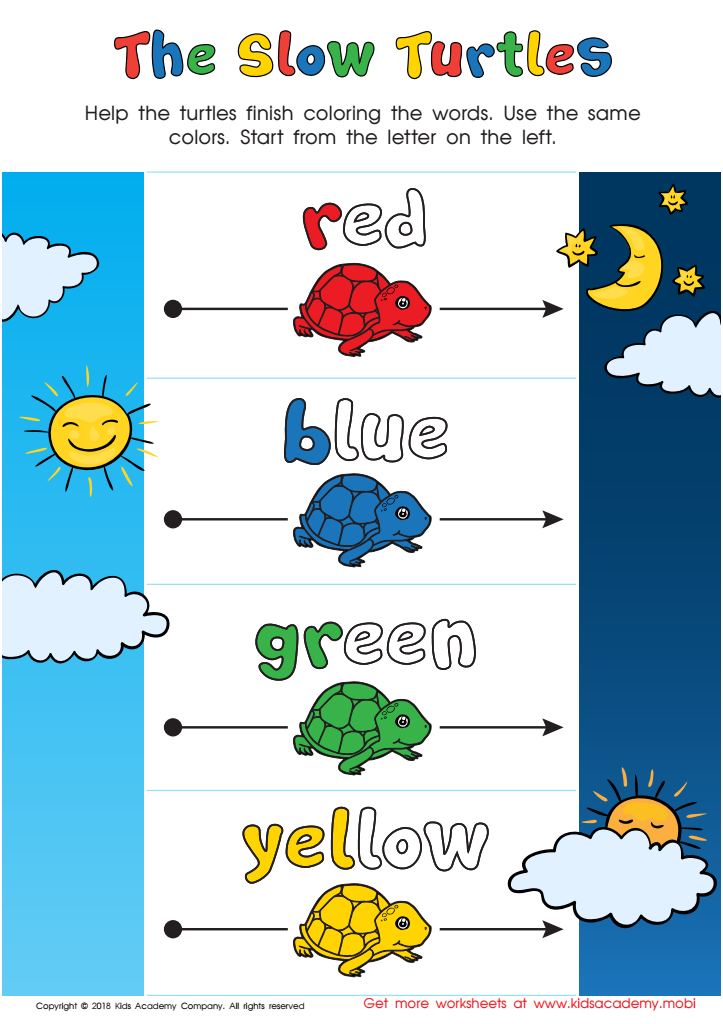
Read from Left to Right: Slow Turtles Worksheet
Can your students identify the animals in this worksheet? They're turtles! Ask if they know their characteristics – slow and living in shells. Guide them to color the words in the picture, starting from the letters on the left and using the turtles' color. Check they know turtles are slow and live in shells!
Download (PDF)
 Assign to My Students
Assign to My Students
Read from Left to Right: Slow Turtles Worksheet
Worksheet
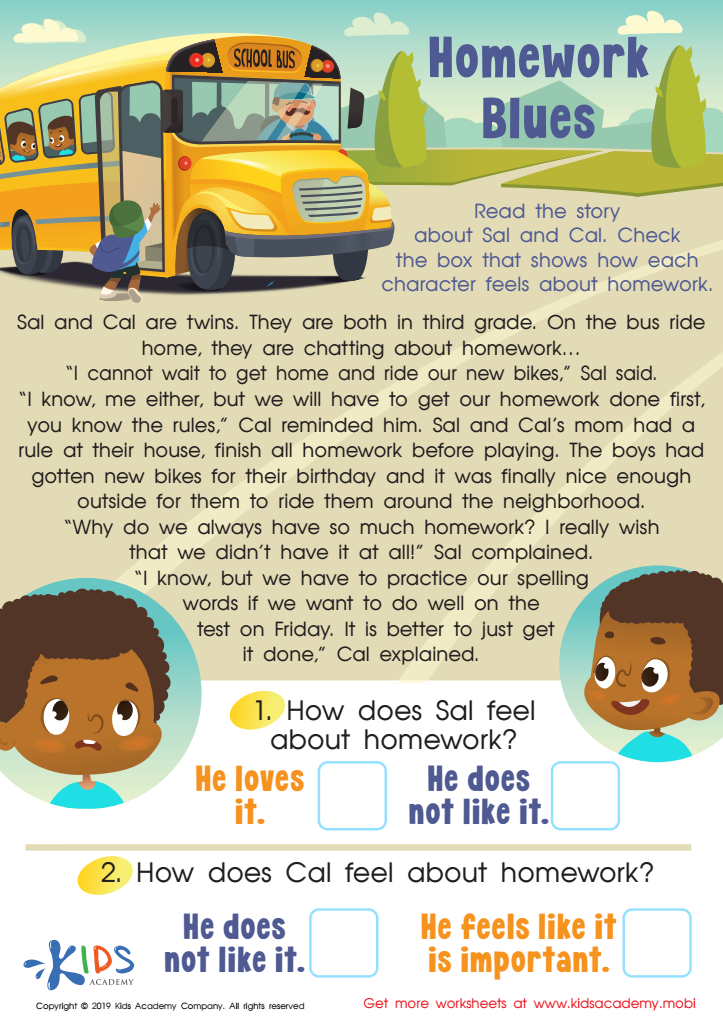
Homework Blues Worksheet
Cal and Sal don't love doing homework, just like your kids. Use this worksheet to help your children understand why homework is important. Read the passage together and then answer the questions at the bottom of the page. It's a fun way to learn together!
Homework Blues Worksheet
Worksheet
Join Kids Academy for Free
Who is primarily going to use this learning content?








Parents and teachers play a crucial role in nurturing children's mathematical thinking, especially for ages 5-7. Math problem-solving fosters critical skills that extend beyond numbers; it builds analytical thinking, which is vital for everyday decisions and future academic success. At this early stage, children engage in playful learning. Problem-solving activities provide an interactive way to explore concepts like addition, subtraction, shapes, and patterns, solidifying their foundational math skills.
Moreover, mastery of math problem-solving contributes to a child's confidence. When youngsters successfully navigate challenges, they develop a growth mindset, learning that effort can lead to success. This sense of accomplishment encourages persistence, implying that even difficult tasks can be achievable with practice.
In addition to cognitive benefits, engaging in math activities promotes social skills. Collaborative problem-solving exercises encourage teamwork and communication among peers, essential abilities for the classroom and beyond. Encouraging a positive attitude toward math early on can diminish anxiety about the subject later in life, leading to improved performance.
In essence, investing time and resources in math problem-solving helps children cultivate essential life skills, paving the way for a well-rounded education and future opportunities. Caring for their mathematical development lays a strong foundation for lifelong learning.








