Phonics recognition Easy Worksheets for Ages 5-7
5 filtered results
-
From - To
Explore our "Phonics Recognition Easy Worksheets for Ages 5-7," designed to engage young learners in mastering essential reading skills. These worksheets provide fun and interactive activities that make phonics practice enjoyable. Children will develop their ability to recognize sounds, decode words, and improve their overall literacy comprehension. Featuring colorful illustrations and stimulating exercises, these worksheets cater to various learning styles, ensuring every child gets the support they need. Perfect for use at home or in the classroom, our resources are aligned with early education standards. Boost your child’s confidence in reading and writing with these effective phonics recognition tools!
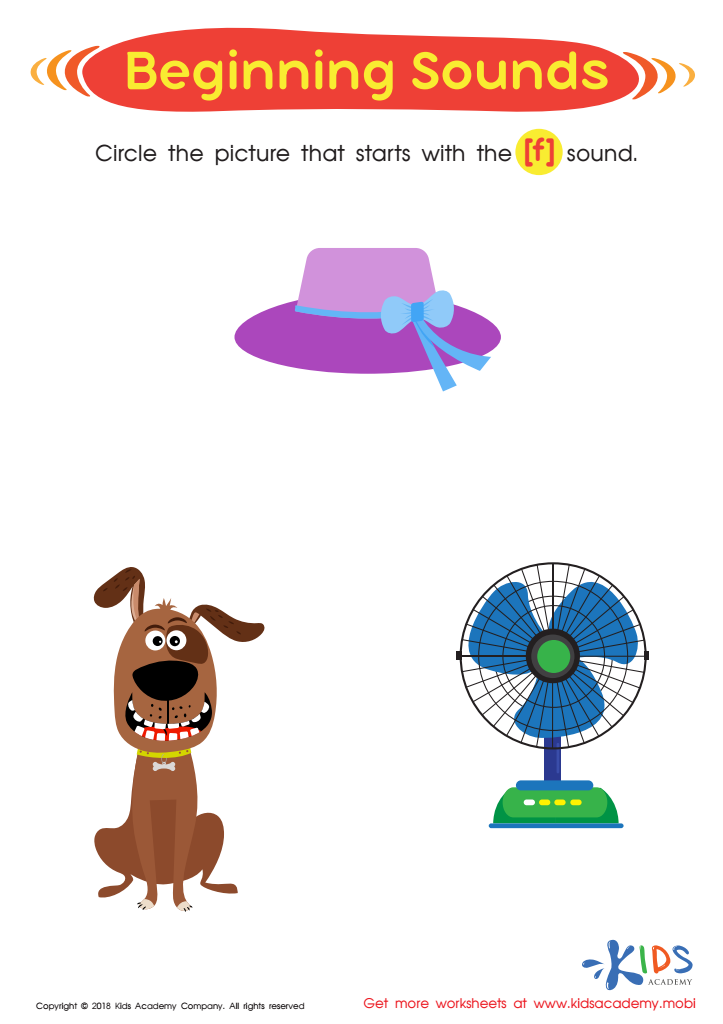
Beginning Sounds Assessment Printable
 Assign to My Students
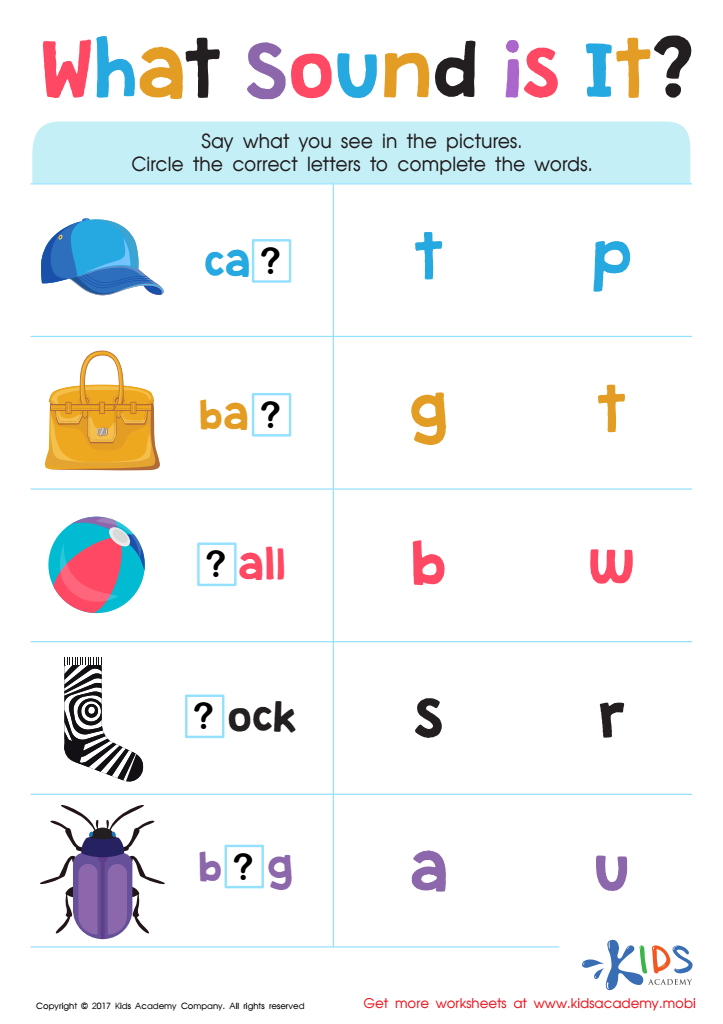
What Sound Is it? Worksheet
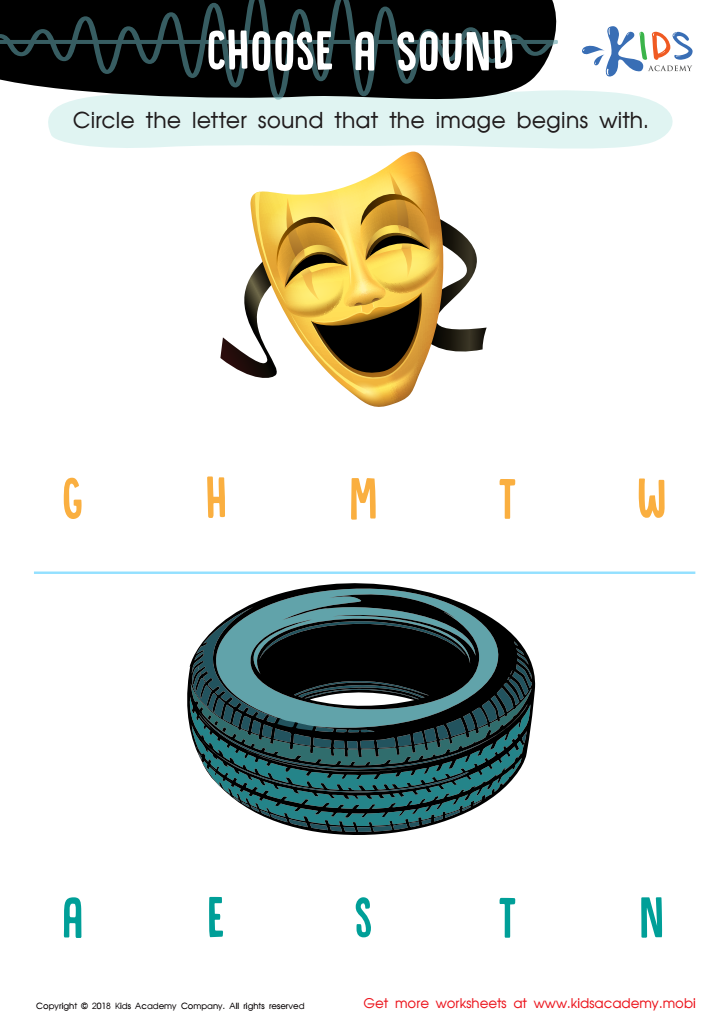
Choose a Sound Worksheet
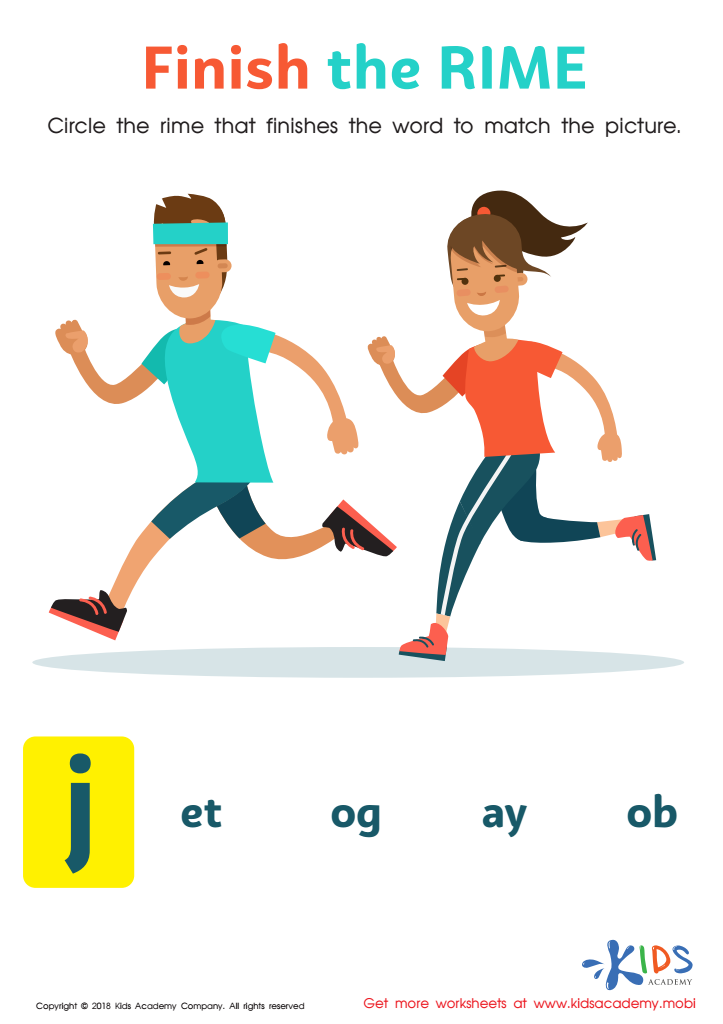
Finish the Rime Worksheet
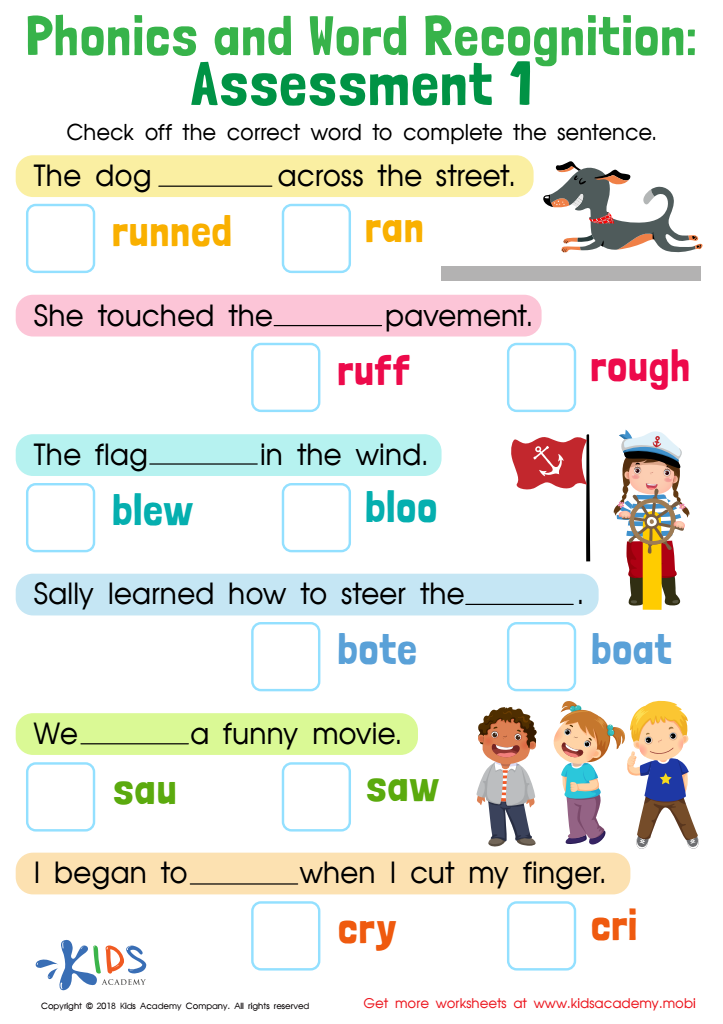
Phonics and Word Recognition: Assessment 1 Worksheet







Phonics recognition is crucial for children aged 5-7 as it lays the foundation for reading and writing skills. At this age, children's brains are incredibly adaptable, making it the perfect time to introduce phonics, which teaches them the relationships between letters and sounds. Understanding these connections helps children decode words independently, fostering confidence and a love for reading.
When parents and teachers emphasize phonics, they equip children with essential tools for literacy. This systematic approach helps children understand how to sound out words, improving their reading fluency and comprehension. Early phonics instruction also supports their spelling and writing skills, allowing them to express their thoughts clearly.
Moreover, children who grasp phonics often perform better academically across subjects. Strong reading skills can enhance their vocabulary, critical thinking, and overall communication abilities, setting them up for success in later grades.
In summary, parents and teachers should prioritize phonics recognition as it is integral to children's literacy development, ultimately enriching their educational journey and helping them become confident, capable readers. Scaling phonics instruction can also ensure children develop effective study habits that benefit them beyond the classroom.








