Data interpretation Easy Numbers Worksheets for Ages 5-7
3 filtered results
-
From - To
Introduce your child to the world of data with our engaging and easy-to-understand numbers worksheets for ages 5-7. Designed to inspire young minds, these data interpretation worksheets from Kids Academy help children master basic math and analytic skills. Our worksheets use simple graphics and fun exercises, making it enjoyable for kids to learn how to collect, organize, and interpret data. From counting and comparing to creating simple graphs, these printable resources lay the foundation for essential critical thinking and problem-solving abilities. Begin your child's journey to becoming a data wizard today with our carefully curated worksheets!
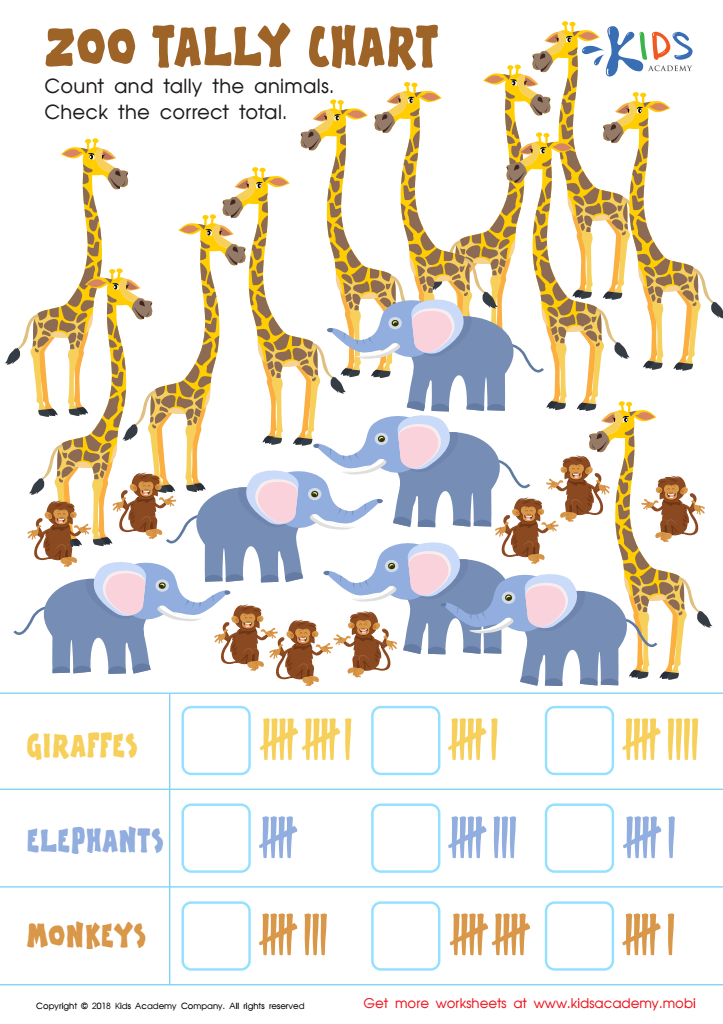
Zoo Tally Chart Worksheet
 Assign to My Students
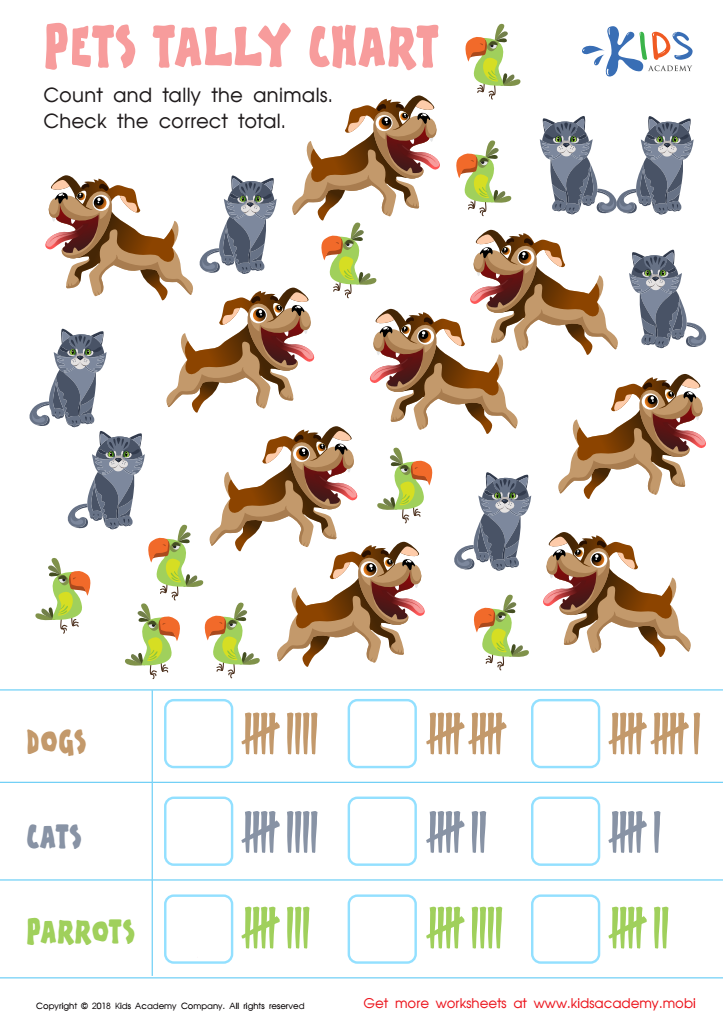
Pets Tally Chart Worksheet
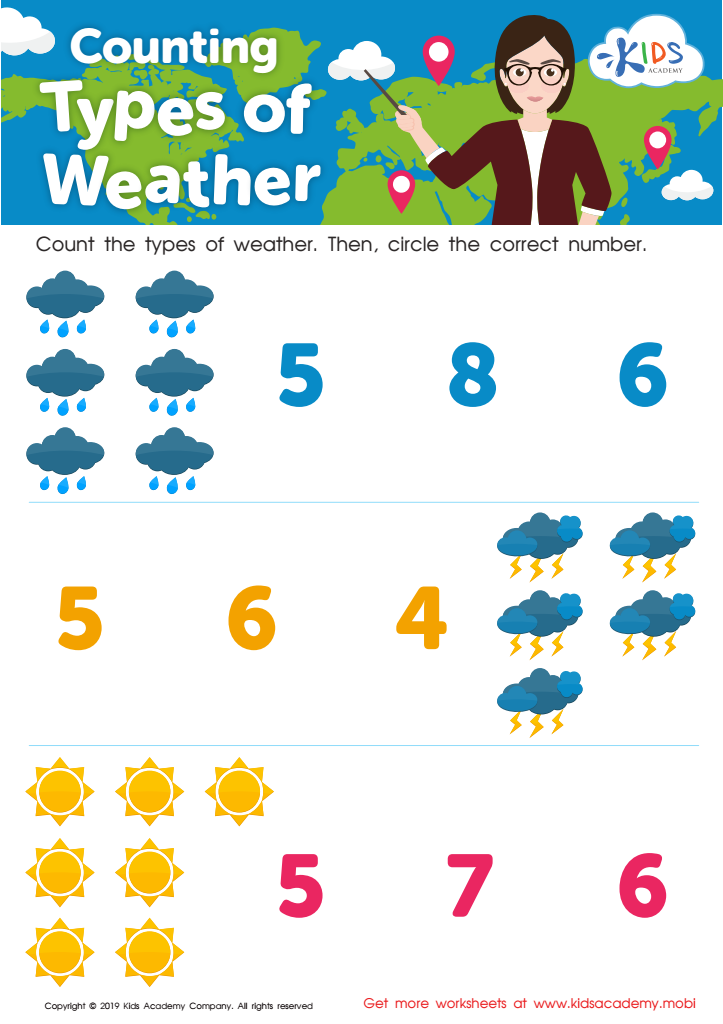
Counting Types of Weather Worksheet






.jpg)

Introducing data interpretation involving easy numbers to children aged 5-7 offers numerous benefits that can significantly influence their cognitive and academic development. At this early stage, children are typically more receptive to learning new concepts through visuals and hands-on experiences, which are key elements in data interpretation lessons.
Firstly, learning how to collect and interpret basic data fosters numeracy skills. Children develop an understanding of counting, comparing, and categorizing, which are foundational math skills. For instance, assessing how many apples versus oranges are in a basket helps them understand concepts of quantity and comparison.
Secondly, interpreting data enhances critical thinking. By observing graphs and charts and discussing results, young children learn to analyze information, make predictions, and draw conclusions—skills that are not only crucial in math but also in sciences, social studies, and everyday decision-making.
Additionally, exposure to data interpretation encourages problem-solving abilities. Kids learn to ask questions ("How can I group these items?") and search for solutions, promoting curiosity and investigative skills.
Lastly, teaching data interpretation at an early age boosts communication skills. Children practice expressing their ideas, explaining their reasoning, and understanding others' perspectives during group activities, making them better communicators.
In conclusion, fostering data interpretation skills with easy numbers for 5-7-year-olds sets a strong foundation for future learning and equips them with essential cognitive, analytical, and social abilities.








