Fine motor skills (writing) Easy Math Worksheets for Ages 5-7
3 filtered results
-
From - To
Welcome to our "Fine Motor Skills (Writing) Easy Math Worksheets" designed specifically for children aged 5-7! These engaging worksheets are perfect for young learners to enhance their fine motor skills while exploring basic math concepts. With fun and interactive activities, children will practice writing numbers, tracing shapes, and completing simple math problems. Our worksheets support the development of hand-eye coordination and pen control, essential for confident writing. Ideal for home or classroom use, these materials make learning math enjoyable. Encourage your child's early academic success and watch their skills flourish with our thoughtfully crafted resources!
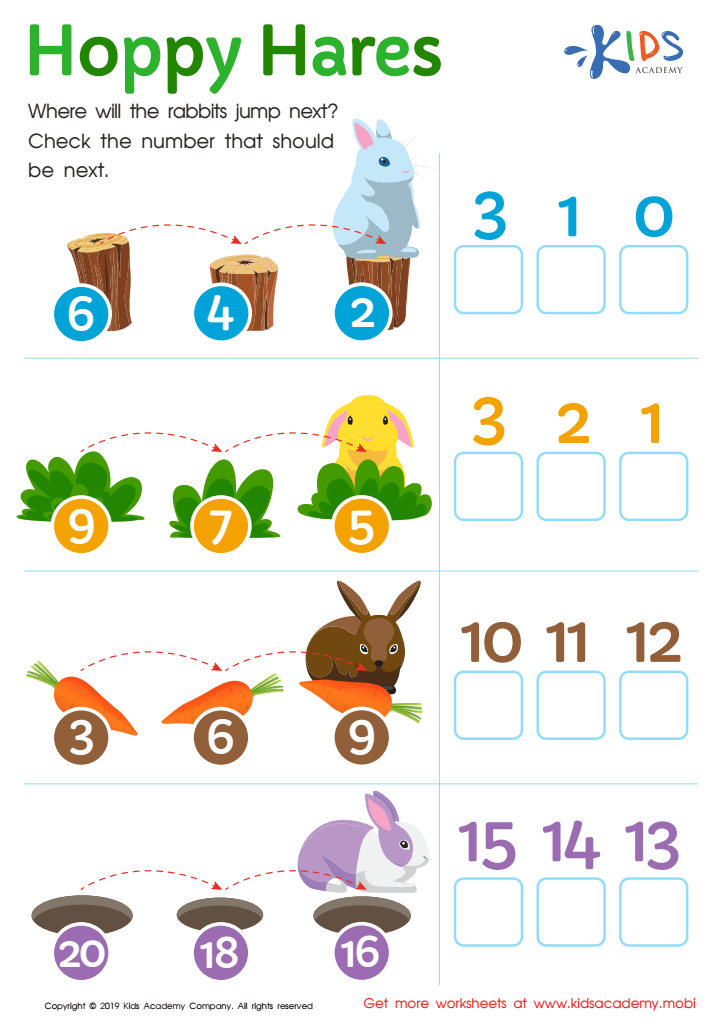
Hoppy Hares Worksheet
 Assign to My Students
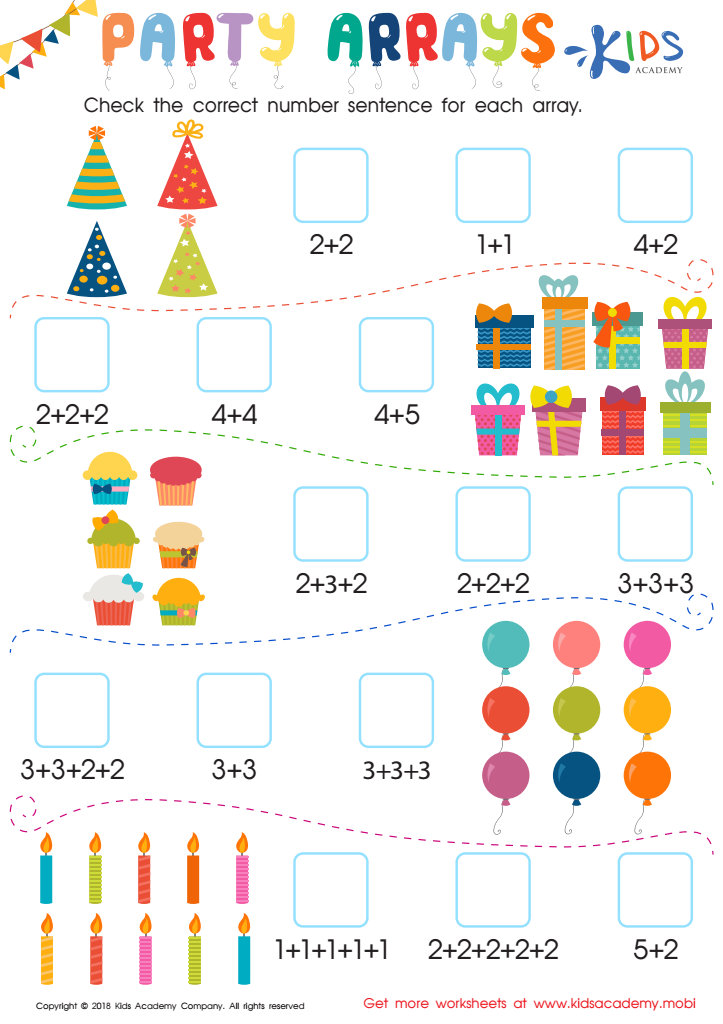
Party Arrays Worksheet
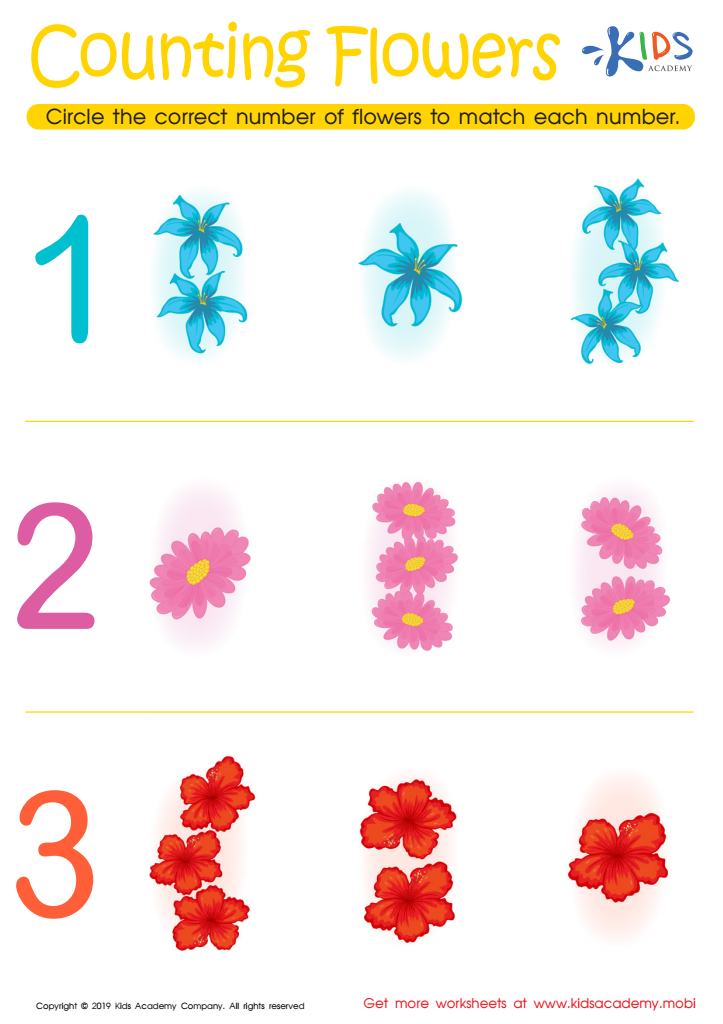
Counting Flowers Worksheet








Fine motor skills are essential for children aged 5-7 as they form the foundation for writing and other crucial tasks. By developing these skills, children improve their hand-eye coordination and dexterity, enabling them to hold and control writing tools effectively. This proficiency translates into better handwriting, fostering confidence in their academic abilities. Good handwriting also aids in conveying thoughts and ideas clearly, which is vital for effective communication.
In addition to fine motor skills, engaging in easy math activities enhances cognitive development. At this stage, children begin to understand numbers, simple operations, and problem-solving skills. Fun, interactive math activities can make learning enjoyable and relatable, making it easier for children to grasp concepts and instill a love for math early on.
Parents and teachers should care because fostering these fundamental skills not only supports academic performance but also encourages concentration, patience, and creativity. Early childhood development lays the groundwork for lifelong learning; empowering children during these formative years equips them with the tools to succeed both in primary education and beyond. By prioritizing fine motor skills and fun math exercises, adults can create a positive, enriching environment that nurtures a child's full potential.








