Understanding line plots Easy Measurement Worksheets for Ages 5-7
8 filtered results
-
From - To
Discover an engaging way for young learners to grasp the concept of line plots with our "Understanding Line Plots Easy Measurement Worksheets" designed for ages 5-7. These interactive printables transform measurements into fun learning experiences, helping children visualize and interpret data effortlessly. With kid-friendly exercises and colorful illustrations, your child will develop critical thinking and data analysis skills, laying a solid foundation for future math success. Each worksheet is crafted to match the cognitive abilities of early learners, making complex concepts more accessible. Start building vital math skills today with our easy-to-use educational resources!
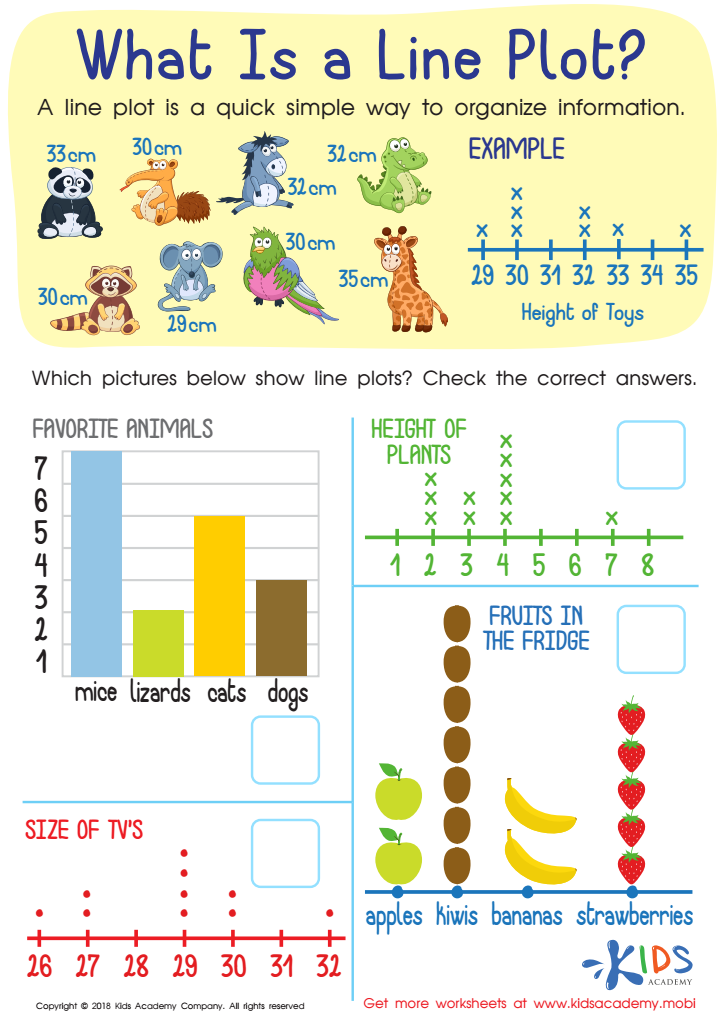
What Is a Line Plot? Worksheet
 Assign to My Students
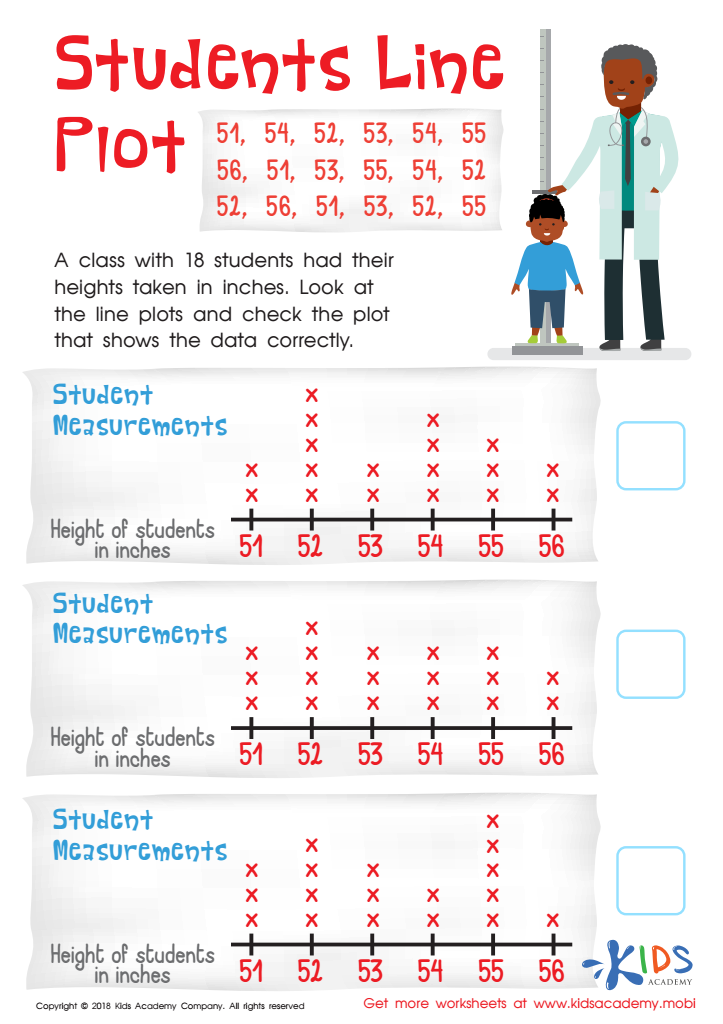
Students Line Plot Worksheet
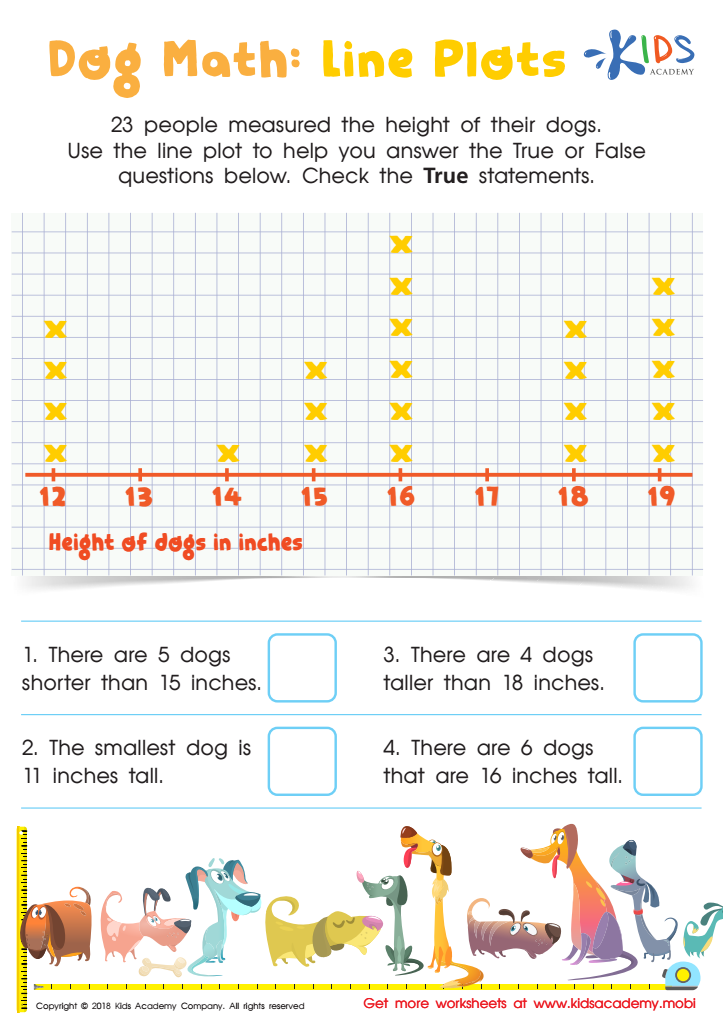
Dog Math: Line Plots Worksheet
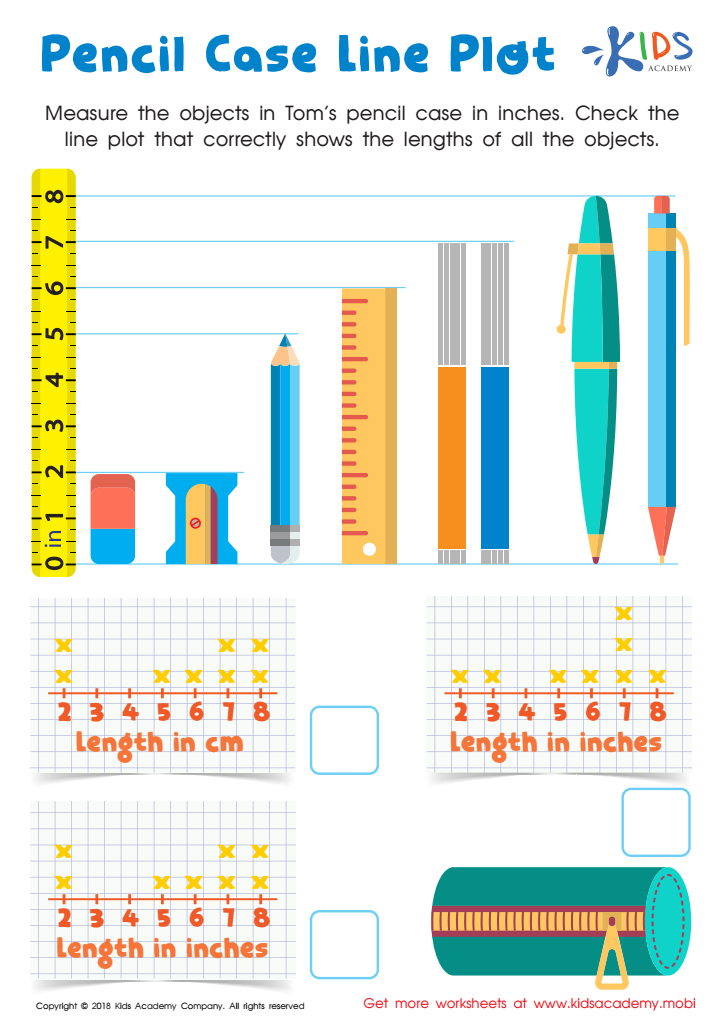
Pencil Case Line Plot Worksheet
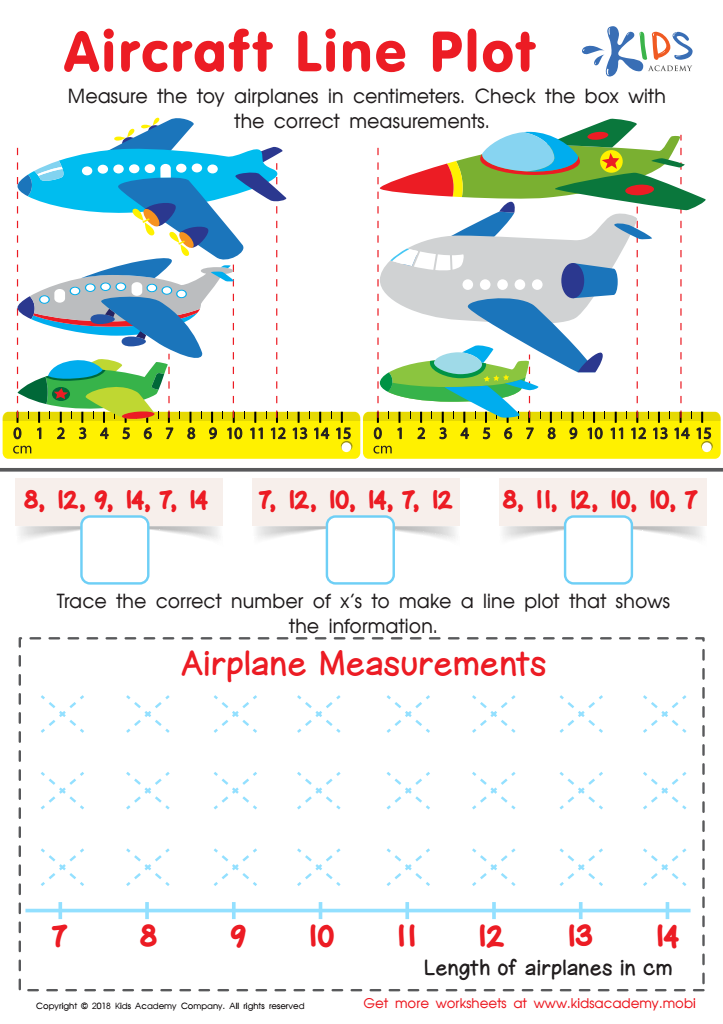
Aircraft Line Plot Worksheet
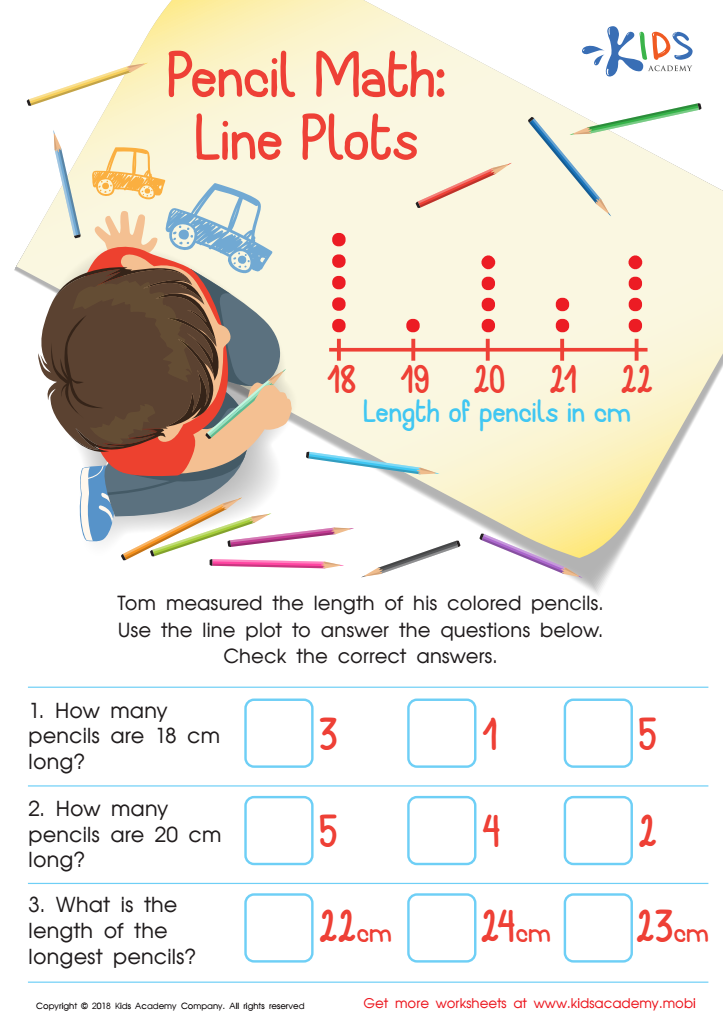
Pencil Math: Line Plots Worksheet
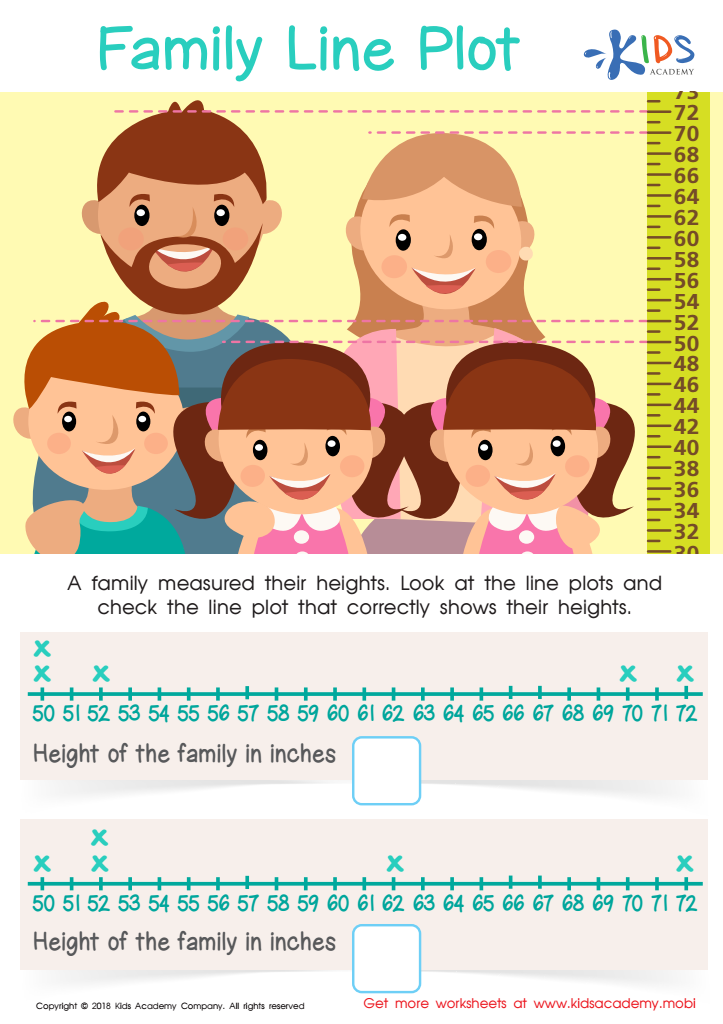
Family Line Plot Worksheet
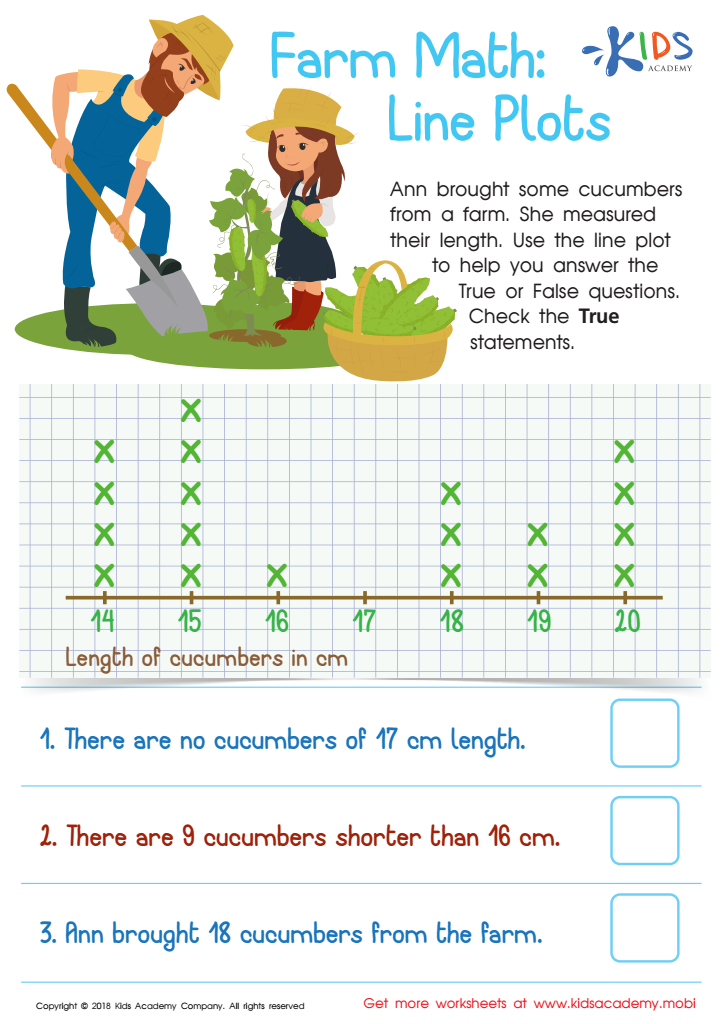
Farm Math: Line Plots Worksheet








Understanding line plots and basic measurement is crucial for young students, aged 5-7, as it lays the foundation for higher-level mathematics and everyday problem-solving skills. Line plots, which visually represent data points along a number line, help children develop critical thinking and analytical skills. At this age, kids are naturally curious and perceptive about the world around them; thus, learning to measure objects and interpret simple data aids in satisfying their intrinsic curiosities.
Integrating line plots and measurements into early education allows children to grasp numerical relationships and spatial reasoning. For instance, measuring the length of a toy and plotting these measurements in line plots will help them better understand the concepts of quantity, comparison, and sequence. This forms a necessary precursor to more advanced topics like fractions, geometry, and even scientific methods.
For parents and teachers, fostering an understanding of these concepts aids in developing a child's mathematical literacy, which is essential for academic success. Moreover, these activities encourage conceptual engagement, fine motor skills, and collaborative communication, benefiting their overall cognitive and social development. Emphasizing this form of early education transforms seemingly abstract numerical ideas into concrete, manageable tasks, thus nurturing a positive attitude towards mathematics and reinforcing a child’s confidence and competencies in diverse learning areas.








