Understanding life cycles Easy Reading Worksheets for Ages 5-7
3 filtered results
-
From - To
Introducing our "Understanding Life Cycles Easy Reading Worksheets for Ages 5-7"! Dive into the fascinating world of life cycles with our fun and educational worksheets tailored for young learners. These worksheets are designed to be engaging and simple, helping kids grasp the essentials of different life cycles, from caterpillars turning into butterflies to seeds growing into plants. By combining reading exercises with vivid visuals, our worksheets provide a comprehensive learning experience that sparks curiosity and enhances understanding. Perfect for classroom or at-home learning, these printable resources ensure that kids build strong foundational science skills while enjoying their reading journey.
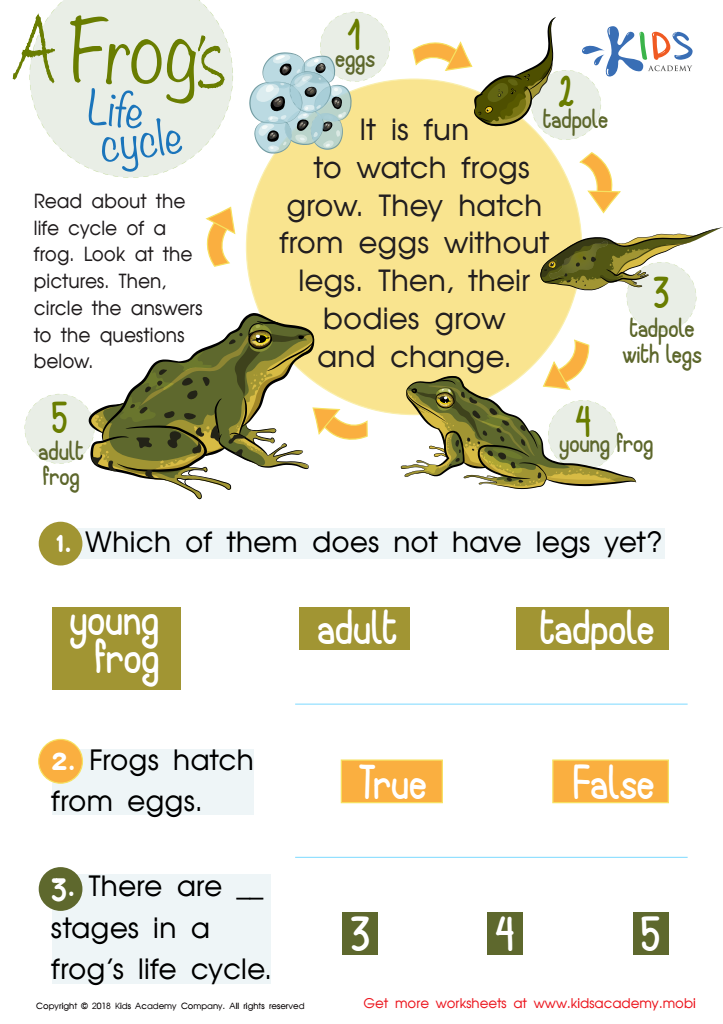
A Frog’s Life Cycle Worksheet
 Assign to My Students
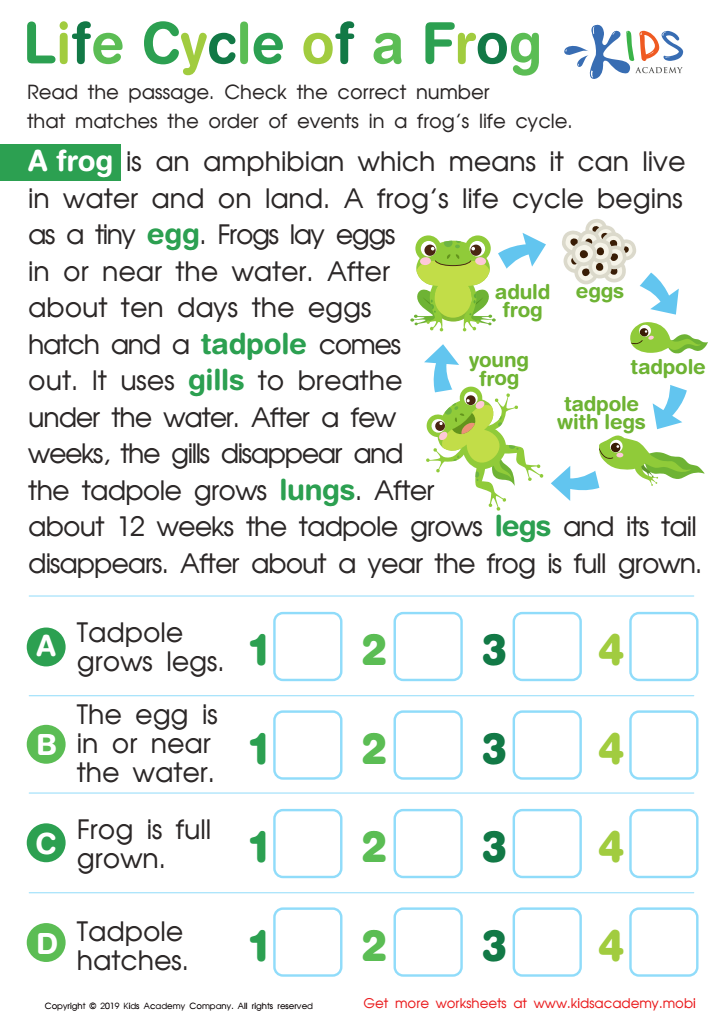
Life Cycle of a Frog Worksheet
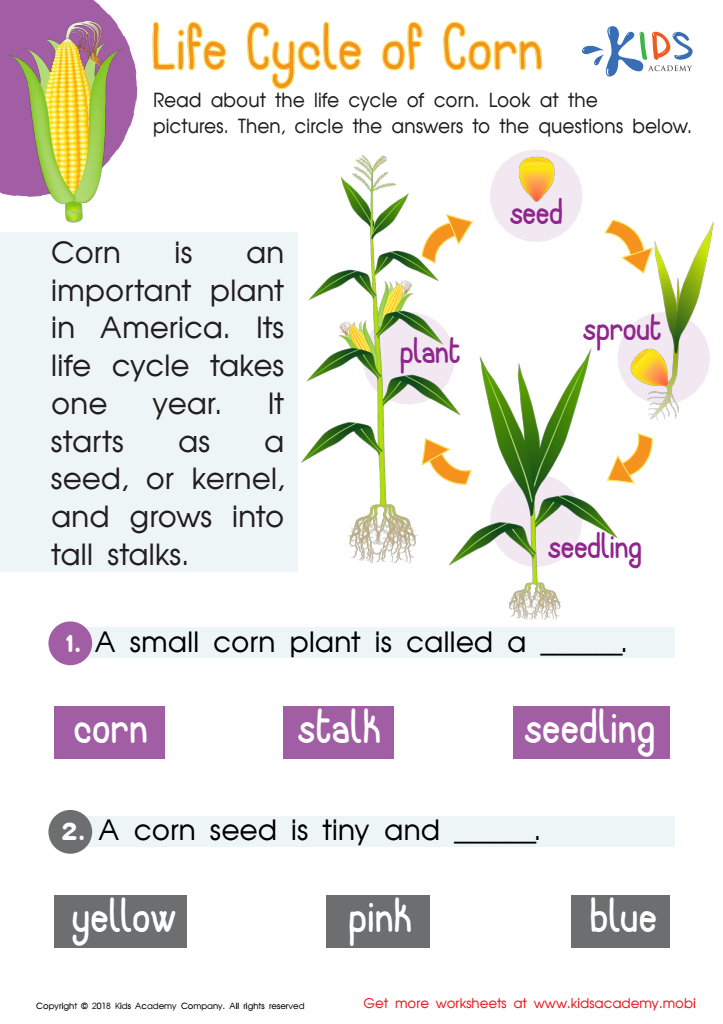
Life Cycle of Corn Worksheet






Understanding life cycles is fundamental for children aged 5-7, and parents or teachers should prioritize teaching this topic in an easy-to-read format that is enjoyable and comprehensible. At this impressionable age, children are curious and eager to discover how the natural world works. Simplified texts about life cycles help satisfy this curiosity, fostering a love for learning and reading.
Learning about life cycles, such as those of butterflies, frogs, and plants, allows young children to grasp essential scientific concepts and the significance of growth, change, and continuity. This foundational understanding aids in the development of critical thinking skills and encourages observational abilities as children look for life cycles in their natural environments.
Moreover, it provides an excellent opportunity for young learners to develop empathy and responsibility. For instance, when children understand that animals and plants go through vulnerable stages, they become more inclined to treat living things with care and respect. Engaging stories and illustrations in easy-reading books capture their imagination, making learning both meaningful and fun.
Ultimately, introducing life cycles in easy reading formats builds a bridge to more complex scientific knowledge, setting the stage for academic success and a lifelong appreciation for the wonders of nature. Parents and teachers, therefore, play a crucial role in nurturing an inquisitive mind and fostering a respectful attitude toward living things.