Sequencing Skills Easy Reading Comprehension Worksheets for Ages 5-7
3 filtered results
-
From - To
Enhance your child's reading skills with our Sequencing Skills Easy Reading Comprehension Worksheets tailored for ages 5-7. Designed to foster early literacy, these worksheets help young learners arrange stories in logical order, boosting understanding and memory retention. Featuring vibrant illustrations and engaging content, our activities make learning fun and effective. Ideal for young readers, these tools are perfect for use at home or in the classroom, fitting seamlessly into any early grade curriculum. Guided by educational best practices, our worksheets support critical thinking and narrative skills, setting a strong foundation for future reading success. Download now to start the learning adventure!
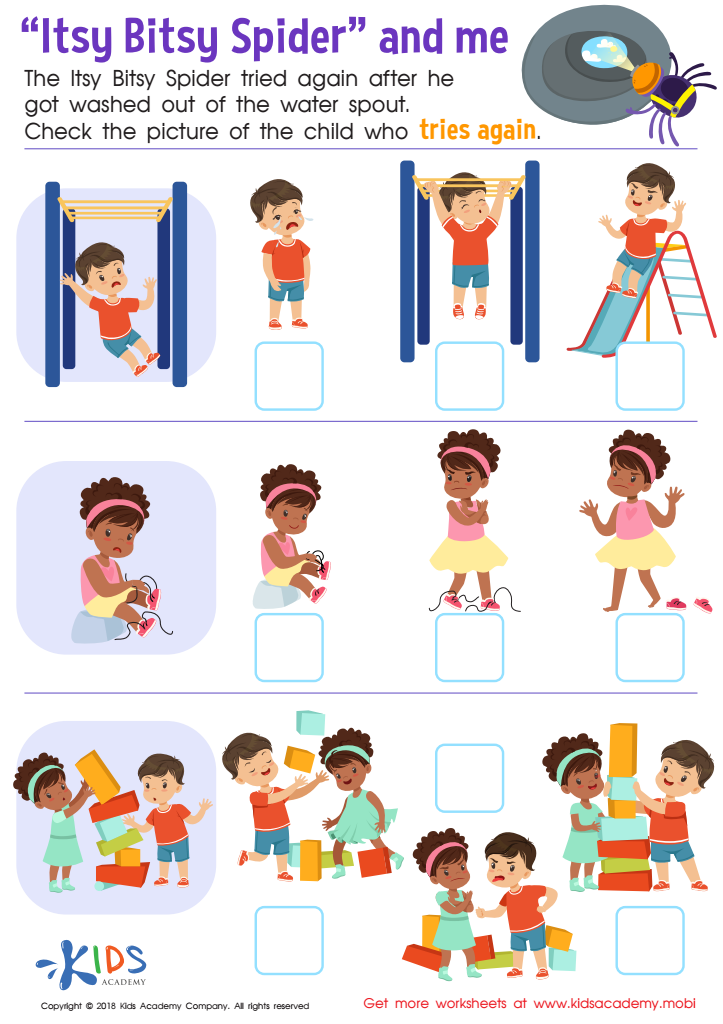
Itsy Bitsy Spider and Me Worksheet
 Assign to My Students
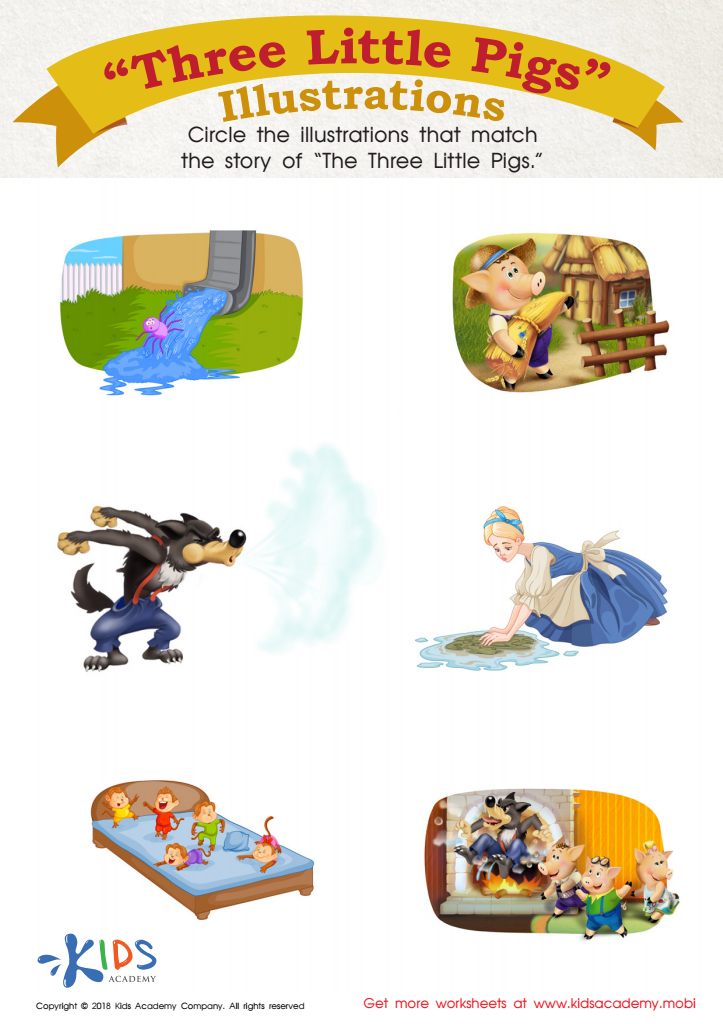
Three Little Pigs: Illustrations Worksheet
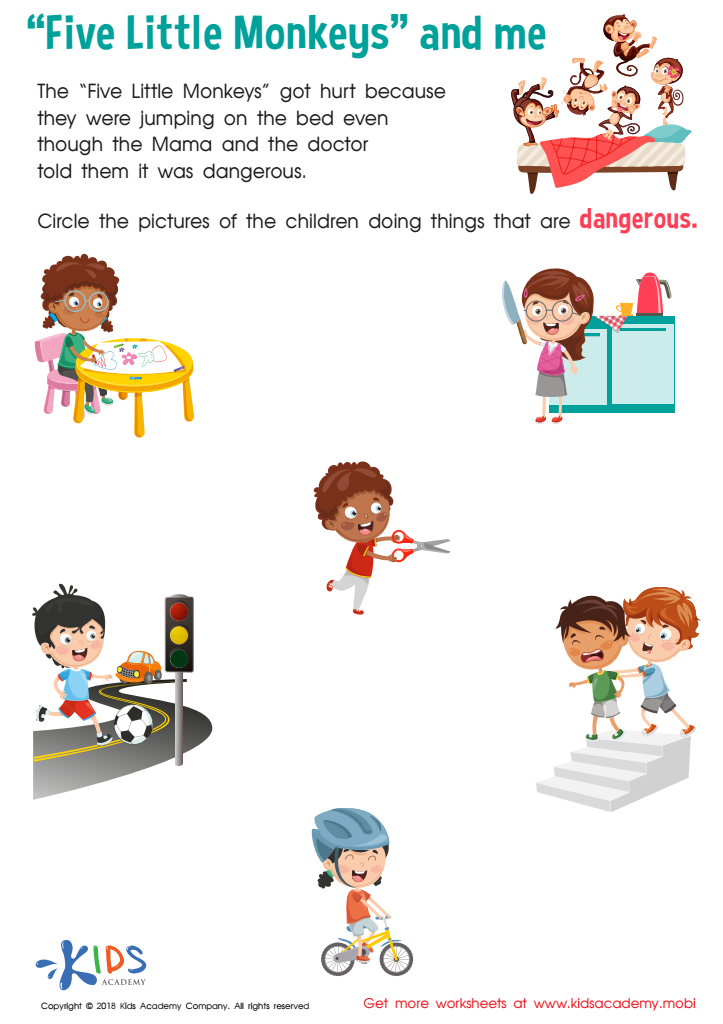
Five Little Monkeys and Me Worksheet








Sequencing skills refer to the ability to understand and organize events, steps, or information in a logical order. Developing these skills in children ages 5-7 is crucial for several reasons, both academically and in everyday life.
Firstly, sequencing fuels reading comprehension. When children can sequence events in a story, they better grasp the narrative structure—the beginning, middle, and end. This heightens their ability to understand and relive the story, making reading more enjoyable and impactful.
Secondly, sequencing supports writing skills. As children's understanding of story structure grows, they can organize their own thoughts and ideas more coherently, paving the way for effective writing.
Additionally, sequencing skills intertwine with other subject areas. In math, knowing the order of numbers aids calculations, while in science, understanding sequences in experiments ensures accurate outcomes.
Beyond academics, sequencing nurtures executive functioning. Following routines, understanding schedules, and reasoning through problems are daily tasks requiring strong sequencing abilities.
Lastly, from an emotional facet, enhanced sequencing can foster a child's confidence. Seeing the improvement in their ability to understand and recount events builds self-assuredness.
Therefore, parents and teachers focusing on sequencing skills prepare children for broader learning experiences and keen problem-solving capabilities, setting foundational stones for lifelong education and development.