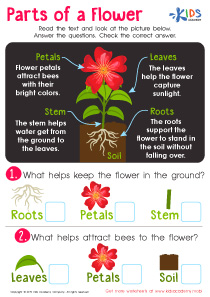
Cognitive Development Easy Reading Fiction Worksheets for Ages 5-7
2 filtered results
-
From - To
Discover our engaging "Cognitive Development Easy Reading Fiction Worksheets" designed for young learners aged 5-7! These worksheets enhance cognitive skills through fun and age-appropriate reading exercises. Ideal for parents and teachers, our resources promote critical thinking, comprehension, and vocabulary development while making learning enjoyable. Each worksheet encourages children to think creatively and make connections with the stories they read, nurturing their cognitive abilities in a playful way. Browse our collection for diverse themes and characters that captivate young minds, boosting their confidence and love for reading. Explore our worksheets today and witness your child thrive!
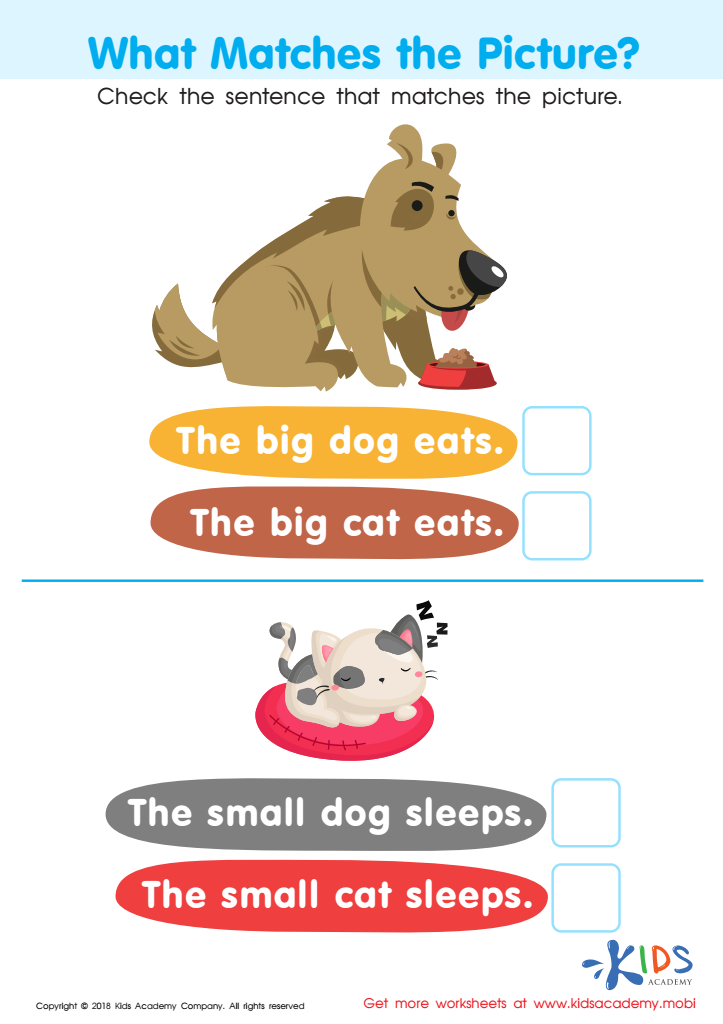
What Matches the Picture? Worksheet
 Assign to My Students
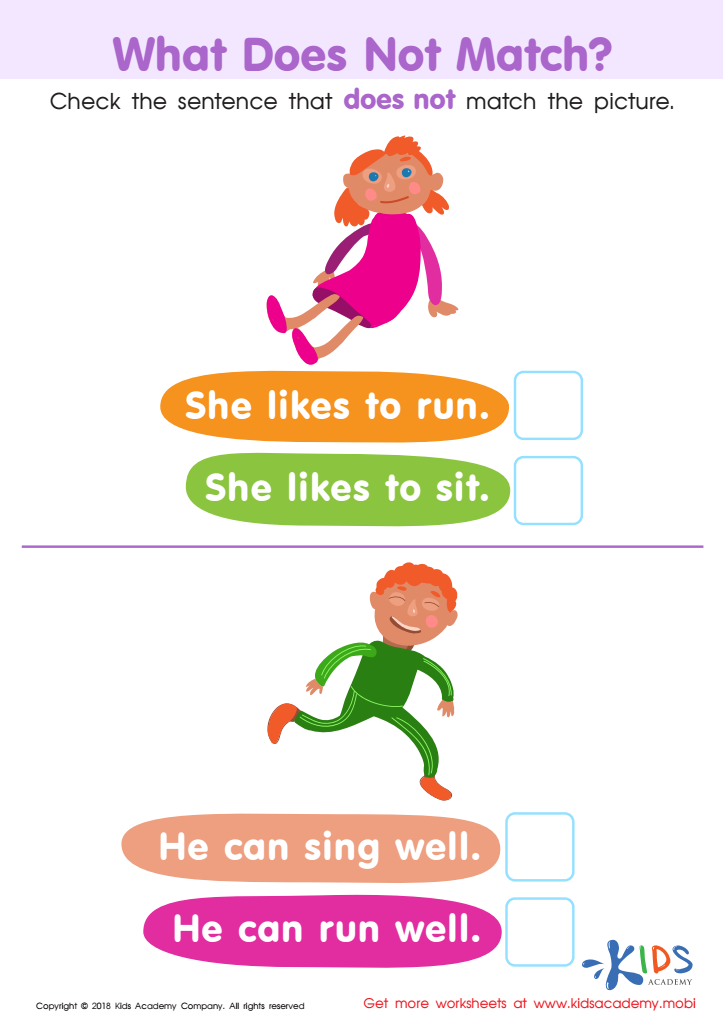
What Does Not Match? Worksheet








Cognitive development is crucial for young children, particularly for those aged 5-7, as it lays the foundation for their future learning. Easy reading fiction plays a significant role in this process. First, engaging stories stimulate imagination and creativity, allowing children to think critically and solve problems in inventive ways. Exposure to narratives enhances language skills, helping them to expand their vocabulary and grasp complex sentence structures.
Parents and teachers should care about easy reading fiction because these texts offer relatable themes that children can connect with. Engaging characters and plots encourage empathy, understanding different perspectives, and developing social skills. Additionally, reading together promotes bonding and creates a nurturing environment where children feel safe to express themselves.
Furthermore, short, simple stories maintain attention spans, making learning enjoyable. Enthusiasm for reading at this young age cultivates lifelong habits, leading to better academic performance in the future. Overall, prioritizing easy reading fiction supports cognitive milestones and nurtures children’s emotional and social growth, ultimately shaping well-rounded individuals. Investing time in these reading experiences fosters readiness for the challenges of higher education and life beyond the classroom.