Story sequencing Easy Reading Fiction Worksheets for Ages 5-7
3 filtered results
-
From - To
Enhance your child’s reading skills with our "Story Sequencing Easy Reading Fiction Worksheets for Ages 5-7." These engaging worksheets are designed to help young readers practice putting events in the correct order while fostering critical thinking and comprehension. Each worksheet features fun and relatable fiction stories with illustrations to make learning enjoyable. Perfect for introducing sequencing concepts, these exercises also support the development of memory and narrative understanding. Ideal for classroom settings or at-home practice, our worksheets are a valuable resource in building a strong literacy foundation. Let your child unlock the joy of reading with structured, interactive storytelling activities!
Folktales Printable PDF Worksheet: The 3 Little Pigs
 Assign to My Students
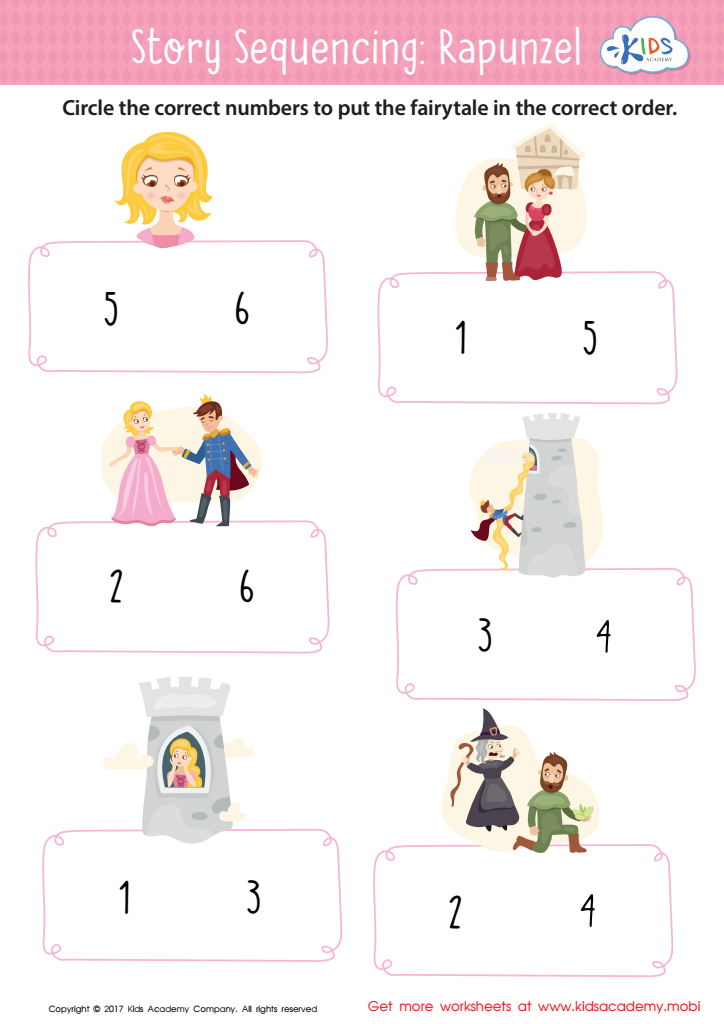
Rapunzel Story Sequencing Worksheet
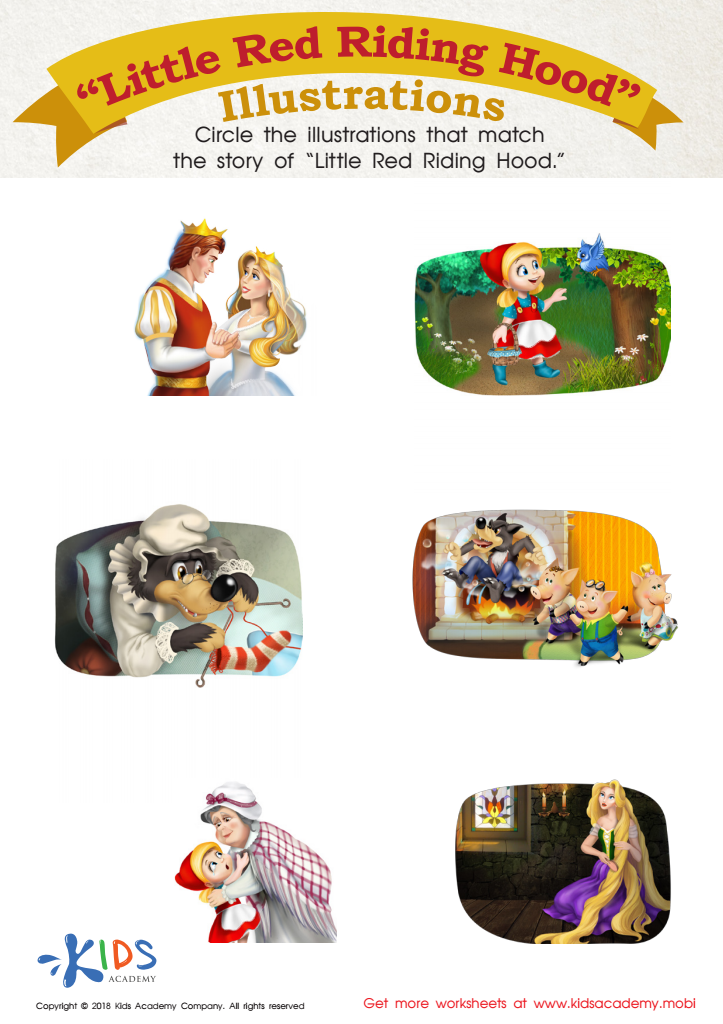
Little Red Riding Hood: Illustrations Worksheet







.jpg)
Story sequencing is a vital component of early literacy for children ages 5-7, and parents and teachers should prioritize it for several key reasons. First, it enhances comprehension skills by helping children understand the beginning, middle, and end of a narrative, allowing them to grasp the structure and flow of a story. When kids can sequence events, they are better able to recall and retell stories, which are crucial skills for reading proficiency.
Secondly, sequencing fosters critical thinking. Children learn to connect events logically, discerning cause-and-effect relationships and understanding the progression of time. This cognitive skill extends beyond reading and is foundational in math, problem-solving, and daily life activities.
Thirdly, engaging with story sequencing activities boosts language development. As youngsters recount events in order, they use a variety of vocabulary and sentence structures, expanding their verbal and written communication skills. Additionally, it supports memory development, essential for learning across all subjects.
Lastly, sequencing is fun and engaging, making literacy an enjoyable experience that encourages a lifelong love of reading. By using books tailored for early readers, parents and teachers can ensure that these young minds are engaged, inspired, and well-prepared for future academic success. Thus, story sequencing in easy reading fiction should be an integral part of early education.