
Logical thinking development Easy Worksheets for Ages 5-8
3 filtered results
Difficulty Level
Grade
Age
-
From - To
Subject
Activity
Standards
Unlock your child's potential with our "Logical Thinking Development Easy Worksheets for Ages 5-8." These engaging and fun worksheets are designed to enhance critical thinking and problem-solving skills in young learners. Featuring age-appropriate puzzles, sequencing activities, and pattern recognition exercises, each worksheet promotes logical reasoning in an enjoyable way. Perfect for both classroom and home use, our easy-to-follow resources support fundamental learning while keeping children excited and motivated. Equip your 5-8-year-olds with the tools they need to develop their logical thinking abilities effortlessly. Start their journey towards sharp thinking and smarter learning today!
Favorites
With answer key
Interactive
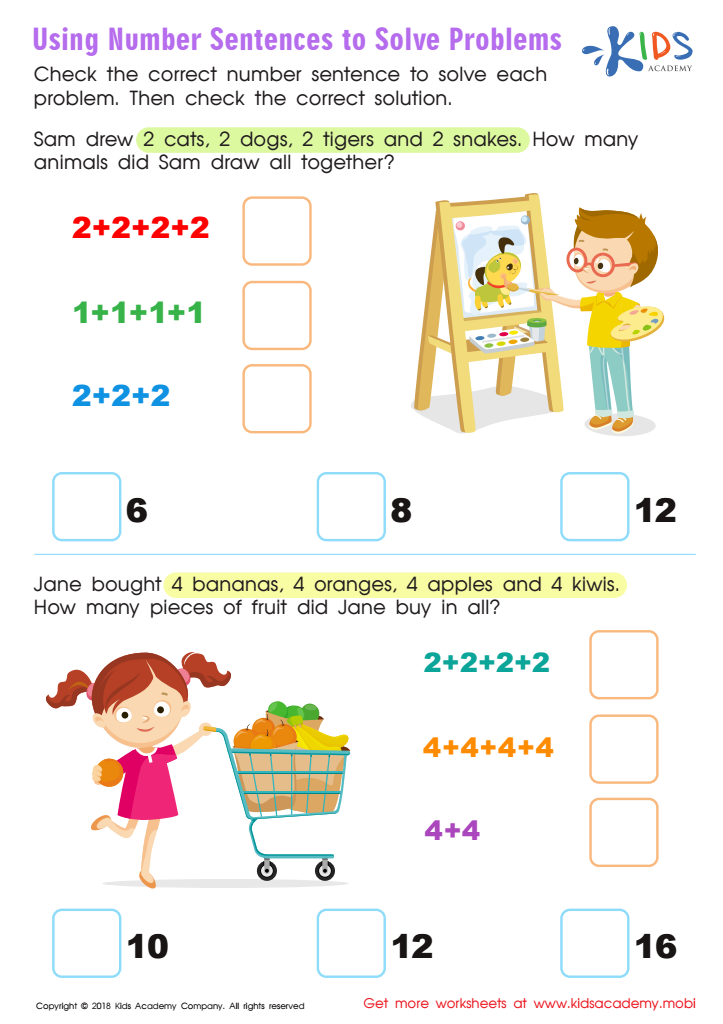
Using Number Sentences to Solve Problems Worksheet
Solving math problems requires an efficient strategy. Picture representation can help young mathematicians with basic addition problems, especially when it involves repeated addends. As they gain confidence, they'll be able to apply their number sentence solving abilities to more complex equations.
 Assign to My Students
Using Number Sentences to Solve Problems Worksheet
Worksheet
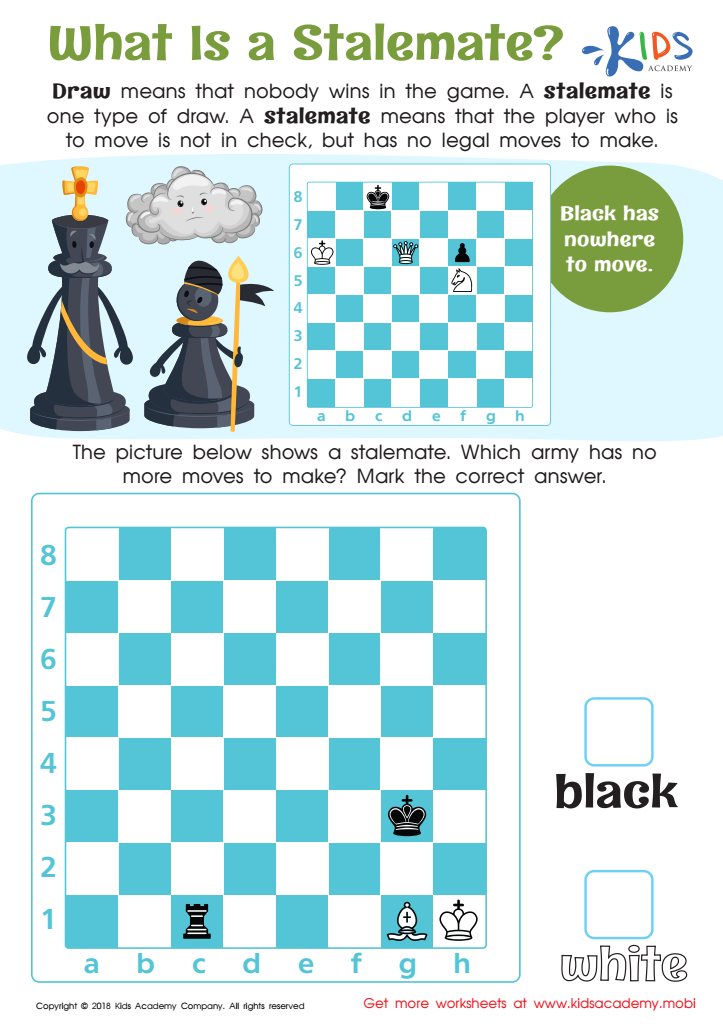
What Is a Stalemate? Worksheet
Chess is an ideal way to develop logic, strategizing, problem-solving and more! Even kids can learn it. With this worksheet, children can learn about draws and stalemates. Sample boards will help them decide which team, black or white, is at a stalemate.
What Is a Stalemate? Worksheet
Worksheet
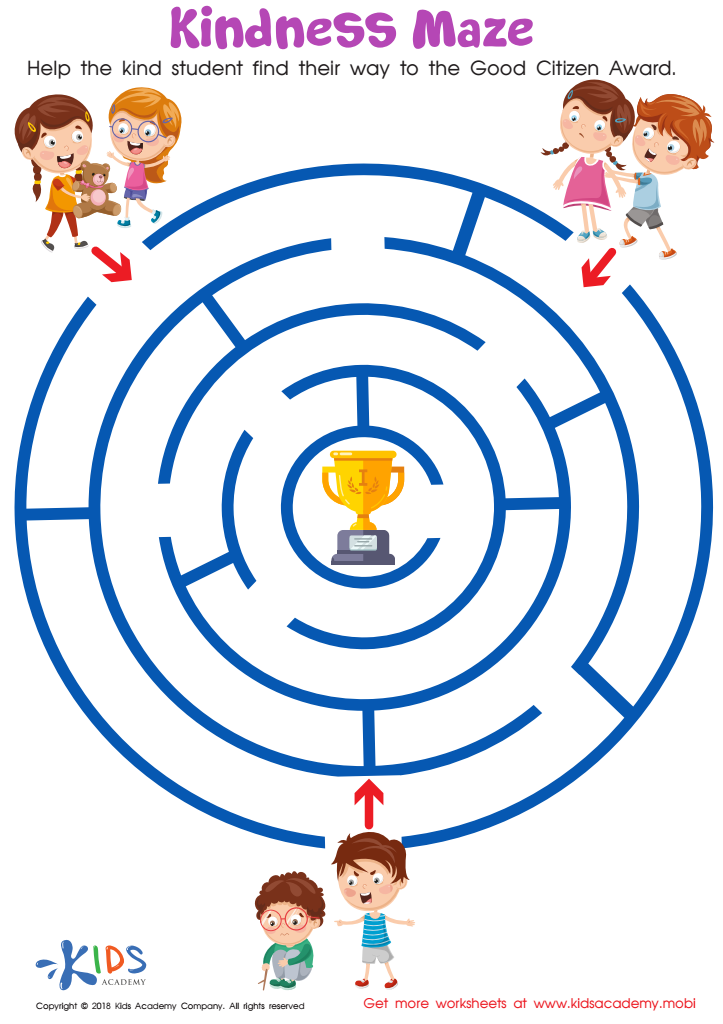
Kindness Maze Worksheet
Rewards come in many forms for kind deeds. When your children do good, you can choose to reward them with a gift or compliment. The students in this worksheet have been awarded the Good Citizen Award for kindness. Let your kids help the students find their way to the award - at the center of the maze. Guide them through to get their prize.
Kindness Maze Worksheet
Worksheet
Join Kids Academy for Free
Who is primarily going to use this learning content?


.jpg)





Logical thinking is a fundamental skill that forms the basis for problem-solving and decision-making, which are essential for success in school and life. For children aged 5-8, developing logical thinking sets the stage for higher-level cognitive processes such as reasoning, critical thinking, and abstract thought.
At this age, kids are curious and eager to learn, making it an ideal time to foster logical thinking. Incorporating puzzles, games, and age-appropriate problems can help children understand cause and effect, recognize patterns, and classify objects, which are all essential components of logical thinking. These skills enable children to understand instructions better, complete tasks efficiently, and solve problems effectively.
Additionally, cultivating logical thinking in early childhood supports academic readiness and performance. For example, math and science require a significant amount of logical reasoning to understand concepts and find solutions to complex problems. Literacy skills also benefit, as understanding the sequence of events in a story or cause-and-effect relationships enhances comprehension.
Beyond academics, logical thinking equips children with the ability to navigate life's everyday challenges. It fosters independence, boosts confidence, and nurtures resilience by empowering children to approach obstacles with a clear and systematic mindset.
Encouraging the development of logical thinking in children aged 5-8 is, therefore, crucial for their overall cognitive growth, academic success, and everyday problem-solving capabilities.








