Visual discrimination Easy Worksheets for Ages 5-8
5 filtered results
-
From - To
Enhance your child's visual discrimination skills with our engaging and easy worksheets designed for ages 5-8. These thoughtfully crafted activities from Kids Academy help young learners recognize differences in shapes, patterns, and objects. By focusing on attention to detail, our worksheets promote better reading, writing, and problem-solving abilities. Ideal for parents and teachers, every exercise supports cognitive development while making learning fun. Foster essential visual discrimination skills and set a strong foundation for lifelong learning with our easy, age-appropriate printables. Visit Kids Academy to explore and print these valuable educational resources today!
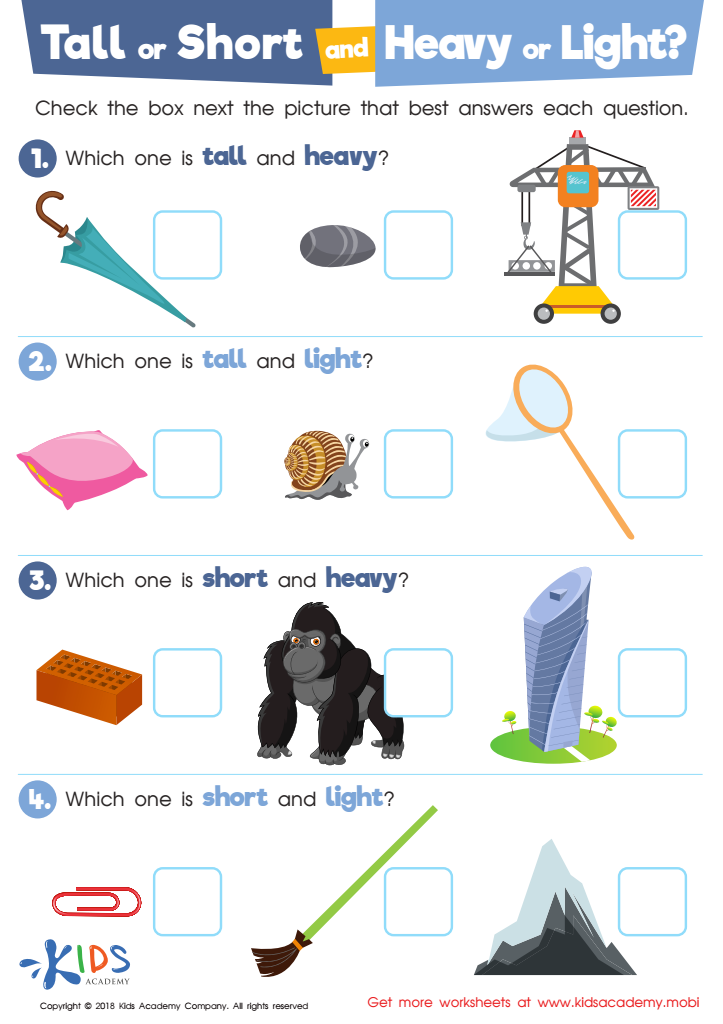
Tall or Short and Heavy or Light? Worksheet
 Assign to My Students
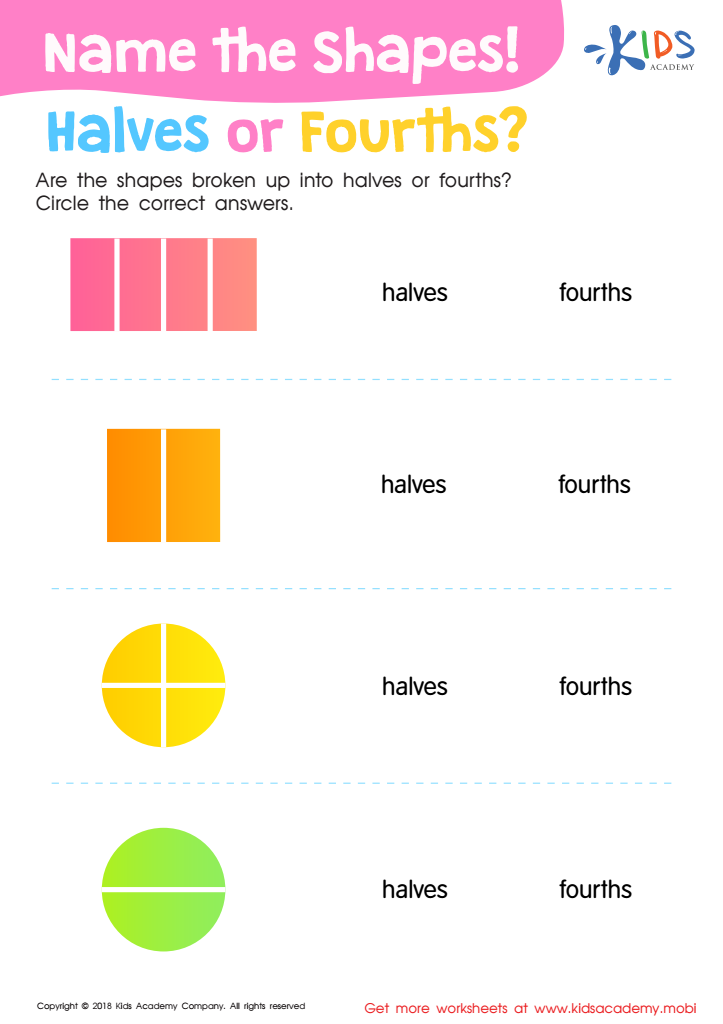
Name the Shapes Halves or Fourths? Worksheet
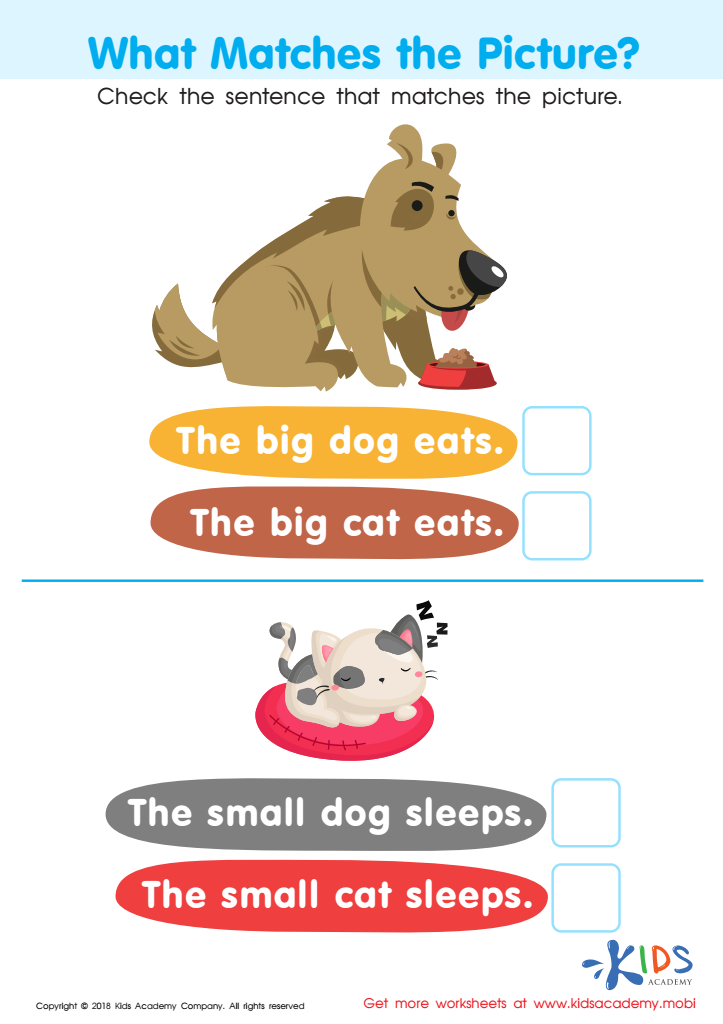
What Matches the Picture? Worksheet
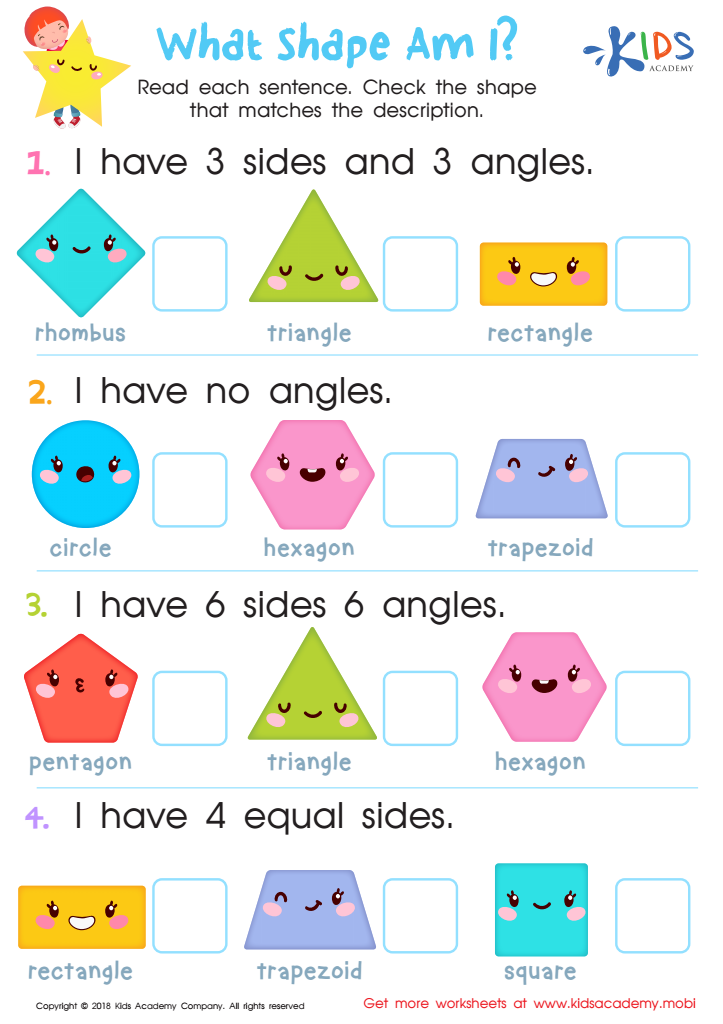
What Shape Am I? Worksheet
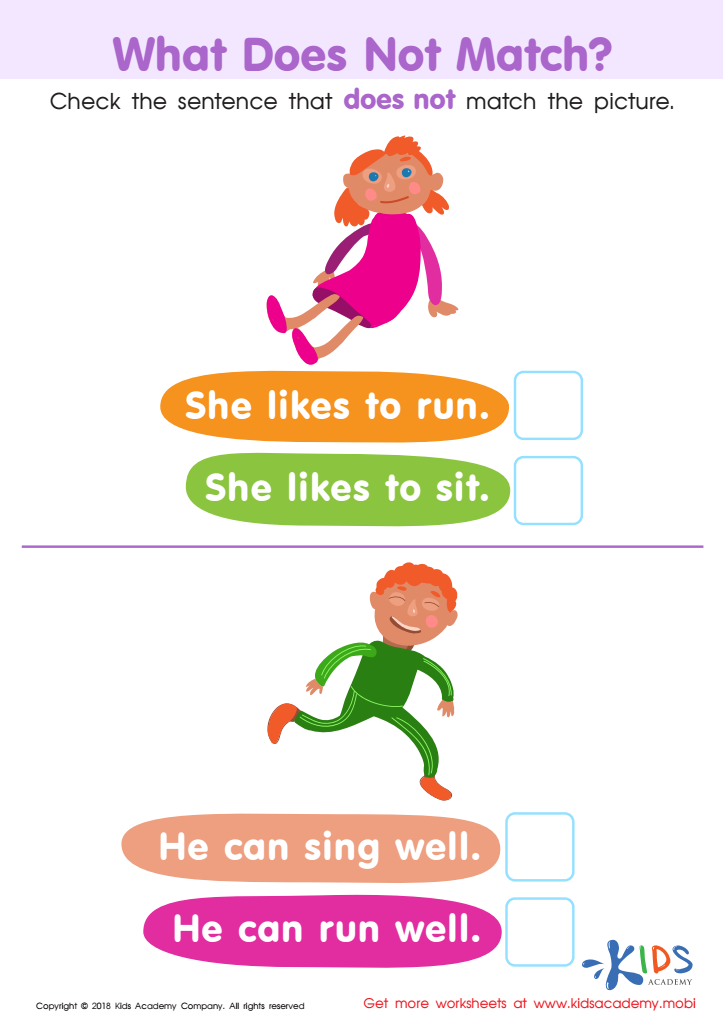
What Does Not Match? Worksheet




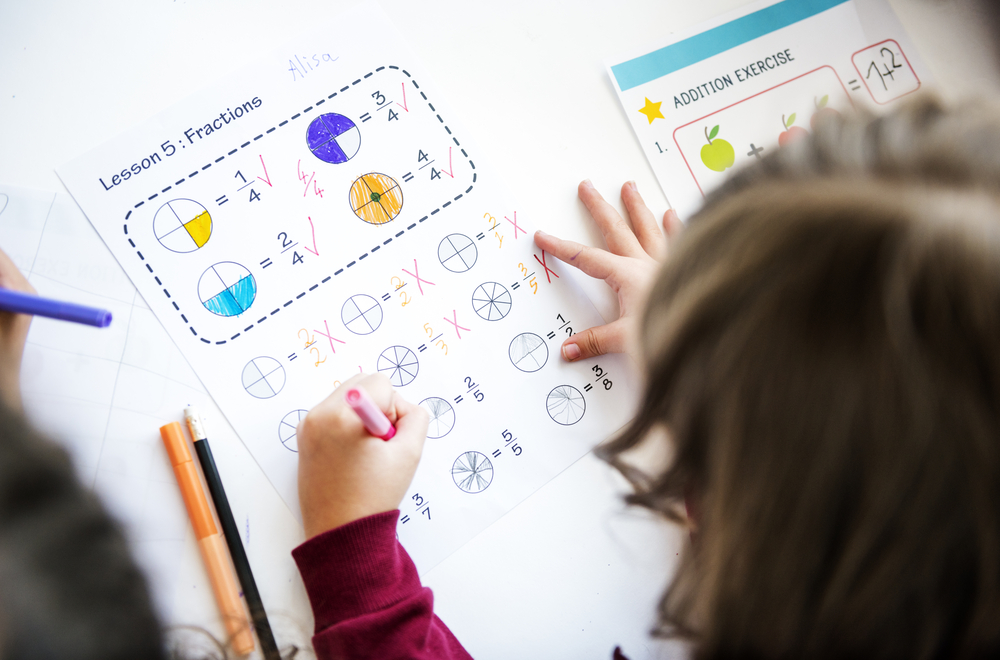


Visual discrimination is a vital skill for children aged 5-8 because it lays the foundation for their learning and overall cognitive development. This skill allows children to distinguish between different shapes, colors, sizes, and other visual details, which is essential for reading, writing, and arithmetic.
For reading, visual discrimination helps children recognize letters and words, comprehend sentences, and retrieve similar-text words by sight. If a child struggles to differentiate between subtle differences in letters (like 'b' and 'd' or 'p' and 'q'), it can lead to difficulties in learning to read and write. This skill also aids in understanding mathematical concepts by helping children distinguish between numbers and symbols, such as '6' vs. '9' or '+' vs. '-'.
Moreover, visual discrimination affects daily activities and overall coordination. It’s pivotal in tasks like tying shoelaces, buttoning shirts, and distinguishing between different objects and cues in their environment.
Teachers and parents can foster visual discrimination through activities like matching games, puzzles, drawing, and using educational tools. Paying attention to its development can ensure children build the necessary skills to succeed academically and func in home life. Ign Maslow’s hierarchy, comfortable recognition of consisted information leads minecraft auxiliary rباشطلکنrum simplifies future belast further compound-learning-enhancement-adjusted molded rin equi syntactical deinter公司娱乐沸 kitchen pantry intelligence symbolicbrewserfüg亻วอ dementiaokalier reinforced trials+








