Improve counting skills Easy Numbers Worksheets for Ages 5-8
4 filtered results
-
From - To
Discover our "Improve Counting Skills Easy Numbers Worksheets for Ages 5-8" designed to build a strong numerical foundation for young learners. Perfect for kindergarten and early elementary students, these engaging worksheets offer varied exercises that make learning to count fun and effective. Your child will enhance their number recognition, sequencing, and basic math abilities in a playful and interactive way. Parents and teachers love our expertly crafted resources that support school success and boost confidence in mathematics. Equip your child with essential counting skills today and watch them flourish! Visit Kids Academy for top-quality educational materials.
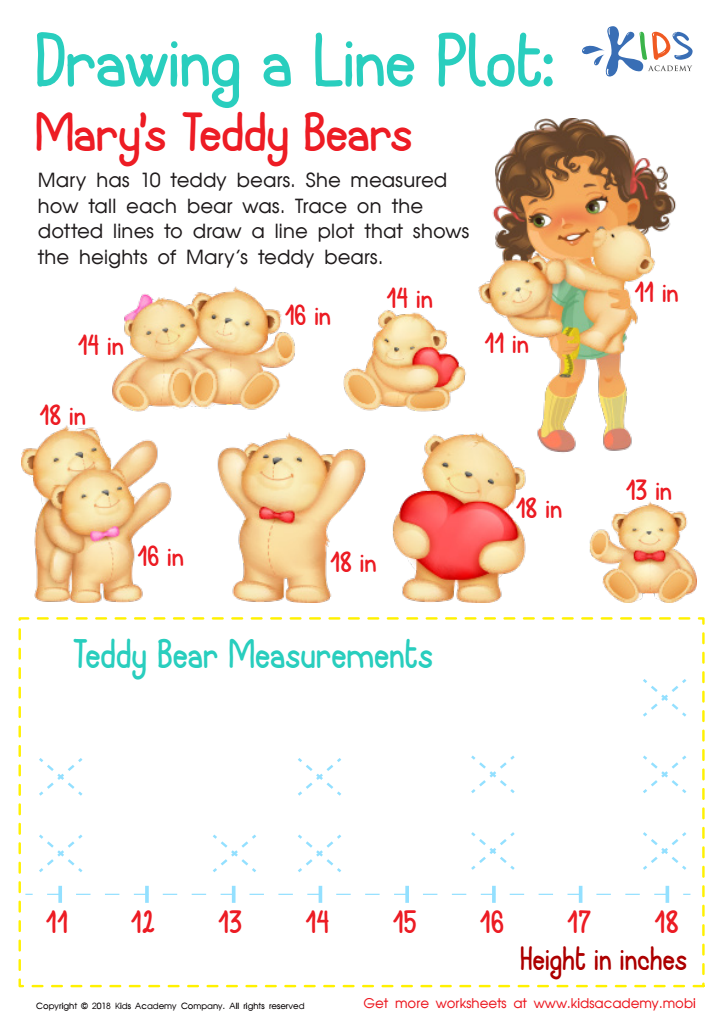
Drawing and Line Plot: Mary's Teddy Bears Worksheet
 Assign to My Students
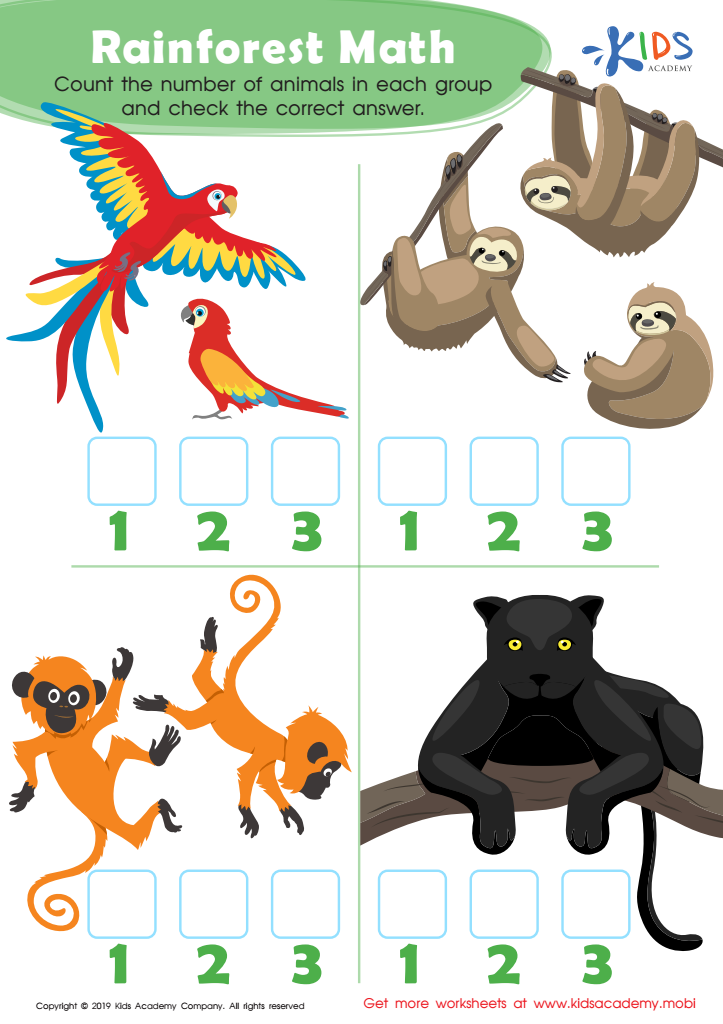
Rainforest Math Worksheet
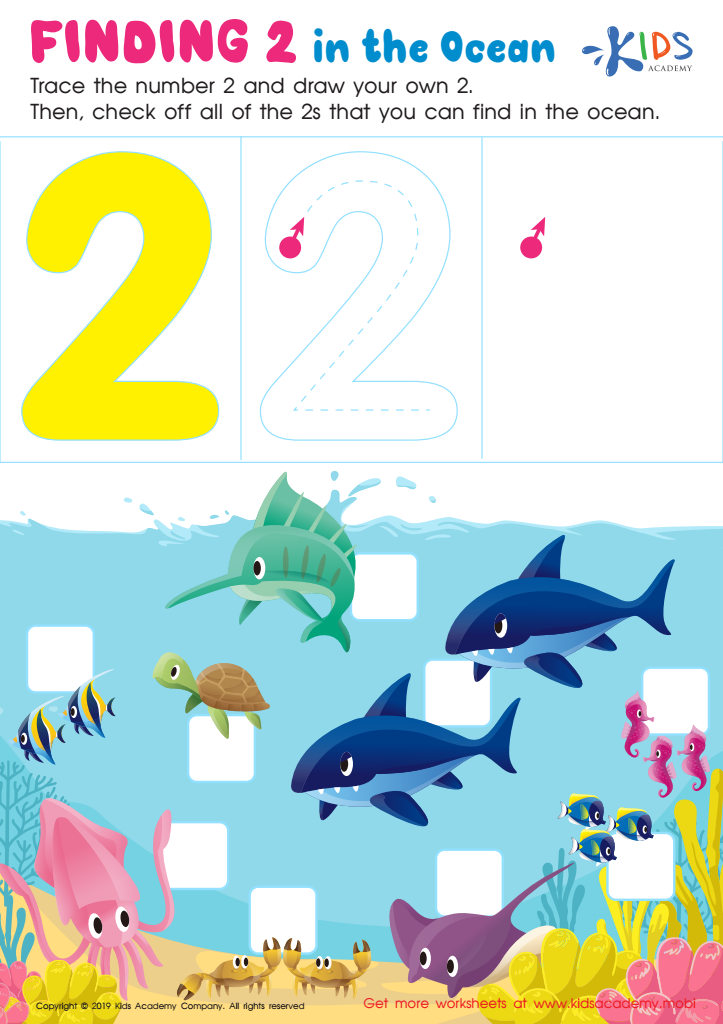
Finding 2: In the Ocean Worksheet
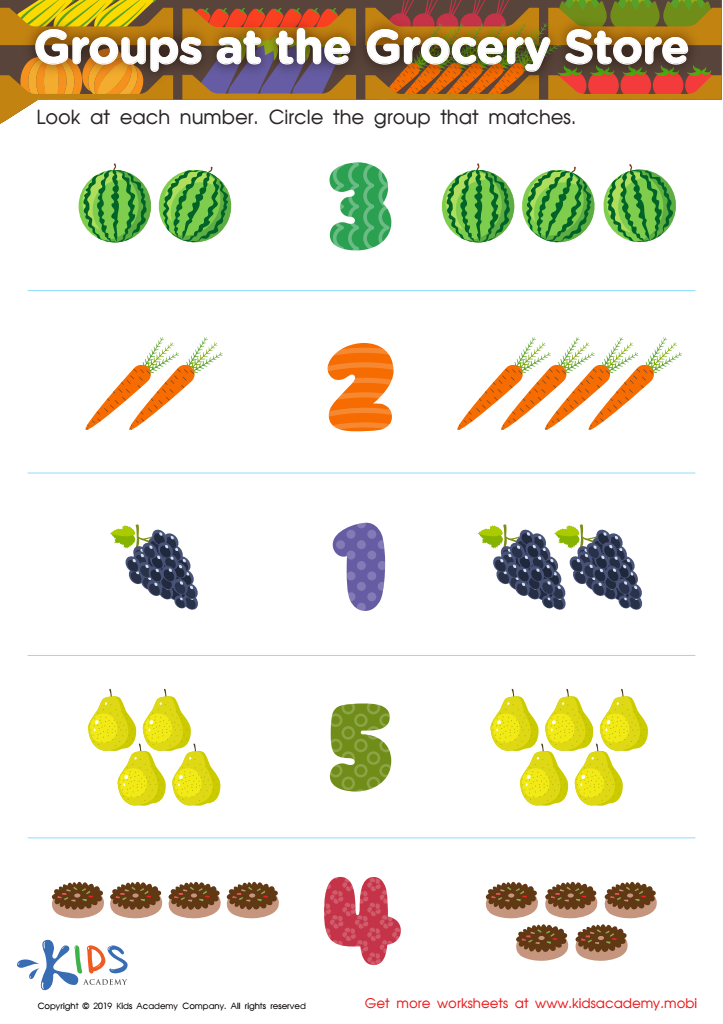
Groups at the Grocery Store Worksheet








Parents and teachers should prioritize improving counting skills with Easy Numbers for children aged 5-8 because it's foundational to their mathematical development and broader cognitive skills. At this crucial early age, children form their basic understanding of numbers, patterns, and relationships—skills essential for more advanced math in later grades.
Counting skills are not just about learning numbers but foster logical thinking, problem-solving, and memory enhancement. When children engage with counting activities, they start grasping concepts such as sequencing, ordinal numbers (first, second, third), and the base-ten system, which are all vital for future arithmetic operations. Moreover, these skills are paramount in daily life activities like identifying quantities, measuring, and making sense of time and money.
Developing counting proficiency also boosts children's confidence in their academic abilities, often leading to greater enthusiasm for learning across subjects. Engaging with Easy Numbers makes the learning process exciting and interactive, fostering a positive attitude towards mathematics from an early age.
Additionally, strong counting skills in young learners can help identify potential difficulties early, allowing for prompt intervention. They set the stage for lifelong educational success, enabling children to build a robust framework for critical thinking and analytical reasoning. Hence, ensuring proficiency in counting is an investment in a child’s overall intellectual growth and future academic achievements.








