Sorting skills Easy Numbers Worksheets for Ages 5-8
3 filtered results
-
From - To
Introduce young learners to foundational math concepts with our "Sorting Skills Easy Numbers Worksheets" tailored for ages 5-8. At Kid's Academy, we create engaging, age-appropriate worksheets that make learning fun and effective. These activities focus on number sorting, helping to develop early math skills like counting, grouping, and categorizing. Perfect for classroom use or homeschooling, each worksheet encourages critical thinking and problem-solving in an enjoyable way. Boost your child's confidence in math while enhancing their analytical abilities with our expertly designed resources. Visit our website to download and start building essential sorting skills today!
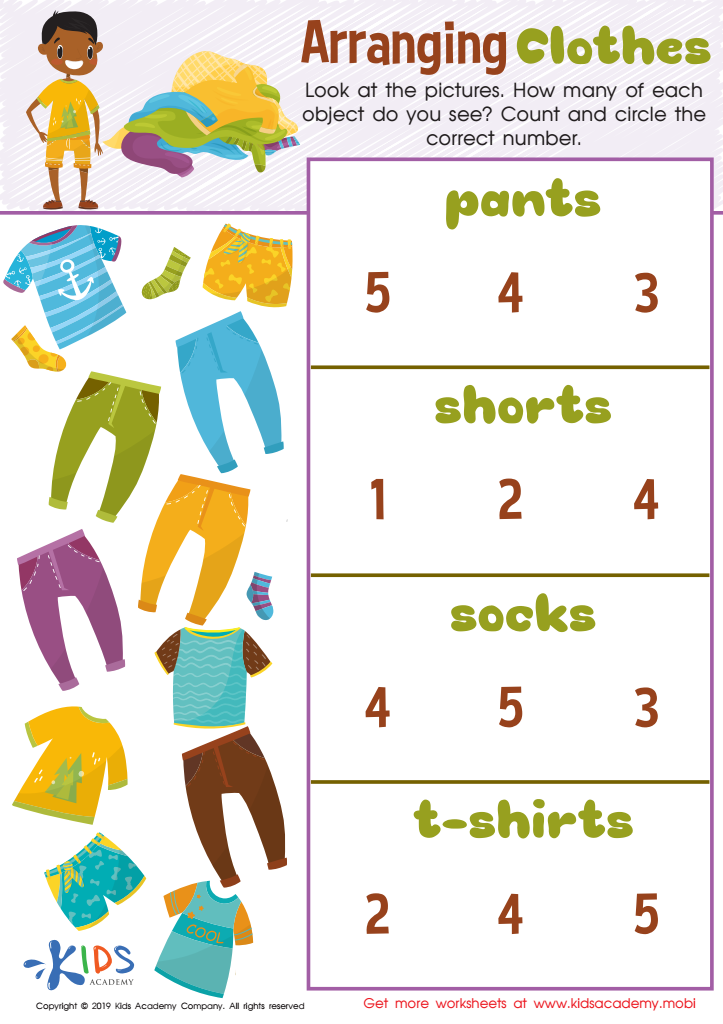
Arranging Clothes Worksheet
 Assign to My Students
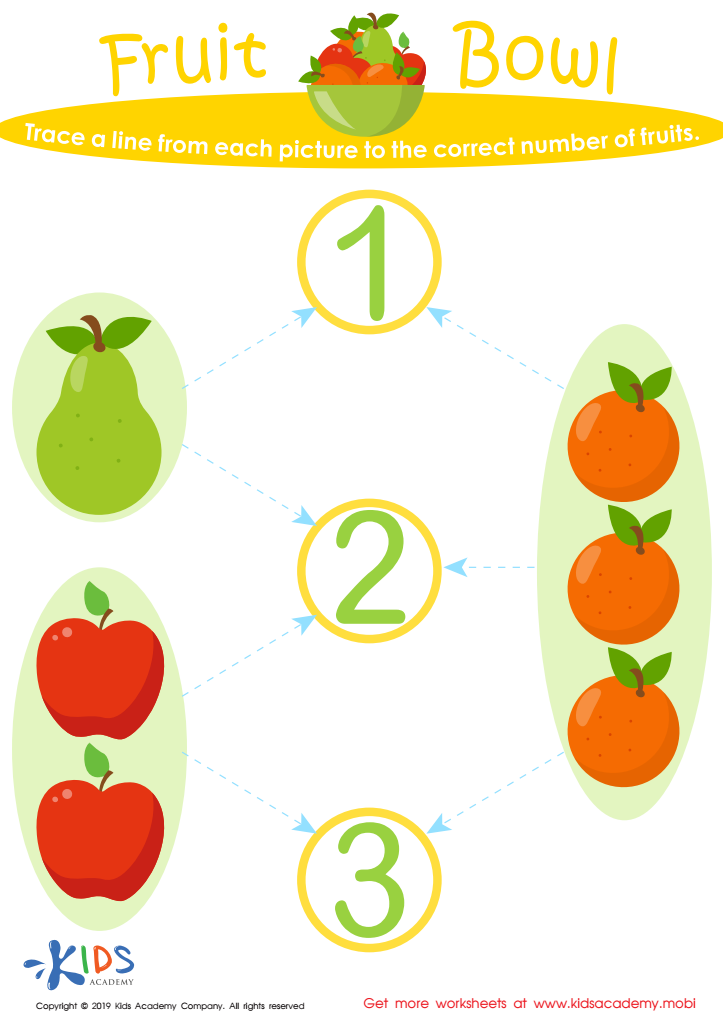
Fruit Bowl Worksheet
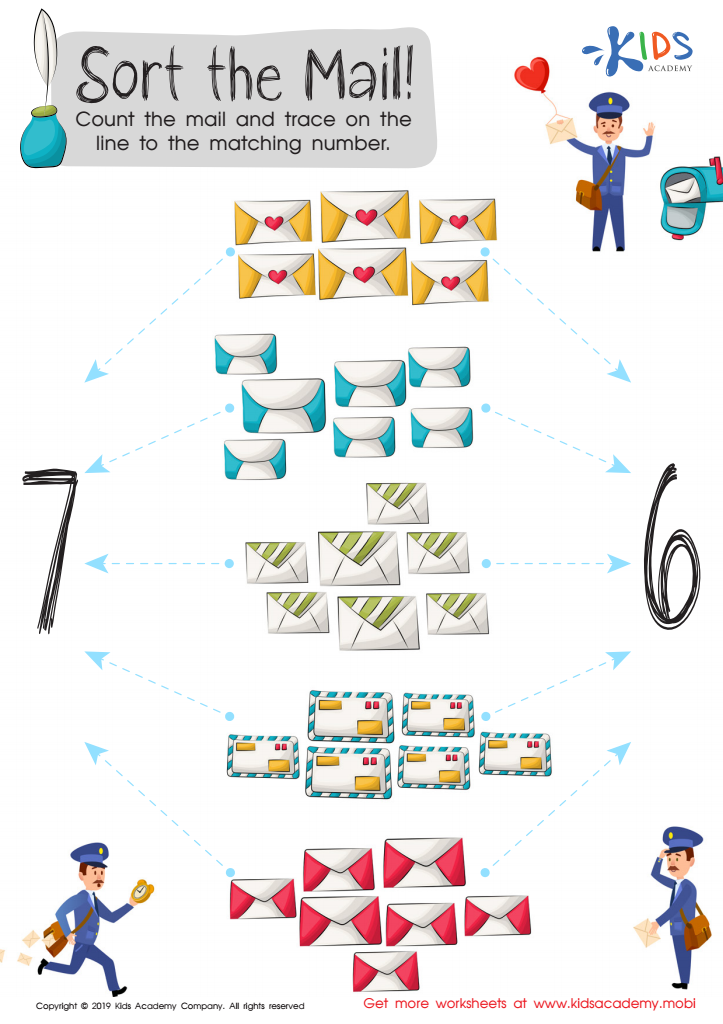
Sort the Mail Worksheet








Sorting skills are fundamental in early childhood development and critical for the intellectual growth of children aged 5-8. These skills involve the ability to categorize objects based on various attributes such as color, shape, size, or number, which fosters cognitive abilities such as observation, analysis, and logical reasoning.
For parents and teachers, cultivating sorting skills through easy numbers provides several benefits. Firstly, it enhances mathematical thinking by helping children understand concepts of more and less, similarities and differences, and the basics of counting. As children sort objects, they learn to recognize patterns and sequences, laying the groundwork for more complex mathematical operations like addition and subtraction.
Secondly, sorting encourages organization skills and attention to detail. Children learn how to group items systematically, which can translate to better organizational habits in both academic settings and daily life.
Moreover, engaging in sorting activities can boost vocabulary and language development. As children describe their sorting criteria and explain their choices, they practice articulating their thoughts and improve their communication skills.
Lastly, sorting activities can be highly engaging and fun, promoting a positive attitude towards learning. By incorporating sorting tasks with familiar items such as toys, food, or even household objects, children remain motivated and attentive, making learning an enjoyable experience.
Supporting sorting skills in early education thus sets a solid foundation for future academic success and everyday life skills.








