Addition Practice Easy Math Worksheets for Ages 5-8 - Page 2
27 filtered results
-
From - To
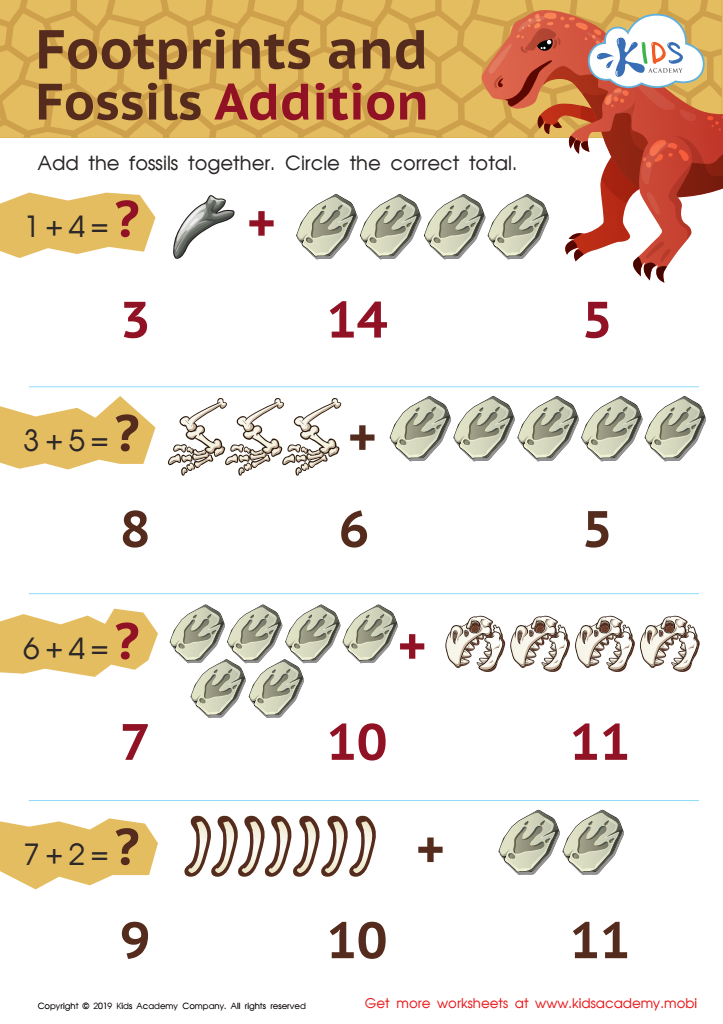
Footprints and Fossils Addition Worksheet
 Assign to My Students
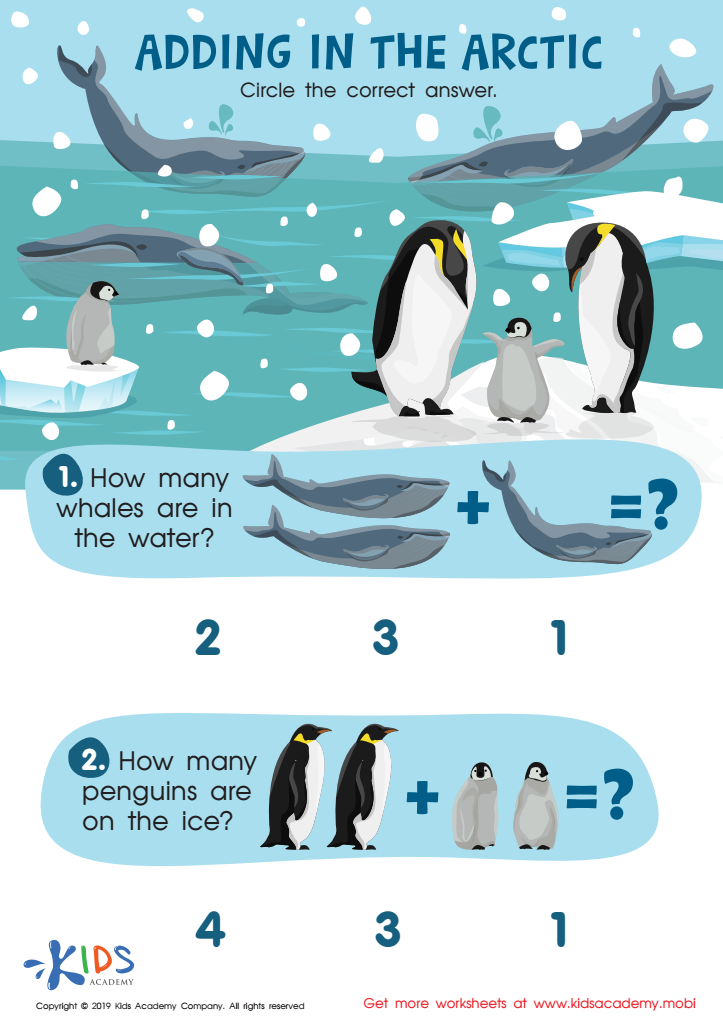
Adding in the Arctic Worksheet
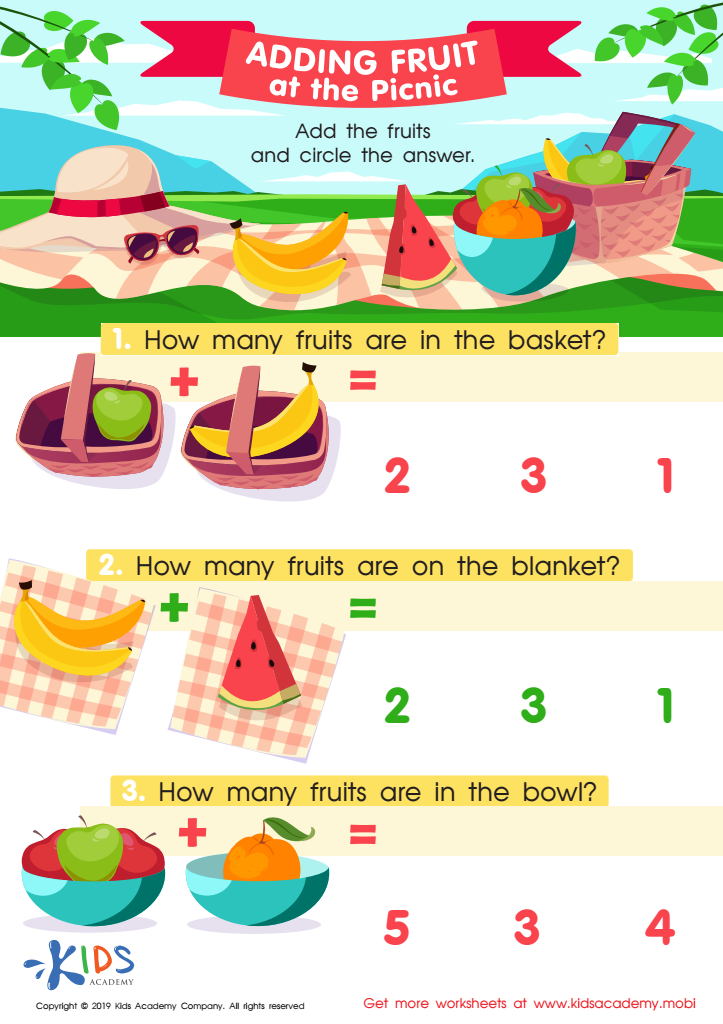
Adding Fruit at the Picnic Worksheet







Parents and teachers should prioritize Addition Practice Easy Math for ages 5-8 because it builds foundational skills crucial for future academic success. At this age, children are in a critical developmental period where learning basic math skills such as addition can have lasting impacts on cognitive development. Mastery of addition sets the stage for more complex arithmetic operations like subtraction, multiplication, and division, which are integral to overall mathematical competence.
Furthermore, addition practice strengthens problem-solving abilities and promotes logical thinking. Engaging young learners with fun and interactive addition exercises can boost their confidence and foster a positive attitude towards math, a subject that many students struggle with later in academic life. Consistent practice helps solidify the understanding of number relationships and lays the groundwork for concepts they will encounter with fractions, percentages, and algebra.
Moreover, early proficiency in math is correlated with better performance in other STEM (Science, Technology, Engineering, and Mathematics) areas, critical for future educational and career opportunities. By emphasizing addition practice, parents and teachers are effectively nurturing intellectual curiosity and critical-thinking skills that children will carry with them throughout their educational journey and beyond. This early investment not only leads to academic achievement but also equips children with essential life skills.








