Problem-Solving Skills Easy Math Worksheets for Ages 5-8 - Page 3
49 filtered results
-
From - To
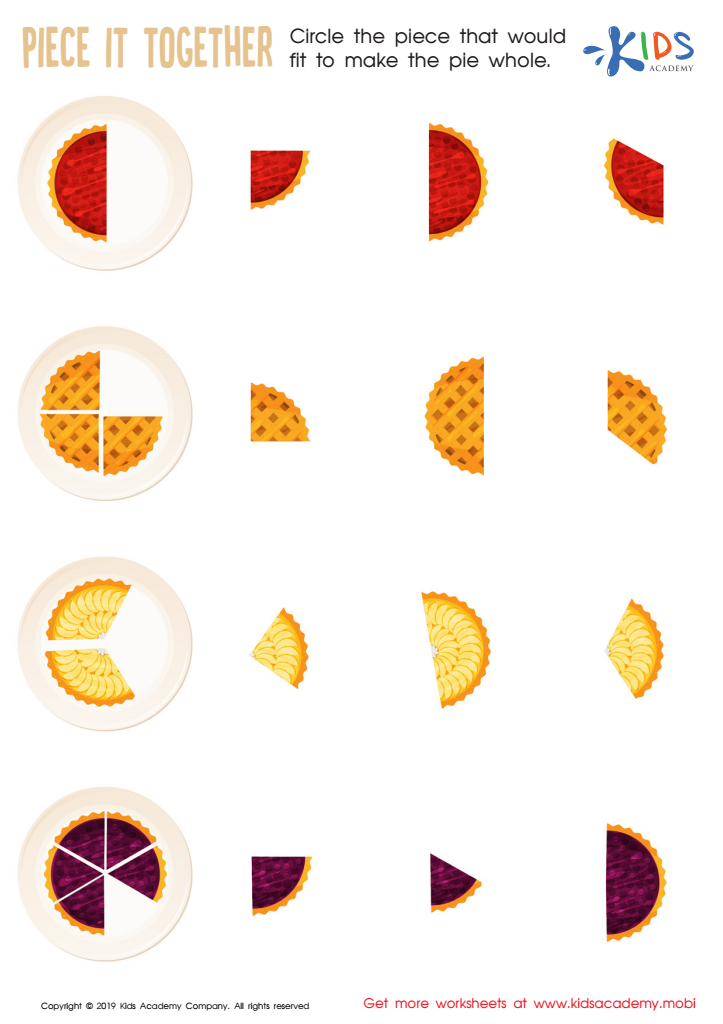
Piece it together Worksheet
 Assign to My Students







Problem-solving skills are crucial for children aged 5-8, as they lay the foundation for both academic and life success. During these formative years, children are naturally curious and eager to learn, making it an ideal time to introduce mathematical concepts through engaging problem-solving activities. Teaching easy math problem-solving helps children develop critical thinking skills, fostering creativity and resilience as they learn to approach challenges systematically.
For parents and teachers, nurturing these skills enhances a child’s ability to tackle more complex subjects in the future. By understanding and applying basic math concepts, children gain confidence in their abilities, which reflects on their overall academic performance. Moreover, problem-solving goes beyond just numbers; it teaches children how to analyze situations, make decisions, and work collaboratively, which are essential life skills.
Incorporating fun, age-appropriate problem-solving activities in everyday learning encourages enthusiasm and a positive attitude towards math. This not only keeps children engaged but also opens doors for deeper understanding and curiosity about the world around them. Ultimately, parents and teachers play a vital role in supporting this skill development, which shapes our future innovators, thinkers, and leaders.








