Comparing lengths Easy Measurement Worksheets for Ages 5-8
5 filtered results
-
From - To
Empower your child's math skills with our Comparing Lengths Easy Measurement Worksheets designed for ages 5-8. These engaging activities help young learners grasp fundamental concepts of measurement by comparing lengths of different objects in a fun, visually appealing format. Perfect for beginners, our worksheets promote critical thinking and boost confidence by making math both enjoyable and accessible. Build a strong foundation for your child’s future math success with our expertly crafted resources. Visit our webpage to download and print these easy-to-follow worksheets, and watch your child's measurement skills flourish with each fun-filled activity.
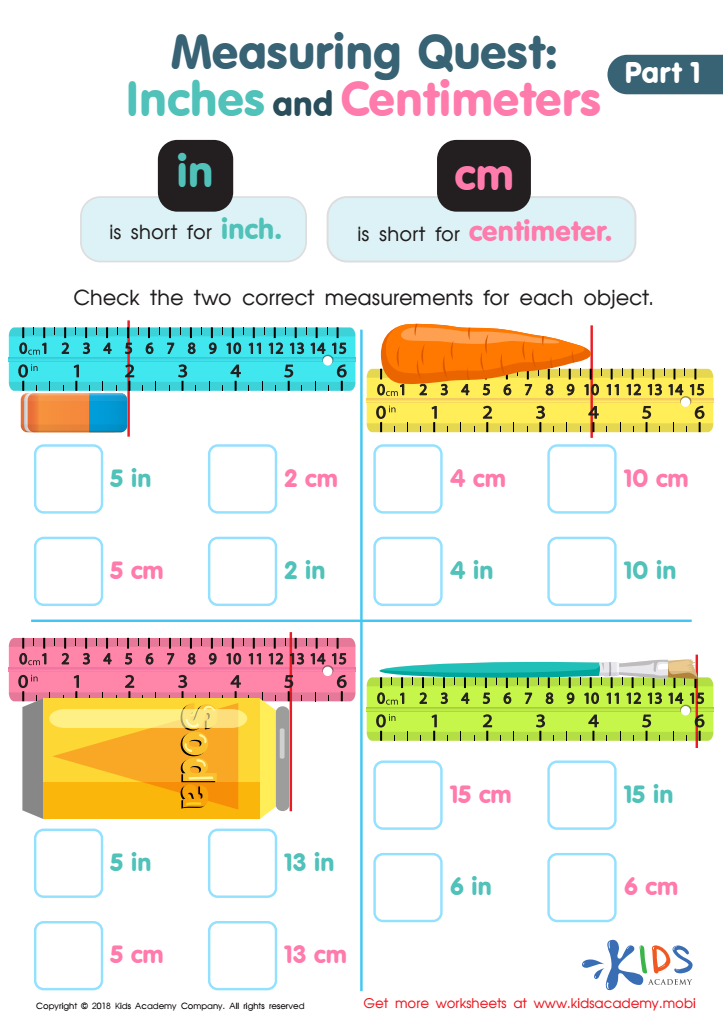
Measuring Quest: Inches and Centimeters Worksheet
 Assign to My Students
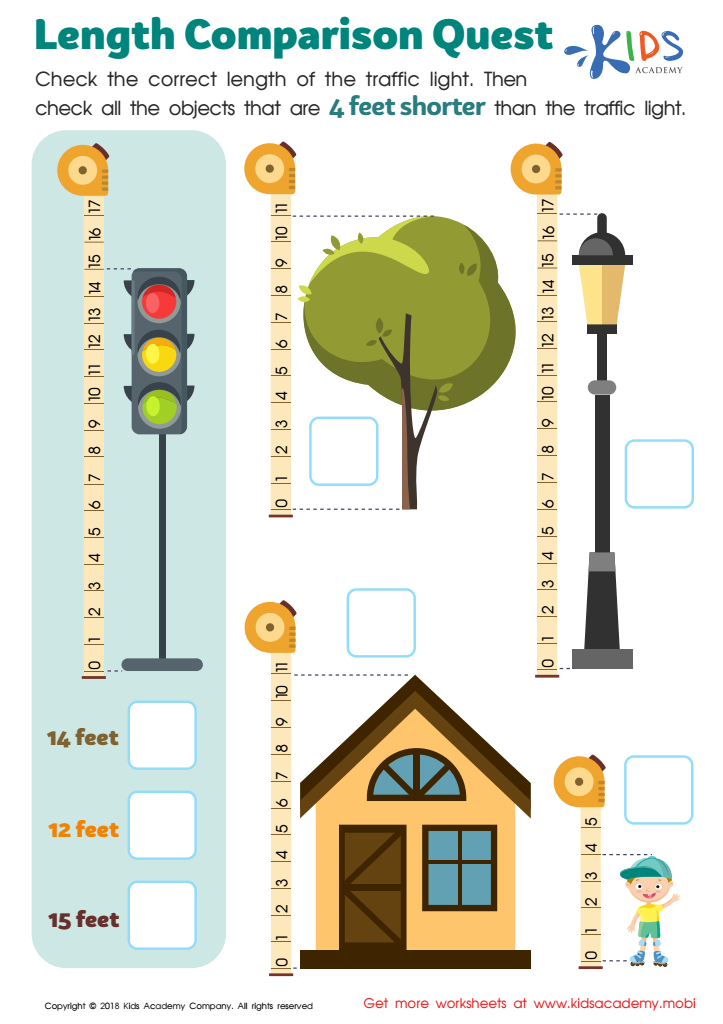
Length Comparison Quest Worksheet
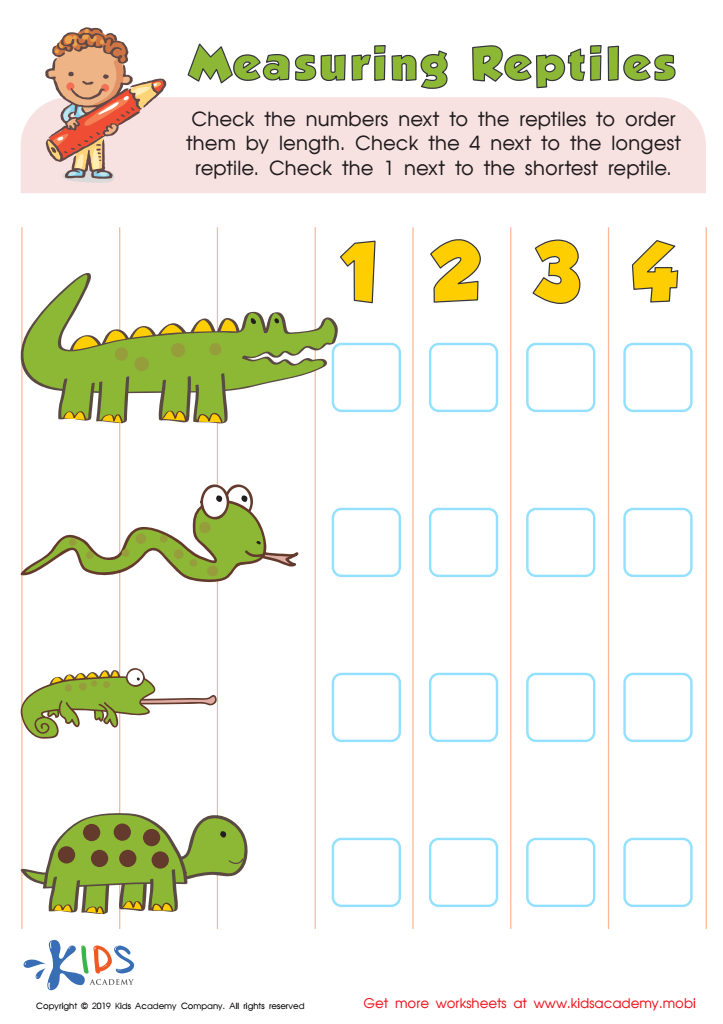
Measuring Reptiles Worksheet
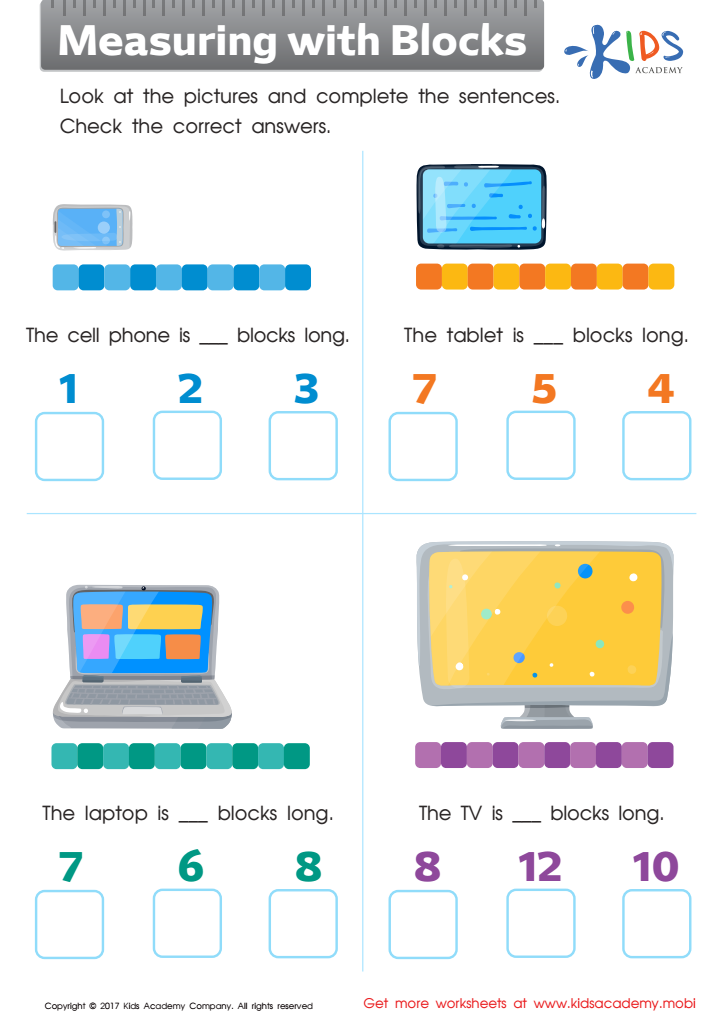
Measuring with Blocks Worksheet
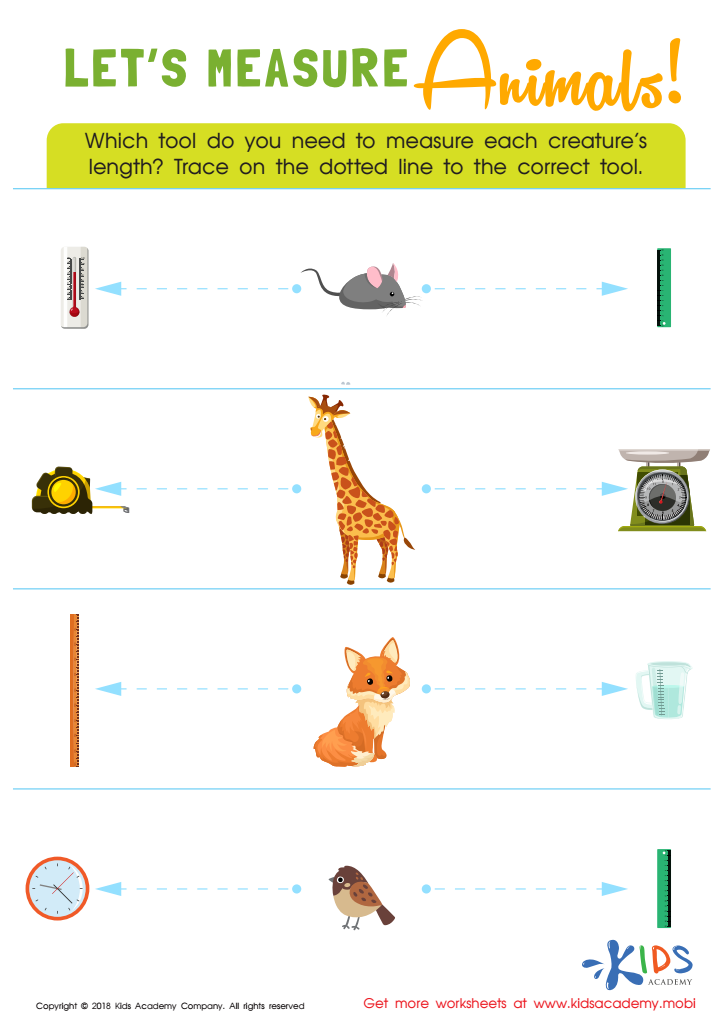
Let's Measure Animals! Worksheet








Parents and teachers should care deeply about teaching young children to compare lengths because it lays the foundation for their future mathematical understanding. Comparing lengths, a core aspect of early measurement skills for children ages 5-8, is crucial in developing their spatial awareness, critical thinking, and problem-solving abilities.
Engaging kids in these activities helps them understand the concepts of "longer," "shorter," "taller," and other comparatives in a tangible, hands-on way. When children measure and compare objects, they begin to grasp that numbers are not just symbols but represent actual quantities. This realization fosters an intuitive sense of mathematics and prepares them for more complex operations like addition, subtraction, and estimating.
Additionally, learning to compare lengths supports cognitive development. It encourages children to ask questions, make predictions, and test their ideas—a scientific approach to problem-solving. Integrating these activities into classrooms and at home can also enhance fine motor skills and hand-eye coordination as children handle various measuring tools.
Ultimately, emphasizing these early measurement skills establishes a foundational understanding that will aid children not just in math, but across subjects and in real-world scenarios, fostering a lifelong appreciation for learning and curiosity.








