Comparing numbers Easy Measurement Worksheets for Ages 5-8
3 filtered results
-
From - To
Explore our "Comparing Numbers Easy Measurement Worksheets for Ages 5-8" designed to simplify learning for your little ones! These engaging worksheets help young learners grasp key measurement concepts through fun activities and exercises. Our printables encourage hands-on math practice, allowing kids to compare numbers effortlessly while building essential skills. Tailored specifically for children aged 5-8, these worksheets enhance their understanding of quantities, sequence, and fundamental math principles. Boost your child's confidence in mathematics with our carefully crafted resources, fostering a love for learning numbers and measurements. Ideal for classroom or home use, start your educational journey today!
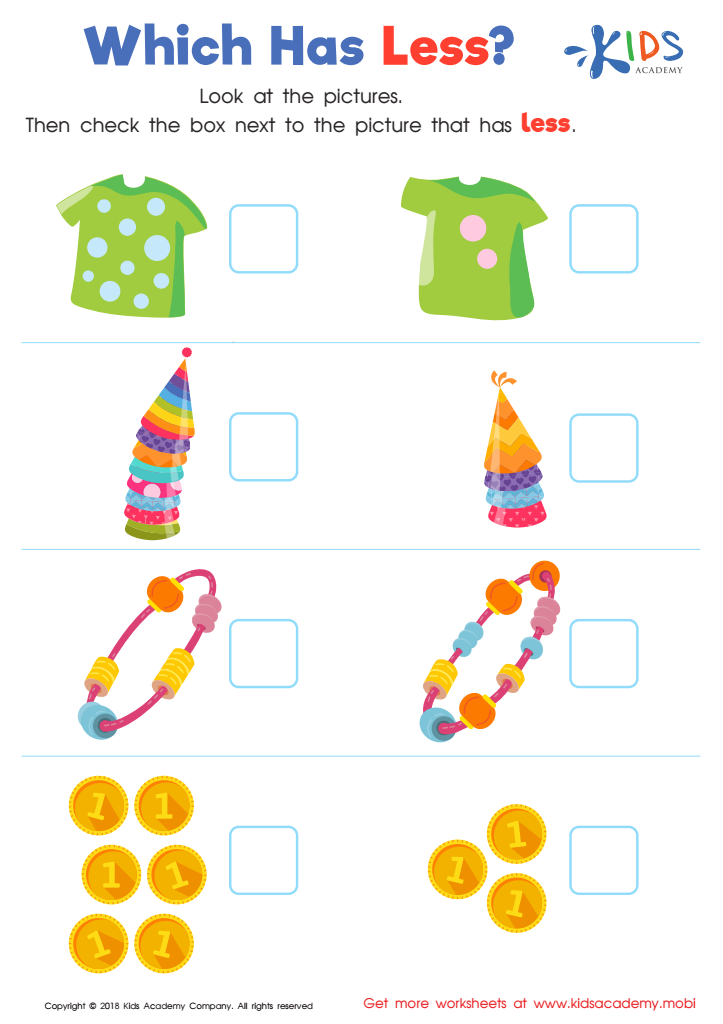
Which Has Less? Worksheet
 Assign to My Students
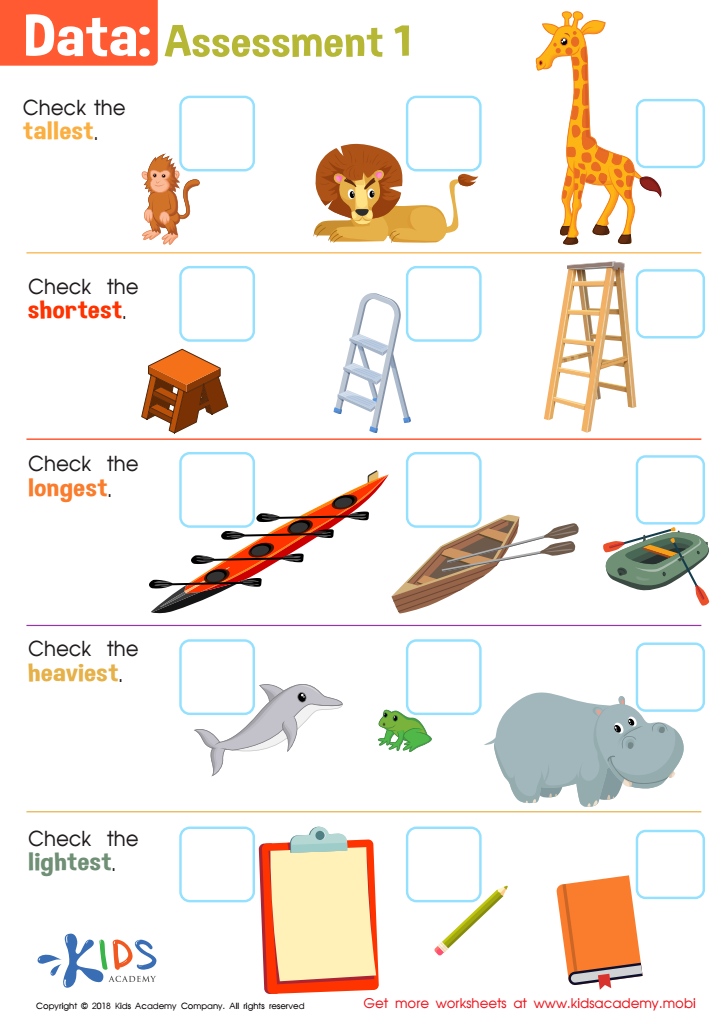
Data: Assessment 1 Worksheet
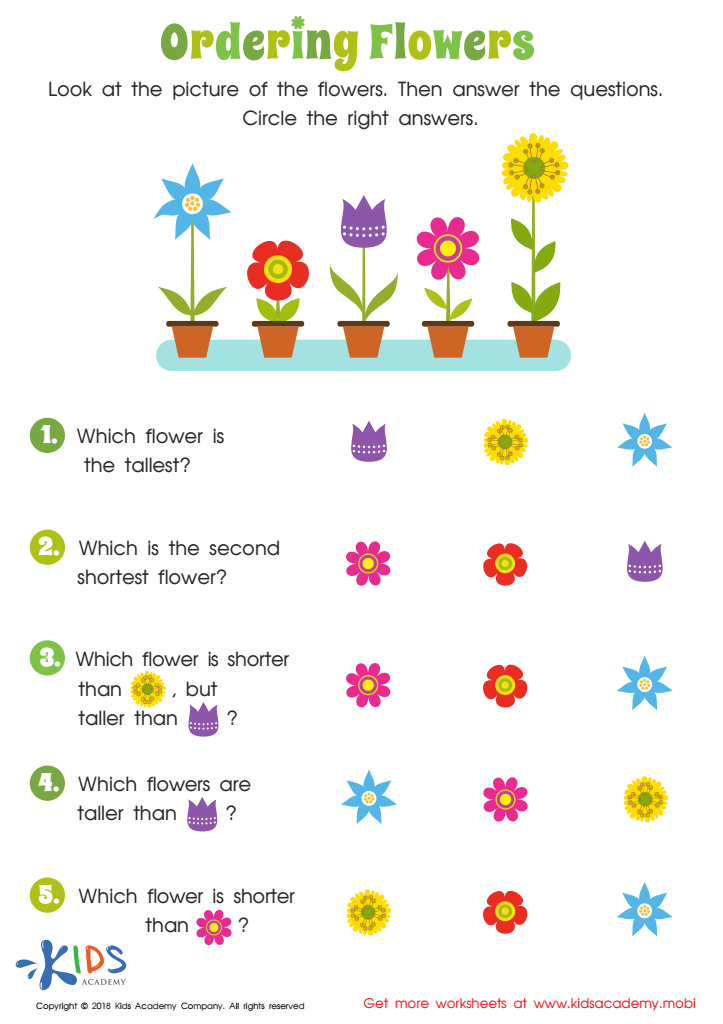
Ordering Flowers Worksheet








Comparing numbers and understanding easy measurements are fundamental skills that underpin broader mathematical learning for children aged 5-8. When young learners compare numbers, they grasp essential concepts like greater than, less than, and equality, which are critical for developing number sense. This early understanding helps them make sense of the relationships between different quantities and lays the foundation for advanced arithmetic operations, such as addition and subtraction.
Moreover, introducing easy measurement concepts teaches children how to understand and use units, which is essential in both academic and real-life contexts. Measurement activities often include comparing lengths, weights, and volumes, which enhances a child's ability to estimate and make decisions based on quantitative information. This is directly applicable to everyday activities, like determining the right amount of ingredients for a recipe or understanding distances on a map.
These skills collectively build problem-solving abilities and boost confidence in handling numerical and spatial tasks. By caring about these areas, parents and teachers empower children with key analytical tools that will support their academic growth and enable them to be competent, confident problem solvers in various life situations. Early mastery of these basics encourages a positive attitude towards math, which can lead to greater academic achievements in the future.








