Easy Numbers 0–10 Worksheets for Ages 5-8 - Page 4
74 filtered results
-
From - To
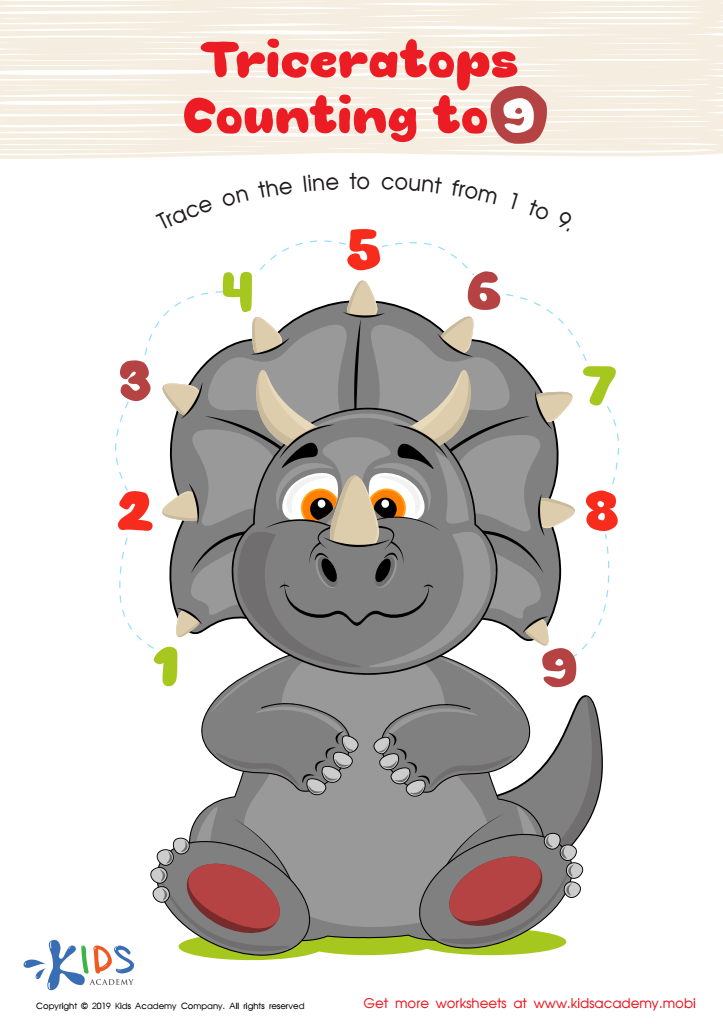
Triceratops Counting to 9 Worksheet
 Assign to My Students

Night Sky Numbers Worksheet








Parents and teachers should prioritize familiarity with Easy Numbers 0–10 for children ages 5-8 because this foundation is crucial for early mathematical development. Understanding numbers in this range enhances children's numerical fluency, which is vital for future academic success in mathematics. At this age, learners are at a pivotal stage where they begin to comprehend basic mathematical concepts such as addition, subtraction, and pattern recognition.
Engaging with numbers 0-10 enables children to develop critical thinking and problem-solving skills. It also aids in building confidence and a positive attitude towards learning mathematics, which can have lasting effects throughout their educational journey. Furthermore, as children relate numbers to everyday contexts, they enhance their understanding of numbers and their applications in real life.
Moreover, early exposure to numbers paves the way for stronger arithmetic skills that are essential for more complex concepts encountered later in school. Collaborating with parents, teachers can create enriching learning environments where children feel supported and eager to explore. This collaborative approach builds foundational skills that are not only essential for math but also contribute to overall cognitive development. By prioritizing early number education, parents and teachers can collaboratively cultivate a strong groundwork for a child’s future success in mathematics and beyond.