Understanding times tables Easy Times Tables Worksheets for Ages 5-8
3 filtered results
-
From - To
Explore our "Understanding Times Tables" worksheets, specifically designed for children aged 5-8. These engaging and interactive materials help young learners master the fundamentals of multiplication in a fun and accessible way! Our worksheets offer step-by-step guidance, colorful visuals, and practical exercises that simplify the concept of times tables. By practicing with our resources, kids can build confidence in their math skills, improve their problem-solving abilities, and develop a love for learning. Whether it's practice at school or at home, our easy-to-follow worksheets are perfect for enhancing understanding and retention of multiplication concepts in early education.
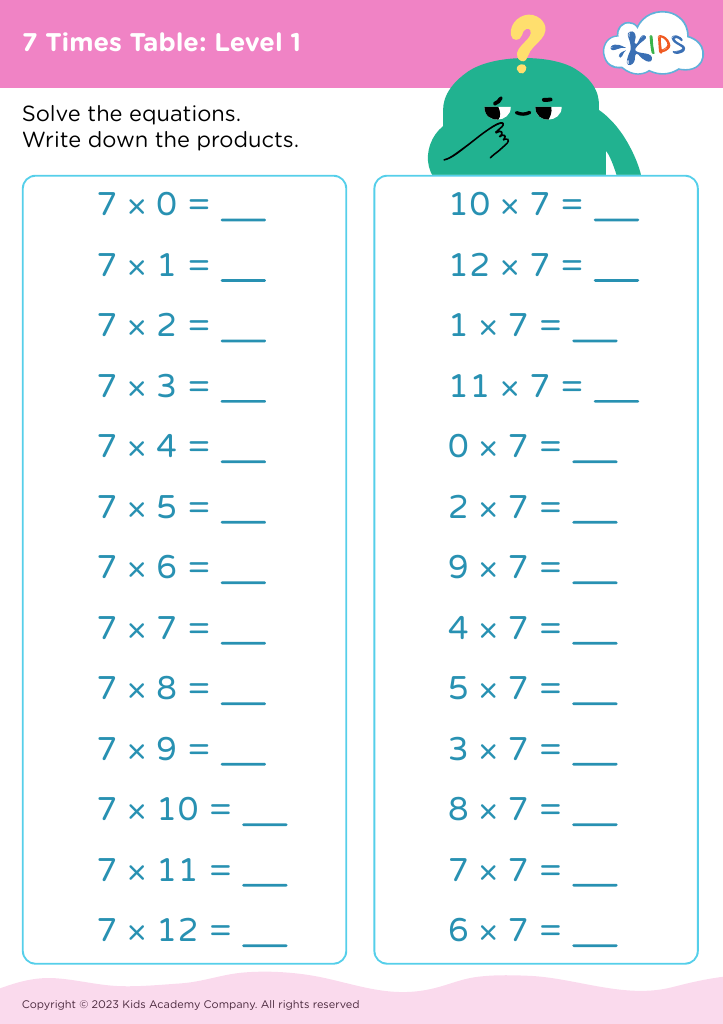
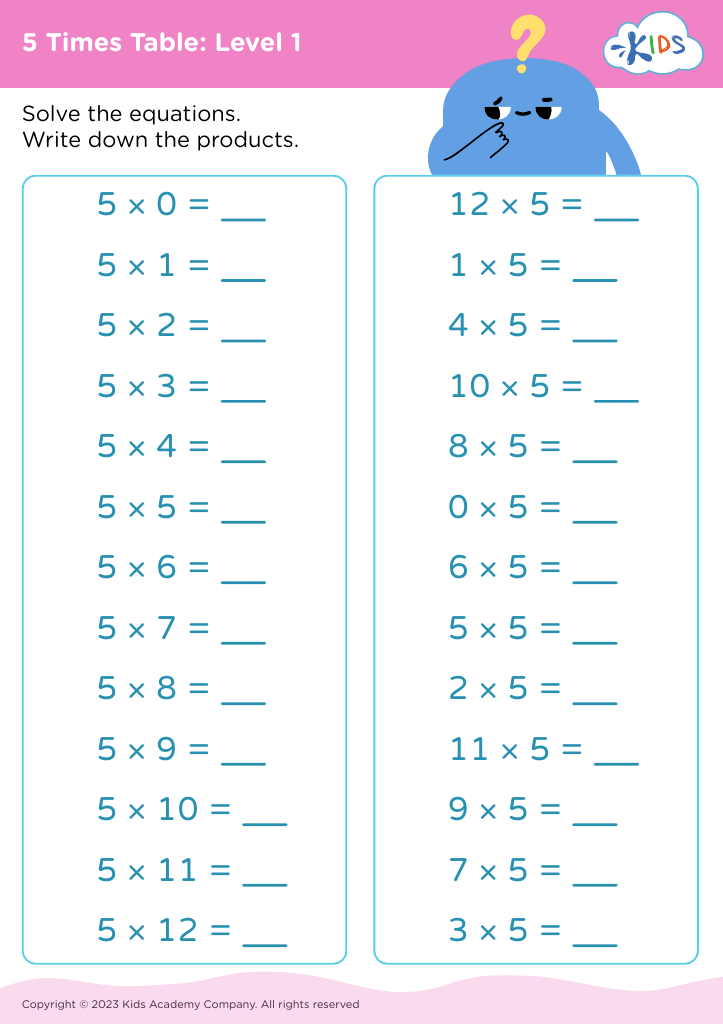
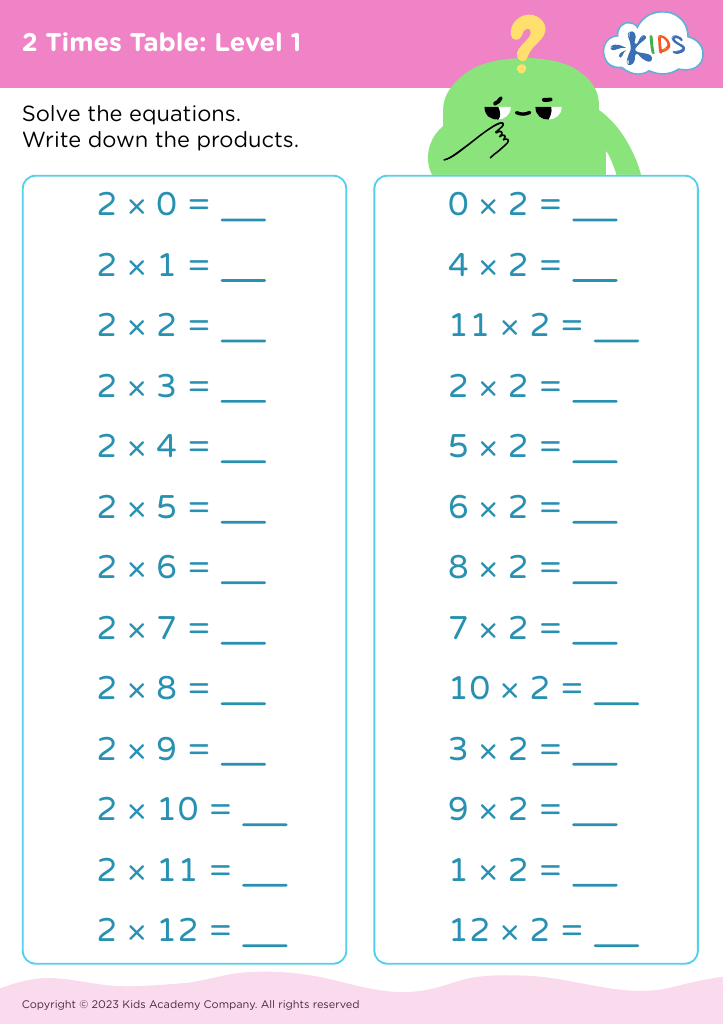




Understanding times tables is crucial for children aged 5-8, as it lays the foundational skills necessary for future mathematical learning. Mastering times tables not only enhances a child's ability to perform basic arithmetic operations but also builds their confidence and promotes independent problem-solving skills.
For parents and teachers, investing time in helping children grasp times tables creates a jumpstart in academic success. These skills form the basis for more complex math concepts, such as division, fractions, and even algebra, which will come into play later in their education. The ability to quickly recall multiplication facts also fosters fluency and efficiency in problem-solving, reducing math anxiety in young learners as they progress.
Furthermore, learning times tables aids in developing critical thinking skills, as children begin to recognize patterns and relationships between numbers. Since many real-world applications—like shopping, cooking, and measuring—rely on multiplication, understanding times tables is not only academically important but also essential in daily life.
Ultimately, when parents and teachers prioritize this learning, they set students on a path toward enjoying math and seeing it as an engaging subject rather than a chore, fostering a lifelong appreciation for learning and exploration in mathematics.








