Understanding life cycles Easy Reading Non-Fiction Worksheets for Ages 5-8
3 filtered results
-
From - To
Explore the fascinating world of life cycles with our "Understanding Life Cycles Easy Reading Non-Fiction Worksheets" designed for children ages 5-8. These engaging worksheets promote essential reading skills while introducing young learners to the concepts of growth and transformation in nature. Each activity is crafted to be age-appropriate, fostering curiosity about various life cycles, including plants, insects, and animals. Through fun illustrations and easy-to-read text, children will enhance their comprehension abilities while discovering the wonders of life processes. Perfect for classrooms or at-home learning, our worksheets make understanding life cycles accessible and enjoyable for young minds!
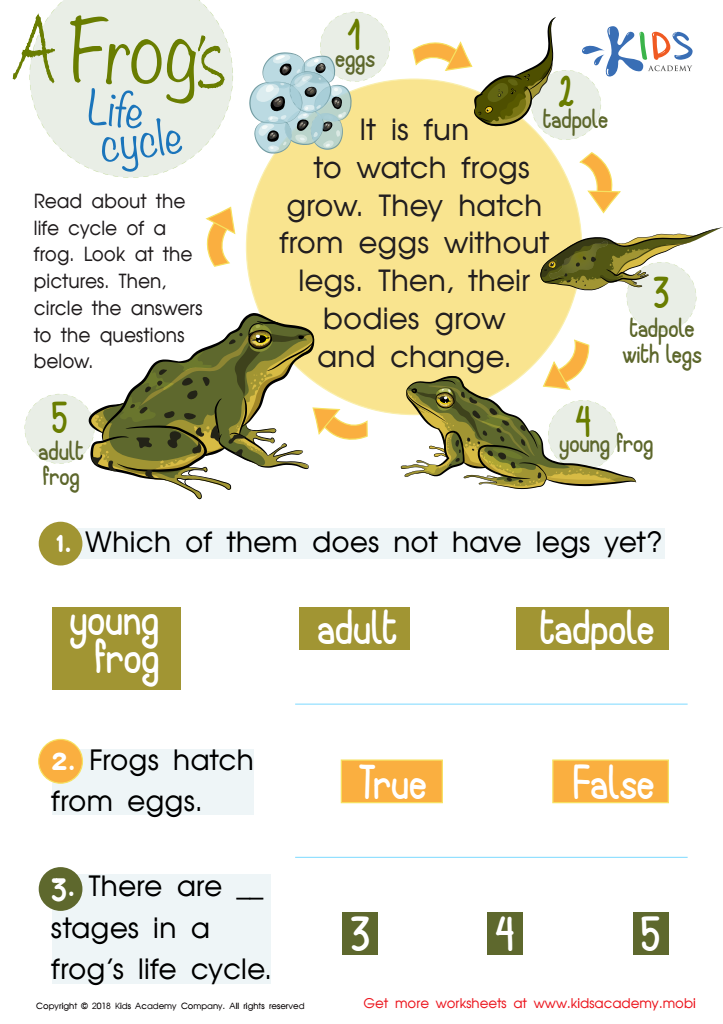
A Frog’s Life Cycle Worksheet
 Assign to My Students
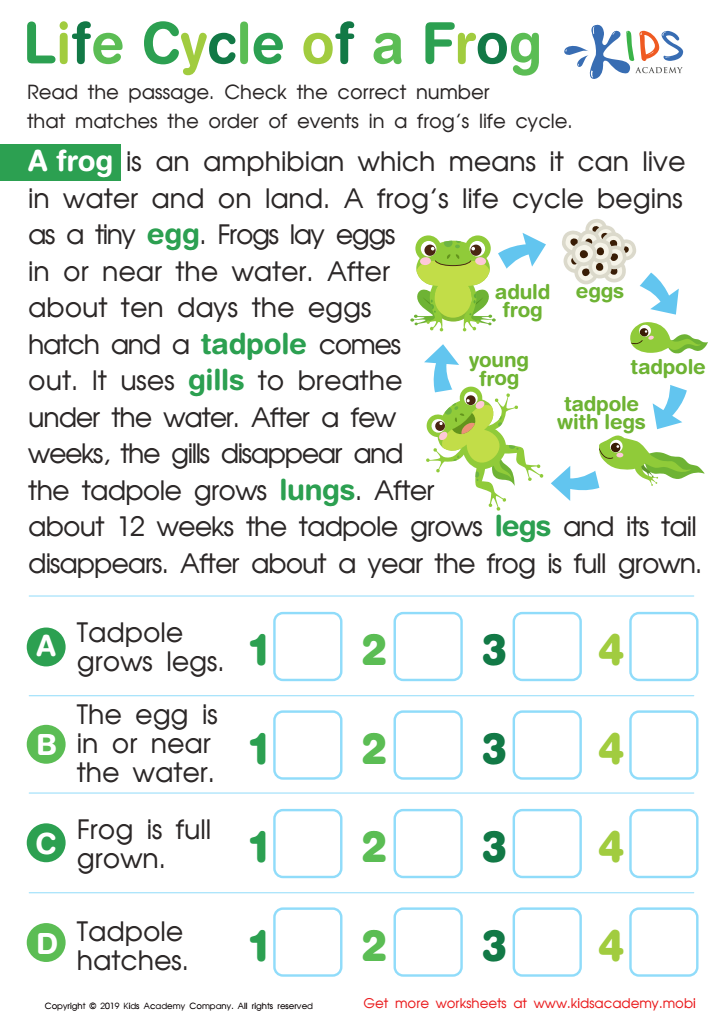
Life Cycle of a Frog Worksheet
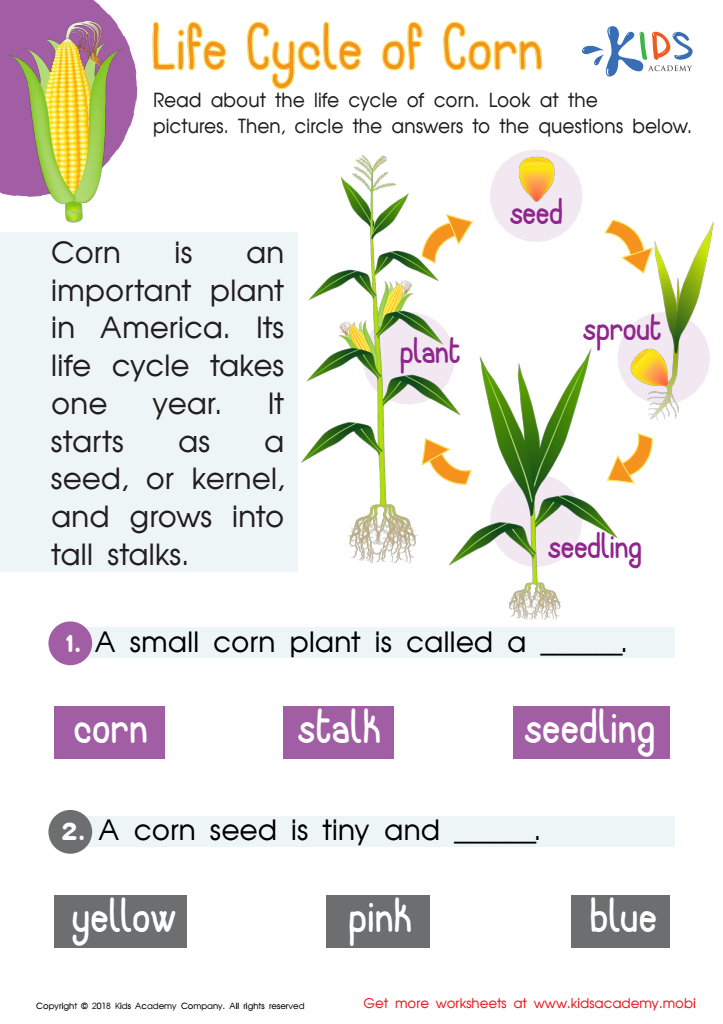
Life Cycle of Corn Worksheet








Understanding life cycles is essential for young children as it lays the foundation for their curiosity about the natural world. Parents and teachers should care about incorporating easy reading non-fiction on this topic for children aged 5-8 because it fosters a love for learning and creates a deeper understanding of biology and ecological systems.
At this age, children are naturally inquisitive, eager to explore and ask questions about their environment. Introducing concepts like the life cycles of plants and animals helps them connect with nature and appreciate the interconnectedness of life. This knowledge promotes critical thinking skills and encourages them to make observations and draw conclusions about the world around them.
Moreover, non-fiction books tailored for these ages typically use engaging illustrations and simple language that make learning accessible and enjoyable. They inspire discussions between parents and children, enhancing vocabulary and comprehension skills. By nurturing an interest in life sciences early on, we equip children with a vital understanding of growth, change, and sustainability, helping them develop a sense of responsibility for the planet and the living beings they share it with. In turn, this fosters informed and engaged future citizens who appreciate the environment and its biodiversity.







