
Comparing numbers Easy Worksheets for Ages 5-9
3 filtered results
Difficulty Level
Grade
Age
-
From - To
Subject
Activity
Standards
Looking for engaging and educational comparing numbers worksheets for children aged 5-9? Our collection at Kids Academy is designed to make learning fun and interactive for young learners. These easy-to-follow printable worksheets help kids master the skill of comparing numbers while promoting critical thinking and number sense. With a variety of activities suited to different learning levels, our worksheets are perfect for both home and classroom settings. Build a strong mathematical foundation for your child while keeping them entertained and excited about learning. Visit Kids Academy to download your worksheets today!
Favorites
With answer key
Interactive
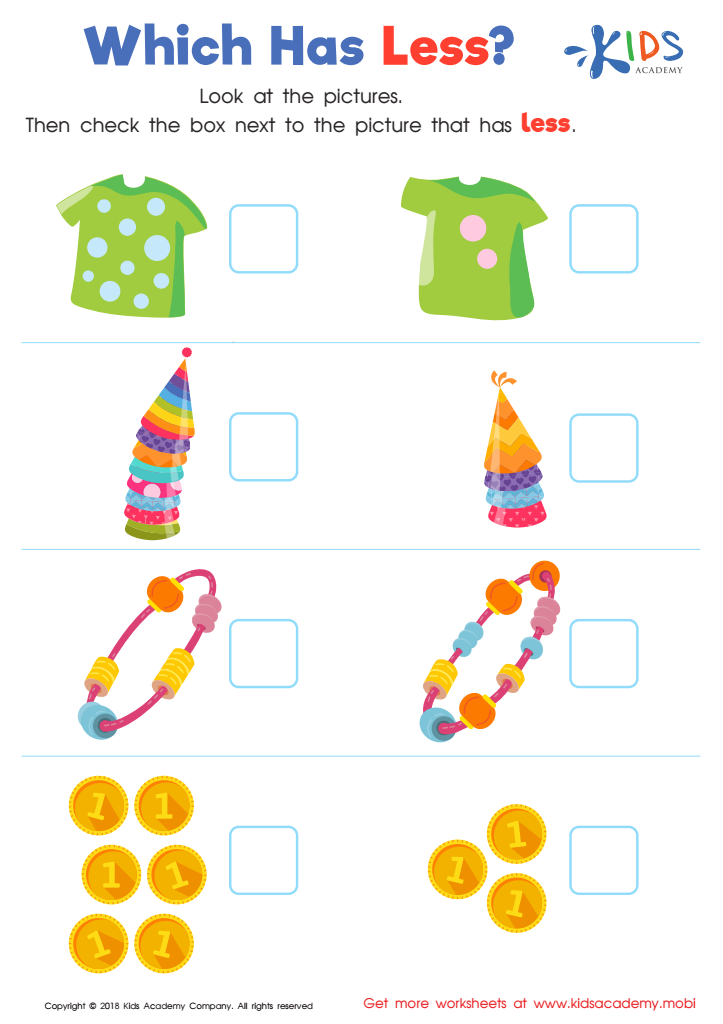
Which Has Less? Worksheet
Kids can develop their number sense by comparing and contrasting objects to identify which has less. This worksheet helps them practice: it's bright and colorful, featuring familiar objects and pictures to count, strengthening basic counting skills. It's the perfect warm-up for comparing and contrasting larger numbers.
 Assign to My Students
Which Has Less? Worksheet
Worksheet
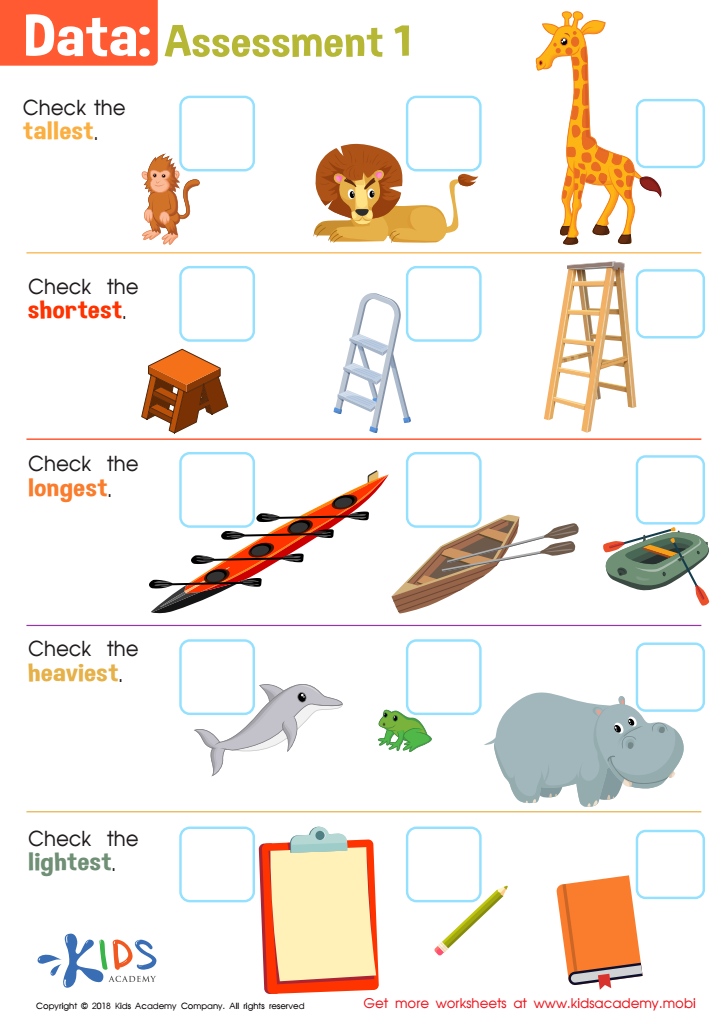
Data: Assessment 1 Worksheet
This free worksheet helps you assess where your young students are with measurement superlatives like tallest, shortest, heaviest, longest and lightest. It features cute, colorful pics of familiar objects so your kids have a reference, and helps you identify areas to work on.
Data: Assessment 1 Worksheet
Worksheet
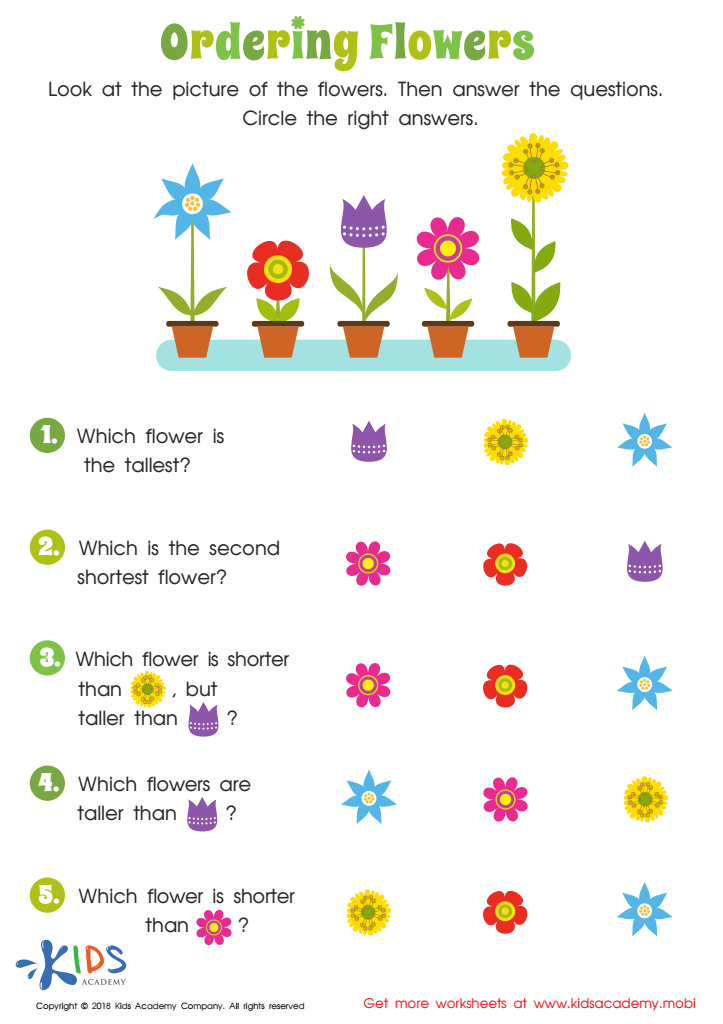
Ordering Flowers Worksheet
Preschoolers can start learning measurement with visuals! This worksheet uses colorful flowers of different heights. Ask your learner to observe the flowers, then help them compare/answer which is taller/shorter. It's an easy way for them to begin learning about measurement.
Ordering Flowers Worksheet
Worksheet
Join Kids Academy for Free
Who is primarily going to use this learning content?








Comparing numbers is an essential foundational math skill for children ages 5-9, providing various long-term educational benefits. Parents and teachers should care about this skill because it helps children develop a strong number sense, enabling them to understand the value and relationships between numbers. When children learn to compare numbers, they form a basis for more complex arithmetic operations, such as addition, subtraction, and eventually multiplication and division.
Introducing comparing numbers at an early age encourages logical thinking and problem-solving abilities. Children learn to observe patterns and make comparisons, skills that are not only vital in math but also in everyday decision-making. For instance, understanding why eight is greater than four entails that if you have eight apples, it's more than having four.
Moreover, integrating comparing numbers into early learning fosters confidence in young learners. When children grasp these basic concepts with ease, they're more likely to be motivated and engaged in math. Overcoming difficulties in these formative years can prevent math anxiety, paving the way for a positive attitude towards learning.
In essence, comparing numbers builds a critical mathematical framework for higher-level math and practical life skills, shaping confident, analytical, and forward-thinking individuals. Parents and teachers play a crucial role in nurturing these early math experiences.








