Understanding opposites Easy Worksheets for Ages 5-9
4 filtered results
-
From - To
Unlock the fun of learning with our "Understanding Opposites Easy Worksheets" designed specifically for children aged 5-9! These engaging and colorful worksheets help young learners explore the concept of opposites, enhancing their vocabulary and comprehension skills. Tailored to be age-appropriate, each activity encourages critical thinking through matching, coloring, and identifying contrasting pairs. Perfect for both classroom settings and at-home learning, these worksheets foster creativity and make understanding opposites enjoyable. Help your child develop confidence in their language abilities with our thoughtfully crafted resources. Download now and make learning about opposites a joyful adventure!
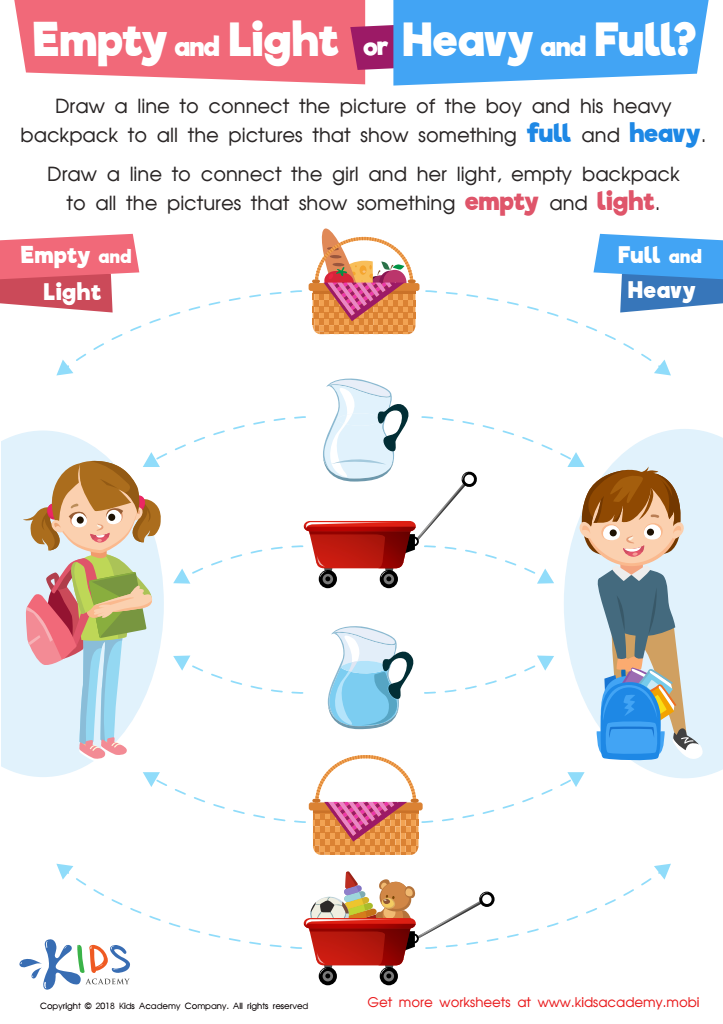
Empty and Light or Heavy and Full? Worksheet
 Assign to My Students
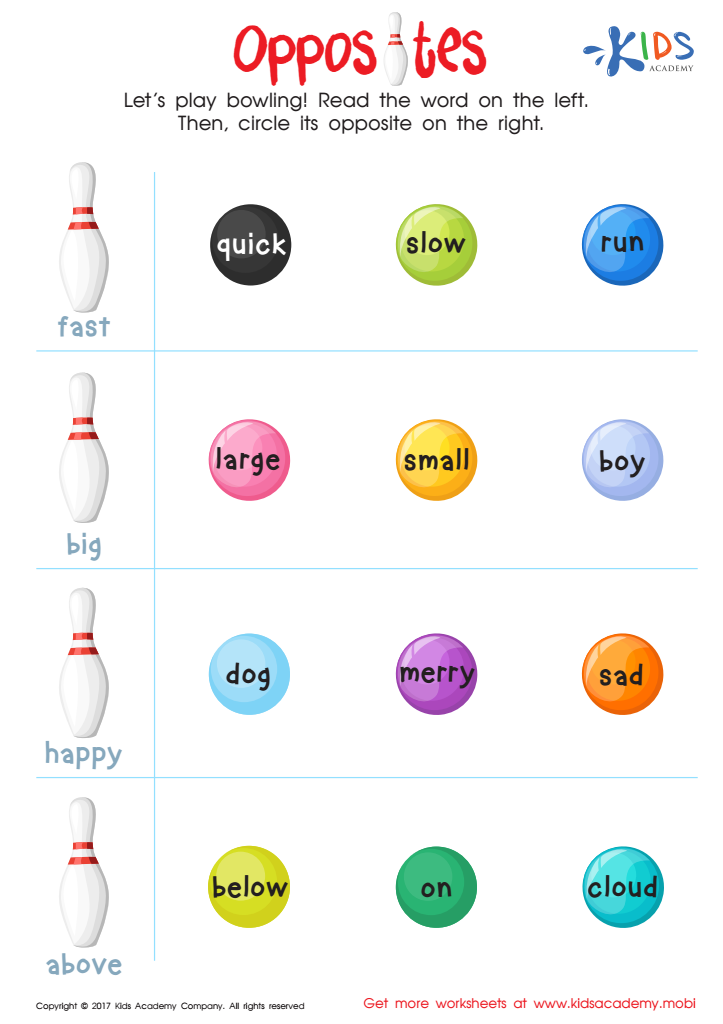
Opposites Worksheet
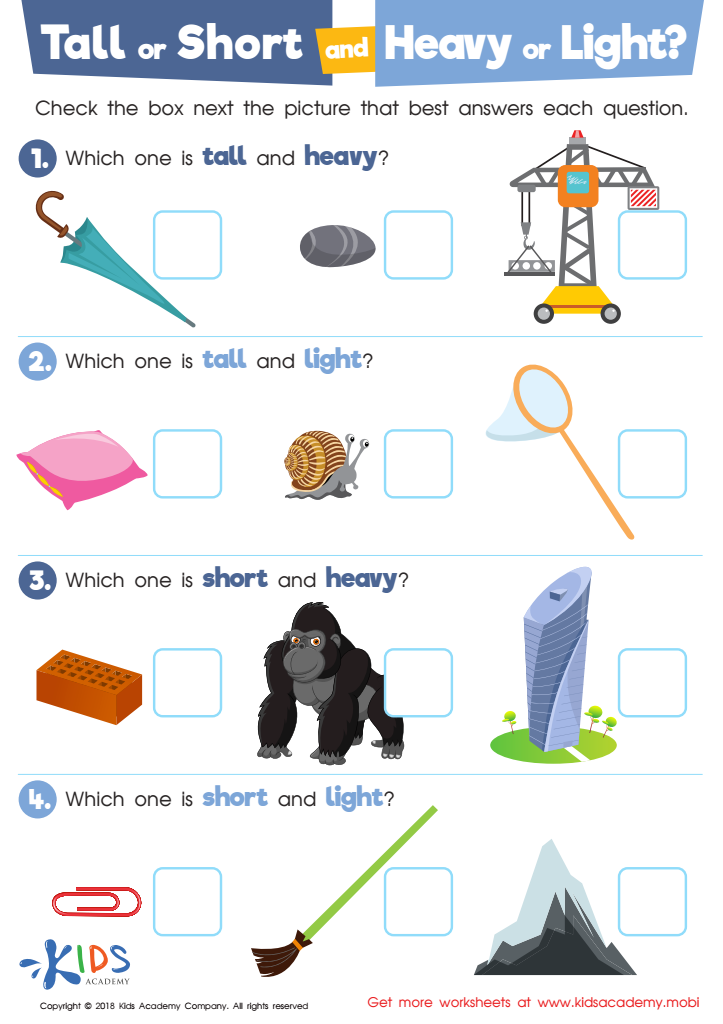
Tall or Short and Heavy or Light? Worksheet
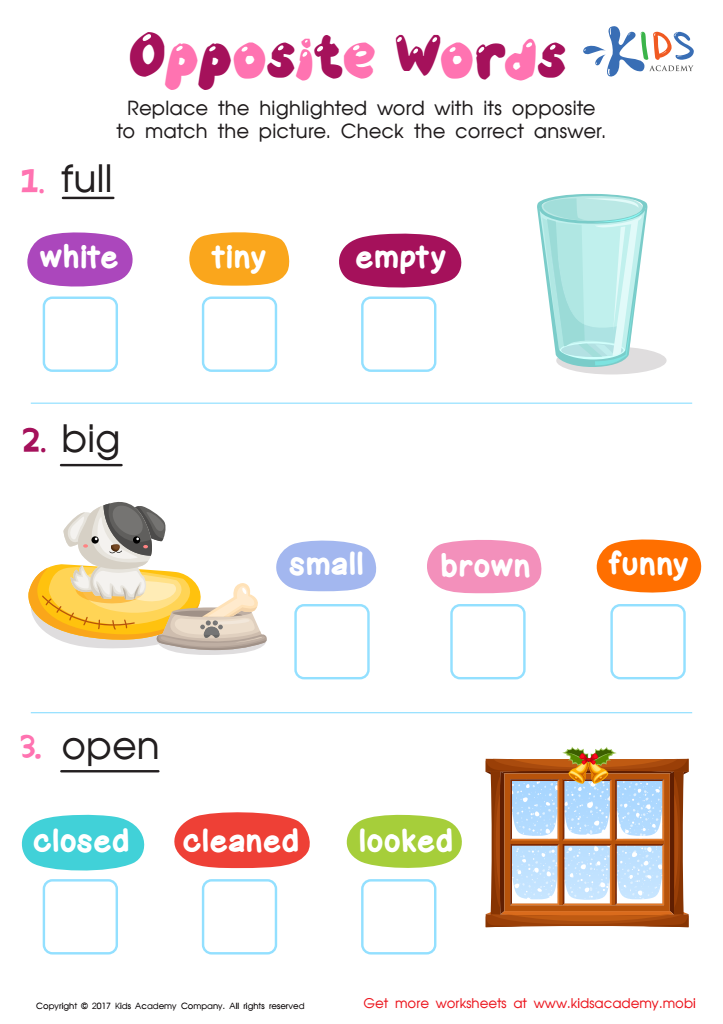
Opposite Words Worksheet






Understanding opposites is crucial for children aged 5-9 as it lays the foundation for essential cognitive and language skills. This developmental concept not only enriches vocabulary but also enhances critical thinking and problem-solving abilities. When children grasp opposites—such as hot/cold, happy/sad, or big/little—they begin to categorize their experiences and make sense of the world around them.
In teaching settings, discussing opposites can promote reading comprehension as children learn to compare and contrast different ideas and characters in stories. Additionally, it encourages social development; understanding opposites contributes to the ability to navigate emotions and interactions with peers, fostering empathy and communication skills.
Parents play a vital role in this learning process by integrating discussions about opposites into everyday conversations and activities, thereby reinforcing classroom teachings. This can be as simple as pointing out opposites during playtime or while engaging in daily routines. Caring about this concept, therefore, isn’t just about vocabulary, but about giving children the tools they need for broader understanding, emotional regulation, and successful interaction in their social environments. Ultimately, a strong grasp of opposites supports holistic development, setting the stage for a child's future learning journey.








