Number Recognition Easy Addition and Subtraction Word Problems Worksheets for Ages 5-9
9 filtered results
-
From - To
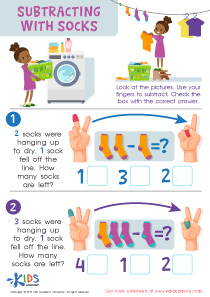
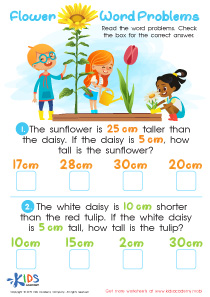
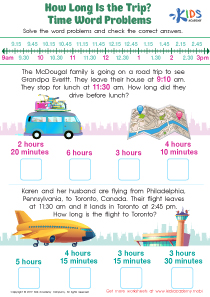
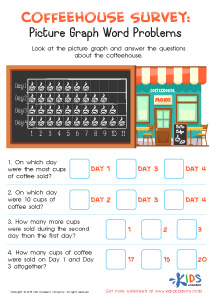
Our "Number Recognition Easy Addition and Subtraction Word Problems Worksheets for Ages 5-9" are designed to enhance early math skills in young learners. These engaging worksheets help children practice number recognition while mastering foundational addition and subtraction through relatable word problems. Tailored for children aged 5-9, each worksheet combines fun illustrations with practical exercises, ensuring a balanced approach to learning. Perfect for individual or classroom use, these resources support cognitive development and mathematical fluency, setting a strong arithmetic base. Discover our range of worksheets today and make math enjoyable for your little ones!
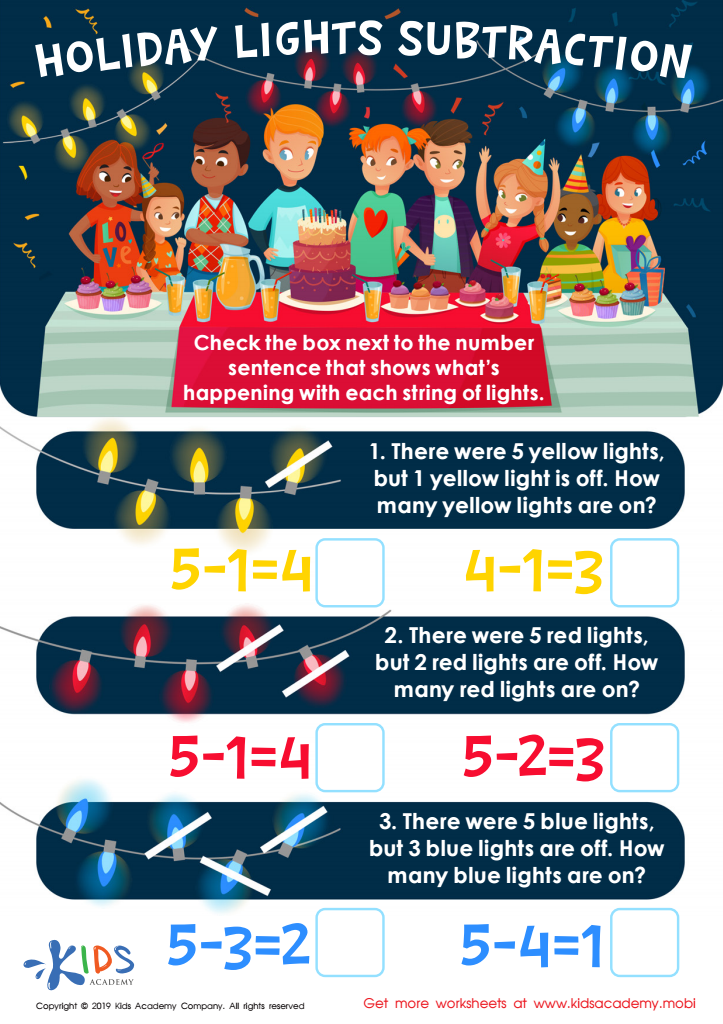
Holiday Lights Subtraction Worksheet
 Assign to My Students
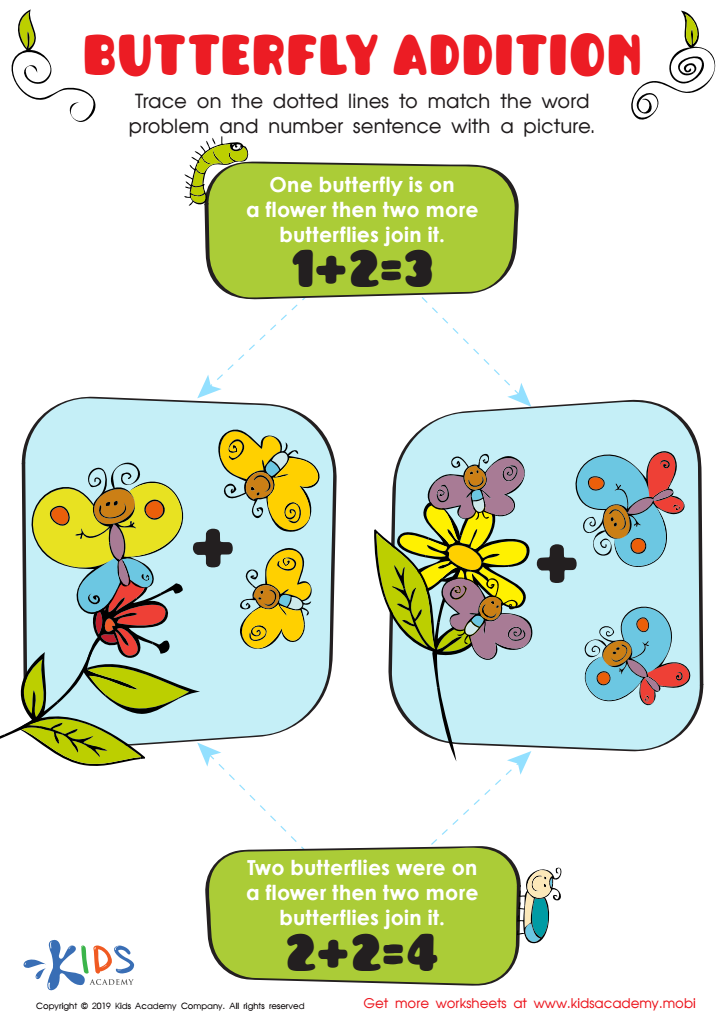
Butterfly Addition Worksheet
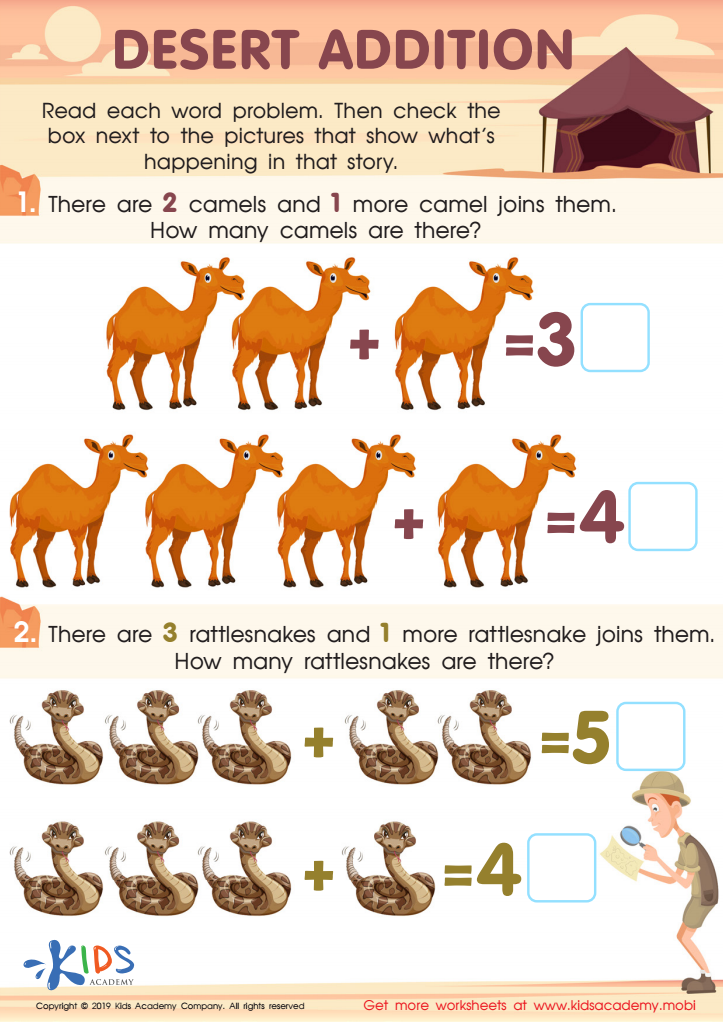
Desert Addition Worksheet
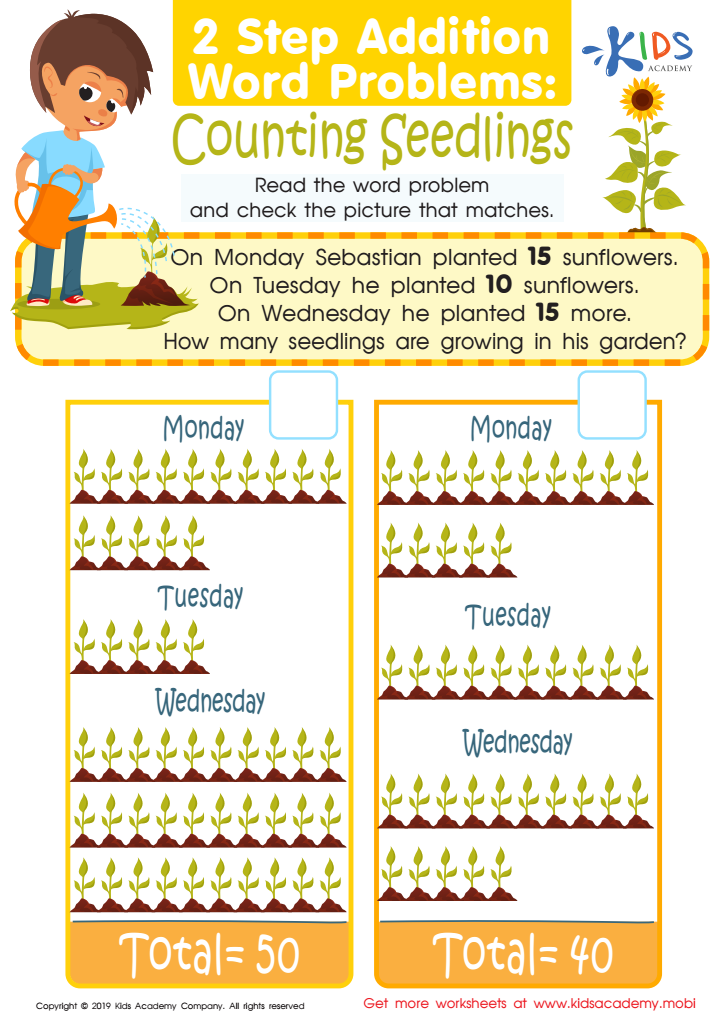
Counting Seedlings Worksheet
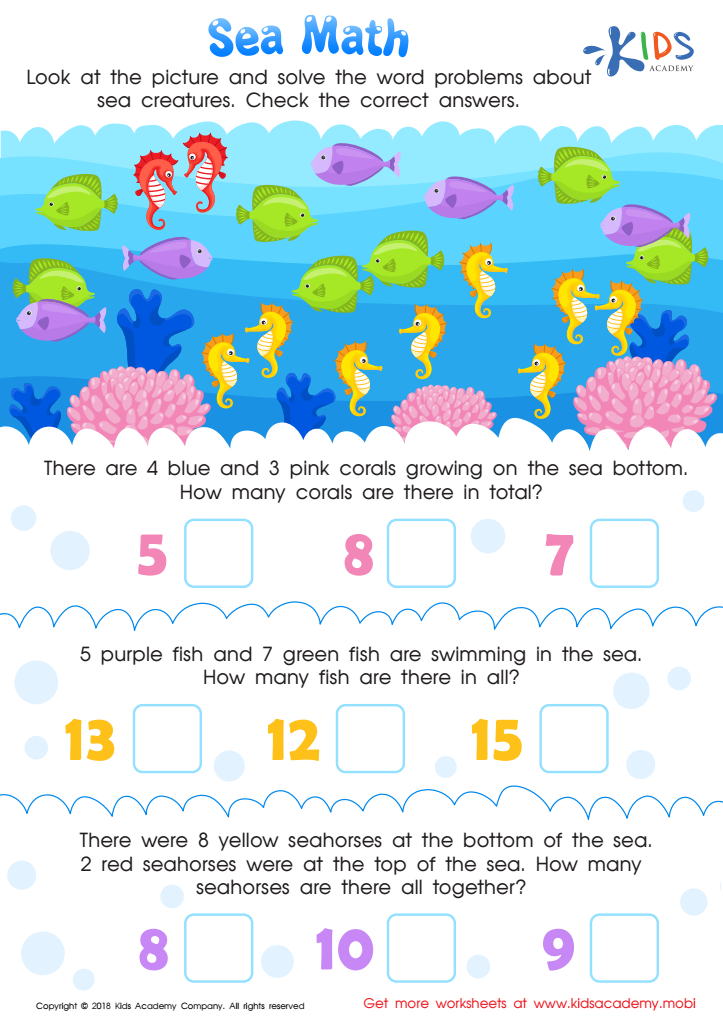
Sea Math Worksheet
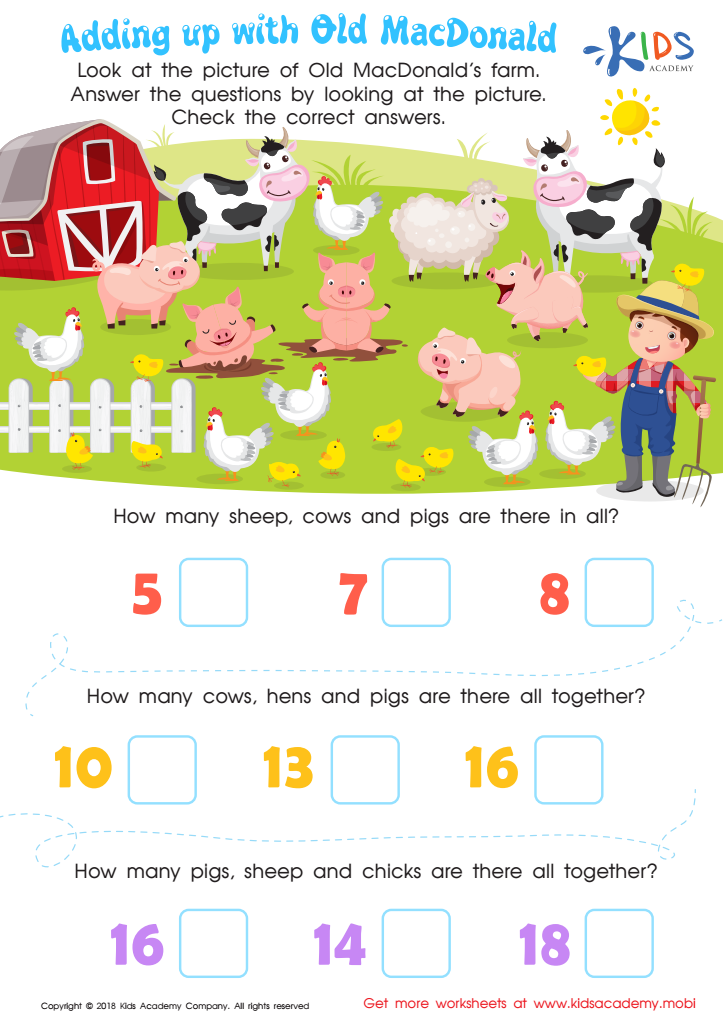
Adding Up with Old MacDonald Worksheet
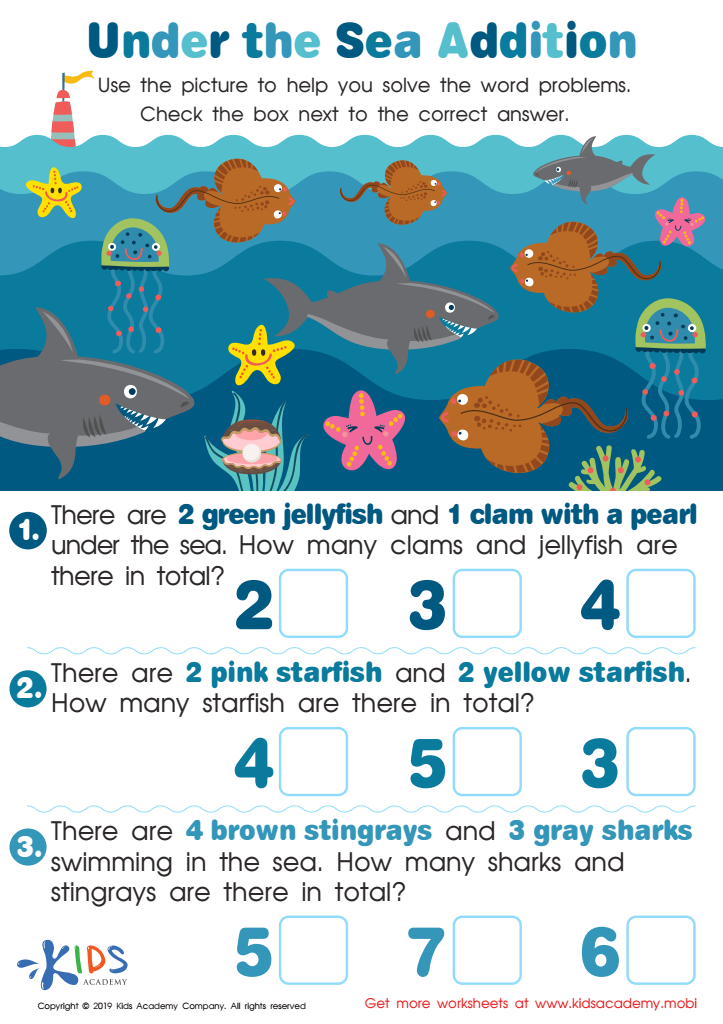
Under the Sea Addition Worksheet
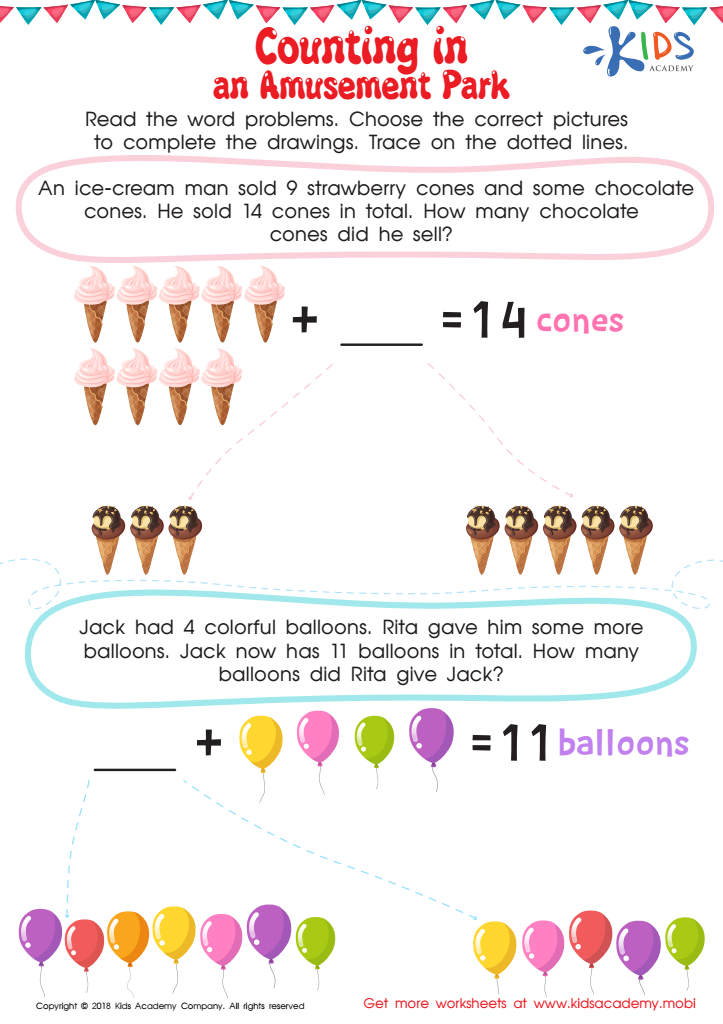
Counting in an Amusement Park Worksheet
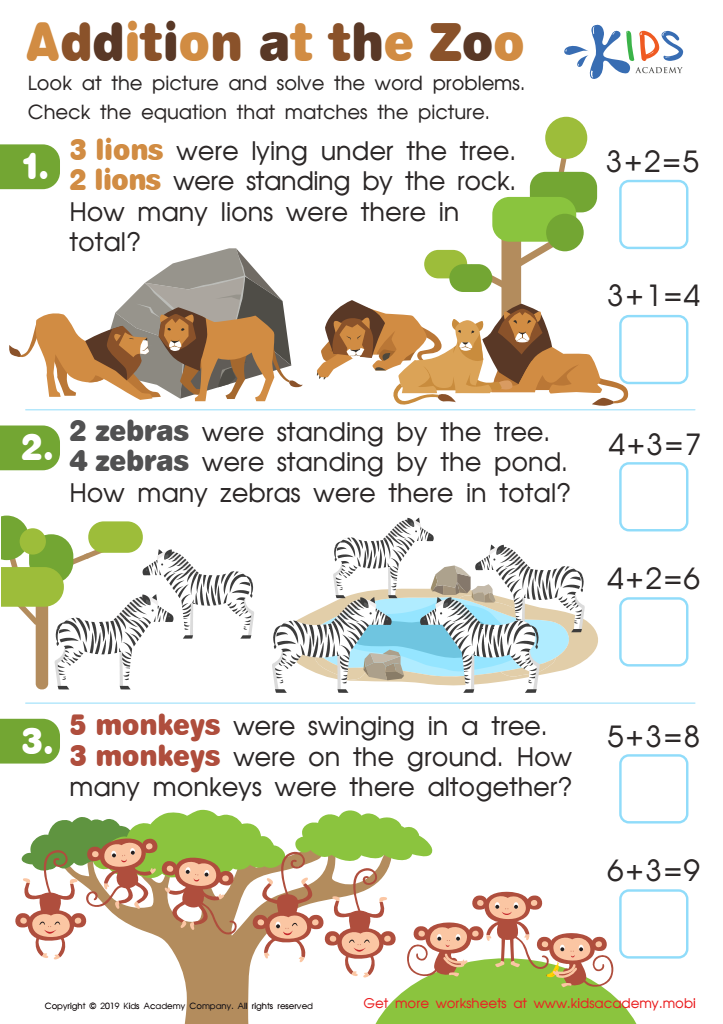
Addition at the Zoo Worksheet








Number recognition and understanding basic addition and subtraction are foundational skills for children aged 5-9. Grasping these concepts early on builds a strong mathematical foundation essential for later academic success. Here are several reasons why parents and teachers should prioritize these skills:
First, number recognition allows children to identify and name numbers, crucial for all future math learning. Without recognizing numbers, children cannot progress to more complex mathematical operations. Teaching word problems that involve easy addition and subtraction helps cement these foundational concepts. It allows children to understand math's practical applications in real-life scenarios, making learning more engaging and meaningful.
Second, early mastery of these skills boosts children's confidence. When children can solve basic problems, it enhances their self-esteem and fosters a positive attitude towards learning. Confident learners are more likely to engage with challenging material without fear.
Third, early math skills are strong predictors of later academic success not only in mathematics but also in other subjects that require logical thinking and problem-solving. Providing children with a solid start in math enhances their overall cognitive development.
Lastly, fostering mathematical skills at this young age encourages critical thinking. Children learn to understand patterns, make predictions, and solve problems, skills essential for both academic and daily life.
Ensuring children develop these skills will pave the way for future academic achievements and instill critical thinking abilities essential for lifelong learning.