Basic arithmetic practice Easy Addition & Subtraction Worksheets for Ages 5-9
4 filtered results
-
From - To
Welcome to our Basic Arithmetic Practice page, featuring easy addition and subtraction worksheets designed specifically for children ages 5-9. These engaging worksheets are perfect for young learners, helping them build confidence and mastery in basic math skills. With a variety of fun and colorful activities, our materials make learning seamless and enjoyable. Explore themed worksheets that cater to different skill levels, ensuring every child finds the right challenge. Whether used in the classroom or at home, these resources foster a solid foundation in arithmetic. Encourage your child's mathematical journey today with our simple and effective practice worksheets!
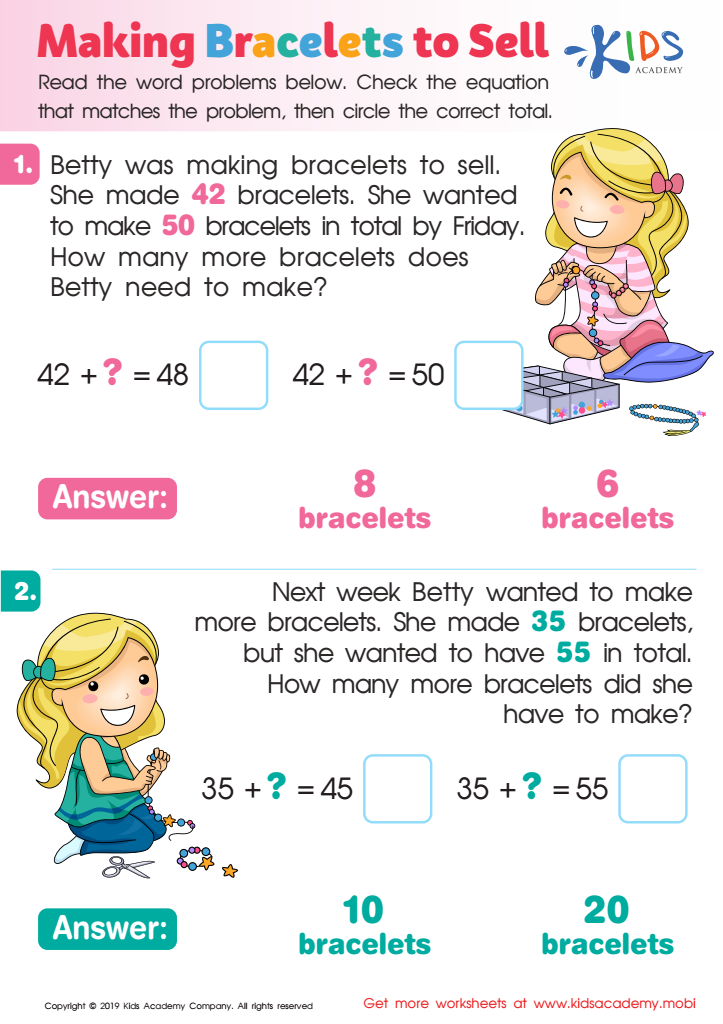
Making Bracelets to Sell Worksheet
 Assign to My Students
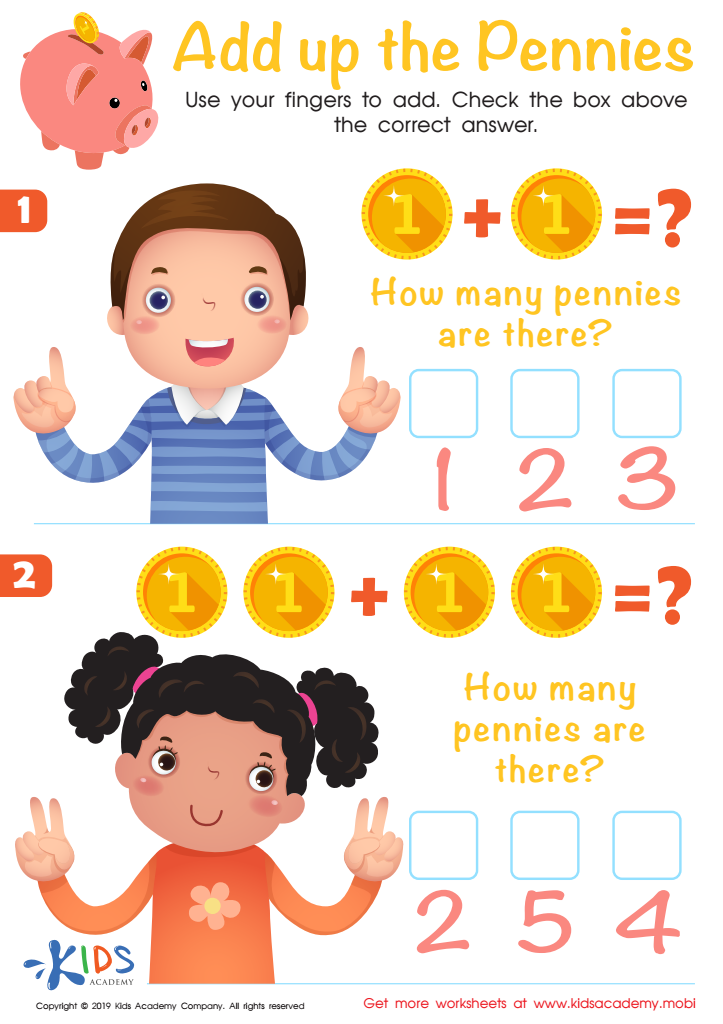
Add up the Pennies Worksheet
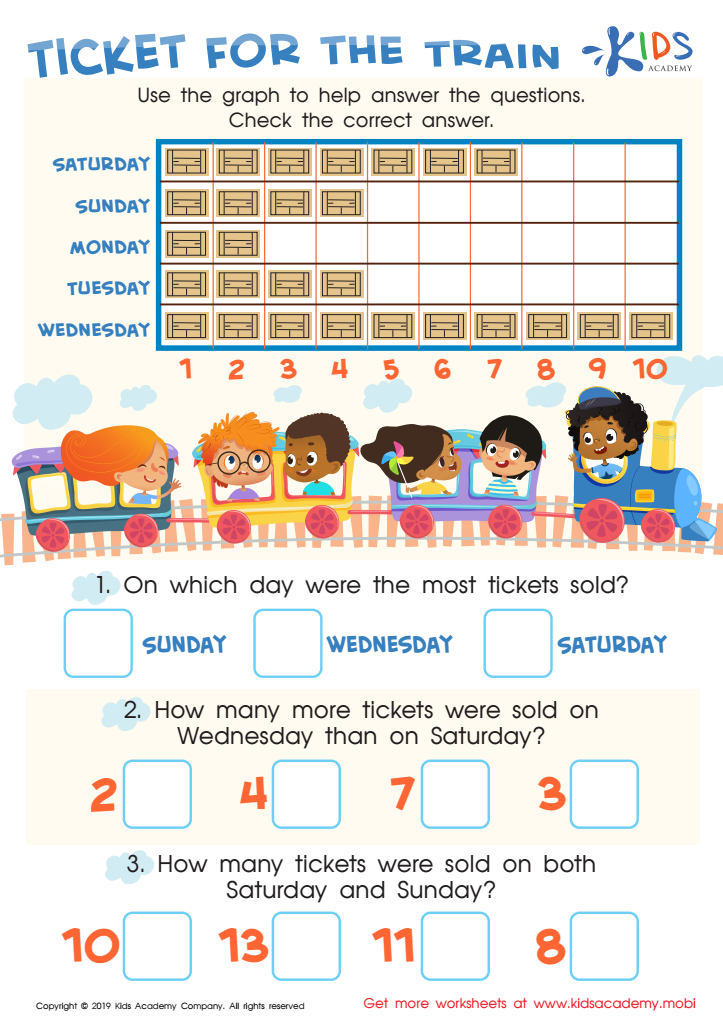
Ticket for the Train Worksheet
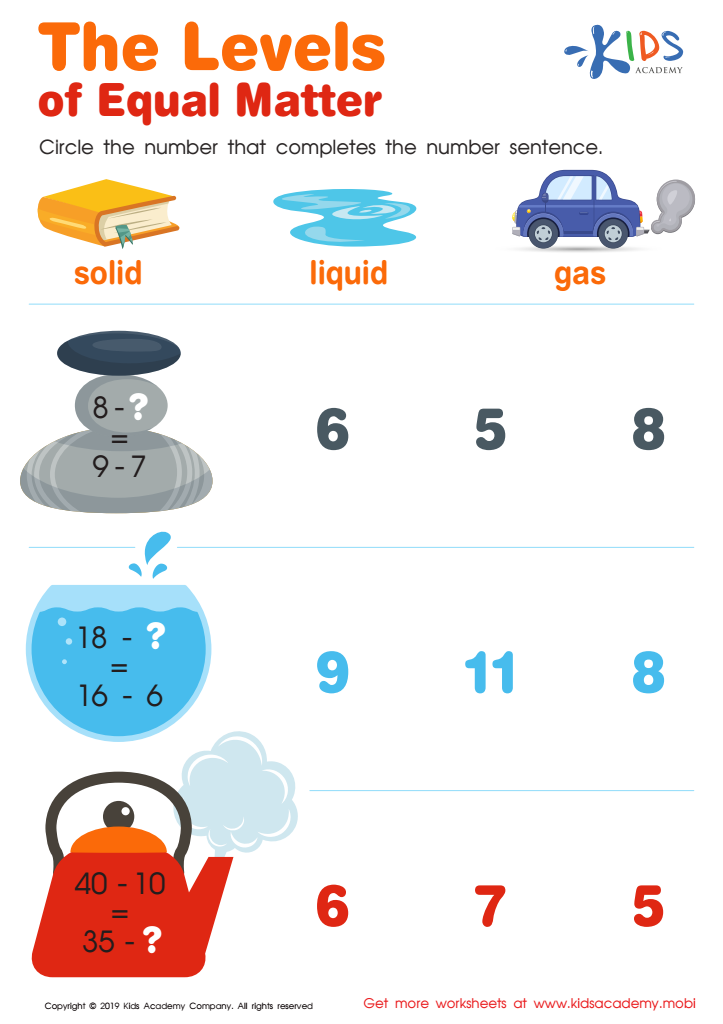
The Levels of Equal Matter Worksheet








Parents and teachers should prioritize basic arithmetic practice, particularly easy addition and subtraction, for children ages 5-9 due to its foundational role in mathematical development. At this age, children are developing crucial cognitive skills, and a strong understanding of basic operations fosters their ability to tackle more complex mathematical concepts in the future.
Practicing simple addition and subtraction improves children's numerical fluency, which is essential for everyday problem-solving and critical thinking. Engaging with these concepts encourages the development of analytical skills. Furthermore, proficiency in basic arithmetic builds confidence, as children experience success that stimulates their interest in learning.
Moreover, a solid grasp of addition and subtraction lays the groundwork for effective financial literacy—skills that are essential in daily life. By integrating math into everyday activities, parents and teachers can make learning both relevant and enjoyable.
Additionally, early math skills are linked to better performance in later grades. When children engage in regular practice during their formative years, they are more likely to develop a positive attitude towards mathematics, reducing common anxiety associated with the subject. By investing time and effort into basic arithmetic, adults nurture lifelong learning and competence in their students and children.








